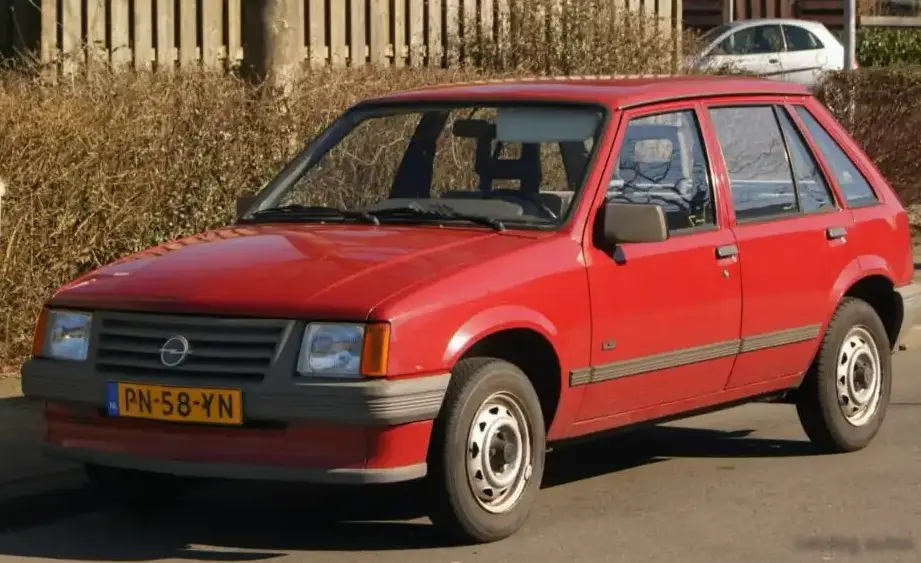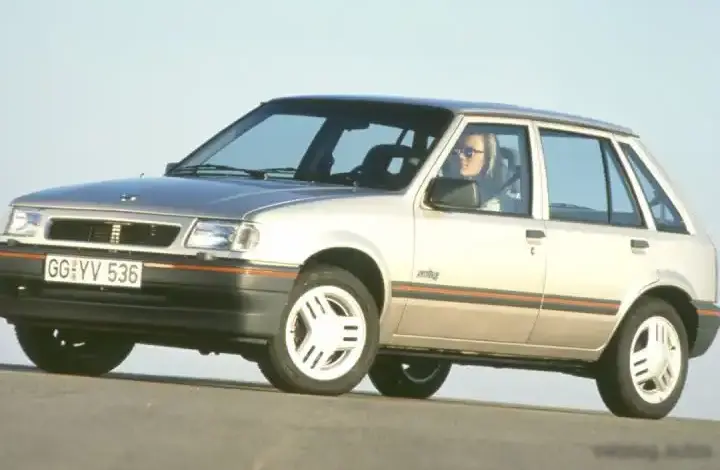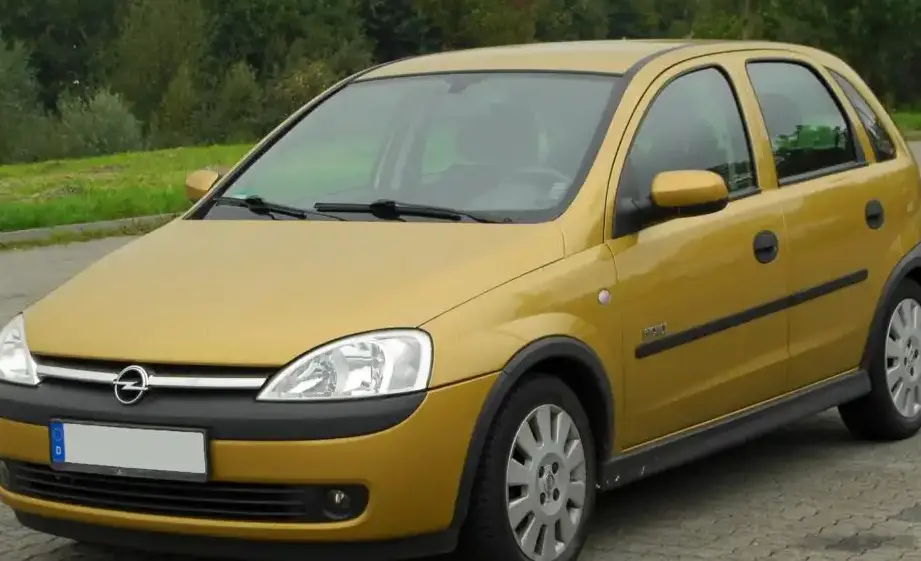
The Opel Corsa C 1.4 16V, producing 90 horsepower, was a mainstay of the Corsa C range produced between October 2000 and June 2003. Positioned as a mid-range offering within the third generation Corsa (1999-2006), it aimed to balance affordability with reasonable performance and equipment levels. The Corsa C itself represented a significant step forward for Opel, moving to the new X10 platform (internally designated 1HX0 for the 3-door and A3 for the 5-door) which improved interior space, safety, and overall refinement compared to its predecessor. This variant was particularly popular in European markets, offering a practical and economical choice for everyday commuting and family use.
Technical Specifications
| Brand | Opel |
| Model | Corsa |
| Generation | Corsa C |
| Type (Engine) | 1.4 16V (90 Hp) |
| Start of production | October, 2000 |
| End of production | June, 2003 |
| Powertrain Architecture | Internal Combustion engine |
| Body type | Hatchback |
| Seats | 5 |
| Doors | 3-5 |
| Fuel consumption (urban) | 9.8 l/100 km (24 US mpg, 28.8 UK mpg, 10.2 km/l) |
| Fuel consumption (extra urban) | 5.7 l/100 km (41.3 US mpg, 49.6 UK mpg, 17.5 km/l) |
| Fuel consumption (combined) | 7.2 l/100 km (32.7 US mpg, 39.2 UK mpg, 13.9 km/l) |
| CO2 emissions | 173 g/km |
| Fuel Type | Petrol (Gasoline) |
| Acceleration 0 – 100 km/h | 11.5 sec |
| Acceleration 0 – 62 mph | 11.5 sec |
| Acceleration 0 – 60 mph | 10.9 sec |
| Maximum speed | 180 km/h (111.85 mph) |
| Weight-to-power ratio | 10.6 kg/Hp, 94.4 Hp/tonne |
| Weight-to-torque ratio | 7.6 kg/Nm, 131.2 Nm/tonne |
| Power | 90 Hp @ 6000 rpm |
| Power per litre | 64.8 Hp/l |
| Torque | 125 Nm @ 4000 rpm (92.2 lb.-ft. @ 4000 rpm) |
| Engine layout | Front, Transverse |
| Engine Model/Code | Z14XE |
| Engine displacement | 1389 cm3 (84.76 cu. in.) |
| Number of cylinders | 4 |
| Engine configuration | Inline |
| Cylinder Bore | 77.6 mm (3.06 in.) |
| Piston Stroke | 73.4 mm (2.89 in.) |
| Compression ratio | 10.5:1 |
| Number of valves per cylinder | 4 |
| Fuel injection system | Multi-port manifold injection |
| Engine aspiration | Naturally aspirated engine |
| Valvetrain | DOHC |
| Engine oil capacity | 3.5 l (3.7 US qt | 3.08 UK qt) |
| Coolant capacity | 6.1 l (6.45 US qt | 5.37 UK qt) |
| Kerb Weight | 953-973 kg (2101.01 – 2145.1 lbs.) |
| Max. weight | 1500-1525 kg (3306.93 – 3362.05 lbs.) |
| Max load | 547-552 kg (1205.93 – 1216.95 lbs.) |
| Trunk (boot) space – minimum | 260 l (9.18 cu. ft.) |
| Trunk (boot) space – maximum | 1060 l (37.43 cu. ft.) |
| Fuel tank capacity | 45 l (11.89 US gal | 9.9 UK gal) |
| Length | 3817 mm (150.28 in.) |
| Width | 1646 mm (64.8 in.) |
| Height | 1440 mm (56.69 in.) |
| Wheelbase | 2491 mm (98.07 in.) |
| Front track | 1429 mm (56.26 in.) |
| Rear track | 1420 mm (55.91 in.) |
| Ride height (ground clearance) | 140 mm (5.51 in.) |
| Drivetrain Architecture | Front wheel drive |
| Drive wheel | Front wheel drive |
| Number of gears and type of gearbox | 5 gears, manual transmission |
| Front suspension | Coil spring |
| Rear suspension | Coil spring |
| Front brakes | Ventilated discs |
| Rear brakes | Drum |
| Assisting systems | ABS (Anti-lock braking system) |
| Steering type | Steering rack and pinion |
| Power steering | Hydraulic Steering |
| Tires size | 175/65 R14 |
| Wheel rims size | 14 |
Powertrain & Engine Architecture
The heart of the Corsa C 1.4 16V is the Z14XE engine, a 1.4-liter inline-four cylinder petrol engine. This engine is a member of Opel’s ‘Family 1’ engine family, known for its relatively simple design and durability. The ‘XE’ suffix denotes a version with single overhead camshafts (SOHC) per cylinder bank, operating 16 valves in total (four per cylinder). Fuel delivery is managed by a multi-point fuel injection system, providing adequate atomization for efficient combustion. The engine’s 1389cc displacement, combined with a compression ratio of 10.5:1, allows it to produce 90 horsepower at 6000 rpm and 125 Nm (92.2 lb-ft) of torque at 4000 rpm. The engine was typically paired with a five-speed manual transmission, but a four-speed automatic transmission was also offered, which is the focus of this article. The automatic transmission, while providing convenience, did impact acceleration and fuel economy compared to the manual version.
Driving Characteristics
The Corsa C 1.4 16V with the automatic transmission offered a comfortable, if not particularly sporty, driving experience. Acceleration from 0-60 mph took around 10.9 seconds, and top speed was limited to 111.85 mph. The four-speed automatic transmission, while smooth in operation, lacked the responsiveness of a modern gearbox. Gear changes were noticeable, and the transmission sometimes hesitated during overtaking maneuvers. The relatively low power output meant that the engine needed to be revved to extract the best performance, especially when fully loaded. Compared to the more powerful 1.6-liter or the diesel variants, the 1.4 automatic felt noticeably slower. However, it provided a more relaxed driving experience, particularly in urban environments.
Equipment & Trim Levels
The 1.4 16V automatic typically came equipped with features such as power steering, central locking, electric front windows, and an adjustable steering column. Higher trim levels, such as ‘Enjoy’ or ‘Cosmo’, added features like air conditioning, alloy wheels, a CD player, and upgraded interior trim. Interior upholstery was generally cloth, with a simple, functional dashboard layout. Optional extras included a sunroof, rear electric windows, and metallic paint. The trim level significantly impacted the overall price and perceived value of the vehicle.
Chassis & Braking
The Corsa C utilized a MacPherson strut front suspension and a torsion beam rear suspension. This setup provided a reasonable balance between ride comfort and handling. The front brakes were ventilated discs, offering good stopping power, while the rear brakes were drums, a cost-saving measure common in this segment. ABS (Anti-lock Braking System) was standard equipment, enhancing safety. The relatively lightweight nature of the Corsa C helped to mitigate the effects of the drum brakes at the rear. Stabilizer bars were fitted to both the front and rear axles, reducing body roll during cornering.
Market Reception & Comparison
The Corsa C 1.4 16V automatic was generally well-received as a practical and affordable small car. Critics praised its comfortable ride and decent fuel economy (around 32.7 US mpg combined). However, the automatic transmission was often criticized for its lack of responsiveness and its impact on fuel consumption. Compared to the manual version, the automatic offered slightly worse fuel economy and slower acceleration. The 1.6-liter engine provided a noticeable performance upgrade, while the 1.7 DTi diesel offered superior fuel efficiency. The 1.4 automatic appealed to buyers who prioritized convenience and ease of driving over outright performance.
Legacy
The Z14XE engine, while not known for being particularly exciting, proved to be relatively reliable. Common issues included occasional oil leaks and sensor failures, but these were generally inexpensive to repair. Today, the Corsa C 1.4 16V automatic can be found on the used car market at very affordable prices. It represents a budget-friendly option for those seeking a small, economical car for city driving. While it may not offer the latest technology or performance, its simplicity and reliability make it a viable choice for those on a tight budget. Parts availability remains good, and the car’s straightforward design makes it relatively easy to maintain.