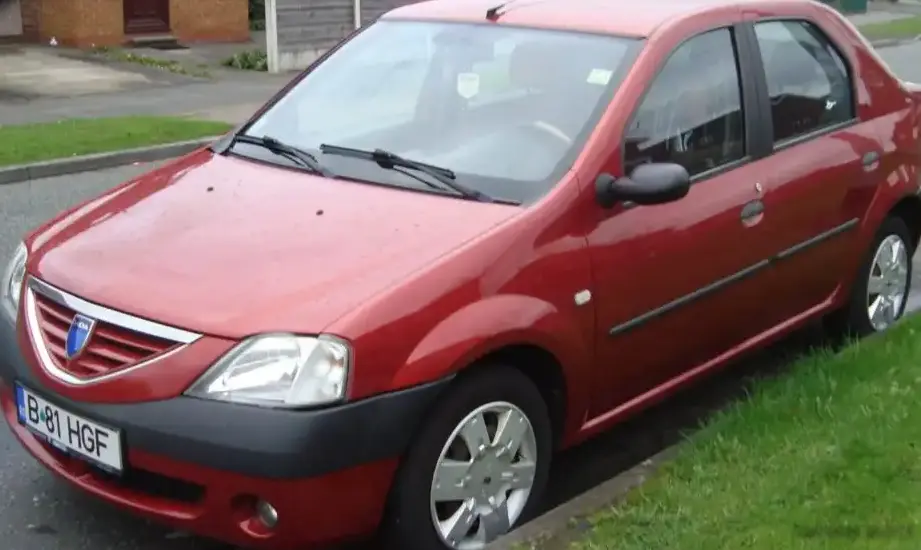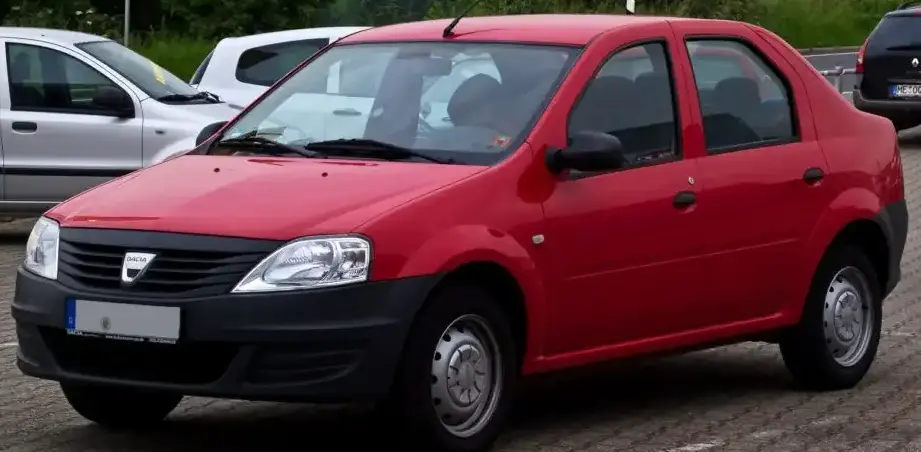
The Dacia Logan I (facelift, produced from 2008 to 2012) 1.2-liter 75 horsepower variant represented an entry-level offering within the broader Logan I range. Introduced as part of the facelifted first generation (also known as the 1HX0 series), this model aimed to provide affordable transportation, particularly in emerging markets and as a budget-conscious option in Western Europe. It occupied the lowest rung of the Logan I powertrain ladder, positioned below the 1.6-liter engines and diesel options. The Logan, from its inception, was designed as a no-frills, practical sedan, and the 1.2L 75hp model exemplified this philosophy.
Technical Specifications
| Brand | Dacia |
| Model | Logan |
| Generation | Logan I (facelift 2008) |
| Type (Engine) | 1.2 (75 Hp) |
| Start of production | 2008 |
| End of production | 2012 |
| Powertrain Architecture | Internal Combustion engine |
| Body type | Sedan |
| Seats | 5 |
| Doors | 4 |
| Fuel consumption (urban) | 7.6 l/100 km (30.9 US mpg, 37.2 UK mpg, 13.2 km/l) |
| Fuel consumption (extra urban) | 4.9 l/100 km (48 US mpg, 57.6 UK mpg, 20.4 km/l) |
| Fuel consumption (combined) | 5.9 l/100 km (39.9 US mpg, 47.9 UK mpg, 16.9 km/l) |
| Fuel Type | Petrol (Gasoline) |
| Acceleration 0 – 100 km/h | 13.6 sec |
| Acceleration 0 – 62 mph | 13.6 sec |
| Acceleration 0 – 60 mph | 12.9 sec |
| Maximum speed | 161 km/h (100.04 mph) |
| Weight-to-power ratio | 13 kg/Hp, 76.9 Hp/tonne |
| Weight-to-torque ratio | 9.1 kg/Nm, 109.7 Nm/tonne |
| Power | 75 Hp @ 5500 rpm |
| Power per litre | 65.3 Hp/l |
| Torque | 107 Nm @ 4250 rpm (78.92 lb.-ft. @ 4250 rpm) |
| Engine layout | Front, Transverse |
| Engine Model/Code | D4F 732 |
| Engine displacement | 1149 cm3 (70.12 cu. in.) |
| Number of cylinders | 4 |
| Engine configuration | Inline |
| Number of valves per cylinder | 4 |
| Fuel injection system | Multi-port manifold injection |
| Engine aspiration | Naturally aspirated engine |
| Engine oil capacity | 4 l (4.23 US qt | 3.52 UK qt) |
| Coolant capacity | 4.5 l (4.76 US qt | 3.96 UK qt) |
| Kerb Weight | 975 kg (2149.51 lbs.) |
| Max. weight | 1530 kg (3373.07 lbs.) |
| Max load | 555 kg (1223.57 lbs.) |
| Fuel tank capacity | 50 l (13.21 US gal | 11 UK gal) |
| Length | 4288 mm (168.82 in.) |
| Width | 1740 mm (68.5 in.) |
| Height | 1534 mm (60.39 in.) |
| Wheelbase | 2630 mm (103.54 in.) |
| Drivetrain Architecture | The Internal combustion engine (ICE) drives the front wheels of the vehicle. |
| Drive wheel | Front wheel drive |
| Number of gears and type of gearbox | 5 gears, manual transmission |
| Assisting systems | ABS (Anti-lock braking system) |
| Steering type | Steering rack and pinion |
| Tires size | 185/65 R15 |
| Wheel rims size | 15 |
Powertrain & Engine Architecture
The heart of this Logan variant was the D4F 732 engine, a 1.2-liter inline-four cylinder petrol engine. This engine was part of the Dacia/Renault D4F family, known for its simplicity and cost-effectiveness. It featured a multi-point fuel injection system, providing adequate fuel delivery for its modest power output. The engine utilized a single overhead camshaft (SOHC) valvetrain with four valves per cylinder, a relatively standard configuration for the time. The 75 horsepower output was achieved at 5500 rpm, while peak torque of 107 Nm (78.92 lb-ft) arrived at 4250 rpm. This engine was paired with a five-speed manual transmission, as an automatic transmission was not offered for this specific configuration. The transmission was chosen for its affordability and reliability, contributing to the Logan’s overall low running costs.
Driving Characteristics
The 1.2L 75hp Logan was not designed for spirited driving. Acceleration was leisurely, taking approximately 13.6 seconds to reach 100 km/h (62 mph). The engine felt strained when pushed hard, particularly when fully loaded or climbing hills. The five-speed manual transmission helped to keep the engine within its optimal operating range, but frequent downshifts were often necessary. Compared to the 1.6-liter versions, the 1.2L felt noticeably slower and less refined. However, for everyday commuting and urban driving, the 1.2L provided sufficient power. The focus was on fuel efficiency and affordability rather than performance.
Equipment & Trim Levels
The 1.2L 75hp Logan typically came with a basic level of equipment. Standard features generally included power steering, central locking, and an immobilizer. Interior upholstery was typically cloth, and the dashboard featured a simple, functional design. Air conditioning, electric windows, and a radio/CD player were often offered as optional extras. The trim level was generally considered the base model, aimed at buyers prioritizing value for money. The interior plastics were durable but lacked the aesthetic appeal of more expensive vehicles.
Chassis & Braking
The Logan I featured a relatively simple chassis design. It utilized a MacPherson strut front suspension and a torsion beam rear suspension. The rear brakes were typically drum brakes, while the front brakes were disc brakes. This configuration was chosen to minimize cost and complexity. The suspension provided a comfortable ride, but handling was not particularly sharp. The steering was light and easy to use, making it well-suited for urban driving. Stabilizer bars were often omitted on the base models to further reduce costs.
Market Reception & Comparison
The Dacia Logan I 1.2L 75hp was generally well-received as an incredibly affordable and practical vehicle. Critics praised its spacious interior, robust build quality, and low running costs. However, the engine’s lack of power and the basic interior were often criticized. Compared to the 1.6-liter versions, the 1.2L offered significantly lower fuel economy but also considerably less performance. The 1.5 dCi diesel engine provided a better balance of fuel economy and performance, but at a higher initial cost. The 1.2L appealed to buyers on a tight budget who prioritized practicality and reliability over driving enjoyment.
Legacy
The Dacia Logan I 1.2L 75hp powertrain proved to be relatively reliable, with few major mechanical issues reported. The engine was known for its durability and ease of maintenance. In the used car market, these models remain popular due to their affordability and low running costs. However, potential buyers should be aware of the engine’s limited power and the basic level of equipment. Parts availability is generally good, and maintenance costs are relatively low. The Logan I 1.2L 75hp played a significant role in establishing Dacia as a major player in the budget car market, demonstrating that a functional and reliable vehicle could be offered at an incredibly competitive price.