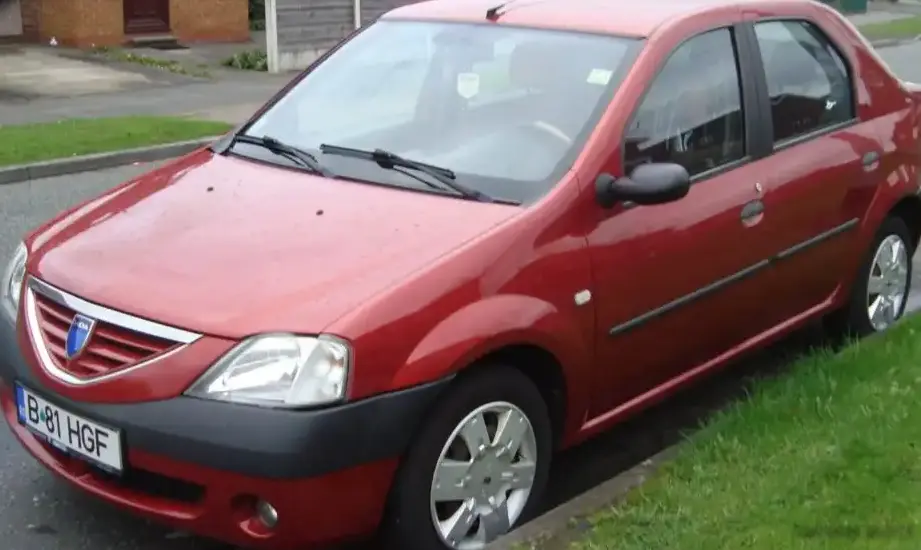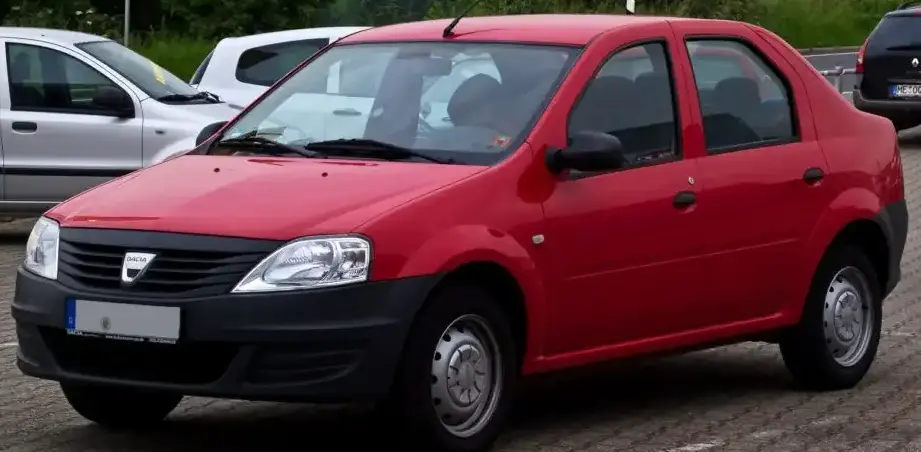
The Dacia Logan I (facelift, produced from July 2008 to June 2010) 1.6 16V, generating 105 horsepower, represented a significant step up in the Logan range. Introduced as part of the facelift for the first-generation Logan (based on the X90 platform), this variant aimed to provide a more refined and powerful option for buyers seeking a budget-friendly sedan. It occupied a mid-range position within the Logan lineup, slotting above the base 1.4-liter engine and below any potential special editions. The 1.6 16V model was primarily marketed in Europe and emerging markets, where affordability and practicality were key purchasing factors.
Technical Specifications
| Brand | Dacia |
| Model | Logan |
| Generation | Logan I (facelift 2008) |
| Type (Engine) | 1.6 16V (105 Hp) |
| Start of production | July, 2008 |
| End of production | June, 2010 |
| Powertrain Architecture | Internal Combustion engine |
| Body type | Sedan |
| Seats | 5 |
| Doors | 4 |
| Fuel consumption (urban) | 9.2 l/100 km (25.6 US mpg) |
| Fuel consumption (extra urban) | 5.9 l/100 km (39.9 US mpg) |
| Fuel consumption (combined) | 7.1 l/100 km (33.1 US mpg) |
| CO2 emissions | 170 g/km |
| Fuel Type | Petrol (Gasoline) |
| Acceleration 0 – 100 km/h | 10.2 sec |
| Acceleration 0 – 62 mph | 10.2 sec |
| Acceleration 0 – 60 mph | 9.7 sec |
| Maximum speed | 183 km/h (113.71 mph) |
| Emission standard | Euro 4 |
| Weight-to-power ratio | 10.1 kg/Hp |
| Weight-to-torque ratio | 7.2 kg/Nm |
| Power | 105 Hp @ 5750 rpm |
| Torque | 148 Nm @ 3750 rpm (109.16 lb.-ft. @ 3750 rpm) |
| Engine layout | Front, Transverse |
| Engine Model/Code | K4M 690 |
| Engine displacement | 1598 cm3 (97.52 cu. in.) |
| Number of cylinders | 4 |
| Engine configuration | Inline |
| Cylinder Bore | 79.5 mm (3.13 in.) |
| Piston Stroke | 80.5 mm (3.17 in.) |
| Compression ratio | 9.8:1 |
| Number of valves per cylinder | 4 |
| Fuel injection system | Multi-port manifold injection |
| Engine aspiration | Naturally aspirated |
| Engine oil capacity | 4.8 l (5.07 US qt | 4.22 UK qt) |
| Coolant capacity | 4.5 l (4.76 US qt | 3.96 UK qt) |
| Kerb Weight | 1060 kg (2336.9 lbs.) |
| Max. weight | 1600 kg (3527.4 lbs.) |
| Max load | 540 kg (1190.5 lbs.) |
| Trunk (boot) space | 510 l (18.01 cu. ft.) |
| Fuel tank capacity | 50 l (13.21 US gal | 11 UK gal) |
| Permitted trailer load (braked) | 1100 kg (2425.08 lbs.) |
| Permitted trailer load (unbraked) | 565 kg (1245.61 lbs.) |
| Length | 4290 mm (168.9 in.) |
| Width | 1740 mm (68.5 in.) |
| Width (with mirrors) | 1989 mm (78.31 in.) |
| Height | 1525 mm (60.04 in.) |
| Wheelbase | 2630 mm (103.54 in.) |
| Front track | 1483 mm (58.39 in.) |
| Rear track | 1470 mm (57.87 in.) |
| Front overhang | 800 mm (31.5 in.) |
| Rear overhang | 858 mm (33.78 in.) |
| Ride height | 155 mm (6.1 in.) |
| Drag coefficient | 0.36 |
| Turning circle | 10.5 m (34.45 ft.) |
| Drivetrain | Front wheel drive |
| Gearbox | 5 gears, manual transmission |
| Front suspension | Independent type McPherson |
| Rear suspension | Torsion |
| Front brakes | Disc, 259 mm |
| Rear brakes | Drum, 203.2 mm |
| Assisting systems | ABS (Anti-lock braking system) |
| Steering | Steering rack and pinion |
| Tires size | 185/65 R15 |
| Wheel rims size | 6.0J x 15 |
INTRODUCTION
The Dacia Logan I, launched in 2004, was a pivotal model for the Romanian automaker, marking its entry into the mainstream European car market after being acquired by Renault. The 2008 facelift brought subtle cosmetic changes and, crucially, engine refinements. The 1.6 16V variant, producing 105 horsepower, was a popular choice, offering a balance between performance and fuel economy. This engine was part of Renault’s K-series family, known for its reliability and relatively simple design. The Logan, in general, was designed as a no-frills, practical sedan aimed at buyers prioritizing value for money over luxury or advanced features.
Powertrain & Engine Architecture
The heart of the Logan 1.6 16V is the K4M 690 engine, a 1.6-liter inline-four cylinder gasoline engine. This engine utilizes a multi-point fuel injection system, delivering fuel directly into the intake ports. The 16-valve configuration (four valves per cylinder) enhances breathing and contributes to the engine’s power output. The engine’s block is cast iron, providing durability, while the cylinder head is aluminum, helping to reduce weight. The K4M engine is known for its robust construction and relatively straightforward maintenance. The 5-speed manual transmission paired with this engine was a standard offering, providing adequate gear ratios for everyday driving. The transmission itself is a conventional design, prioritizing durability and ease of repair over sporty performance.
Driving Characteristics
The Logan 1.6 16V offered a noticeable improvement in performance compared to the base 1.4-liter model. While not a particularly sporty vehicle, the 105 horsepower engine provided sufficient power for comfortable highway cruising and overtaking. Acceleration from 0 to 60 mph took around 9.7 seconds, which was respectable for a budget sedan of its time. The gear ratios in the 5-speed manual transmission were well-spaced, allowing the engine to operate efficiently at various speeds. The power delivery was linear, without any significant peaks or valleys. Compared to the 1.4-liter, the 1.6 felt more relaxed at higher speeds and under load. However, it didn’t offer the same level of responsiveness as higher-performance variants found in other segments.
Equipment & Trim Levels
The Logan 1.6 16V typically came equipped with basic but functional features. Standard equipment included power steering, central locking, and an adjustable steering column. Interior upholstery was typically cloth, with a durable and practical design. Air conditioning was often an optional extra, as were features like electric windows and a radio/CD player. The dashboard layout was simple and functional, prioritizing ease of use over aesthetic appeal. Higher trim levels might have included features like body-colored bumpers and door handles, as well as upgraded interior trim.
Chassis & Braking
The Logan’s chassis was designed for robustness and cost-effectiveness. It utilized a McPherson strut front suspension and a torsion beam rear suspension. This setup provided a comfortable ride, although it wasn’t particularly sporty or refined. The front brakes were disc brakes, while the rear brakes were drum brakes – a common cost-saving measure in this segment. ABS (Anti-lock Braking System) was typically included as standard equipment, enhancing safety. The Logan’s suspension was tuned for comfort and stability, rather than handling precision.
Market Reception & Comparison
The Dacia Logan 1.6 16V was generally well-received by critics and buyers alike. It was praised for its affordability, practicality, and reliability. Compared to the base 1.4-liter model, the 1.6 offered a significant improvement in performance without a substantial increase in price. Fuel economy was reasonable, averaging around 33.1 US mpg in combined driving. While not as refined or feature-rich as some of its competitors, the Logan offered exceptional value for money. It directly competed with other budget sedans, such as the Skoda Fabia and the Renault Clio, but consistently undercut them on price.
Legacy
The Dacia Logan 1.6 16V powertrain has proven to be remarkably durable and reliable over the long term. The K4M engine is known for its ability to withstand high mileage with proper maintenance. In the used car market, these Logans are still relatively common and can be purchased for very affordable prices. While they may require some maintenance due to their age, the K4M engine is generally considered to be a robust and dependable unit. The Logan’s legacy lies in its ability to provide affordable and practical transportation to a wide range of buyers, establishing Dacia as a major player in the European car market.