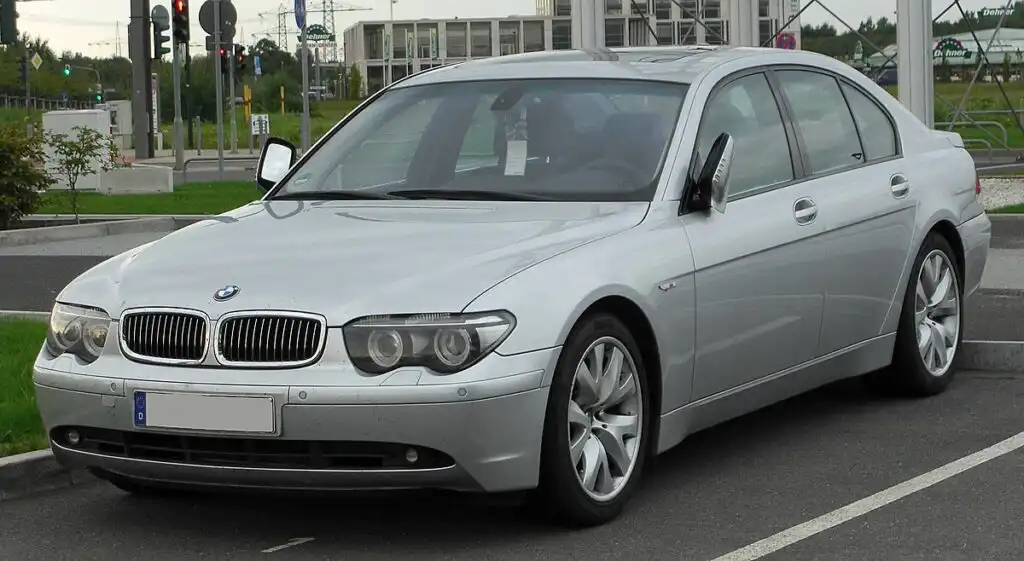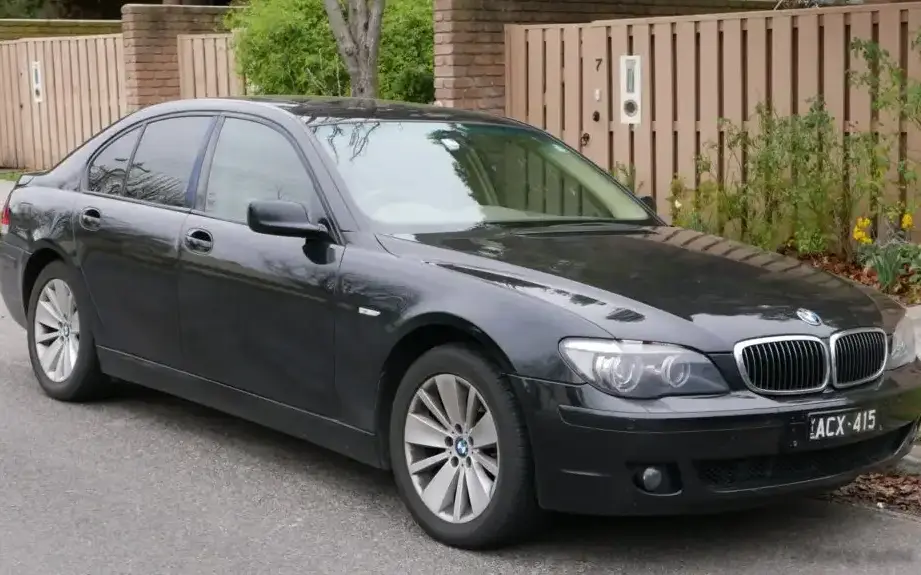
The BMW 750i, part of the E65 generation (specifically the 2005-2008 facelift), represented the pinnacle of BMW’s luxury sedan offerings during its time. Introduced as a successor to the E38 7 Series, the E65 aimed to blend cutting-edge technology with traditional BMW driving dynamics. The 750i, equipped with the naturally aspirated 4.8-liter V8 engine and the six-speed Steptronic automatic transmission, occupied the top-tier performance position within the E65 lineup, above the 745i and 730i models. Production spanned from 2005 to 2008, marking a significant period of innovation for the Bavarian automaker.
Technical Specifications
| Brand | BMW |
| Model | 7 Series |
| Generation | 7 Series (E65, facelift 2005) |
| Type (Engine) | 750i (367 Hp) Steptronic |
| Start of production | 2005 |
| End of production | 2008 |
| Powertrain Architecture | Internal Combustion engine |
| Body type | Sedan |
| Seats | 5 |
| Doors | 4 |
| Fuel consumption (economy) – urban | 16.9 l/100 km (13.9 US mpg, 16.7 UK mpg, 5.9 km/l) |
| Fuel consumption (economy) – extra urban | 8.3 l/100 km (28.3 US mpg, 34 UK mpg, 12 km/l) |
| Fuel consumption (economy) – combined | 11.4 l/100 km (20.6 US mpg, 24.8 UK mpg, 8.8 km/l) |
| Fuel Type | Petrol (Gasoline) |
| Acceleration 0 – 100 km/h | 5.9 sec |
| Acceleration 0 – 62 mph | 5.9 sec |
| Acceleration 0 – 60 mph | 5.6 sec |
| Maximum speed | 250 km/h (155.34 mph) |
| Emission standard | Euro 4 |
| Weight-to-power ratio | 5.2 kg/Hp, 192.1 Hp/tonne |
| Weight-to-torque ratio | 3.9 kg/Nm, 256.5 Nm/tonne |
| Power | 367 Hp @ 6300 rpm |
| Power per litre | 76.5 Hp/l |
| Torque | 490 Nm @ 3400 rpm (361.41 lb.-ft. @ 3400 rpm) |
| Engine layout | Front, Longitudinal |
| Engine Model/Code | N62B48 |
| Engine displacement | 4799 cm3 (292.85 cu. in.) |
| Number of cylinders | 8 |
| Engine configuration | V-engine |
| Cylinder Bore | 93 mm (3.66 in.) |
| Piston Stroke | 88.3 mm (3.48 in.) |
| Compression ratio | 10.5:1 |
| Number of valves per cylinder | 4 |
| Fuel injection system | Multi-port manifold injection |
| Engine aspiration | Naturally aspirated engine |
| Valvetrain | DOHC |
| Engine oil capacity | 8 l (8.45 US qt | 7.04 UK qt) |
| Coolant | 14.5 l (15.32 US qt | 12.76 UK qt) |
| Kerb Weight | 1910 kg (4210.83 lbs.) |
| Max. weight | 2490 kg (5489.51 lbs.) |
| Max load | 580 kg (1278.68 lbs.) |
| Trunk (boot) space – minimum | 500 l (17.66 cu. ft.) |
| Fuel tank capacity | 88 l (23.25 US gal | 19.36 UK gal) |
| Length | 5039 mm (198.39 in.) |
| Width | 1902 mm (74.88 in.) |
| Height | 1491 mm (58.7 in.) |
| Wheelbase | 2990 mm (117.72 in.) |
| Front track | 1578 mm (62.13 in.) |
| Rear (Back) track | 1596 mm (62.83 in.) |
| Drag coefficient (Cd) | 0.29 |
| Minimum turning circle | 12.1 m (39.7 ft.) |
| Drivetrain Architecture | Rear wheel drive |
| Drive wheel | Rear wheel drive |
| Number of gears and type of gearbox | 6 gears, automatic transmission Steptronic |
| Front suspension | Spring Strut |
| Rear suspension | Coil spring |
| Front brakes | Ventilated discs |
| Rear brakes | Ventilated discs |
| Assisting systems | ABS (Anti-lock braking system) |
| Steering type | Steering rack and pinion |
| Power steering | Hydraulic Steering |
| Tires size | 245/55 R17 |
| Wheel rims size | 17 |
Powertrain & Engine Architecture
The heart of the 750i was the N62B48 engine, a 4.8-liter naturally aspirated V8. This engine featured aluminum alloy construction, double overhead camshafts (DOHC) with four valves per cylinder, and BMW’s Double-VANOS variable valve timing system for both intake and exhaust. The N62 utilized a multi-port fuel injection system, delivering fuel directly into the intake ports. The engine produced 367 horsepower at 6300 rpm and 490 Nm (361 lb-ft) of torque at 3400 rpm. Paired with this engine was the ZF 6HP26 six-speed automatic transmission, marketed by BMW as “Steptronic.” This transmission offered both fully automatic operation and a manual shift mode, allowing drivers to exert more control over gear selection. The Steptronic transmission was known for its smooth shifts and responsiveness.
Driving Characteristics
The 750i’s combination of a powerful V8 and a smooth-shifting automatic transmission resulted in a refined and capable driving experience. Acceleration from 0 to 60 mph was achieved in approximately 5.6 seconds, making it a genuinely quick sedan for its time. While not as overtly sporty as some of its rivals, the 750i offered a comfortable ride and confident handling. The Steptronic transmission, while not as engaging as a manual, provided quick and seamless gear changes, contributing to the car’s overall refinement. Compared to the 745i (with its smaller V8) and the 730i (with its inline-six), the 750i offered significantly more power and torque, resulting in noticeably stronger acceleration and effortless cruising.
Equipment & Trim Levels
The 750i came standard with a comprehensive list of luxury features, including leather upholstery, power-adjustable heated front seats, a premium sound system, automatic climate control, and a navigation system. The interior was characterized by high-quality materials and a sophisticated design. Optional extras included rear-seat entertainment, massaging seats, active suspension, and various customization options for interior trim and exterior paint. The E65 facelift brought subtle interior refinements, including updated switchgear and improved iDrive functionality.
Chassis & Braking
The E65 7 Series featured a robust chassis with a MacPherson strut front suspension and a multi-link rear suspension. The 750i, due to its higher weight and performance, typically came equipped with thicker stabilizer bars compared to the lower-trim models. Braking duties were handled by ventilated disc brakes on all four wheels, coupled with ABS (Anti-lock Braking System) and electronic brake-force distribution. The steering system was a hydraulic rack-and-pinion setup, providing precise and responsive steering feel.
Market Reception & Comparison
The E65 7 Series, and particularly the 750i, received mixed reviews upon its launch. While praised for its technological innovations and luxurious interior, it was criticized by some for its controversial styling (particularly the rear end) and the complexity of its iDrive system. Compared to its rivals, such as the Mercedes-Benz S-Class and the Audi A8, the 750i offered a more driver-focused experience, but some found the ride quality to be slightly firmer. Fuel economy, as expected for a large V8-powered sedan, was relatively poor, averaging around 20.6 mpg combined.
Legacy
The N62B48 engine, while generally reliable, is known to be susceptible to certain issues, including oil leaks and cooling system problems. Regular maintenance, including timely oil changes and coolant flushes, is crucial for ensuring its longevity. Today, the E65 750i represents an affordable entry point into the world of high-end BMW sedans. While maintenance costs can be higher than those of more mainstream vehicles, the car’s performance, luxury, and technological features continue to appeal to enthusiasts. The E65 generation, despite its initial criticisms, paved the way for future BMW 7 Series models and remains a significant chapter in the brand’s history.