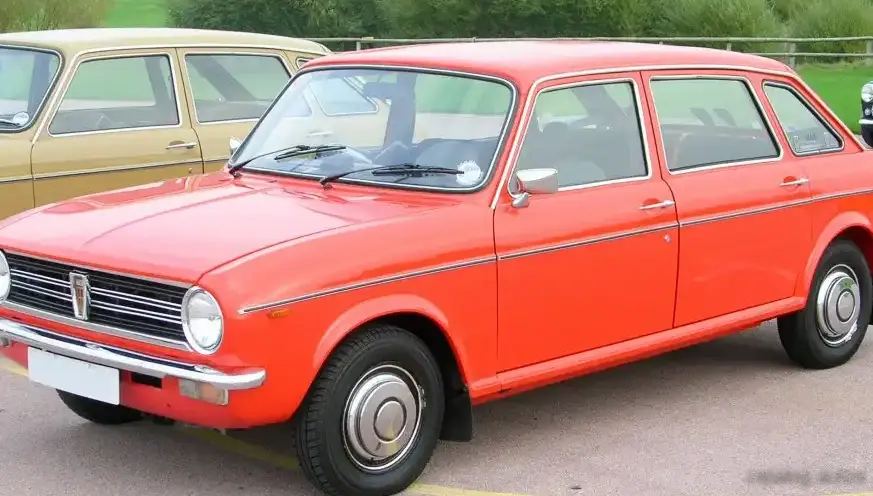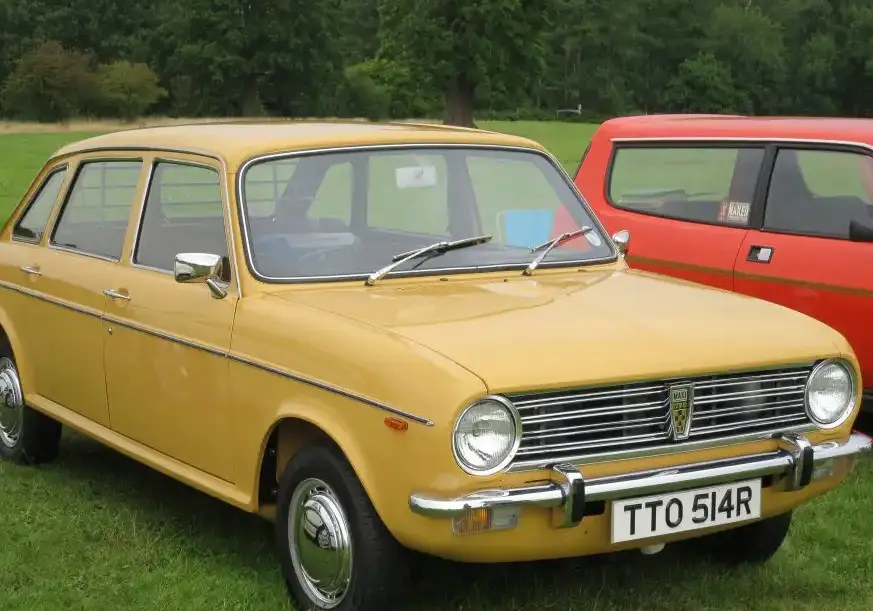
The Austin Maxi 1500, producing 68 horsepower, represents a significant, though often overlooked, chapter in British automotive history. Produced from 1969 to 1980, the Maxi was intended as a spacious and practical family car, a direct response to increasing competition from European rivals like the Renault 16 and Fiat 124. The 1500 variant, equipped with a 1.5-liter engine and typically paired with a four-speed manual transmission (though a three-speed automatic was available), served as the mainstay of the Maxi lineup for much of its production run. It occupied a crucial position as the entry-level model, offering affordability and reasonable performance for the average British family.
Technical Specifications
| Brand | Austin |
| Model | Maxi |
| Generation | Maxi I |
| Type (Engine) | 1500 (68 Hp) |
| Start of Production | 1969 |
| End of Production | 1980 |
| Powertrain Architecture | Internal Combustion Engine |
| Body Type | Hatchback |
| Fuel Type | Petrol (Gasoline) |
| Power | 68 Hp |
| Engine Aspiration | Naturally Aspirated |
Powertrain & Engine Architecture
The heart of the Austin Maxi 1500 was the ‘E’ series 1485cc inline-four cylinder engine. This engine, while relatively simple in design, was notable for its overhead camshaft – a feature not commonly found in British cars of this era and price point. The camshaft was driven by a duplex chain, intended to improve reliability over earlier timing chain designs. The engine utilized a single Zenith 36mm carburetor, providing fuel delivery. The cylinder head featured eight valves (two per cylinder), and the compression ratio was approximately 8.5:1. The engine produced 68 horsepower at 5,000 rpm and 82 lb-ft of torque at 3,000 rpm. The three-speed automatic transmission, when equipped, was a Borg Warner unit, known for its smoothness but also for its tendency to reduce overall fuel economy and performance. The manual transmission was a four-speed unit, offering a more engaging driving experience and better fuel efficiency.
Driving Characteristics
The Maxi 1500, particularly in automatic guise, was not a performance car. Acceleration was modest, taking around 16 seconds to reach 60 mph. However, the engine proved reasonably tractable, offering sufficient power for everyday driving conditions. The automatic transmission, while smooth, contributed to a noticeable loss of power and responsiveness compared to the manual version. The gear ratios were optimized for fuel economy and cruising comfort rather than outright acceleration. The Maxi’s front-wheel-drive layout provided decent handling, although the steering was somewhat vague by modern standards. The suspension, consisting of independent front suspension with coil springs and a leaf-sprung rear axle, offered a comfortable ride, absorbing bumps and imperfections in the road reasonably well. The car’s relatively light weight (around 2,200 lbs) helped to mitigate the effects of the modest engine output.
Equipment & Trim Levels
The Austin Maxi 1500 was generally equipped with basic, but functional, features. Standard equipment included reclining front seats, a heater, and a basic instrument panel. Interior trim was typically vinyl, with cloth seat facings available as an option. The dashboard layout was simple and utilitarian, with large, easy-to-read gauges. Optional extras included a radio, a heated rear window, and a vinyl roof. The Maxi was available in a range of exterior colors, including popular shades like British Racing Green, Old English White, and Carnival Red. Later models received minor cosmetic updates, such as a revised grille and interior trim.
Chassis & Braking
The Maxi featured a monocoque chassis construction, providing a good balance of strength and weight. The front suspension utilized independent wishbones and coil springs, while the rear suspension employed a leaf spring setup. This combination provided a comfortable ride, but the rear leaf springs could sometimes lead to a bouncy ride when the car was lightly loaded. The braking system consisted of Girling hydraulic disc brakes on the front wheels and drum brakes on the rear wheels. The brakes were adequate for the car’s weight and performance, but lacked the stopping power of more modern braking systems. Steering was of the rack and pinion type, providing reasonable precision, although it lacked power assistance.
Market Reception & Comparison
The Austin Maxi 1500 received a mixed reception from automotive critics. While praised for its spacious interior and practical hatchback design, it was often criticized for its lack of performance and somewhat dated styling. Compared to its European rivals, such as the Renault 16 and Fiat 124, the Maxi was often seen as less refined and less technologically advanced. However, it offered a competitive price point, making it an attractive option for budget-conscious buyers. The 1500 variant was generally considered a better value than the more powerful 1750 model, as the extra performance of the larger engine did not always justify the higher price. Fuel economy was reasonable for the time, averaging around 30-35 mpg in mixed driving conditions. Reliability was generally good, although the automatic transmission could be prone to issues if not properly maintained.
Legacy
The Austin Maxi, despite its shortcomings, played an important role in the evolution of British family cars. It was one of the first British hatchbacks, paving the way for future models like the Austin Metro and Rover 200. The ‘E’ series engine, while not a powerhouse, proved to be a durable and reliable unit, finding its way into other British Leyland vehicles. Today, the Austin Maxi 1500 is a relatively rare sight on the roads, but it has gained a following among classic car enthusiasts. Well-maintained examples are increasingly sought after, particularly those with original features and low mileage. The car’s simple mechanical design makes it relatively easy to maintain and repair, appealing to those who enjoy hands-on restoration projects. While not a performance icon, the Austin Maxi 1500 remains a fondly remembered example of British automotive ingenuity and practicality.