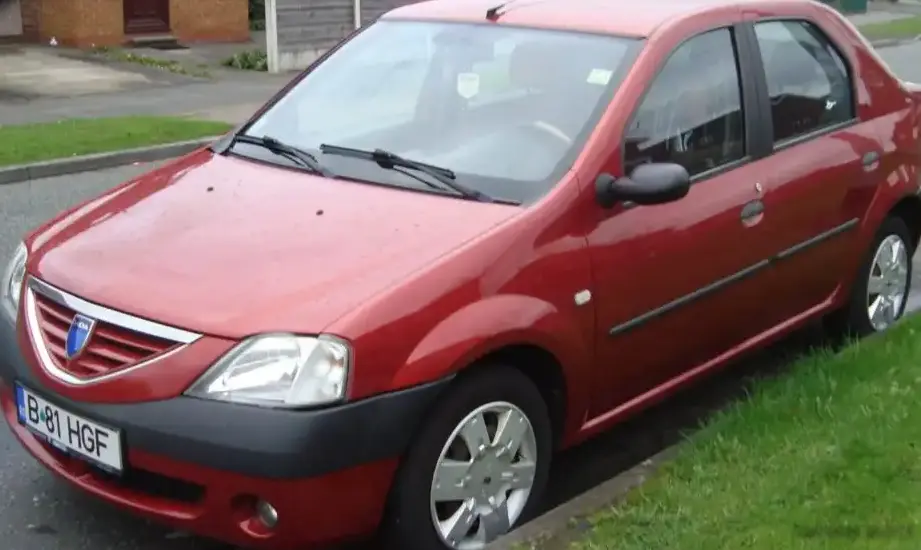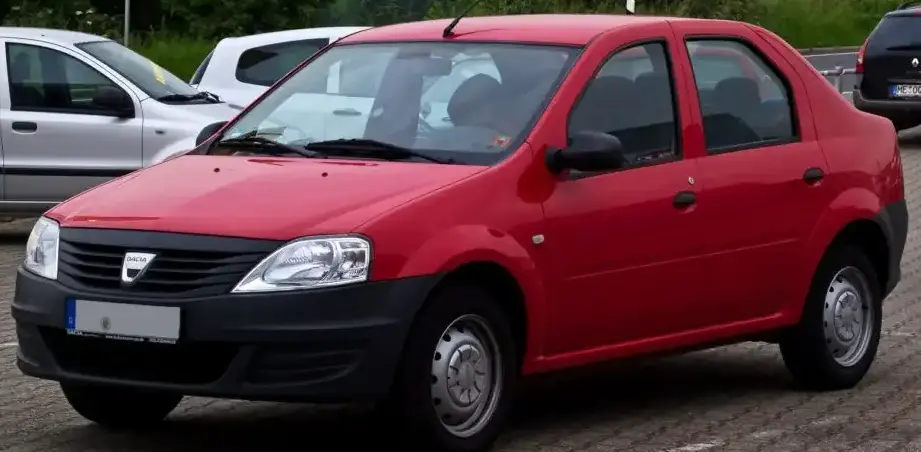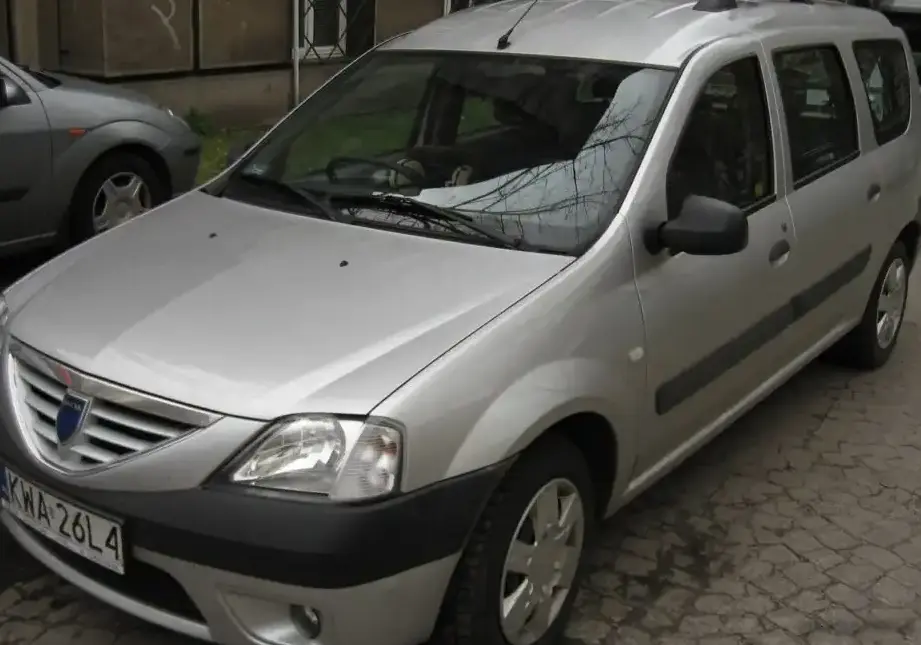
The Dacia Logan I MCV 1.4i 7-seat variant, produced between 2006 and 2008, represents an important iteration of Dacia’s initial foray into the modern automotive market. As a station wagon (estate) body style, the MCV – which stands for “Multi Capacity Vehicle” – expanded upon the original Logan sedan’s value proposition by offering increased practicality and passenger space. This particular version, equipped with the 1.4-liter engine producing 75 horsepower, served as an entry-level option within the MCV range, targeting budget-conscious families and those needing a versatile vehicle for both passengers and cargo. It was built on the 1HX0/A3 platform, shared with the Renault Clio II and other Renault models, providing a cost-effective foundation for the vehicle.
Technical Specifications
| Brand | Dacia |
| Model | Logan |
| Generation | Logan I MCV |
| Type (Engine) | 1.4i (75 Hp) 7 Seats |
| Start of production | 2006 |
| End of production | 2008 |
| Powertrain Architecture | Internal Combustion engine |
| Body type | Station wagon (estate) |
| Seats | 7 |
| Doors | 5 |
| Fuel consumption (urban) | 10.4 l/100 km (22.6 US mpg, 27.2 UK mpg, 9.6 km/l) |
| Fuel consumption (extra urban) | 6.3 l/100 km (37.3 US mpg, 44.8 UK mpg, 15.9 km/l) |
| Fuel consumption (combined) | 7.8 l/100 km (30.2 US mpg, 36.2 UK mpg, 12.8 km/l) |
| Fuel Type | Petrol (Gasoline) |
| Acceleration 0 – 100 km/h | 13 sec |
| Acceleration 0 – 62 mph | 13 sec |
| Acceleration 0 – 60 mph | 12.4 sec |
| Maximum speed | 162 km/h (100.66 mph) |
| Emission standard | Euro 4 |
| Weight-to-power ratio | 14 kg/Hp, 71.4 Hp/tonne |
| Weight-to-torque ratio | 9.4 kg/Nm, 106.7 Nm/tonne |
| Power | 75 Hp @ 5500 rpm |
| Power per litre | 54 Hp/l |
| Torque | 112 Nm @ 3000 rpm (82.61 lb.-ft. @ 3000 rpm) |
| Engine layout | Front, Transverse |
| Engine Model/Code | K7J 710 |
| Engine displacement | 1390 cm3 (84.82 cu. in.) |
| Number of cylinders | 4 |
| Engine configuration | Inline |
| Cylinder Bore | 79.5 mm (3.13 in.) |
| Piston Stroke | 70 mm (2.76 in.) |
| Compression ratio | 9.5:1 |
| Number of valves per cylinder | 2 |
| Fuel injection system | Multi-port manifold injection |
| Engine aspiration | Naturally aspirated engine |
| Valvetrain | OHC |
| Engine oil capacity | 3.3 l (3.49 US qt | 2.9 UK qt) |
| Coolant capacity | 4.5 l (4.76 US qt | 3.96 UK qt) |
| Kerb Weight | 1050 kg (2314.85 lbs.) |
| Max. weight | 1535 kg (3384.1 lbs.) |
| Max load | 485 kg (1069.24 lbs.) |
| Trunk (boot) space – minimum | 198 l (6.99 cu. ft.) |
| Trunk (boot) space – maximum | 2350 l (82.99 cu. ft.) |
| Fuel tank capacity | 50 l (13.21 US gal | 11 UK gal) |
| Length | 4450 mm (175.2 in.) |
| Width | 1740 mm (68.5 in.) |
| Height | 1674 mm (65.91 in.) |
| Wheelbase | 2905 mm (114.37 in.) |
| Front track | 1480 mm (58.27 in.) |
| Rear track | 1470 mm (57.87 in.) |
| Drivetrain Architecture | Front wheel drive |
| Number of gears | 5 |
| Gearbox type | Manual transmission |
| Front suspension | Independent, McPherson with coil spring and anti-roll bar |
| Rear suspension | Semi-independent, coil spring |
| Front brakes | Disc |
| Rear brakes | Drum |
| Steering type | Steering rack and pinion |
| Power steering | Hydraulic |
| Tires size | 185/65 R15 |
Powertrain & Engine Architecture
The heart of this Logan MCV variant is the K7J 710 engine, a 1.4-liter inline-four cylinder gasoline engine. This engine, developed by Renault, is known for its simplicity and robustness. It features a single overhead camshaft (OHC) valvetrain with two valves per cylinder. Fuel delivery is managed by a multi-point fuel injection system, providing adequate, though not exceptional, fuel atomization. The engine’s 9.5:1 compression ratio is a compromise between efficiency and performance. The 75 horsepower output is achieved at 5500 rpm, while peak torque of 112 Nm (82.61 lb-ft) arrives at 3000 rpm. This engine is paired with a five-speed manual transmission, chosen for its cost-effectiveness and reliability. The transmission’s gear ratios are geared towards fuel economy rather than spirited acceleration.
Driving Characteristics
The 1.4i 7-seat Logan MCV offers modest performance. Acceleration from 0-100 km/h (0-62 mph) takes approximately 13 seconds, and top speed is around 162 km/h (100.66 mph). The engine feels strained when fully loaded with passengers and cargo, particularly on inclines. The five-speed manual transmission helps to keep the engine within its optimal operating range, but frequent downshifts are often necessary. Compared to higher-output versions of the Logan MCV, such as those equipped with the 1.6-liter engine, this variant feels significantly less powerful. However, it provides a smoother and more predictable driving experience than the diesel options, which could be noisy and exhibit turbo lag.
Equipment & Trim Levels
The 7-seat 1.4i Logan MCV was typically a fairly basic trim level. Standard equipment generally included power steering, central locking, and an adjustable steering column. Interior upholstery was typically cloth, and the dashboard featured a functional, if somewhat spartan, design. Optional extras included air conditioning, power windows, and a radio/CD player. The seven seats were a key feature, offering flexibility for families, but the rearmost seats were best suited for occasional use or smaller passengers. Safety features were limited, typically including only driver and front passenger airbags and seatbelts.
Chassis & Braking
The Logan MCV utilizes a McPherson strut front suspension and a semi-independent coil spring rear suspension. This setup provides a comfortable ride, but handling is not particularly sharp. The front brakes are discs, while the rear brakes are drums, a cost-saving measure common in this segment. The hydraulic power steering provides light and easy steering, but lacks feedback. Tire size is typically 185/65 R15, offering a good balance between comfort and grip.
Market Reception & Comparison
The Dacia Logan I MCV 1.4i 7-seat variant was well-received in markets where affordability was a primary concern. Critics praised its spacious interior, large cargo capacity, and low price point. However, the engine’s lack of power and the basic interior trim were often criticized. Compared to other station wagons available at the time, the Logan MCV offered exceptional value for money. Its fuel economy, around 7.8 l/100 km (30.2 US mpg), was competitive with other vehicles in its class. Reliability was generally good, although the basic components meant that maintenance was essential to prevent issues.
Legacy
The Dacia Logan I MCV 1.4i 7-seat remains a popular choice in the used car market, particularly for those seeking a practical and affordable vehicle. The K7J engine is known for its durability, but regular maintenance is crucial to prevent issues such as oil leaks and timing chain wear. Parts availability is generally good, and repair costs are relatively low. This variant helped establish Dacia as a major player in the European automotive market, demonstrating that a reliable and spacious vehicle could be offered at a very competitive price. It paved the way for subsequent Logan models and cemented Dacia’s reputation as a value-oriented brand.