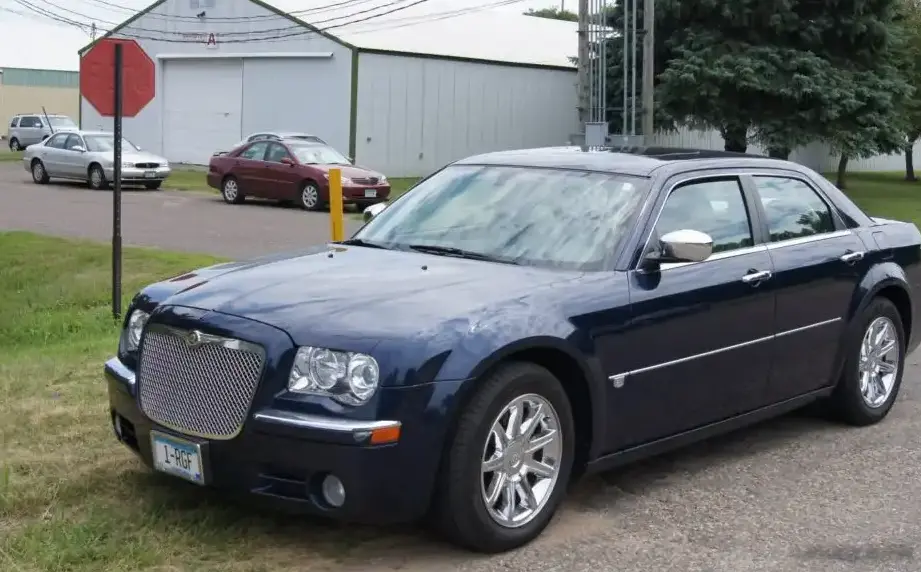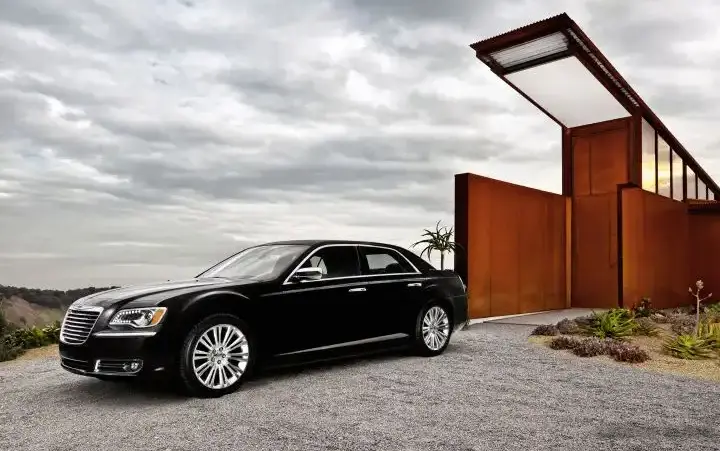
The Chrysler 300 Touring 5.7i V8 16V (340 Hp) represents a significant iteration of the revitalized Chrysler 300 series, produced from 2004 to 2010. This variant, a station wagon (estate) body style, was positioned as a premium offering within the 300 lineup, blending American V8 power with the practicality of a larger cargo area. It was a key model in Chrysler’s attempt to recapture a segment of the market seeking a domestically-produced, full-size vehicle with a touch of European styling influence. The 300 series, built on the LX platform, aimed to offer a more sophisticated alternative to traditional American sedans and wagons.
Technical Specifications
| Brand | Chrysler |
| Model | 300 |
| Generation | 300 Touring |
| Type (Engine) | 5.7 i V8 16V (340 Hp) |
| Start of production | 2004 |
| End of production | 2010 |
| Powertrain Architecture | Internal Combustion engine |
| Body type | Station wagon (estate) |
| Seats | 5 |
| Doors | 5 |
| Fuel consumption (urban) | 18.3 l/100 km (12.9 US mpg, 15.4 UK mpg, 5.5 km/l) |
| Fuel consumption (extra urban) | 9.1 l/100 km (25.8 US mpg, 31 UK mpg, 11 km/l) |
| Fuel consumption (combined) | 12.5 l/100 km (18.8 US mpg, 22.6 UK mpg, 8 km/l) |
| Fuel Type | Petrol (Gasoline) |
| Acceleration 0 – 100 km/h | 6.4 sec |
| Acceleration 0 – 62 mph | 6.4 sec |
| Acceleration 0 – 60 mph | 6.1 sec |
| Maximum speed | 250 km/h (155.34 mph) |
| Weight-to-power ratio | 5.5 kg/Hp, 182.8 Hp/tonne |
| Weight-to-torque ratio | 3.5 kg/Nm, 282.3 Nm/tonne |
| Power | 340 Hp @ 5000 rpm |
| Power per litre | 60.1 Hp/l |
| Torque | 525 Nm @ 5800 rpm (387.22 lb.-ft. @ 5800 rpm) |
| Engine layout | Front, Longitudinal |
| Engine Model/Code | EZB |
| Engine displacement | 5654 cm3 (345.03 cu. in.) |
| Number of cylinders | 8 |
| Engine configuration | V-engine |
| Cylinder Bore | 99.5 mm (3.92 in.) |
| Piston Stroke | 90.9 mm (3.58 in.) |
| Compression ratio | 9.6:1 |
| Number of valves per cylinder | 2 |
| Fuel injection system | Multi-port manifold injection |
| Engine aspiration | Naturally aspirated engine |
| Valvetrain | OHV |
| Engine oil capacity | 6.6 l (6.97 US qt | 5.81 UK qt) |
| Coolant | 13.9 l (14.69 US qt | 12.23 UK qt) |
| Kerb Weight | 1860 kg (4100.6 lbs.) |
| Trunk (boot) space – minimum | 603 l (21.29 cu. ft.) |
| Trunk (boot) space – maximum | 1602 l (56.57 cu. ft.) |
| Fuel tank capacity | 72 l (19.02 US gal | 15.84 UK gal) |
| Length | 4999 mm (196.81 in.) |
| Width | 1881 mm (74.06 in.) |
| Height | 1481 mm (58.31 in.) |
| Wheelbase | 3048 mm (120 in.) |
| Front track | 1600 mm (62.99 in.) |
| Rear (Back) track | 1603 mm (63.11 in.) |
| Drivetrain Architecture | Rear wheel drive |
| Drive wheel | Rear wheel drive |
| Number of gears and type of gearbox | 5 gears, automatic transmission |
| Front suspension | Spring Strut |
| Rear suspension | Transverse stabilizer |
| Front brakes | Ventilated discs |
| Rear brakes | Disc |
| Assisting systems | ABS (Anti-lock braking system) |
| Steering type | Steering rack and pinion |
| Tires size | 225/60 R18 |
| Wheel rims size | 7.5J x 18 |
Powertrain & Engine Architecture
At the heart of the 300 Touring 5.7i was the EZB engine, a 5.7-liter (345 cubic inch) V8. This engine, part of Chrysler’s HEMI family, utilized overhead valve (OHV) technology and multi-port fuel injection. The 9.6:1 compression ratio and two valves per cylinder contributed to a robust power output of 340 horsepower at 5000 rpm and 387 lb-ft of torque at 5800 rpm. The engine’s longitudinal mounting and rear-wheel-drive configuration were a deliberate departure from the front-wheel-drive layouts common in many contemporary American vehicles. Paired with the EZB engine was a 5-speed automatic transmission, designed to handle the substantial torque output. This transmission, while providing smooth shifts, wasn’t known for being particularly sporty or fuel-efficient compared to some European counterparts.
Driving Characteristics
The 5.7L V8 and automatic transmission combination delivered brisk acceleration. The 0-60 mph time of around 6.1 seconds was respectable for a full-size wagon. However, the automatic transmission’s programming prioritized comfort over performance, resulting in slightly slower shifts compared to a manual transmission. The gear ratios were tuned for highway cruising, making the 300 Touring a comfortable long-distance vehicle. The rear-wheel-drive layout provided a balanced feel, though the vehicle’s weight (approximately 4100 lbs) was noticeable in cornering. Compared to the base 3.5L V6 models, the 5.7L offered a significant performance upgrade, but it came at the cost of increased fuel consumption.
Equipment & Trim Levels
The 300 Touring 5.7i typically included a generous array of standard features. Interior appointments included leather upholstery, power-adjustable front seats, and a premium sound system. Standard safety equipment included ABS brakes, traction control, and multiple airbags. Optional extras included a sunroof, navigation system, and upgraded audio options. The Touring trim generally represented a mid-range offering, positioned above the base models but below the more luxurious “Limited” trim. Exterior features often included alloy wheels, chrome accents, and a body-colored grille.
Chassis & Braking
The 300 Touring utilized a traditional body-on-frame construction, contributing to its substantial weight. The front suspension employed a spring strut design, while the rear featured a multi-link setup with a transverse stabilizer bar. Braking duties were handled by ventilated discs at the front and solid discs at the rear. The ABS system provided enhanced stopping power and stability. The suspension tuning prioritized ride comfort over sporty handling, resulting in a relatively soft and compliant ride quality.
Market Reception & Comparison
The Chrysler 300 Touring 5.7i received mixed reviews. Critics praised its powerful engine, spacious interior, and distinctive styling. However, the vehicle’s fuel economy was a common criticism, particularly compared to smaller, more efficient vehicles. Compared to the 3.5L V6 models, the 5.7L offered a substantial performance boost but suffered from significantly lower fuel economy. The 5.7L also commanded a higher price point. Reliability was generally considered average, with some reports of issues with the transmission and electrical systems.
Legacy
The Chrysler 300 Touring 5.7i, while not a massive sales success, remains a notable vehicle in Chrysler’s history. The EZB V8 engine proved to be relatively durable, and well-maintained examples continue to be found on the used car market. The 300 series as a whole helped to revitalize Chrysler’s image and demonstrated the company’s ability to produce a competitive full-size vehicle. Today, the 300 Touring 5.7i is appreciated by enthusiasts who value its combination of American V8 power, spaciousness, and distinctive styling. Its relatively affordable price on the used market makes it an attractive option for those seeking a unique and powerful wagon.