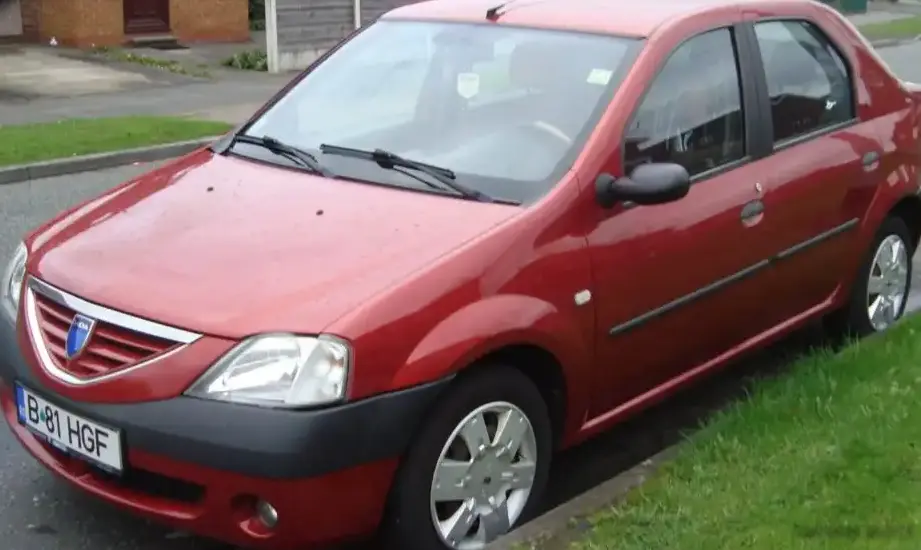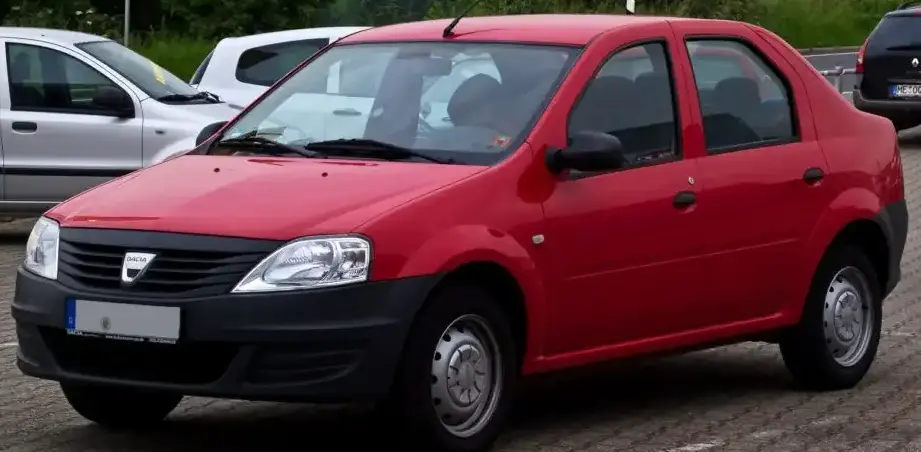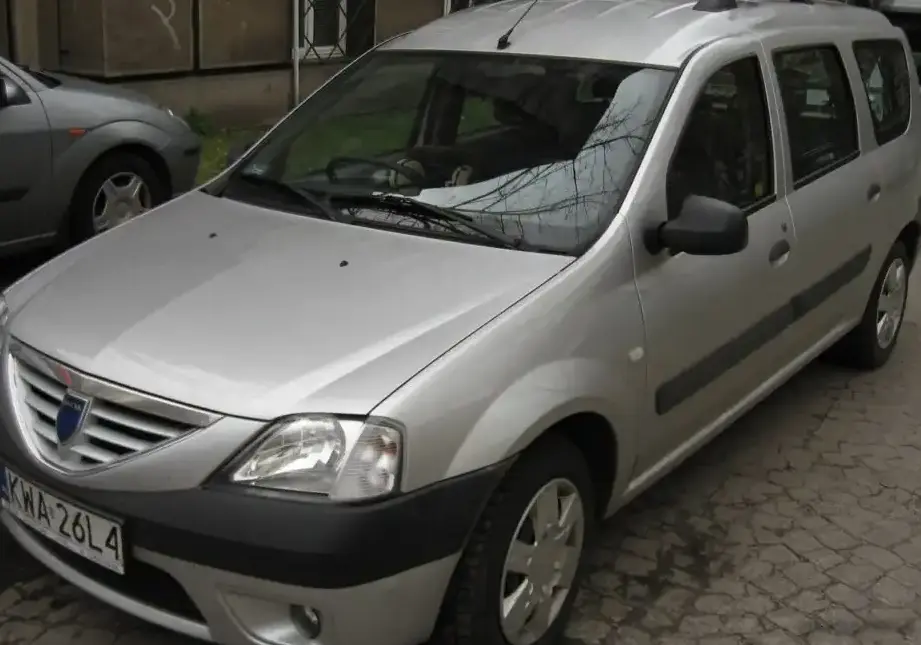
The Dacia Logan I MCV 1.5 dCi 7-seat variant, produced between 2006 and 2008, represents a practical and affordable option within the first generation Logan MCV (Multi-Capacity Vehicle) lineup. Positioned as a budget-friendly family vehicle, it offered increased passenger and cargo space compared to the standard Logan sedan. The MCV, essentially a station wagon, aimed to provide a versatile vehicle for families and commercial users alike, particularly in emerging markets where value for money was paramount. This specific 1.5 dCi engine and 7-seat configuration was a key offering, balancing fuel efficiency with the ability to transport larger families or significant amounts of cargo.
Technical Specifications
| Brand | Dacia |
| Model | Logan |
| Generation | Logan I MCV |
| Type (Engine) | 1.5 dCi (86 Hp) 7 Seats |
| Start of production | 2006 |
| End of production | 2008 |
| Powertrain Architecture | Internal Combustion engine |
| Body type | Station wagon (estate) |
| Seats | 7 |
| Doors | 5 |
| Fuel consumption (urban) | 5.9 l/100 km (39.9 US mpg, 47.9 UK mpg, 16.9 km/l) |
| Fuel consumption (extra urban) | 4.8 l/100 km (49 US mpg, 58.9 UK mpg, 20.8 km/l) |
| Fuel consumption (combined) | 5.2 l/100 km (45.2 US mpg, 54.3 UK mpg, 19.2 km/l) |
| CO2 emissions | 137 g/km |
| Fuel Type | Diesel |
| Acceleration 0 – 100 km/h | 14.6 sec |
| Acceleration 0 – 62 mph | 14.6 sec |
| Acceleration 0 – 60 mph | 13.9 sec |
| Maximum speed | 161 km/h (100.04 mph) |
| Emission standard | Euro 4 |
| Weight-to-power ratio | 14.6 kg/Hp, 68.5 Hp/tonne |
| Weight-to-torque ratio | 6.3 kg/Nm, 159.4 Nm/tonne |
| Power | 86 Hp @ 3750 rpm |
| Power per litre | 58.9 Hp/l |
| Torque | 200 Nm @ 1900 rpm (147.51 lb.-ft. @ 1900 rpm) |
| Engine layout | Front, Transverse |
| Engine Model/Code | K9K 792 |
| Engine displacement | 1461 cm3 (89.16 cu. in.) |
| Number of cylinders | 4 |
| Engine configuration | Inline |
| Cylinder Bore | 76 mm (2.99 in.) |
| Piston Stroke | 80.5 mm (3.17 in.) |
| Compression ratio | 17.9:1 |
| Number of valves per cylinder | 2 |
| Fuel injection system | Diesel Commonrail |
| Engine aspiration | Turbocharger, Intercooler |
| Valvetrain | SOHC |
| Engine oil capacity | 4.5 l (4.76 US qt | 3.96 UK qt) |
| Coolant capacity | 4.5 l (4.76 US qt | 3.96 UK qt) |
| Kerb Weight | 1255 kg (2766.8 lbs.) |
| Max. weight | 1870 kg (4122.64 lbs.) |
| Max load | 615 kg (1355.84 lbs.) |
| Trunk (boot) space – minimum | 198 l (6.99 cu. ft.) |
| Trunk (boot) space – maximum | 2350 l (82.99 cu. ft.) |
| Fuel tank capacity | 50 l (13.21 US gal | 11 UK gal) |
| Max. roof load | 80 kg (176.37 lbs.) |
| Permitted trailer load with brakes (12%) | 1300 kg (2866.01 lbs.) |
| Permitted trailer load without brakes | 665 kg (1466.07 lbs.) |
| Permitted towbar download | 75 kg (165.35 lbs.) |
| Length | 4450 mm (175.2 in.) |
| Width | 1740 mm (68.5 in.) |
| Width including mirrors | 1993 mm (78.46 in.) |
| Height | 1674 mm (65.91 in.) |
| Wheelbase | 2905 mm (114.37 in.) |
| Front track | 1481 mm (58.31 in.) |
| Rear track | 1458 mm (57.4 in.) |
| Ride height (ground clearance) | 160 mm (6.3 in.) |
| Minimum turning circle | 11.25 m (36.91 ft.) |
| Drivetrain Architecture | Front wheel drive |
| Number of gears | 5 |
| Gearbox type | Manual transmission |
| Front suspension | Independent, McPherson with coil spring and anti-roll bar |
| Rear suspension | Coil spring, Torsion |
| Front brakes | Ventilated discs, 259 mm |
| Rear brakes | Drum, 203 mm |
| Assisting systems | ABS (Anti-lock braking system) |
| Steering type | Steering rack and pinion |
| Power steering | Hydraulic |
| Tires size | 185/65 R15 |
| Wheel rims size | 6J x 15 |
Powertrain & Engine Architecture
The heart of the Logan MCV 1.5 dCi 7-seat is the K9K 792 engine, a 1.5-liter inline-four cylinder diesel engine. This engine, developed jointly by Renault and Nissan, was widely used across various models in the Renault-Nissan-Dacia portfolio. It features a single overhead camshaft (SOHC) valvetrain with two valves per cylinder. Crucially, it employs a diesel common rail direct injection system, which delivers fuel directly into the combustion chamber at very high pressure, optimizing combustion efficiency and reducing emissions. A turbocharger with an intercooler is also present, boosting power output and improving torque delivery. The 7-seat variant was exclusively offered with a 5-speed manual transmission, designed to balance fuel economy with the demands of carrying a full load of passengers and cargo. The engine’s relatively simple design contributed to its robustness and ease of maintenance.
Driving Characteristics
The 1.5 dCi engine in the Logan MCV 7-seat prioritizes fuel economy and usability over outright performance. With 86 horsepower and 200 Nm (147 lb-ft) of torque, acceleration is modest, taking approximately 14.6 seconds to reach 62 mph. However, the engine’s torque is available from a relatively low 1900 rpm, providing adequate pulling power for everyday driving and when fully loaded. The 5-speed manual transmission is geared for economy, with taller ratios in the upper gears. Compared to potential higher-output versions of the K9K engine (found in other Renault/Dacia models), this variant feels less responsive, particularly at higher speeds. The focus is on providing a comfortable and economical driving experience, rather than sporty handling or rapid acceleration.
Equipment & Trim Levels
The 7-seat Logan MCV 1.5 dCi was generally offered with a basic level of equipment, reflecting its budget-oriented positioning. Standard features typically included power steering, central locking, and an adjustable steering column. Interior upholstery was typically cloth, and the dashboard featured a functional, if somewhat spartan, design. Optional extras could include air conditioning, electric front windows, and a radio/CD player. The 7-seat configuration involved a split-folding rear bench and often included two additional seats that folded flat into the floor when not in use. Safety features were limited, typically including ABS brakes and driver/passenger airbags.
Chassis & Braking
The Logan MCV utilizes a relatively simple chassis design. Front suspension consists of independent McPherson struts with a coil spring and anti-roll bar, while the rear suspension employs a torsion beam setup. This configuration provides a comfortable ride, but doesn’t offer particularly dynamic handling. The braking system features ventilated discs on the front wheels and drum brakes on the rear. ABS (Anti-lock Braking System) was standard, enhancing braking performance and stability. The suspension was tuned to prioritize ride comfort and load-carrying capacity, rather than sporty handling.
Market Reception & Comparison
The Dacia Logan I MCV 1.5 dCi 7-seat was well-received in markets where affordability and practicality were key considerations. Critics praised its spacious interior, large cargo capacity, and excellent fuel economy. However, it was often criticized for its basic interior, lack of refinement, and modest performance. Compared to other trims in the Logan MCV lineup, the 1.5 dCi 7-seat offered the best balance of fuel efficiency and passenger/cargo capacity. It was a more practical choice than the standard Logan sedan, and a more affordable option than larger MPVs or SUVs.
Legacy
The K9K 792 engine has proven to be a remarkably durable and reliable powertrain. Many examples of the Logan MCV 1.5 dCi are still on the road today, testament to its robust construction. While maintenance costs are generally low, common issues can include diesel particulate filter (DPF) clogging (particularly on earlier Euro 4 models) and wear on turbocharger components. On the used car market, the 7-seat Logan MCV remains a popular choice for budget-conscious buyers seeking a practical and spacious vehicle. Its simplicity and affordability continue to make it a viable option for families and commercial users.