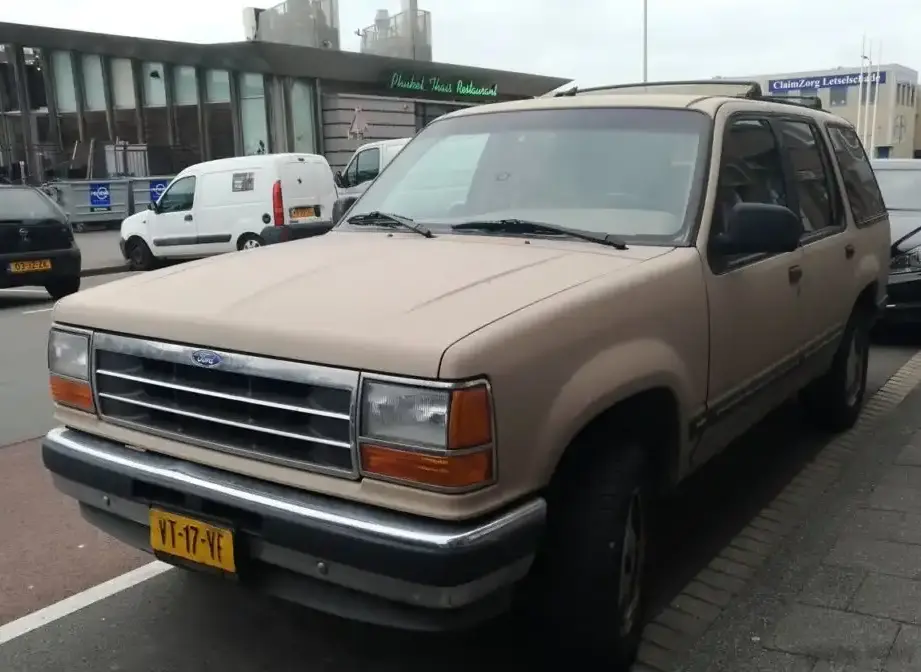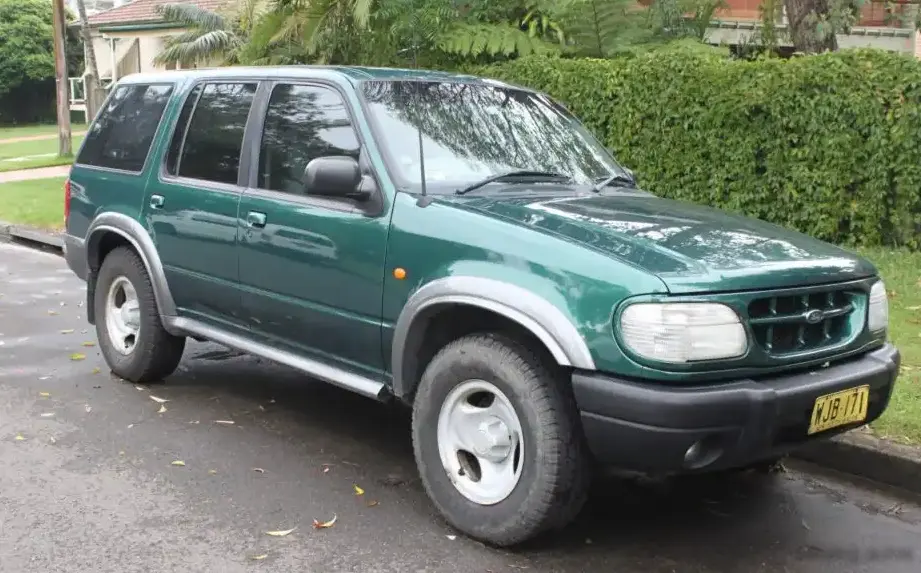
The Ford Explorer II, specifically the 4.0 V6 4WD variant producing 160 horsepower, was a significant iteration of Ford’s popular SUV, manufactured from 1995 to 2003. This second-generation Explorer (designated as the 4WD variant) represented a substantial redesign from the original, focusing on increased space, improved safety, and a more refined driving experience. It played a crucial role in solidifying the Explorer’s position as a leading SUV in the North American market, competing directly with vehicles like the Chevrolet Blazer and Jeep Grand Cherokee. This particular configuration, with the 4.0L V6 and four-wheel drive, was positioned as a mid-range offering, balancing capability with affordability.
Technical Specifications
| Brand | Ford |
| Model | Explorer |
| Generation | Explorer II |
| Type (Engine) | 4.0 V6 4WD (160 Hp) |
| Start of production | 1995 |
| End of production | 2003 |
| Powertrain Architecture | Internal Combustion engine |
| Body type | SUV |
| Seats | 5 |
| Doors | 3 |
| Fuel Type | Petrol (Gasoline) |
| Maximum speed | 177 km/h (109.98 mph) |
| Weight-to-power ratio | 11.3 kg/Hp, 88.5 Hp/tonne |
| Weight-to-torque ratio | 5.9 kg/Nm, 168.8 Nm/tonne |
| Power | 160 Hp @ 4200 rpm |
| Power per litre | 40.4 Hp/l |
| Torque | 305 Nm @ 2800 rpm (224.96 lb.-ft. @ 2800 rpm) |
| Engine layout | Front, Longitudinal |
| Engine displacement | 3958 cm3 (241.53 cu. in.) |
| Number of cylinders | 6 |
| Engine configuration | V-engine |
| Cylinder Bore | 100 mm (3.94 in.) |
| Piston Stroke | 84 mm (3.31 in.) |
| Compression ratio | 9:1 |
| Number of valves per cylinder | 2 |
| Fuel injection system | Multi-port manifold injection |
| Engine aspiration | Naturally aspirated engine |
| Engine oil capacity | 4.7 l (4.97 US qt | 4.14 UK qt) |
| Coolant | 7.4 l (7.82 US qt | 6.51 UK qt) |
| Kerb Weight | 1807 kg (3983.75 lbs.) |
| Trunk (boot) space – minimum | 767 l (27.09 cu. ft.) |
| Trunk (boot) space – maximum | 1270 l (44.85 cu. ft.) |
| Fuel tank capacity | 66 l (17.44 US gal | 14.52 UK gal) |
| Length | 4536 mm (178.58 in.) |
| Width | 1783 mm (70.2 in.) |
| Height | 1714 mm (67.48 in.) |
| Wheelbase | 2593 mm (102.09 in.) |
| Front track | 1480 mm (58.27 in.) |
| Rear (Back) track | 1480 mm (58.27 in.) |
| Drive wheel | All wheel drive (4×4) |
| Number of gears and type of gearbox | 5 gears, manual transmission |
| Front suspension | Coil spring |
| Rear suspension | Leaf spring |
| Front brakes | Disc |
| Rear brakes | Drum |
| Assisting systems | ABS (Anti-lock braking system) |
| Steering type | Steering rack and pinion |
| Power steering | Hydraulic Steering |
| Tires size | 255/70 R16 |
Powertrain & Engine Architecture
The heart of this Explorer II variant is the 4.0-liter Cologne V6 engine. This engine, internally designated as the 4.0 OHV, is a pushrod engine, a design choice that prioritized compactness and cost-effectiveness over the more sophisticated overhead cam designs. It features a 90-degree V-angle and utilizes a multi-port fuel injection system for precise fuel delivery. The engine’s 160 horsepower output at 4200 rpm and 225 lb-ft of torque at 2800 rpm were considered adequate for the vehicle’s weight and intended use. The five-speed manual transmission was a standard offering, providing drivers with direct control over the engine’s power. While an automatic transmission was also available, the manual offered slightly improved fuel economy and a more engaging driving experience.
Driving Characteristics
The 160 hp 4.0L V6 with the five-speed manual transmission provided a reasonably responsive driving experience. Acceleration was adequate for everyday driving, but not particularly brisk. The engine’s torque curve was relatively flat, providing usable power across a wide range of engine speeds. The manual transmission’s gear ratios were well-matched to the engine’s characteristics, allowing for smooth and efficient shifting. Compared to the higher-output 4.0L V6 variants, this version felt less powerful, especially when fully loaded or towing. However, it offered a more balanced driving experience for those prioritizing fuel economy and ease of use. The four-wheel-drive system provided enhanced traction in inclement weather and on unpaved surfaces.
Equipment & Trim Levels
The 4.0L V6 4WD Explorer II typically came standard with features such as air conditioning, power windows and locks, and an AM/FM stereo. Higher trim levels, like the Eddie Bauer, added features such as leather upholstery, upgraded sound systems, and woodgrain interior trim. Optional extras included a sunroof, a CD player, and a tow package. The interior design was functional and durable, with a focus on practicality rather than luxury. The 3-door configuration offered easier access to the rear seats in tight parking situations, but at the expense of rear passenger space.
Chassis & Braking
The Explorer II utilized a body-on-frame construction, providing a robust and durable chassis. The front suspension featured coil springs, while the rear suspension employed leaf springs. This setup provided a comfortable ride, but could feel somewhat bouncy when unloaded. The braking system consisted of disc brakes on the front wheels and drum brakes on the rear. Anti-lock brakes (ABS) were standard, enhancing safety during emergency braking situations. The steering system was a rack-and-pinion setup with hydraulic power assist, providing precise and responsive steering.
Market Reception & Comparison
The 160 hp 4.0L V6 4WD Explorer II was generally well-received by critics and consumers alike. It was praised for its spacious interior, comfortable ride, and capable four-wheel-drive system. However, some critics noted that the engine’s performance was somewhat underwhelming, especially compared to the higher-output V6 options. Fuel economy was average for its class. Compared to the 4.0L V6 with automatic transmission, the manual version offered slightly better fuel economy and a more engaging driving experience. The 4.0L V6 was a more affordable option than the V8, making it an attractive choice for budget-conscious buyers.
Legacy
The Ford Explorer II 4.0 V6 4WD (160 Hp) has proven to be a relatively reliable vehicle, with many examples still on the road today. The 4.0L V6 engine is known for its durability, although regular maintenance is essential to prevent issues such as oil leaks and timing chain wear. The manual transmission is also generally reliable, but clutch replacement may be necessary after high mileage. In the used car market, these Explorers are often sought after by those looking for a capable and affordable SUV. Their simplicity and relatively low maintenance costs make them an attractive option for those who need a rugged and dependable vehicle.