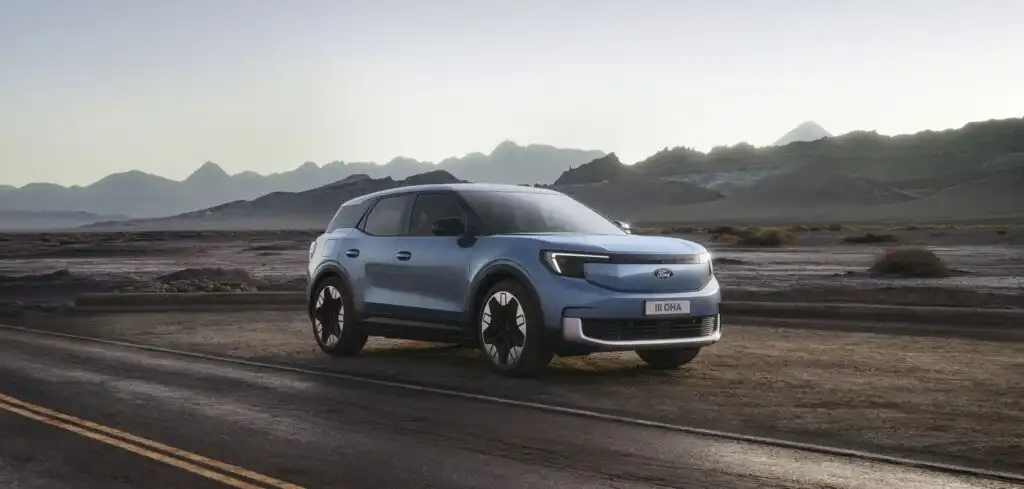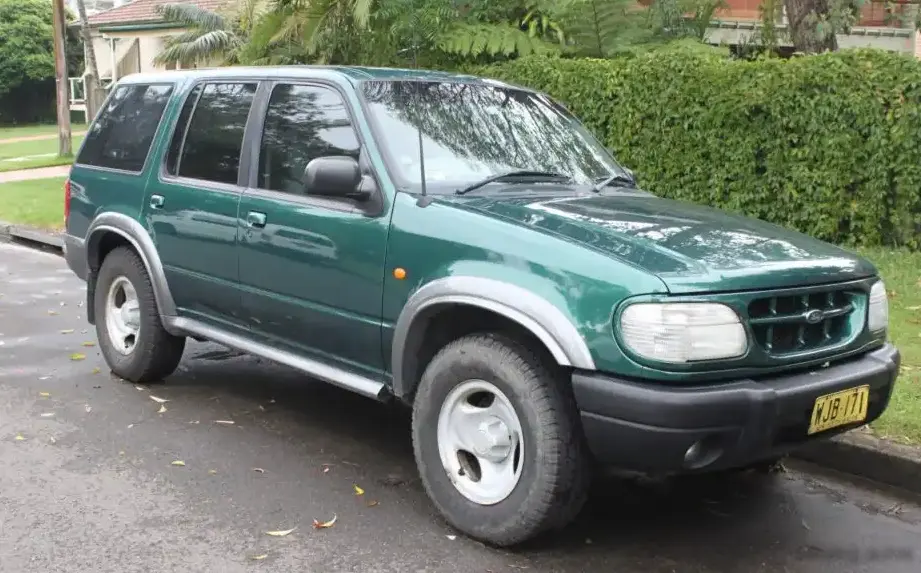
The Ford Explorer II 4.0 XL, produced from 1996 to 2003, represented a significant iteration of Ford’s popular SUV, primarily aimed at the North American market. This variant, equipped with the 4.0-liter V6 engine producing 162 horsepower, occupied a middle ground within the Explorer II lineup, offering a balance between affordability and capability. It served as a workhorse for families and those needing a robust vehicle for light-duty tasks, bridging the gap between the base models and the more powerful, often four-wheel-drive, trims. The Explorer II, a longer wheelbase version of the standard Explorer, aimed to provide increased cargo space and a more comfortable ride, appealing to buyers needing more room without stepping up to a full-size SUV.
Technical Specifications
| Brand | Ford |
| Model | Explorer |
| Generation | Explorer II |
| Type (Engine) | 4.0 XL (162 Hp) |
| Start of production | 1996 |
| End of production | 2003 |
| Powertrain Architecture | Internal Combustion engine |
| Body type | SUV |
| Seats | 5 |
| Doors | 3 |
| Fuel consumption (urban) | 13.3 l/100 km (17.7 US mpg, 21.2 UK mpg, 7.5 km/l) |
| Fuel consumption (extra urban) | 10.4 l/100 km (22.6 US mpg, 27.2 UK mpg, 9.6 km/l) |
| Fuel Type | Petrol (Gasoline) |
| Acceleration 0 – 100 km/h | 12.7 sec |
| Acceleration 0 – 62 mph | 12.7 sec |
| Acceleration 0 – 60 mph | 12.1 sec |
| Maximum speed | 170 km/h (105.63 mph) |
| Weight-to-power ratio | 10.3 kg/Hp (97 Hp/tonne) |
| Weight-to-torque ratio | 5.5 kg/Nm (182.6 Nm/tonne) |
| Power | 162 Hp @ 4200 rpm |
| Power per litre | 40.5 Hp/l |
| Torque | 305 Nm @ 2800 rpm (224.96 lb.-ft. @ 2800 rpm) |
| Engine layout | Front, Longitudinal |
| Engine displacement | 3996 cm3 (243.85 cu. in.) |
| Number of cylinders | 6 |
| Engine configuration | V-engine |
| Cylinder Bore | 100.3 mm (3.95 in.) |
| Piston Stroke | 84.3 mm (3.32 in.) |
| Compression ratio | 9:1 |
| Number of valves per cylinder | 2 |
| Fuel injection system | Multi-port manifold injection |
| Engine aspiration | Naturally aspirated engine |
| Engine oil capacity | 4.7 l (4.97 US qt | 4.14 UK qt) |
| Coolant capacity | 7.4 l (7.82 US qt | 6.51 UK qt) |
| Kerb Weight | 1670 kg (3681.72 lbs.) |
| Max. weight | 2200 kg (4850.17 lbs.) |
| Max load | 530 kg (1168.45 lbs.) |
| Trunk (boot) space – minimum | 925 l (32.67 cu. ft.) |
| Trunk (boot) space – maximum | 1965 l (69.39 cu. ft.) |
| Fuel tank capacity | 83 l (21.93 US gal | 18.26 UK gal) |
| Length | 4530 mm (178.35 in.) |
| Width | 1790 mm (70.47 in.) |
| Height | 1800 mm (70.87 in.) |
| Wheelbase | 2595 mm (102.17 in.) |
| Front track | 1490 mm (58.66 in.) |
| Rear (Back) track | 1490 mm (58.66 in.) |
| Drivetrain Architecture | The Internal combustion engine (ICE) drives the rear wheels of the vehicle. |
| Drive wheel | Rear wheel drive |
| Number of gears and type of gearbox | 5 gears, manual transmission |
| Front suspension | Coil spring |
| Rear suspension | Leaf spring |
| Front brakes | Disc |
| Rear brakes | Disc |
| Assisting systems | ABS (Anti-lock braking system) |
| Steering type | Steering rack and pinion |
| Power steering | Hydraulic Steering |
| Tires size | 225/75 R15 |
Powertrain & Engine Architecture
The heart of the Explorer II 4.0 XL is the 4.0-liter (3996 cc) Cologne V6 engine. This engine, designated as the 4.0 OHV, is a naturally aspirated, pushrod V6 known for its durability and relatively simple design. It utilizes a multi-port fuel injection system, delivering fuel directly to each intake port for improved combustion efficiency. The engine produces 162 horsepower at 4200 rpm and 225 lb-ft of torque at 2800 rpm. The 5-speed manual transmission was standard, offering a direct connection to the engine and allowing for driver control. The engine’s architecture, while not particularly advanced, was well-proven and reliable, making it a popular choice for those prioritizing longevity over outright performance. The longitudinal engine placement facilitated a rear-wheel-drive layout, a characteristic that contributed to the Explorer II’s truck-like feel and towing capacity.
Driving Characteristics
The Explorer II 4.0 XL with the 5-speed manual transmission offered a reasonably engaging driving experience, though it wasn’t a performance-oriented vehicle. Acceleration from 0-60 mph took around 12.1 seconds, which was adequate for everyday driving but noticeably slower than the V8-powered models. The 5-speed manual transmission allowed drivers to keep the engine in its optimal power band, maximizing acceleration and providing better control on inclines. The rear-wheel-drive configuration provided a more traditional driving feel compared to the available four-wheel-drive systems. While the suspension was tuned for comfort, the Explorer II’s weight and body-on-frame construction resulted in some body roll during cornering. Overall, the driving experience was characterized by practicality and dependability rather than sporty handling.
Equipment & Trim Levels
The 4.0 XL trim represented the entry-level offering for the Explorer II. Standard features typically included air conditioning, a basic AM/FM radio, cloth upholstery, and manual windows and locks. Power steering was standard, but power windows and locks were often optional extras. The interior was functional and durable, designed to withstand the rigors of family use. Optional equipment could include upgraded audio systems, cruise control, and a rear cargo area cover. The XL trim focused on providing essential features at an affordable price point, making it an attractive option for budget-conscious buyers.
Chassis & Braking
The Explorer II utilized a traditional body-on-frame construction, providing a robust and durable chassis. The front suspension featured coil springs, while the rear suspension employed leaf springs, a setup common for trucks and SUVs of the era. This configuration prioritized load-carrying capacity and durability over refined handling. Braking duties were handled by disc brakes on all four wheels, supplemented by an Anti-lock Braking System (ABS) for improved stopping power and control. The Explorer II’s braking performance was adequate for its weight class, but it wasn’t particularly noteworthy. The rear track width was 1490 mm, contributing to the vehicle’s stability.
Market Reception & Comparison
The Explorer II 4.0 XL received mixed reviews. Critics generally praised its spacious interior and robust construction but noted its relatively slow acceleration and somewhat dated interior design. Compared to the V8-powered Explorer II models, the 4.0 XL offered significantly less power and performance. However, it provided better fuel economy, achieving around 17.7 mpg in the city and 22.6 mpg on the highway. The 4.0 XL also undercut the V8 models in price, making it a more accessible option for many buyers. Compared to other SUVs in its class, such as the Chevrolet Blazer and the Jeep Grand Cherokee, the Explorer II offered a compelling combination of space, capability, and affordability.
Legacy
The Ford Explorer II 4.0 XL has proven to be a relatively reliable vehicle, with many examples still on the road today. The 4.0-liter V6 engine is known for its durability, and with proper maintenance, it can withstand high mileage. However, like any older vehicle, the Explorer II is susceptible to age-related issues, such as rust and wear on suspension components. In the used car market, the Explorer II 4.0 XL remains an affordable and practical option for those seeking a spacious and capable SUV. Its simplicity and robust construction make it a popular choice for those who value dependability over modern features. While it may not offer the refinement or performance of newer SUVs, the Explorer II 4.0 XL continues to hold a place as a capable and enduring vehicle.