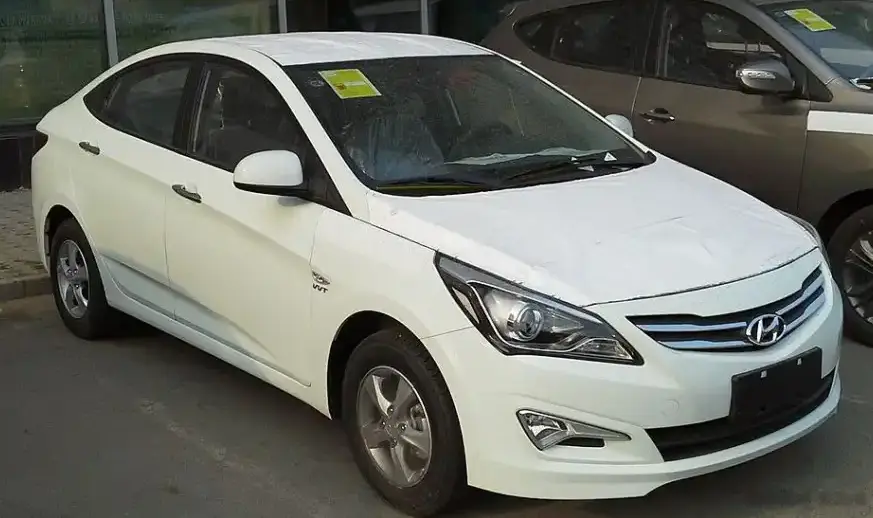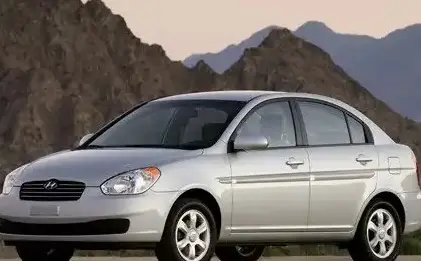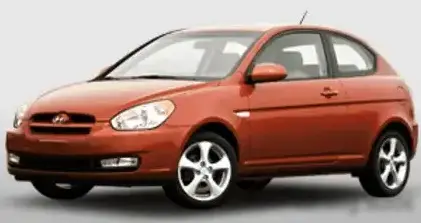
The Hyundai Verna Hatchback 1.5 16V CRDi (110 hp) was a subcompact car produced by the South Korean manufacturer Hyundai between 2006 and 2009. This variant, powered by a 1.5-liter turbocharged diesel engine, represented a key offering in Hyundai’s European and Asian markets, aiming to provide an economical and practical option for buyers seeking a versatile hatchback. It was positioned as a mid-range trim within the Verna Hatchback lineup, offering a balance between performance, fuel efficiency, and features. The Verna Hatchback itself was based on the Hyundai Accent platform, offering a more youthful and sporty alternative to the traditional sedan body style.
Technical Specifications
| Brand | Hyundai |
| Model | Verna |
| Generation | Verna Hatchback |
| Type (Engine) | 1.5 16V CRDi (110 Hp) |
| Start of production | 2006 |
| End of production | 2009 |
| Powertrain Architecture | Internal Combustion engine |
| Body type | Hatchback |
| Seats | 5 |
| Doors | 3 |
| Fuel Type | Diesel |
| Acceleration 0 – 100 km/h | 11.5 sec |
| Acceleration 0 – 62 mph | 11.5 sec |
| Acceleration 0 – 60 mph | 10.9 sec |
| Maximum speed | 190 km/h (118.06 mph) |
| Weight-to-power ratio | 10.4 kg/Hp, 96.5 Hp/tonne |
| Weight-to-torque ratio | 4.9 kg/Nm, 206.1 Nm/tonne |
| Power | 110 Hp @ 4000 rpm |
| Power per litre | 73.7 Hp/l |
| Torque | 235 Nm @ 1900 rpm (173.33 lb.-ft. @ 1900 rpm) |
| Engine layout | Front, Transverse |
| Engine Model/Code | U / D4FA |
| Engine displacement | 1493 cm3 (91.11 cu. in.) |
| Number of cylinders | 4 |
| Engine configuration | Inline |
| Cylinder Bore | 75 mm (2.95 in.) |
| Piston Stroke | 84.5 mm (3.33 in.) |
| Compression ratio | 17.8:1 |
| Number of valves per cylinder | 4 |
| Fuel injection system | Diesel Commonrail |
| Engine aspiration | Turbocharger, Intercooler |
| Valvetrain | DOHC |
| Engine oil capacity | 5.3 l (5.6 US qt | 4.66 UK qt) |
| Coolant | 5.3 l (5.6 US qt | 4.66 UK qt) |
| Kerb Weight | 1140 kg (2513.27 lbs.) |
| Max. weight | 1690 kg (3725.81 lbs.) |
| Max load | 550 kg (1212.54 lbs.) |
| Trunk (boot) space – minimum | 367 l (12.96 cu. ft.) |
| Trunk (boot) space – maximum | 801 l (28.29 cu. ft.) |
| Fuel tank capacity | 45 l (11.89 US gal | 9.9 UK gal) |
| Length | 4045 mm (159.25 in.) |
| Width | 1695 mm (66.73 in.) |
| Height | 1470 mm (57.87 in.) |
| Wheelbase | 2500 mm (98.43 in.) |
| Front track | 1470 mm (57.87 in.) |
| Rear (Back) track | 1460 mm (57.48 in.) |
| Drivetrain Architecture | The Internal combustion engine (ICE) drives the front wheels of the vehicle. |
| Drive wheel | Front wheel drive |
| Number of gears and type of gearbox | 5 gears, manual transmission |
| Front suspension | Independent, type McPherson with coil spring and anti-roll bar |
| Rear suspension | Coil spring |
| Front brakes | Disc |
| Rear brakes | Drum |
| Assisting systems | ABS (Anti-lock braking system) |
| Steering type | Steering rack and pinion |
| Tires size | 185/65 R14 |
Powertrain & Engine Architecture
The heart of the Verna Hatchback 1.5 CRDi was the D4FA engine, a 1.5-liter inline-four cylinder diesel engine. This engine utilized a second-generation common rail direct injection (CRDi) system, delivering fuel directly into the combustion chamber at extremely high pressure. This technology, coupled with a turbocharger and intercooler, allowed for a good balance of power and fuel efficiency. The engine featured a double overhead camshaft (DOHC) valvetrain with four valves per cylinder, optimizing airflow for improved performance. The engine code ‘U’ often denoted slight variations in calibration or emissions equipment depending on the specific market. The five-speed manual transmission was the standard offering for this variant, providing a direct connection between the engine and the front wheels. The transmission was chosen for its simplicity and efficiency, contributing to the car’s overall fuel economy.
Driving Characteristics
The 110 hp output of the 1.5 CRDi engine, while not exceptionally powerful, provided adequate performance for everyday driving. Acceleration from 0 to 60 mph took approximately 10.9 seconds, and the car had a top speed of around 118 mph. The turbocharger provided a noticeable boost in power at lower engine speeds, offering good responsiveness for overtaking and merging onto highways. However, compared to higher-output versions of the Verna, or those equipped with a gasoline engine, this variant felt less eager to rev. The five-speed manual transmission was well-matched to the engine’s characteristics, with gear ratios optimized for fuel efficiency and reasonable acceleration. The gear ratios were slightly taller than those found in sportier trims, prioritizing economy over outright performance.
Equipment & Trim Levels
The 1.5 CRDi variant of the Verna Hatchback typically came equipped with a reasonable level of standard features. These included power steering, central locking, electric front windows, and an air conditioning system. Interior upholstery was typically cloth, with a functional and durable design. Optional extras included alloy wheels, a CD player with MP3 compatibility, and upgraded interior trim. The trim level sat in the middle of the Verna Hatchback range, offering more features than the base model but lacking the premium appointments of the higher-spec versions. Safety features included ABS (Anti-lock Braking System) as standard, providing enhanced braking performance.
Chassis & Braking
The Verna Hatchback utilized a McPherson strut front suspension system with a coil spring and anti-roll bar, providing a comfortable ride and predictable handling. The rear suspension consisted of a simple coil spring setup. The front brakes were disc brakes, offering good stopping power, while the rear brakes were drum brakes, a cost-saving measure common in this class of vehicle. The suspension tuning was geared towards comfort rather than sporty handling, making it well-suited for everyday driving conditions. The steering was a rack and pinion system, providing precise and responsive steering feel.
Market Reception & Comparison
The Hyundai Verna Hatchback 1.5 CRDi was generally well-received by automotive critics as a practical and economical choice. Its fuel efficiency was a major selling point, particularly in Europe and Asia where diesel fuel was often cheaper than gasoline. Compared to the gasoline-powered versions of the Verna, the 1.5 CRDi offered significantly better fuel economy. However, some critics noted that the diesel engine was noisier and produced more vibrations than the gasoline engines. Compared to competitors like the Volkswagen Polo or Ford Fiesta, the Verna offered a competitive price point and a generous level of standard equipment. Reliability was generally good, although some owners reported issues with the diesel particulate filter (DPF) in later years.
Legacy
The Hyundai Verna Hatchback 1.5 CRDi, while no longer in production, remains a relatively common sight on used car markets. The D4FA engine, when properly maintained, is known for its durability and longevity. However, potential buyers should be aware of the potential for DPF issues, particularly on vehicles that have primarily been used for short trips. The Verna Hatchback 1.5 CRDi represents a significant step forward for Hyundai in terms of design, technology, and build quality, helping to establish the brand as a major player in the global automotive market. Its blend of practicality, fuel efficiency, and affordability continues to appeal to budget-conscious buyers today.