
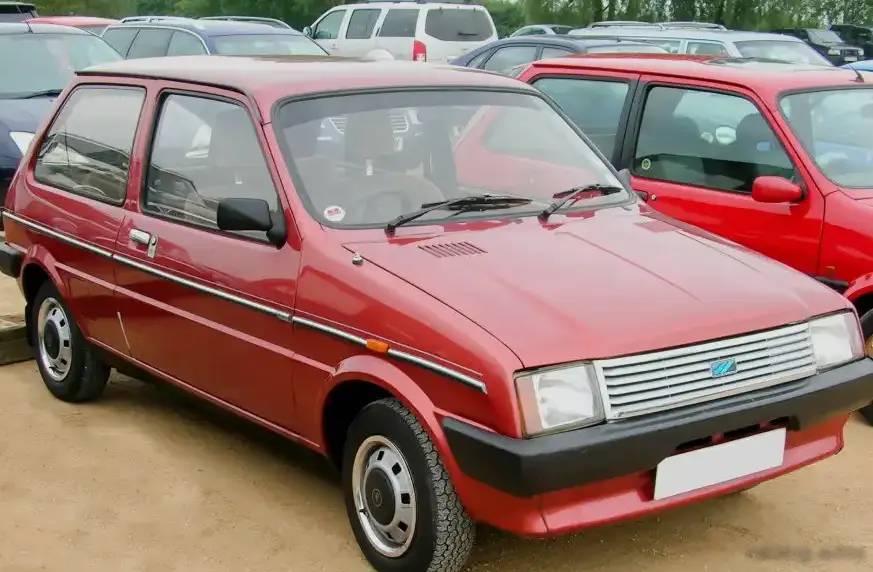
The Austin Metro 1.3 Surf (XF), produced between 1985 and 1990, represents a key iteration of the popular British supermini. Falling within the first generation of the Metro (designated ADO88), the 1.3 Surf was positioned as a practical and affordable entry-level option, aimed at buyers prioritizing economy and ease of use over outright performance. It played a significant role in the British automotive landscape of the 1980s, offering a modern alternative to established competitors like the Fiat Panda and the Citroën 2CV. The “Surf” trim level denoted a slightly more equipped version of the base Metro, featuring enhanced interior trim and occasionally, minor exterior styling cues. The Metro, as a whole, was intended to replace the aging Mini and provide a more modern, efficient, and spacious small car for the British market.
Technical Specifications
| Brand | Austin |
| Model | Metro |
| Generation | Metro (First Generation) |
| Type (Engine) | 1.3 Surf (XF) (60 Hp) |
| Start of Production | 1985 |
| End of Production | 1990 |
| Powertrain Architecture | Internal Combustion Engine |
| Body Type | Hatchback |
| Fuel Type | Petrol (Gasoline) |
| Power | 60 Hp |
| Engine Aspiration | Naturally Aspirated |
Powertrain & Engine Architecture
The Austin Metro 1.3 Surf (XF) was powered by the A-Series inline-four cylinder engine, a long-running and well-established powerplant within British Leyland and its successor, Austin Rover. Specifically, the ‘XF’ designation indicates a 1275cc version of the A-Series, though detuned to produce 60 horsepower. This was achieved through a smaller carburetor (typically a Zenith-Stromberg), reduced compression ratio, and a less aggressive camshaft profile. The engine is a naturally aspirated, overhead valve (OHV) design, known for its simplicity and relative ease of maintenance. Fuel delivery was handled by a single downdraft carburetor, a common setup for the era. The engine’s valvetrain utilized a pushrod-actuated system, contributing to its compact size and straightforward construction.
The Surf variant was exclusively offered with a four-speed manual transmission. This transmission was also a carryover from previous British Leyland designs, known for its durability but not particularly refined shift quality. The gearbox featured a non-synchronized reverse gear, requiring a pause when shifting into reverse. The transmission’s gear ratios were geared towards economy, prioritizing fuel efficiency over rapid acceleration. The drivetrain was front-wheel drive, a relatively modern configuration for a British small car at the time.
Driving Characteristics
The driving experience of the Austin Metro 1.3 Surf was characterized by its light weight and nimble handling. With only 60 horsepower on tap, acceleration was modest, taking approximately 16 seconds to reach 60 mph. However, the car’s small size and relatively soft suspension made it easy to maneuver in urban environments. The four-speed gearbox required frequent shifting to maintain momentum, particularly when tackling hills or overtaking. The steering was light and unassisted, providing reasonable feedback, although it could feel somewhat vague at higher speeds. The car’s braking system, consisting of front disc brakes and rear drum brakes, was adequate for its performance level, but lacked the stopping power of more modern vehicles. Compared to the slightly more powerful 1.1-liter Metro, the 1.3 Surf offered a noticeable improvement in mid-range torque, making it more comfortable for longer journeys and carrying passengers.
Equipment & Trim Levels
The “Surf” trim level represented a step up from the base Metro, offering a few additional comfort and convenience features. Standard equipment typically included cloth upholstery, a basic instrument panel with speedometer and fuel gauge, and a heated rear window. The Surf also featured upgraded door cards and a slightly more refined interior trim compared to the base model. Optional extras included a radio, upgraded seat fabrics, and occasionally, a sunroof. The interior design was functional and utilitarian, reflecting the car’s affordable price point. The dashboard layout was simple and straightforward, with all controls within easy reach of the driver. The seats provided reasonable comfort for short journeys, but lacked substantial bolstering.
Chassis & Braking
The Austin Metro utilized a monocoque chassis construction, providing a good balance of strength and weight. The front suspension consisted of independent MacPherson struts, while the rear suspension employed a twist-beam axle. This suspension setup provided a comfortable ride quality, although it was not particularly sporty. The steering was rack and pinion, offering reasonable precision. As mentioned previously, the braking system featured front disc brakes and rear drum brakes. The brakes were hydraulically operated, providing adequate stopping power for the car’s weight and performance. Stabilizer bars were not typically fitted to the base Metro models, contributing to a slightly more pronounced body roll in corners.
Market Reception & Comparison
The Austin Metro 1.3 Surf was generally well-received by the British motoring press as a practical and affordable small car. Critics praised its nimble handling, comfortable ride, and fuel efficiency. However, they also noted its modest performance and somewhat dated interior. Compared to the 1.1-liter Metro, the 1.3 Surf offered a noticeable improvement in performance, making it a more versatile option for drivers who frequently undertook longer journeys or carried passengers. Fuel economy was a strong point, averaging around 45-50 mpg in real-world driving conditions. Reliability was generally good, although the A-Series engine was prone to oil leaks as it aged. The Metro faced competition from rivals such as the Fiat Panda, the Citroën 2CV, and the Ford Fiesta. The Metro offered a more modern and refined driving experience than the 2CV, while being more affordable than the Fiesta.
Legacy
The Austin Metro, and specifically the 1.3 Surf variant, holds a significant place in British automotive history. It represented a modern and efficient alternative to the aging Mini and helped to establish Austin Rover as a competitive force in the small car market. Today, the Metro 1.3 Surf is a relatively affordable classic car, appealing to enthusiasts seeking a nostalgic and easy-to-maintain vehicle. The A-Series engine is well-known to mechanics and spare parts are readily available. While not particularly collectible, well-maintained examples are becoming increasingly sought after by enthusiasts. The powertrain, while simple, proved to be reasonably durable, and many examples are still on the road today, testament to its robust design and the availability of parts. The Metro’s influence can be seen in subsequent generations of small British cars, and it remains a fondly remembered icon of the 1980s.
