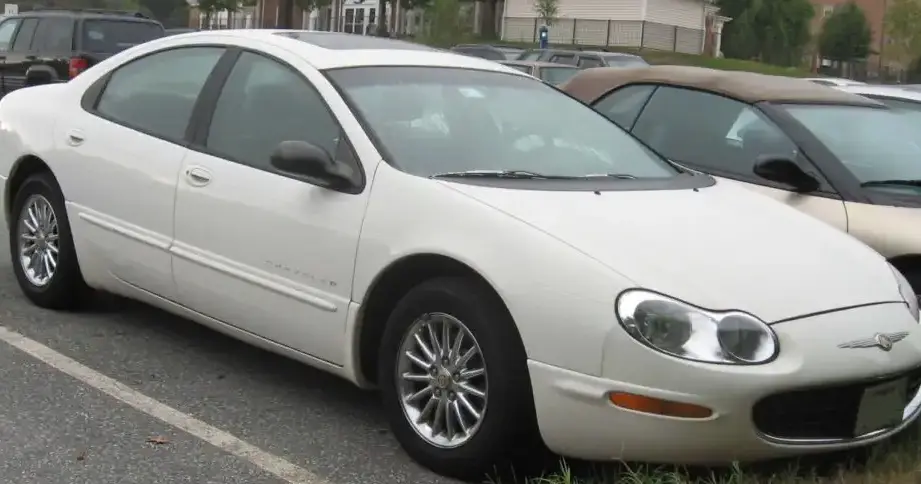
The Chrysler Concorde 3.5 V6 24V, producing 214 horsepower, represented a significant offering in the full-size American sedan market during its 1992-1997 production run. Positioned as a comfortable and relatively upscale option within the Chrysler lineup, it was a key component of the LH platform family, alongside the Dodge Intrepid and Eagle Vision. This generation of Concorde aimed to break from the boxy designs of the 1980s, embracing a more aerodynamic and modern aesthetic. The 3.5L V6 variant occupied a mid-to-upper trim level, offering a step up in performance from the base 3.3L engine while remaining more accessible than potential future high-performance versions.
Technical Specifications
| Brand | Chrysler |
| Model | Concorde |
| Generation | Concorde |
| Type (Engine) | 3.5 V6 24V (214 Hp) |
| Start of production | 1992 |
| End of production | 1997 |
| Powertrain Architecture | Internal Combustion engine |
| Body type | Sedan |
| Seats | 5 |
| Doors | 4 |
| Fuel consumption (combined) | 11.3 l/100 km |
| Fuel consumption (US mpg) | 20.8 |
| Fuel consumption (UK mpg) | 25 |
| Fuel Type | Petrol (Gasoline) |
| Weight-to-power ratio | 7.2 kg/Hp |
| Power | 214 Hp @ 5800 rpm |
| Power per litre | 60.8 Hp/l |
| Torque | 300 Nm @ 2800 rpm |
| Torque (lb.-ft.) | 221.27 lb.-ft. @ 2800 rpm |
| Engine layout | Front, Longitudinal |
| Engine Model/Code | EGE |
| Engine displacement | 3518 cm3 |
| Engine displacement (cu. in.) | 214.68 |
| Number of cylinders | 6 |
| Engine configuration | V-engine |
| Number of valves per cylinder | 4 |
| Fuel injection system | Multi-port manifold injection |
| Engine aspiration | Naturally aspirated engine |
| Valvetrain | OHC |
| Engine oil capacity | 5.2 l |
| Engine oil capacity (US qt) | 5.49 |
| Engine oil capacity (UK qt) | 4.58 |
| Coolant capacity | 11.5 l |
| Coolant capacity (US qt) | 12.15 |
| Coolant capacity (UK qt) | 10.12 |
| Kerb Weight | 1542 kg |
| Kerb Weight (lbs) | 3399.53 |
| Trunk (boot) space (minimum) | 473 l |
| Trunk (boot) space (cu. ft.) | 16.7 |
| Fuel tank capacity | 68 l |
| Fuel tank capacity (US gal) | 17.96 |
| Fuel tank capacity (UK gal) | 14.96 |
| Length | 5152 mm |
| Length (in.) | 202.83 |
| Width | 1890 mm |
| Width (in.) | 74.41 |
| Height | 1429 mm |
| Height (in.) | 56.26 |
| Wheelbase | 2870 mm |
| Wheelbase (in.) | 112.99 |
| Front track | 1574 mm |
| Front track (in.) | 61.97 |
| Rear track | 1574 mm |
| Rear track (in.) | 61.97 |
| Drivetrain Architecture | Front wheel drive |
| Number of gears | 4 |
| Gearbox type | automatic transmission |
| Front suspension | Wishbone |
| Rear suspension | Coil spring |
| Front brakes | Ventilated discs |
| Rear brakes | Disc |
| Assisting systems | ABS (Anti-lock braking system) |
| Steering type | Steering rack and pinion |
| Power steering | Hydraulic Steering |
| Tires size | 205/70 R15 |
Powertrain & Engine Architecture
The heart of the Concorde 3.5 was the EGE engine, a 3.5-liter (3518 cc) 60-degree V6. This engine utilized a cast iron block with aluminum cylinder heads, a configuration common for American V6 engines of the era. It featured a single overhead camshaft (OHC) design operating four valves per cylinder (24V). Fuel delivery was managed by a multi-port fuel injection system, providing precise fuel metering for improved efficiency and performance. The engine was longitudinally mounted in the front of the vehicle, driving the front wheels. The 4-speed automatic transmission, a Chrysler-built unit (typically the A727 or similar), was specifically tuned for smooth operation and comfortable cruising, prioritizing ease of use over outright performance. The transmission’s gear ratios were geared towards maximizing fuel economy at highway speeds, rather than providing aggressive acceleration.
Driving Characteristics
The 3.5L V6 automatic Concorde offered a comfortable and refined driving experience. While not a sports sedan, the 214 horsepower provided adequate power for merging onto highways and passing slower traffic. Acceleration from 0 to 60 mph was typically in the 8-9 second range, respectable for a full-size sedan of the 1990s. Compared to the base 3.3L engine, the 3.5L offered a noticeable improvement in responsiveness. However, it didn’t possess the sharper handling or quicker acceleration of the later, more performance-oriented variants. The automatic transmission, while smooth, could feel somewhat sluggish during quick downshifts. The focus was clearly on providing a relaxed and comfortable ride, making it well-suited for long-distance travel.
Equipment & Trim Levels
The 3.5L Concorde typically came standard with features such as air conditioning, power windows and locks, cruise control, and an AM/FM stereo. Higher trim levels added features like leather upholstery, upgraded sound systems, power seats, and alloy wheels. Interior upholstery was often cloth, with leather being an optional upgrade. The dashboard featured a relatively simple and straightforward layout, prioritizing ease of use. Optional extras included a sunroof, upgraded audio systems with cassette or CD players, and various convenience packages.
Chassis & Braking
The Concorde utilized a front-wheel-drive layout with an independent front suspension featuring wishbone components and a coil spring rear suspension. This setup aimed to provide a comfortable ride while maintaining reasonable handling characteristics. The braking system consisted of ventilated disc brakes at the front and solid disc brakes at the rear. Anti-lock braking system (ABS) was standard, enhancing safety by preventing wheel lockup during hard braking. Steering was rack-and-pinion with hydraulic power assist, providing light and easy steering feel.
Market Reception & Comparison
The Chrysler Concorde 3.5L V6 was generally well-received by automotive critics as a comfortable and spacious family sedan. It was praised for its smooth ride, quiet interior, and ample interior space. However, some critics noted that its handling was not as sharp as some of its competitors, such as the Ford Taurus or Toyota Camry. Fuel economy, at around 20-25 mpg, was typical for a full-size sedan of the era. Compared to the base 3.3L Concorde, the 3.5L offered a noticeable performance upgrade, justifying the higher price. Compared to potential future performance trims, it offered a balance of power and affordability.
Legacy
The Chrysler Concorde 3.5L V6, while not a particularly rare or collectible vehicle today, remains a relatively reliable and affordable option in the used car market. The 3.5L engine is generally considered to be durable and long-lasting, although regular maintenance is essential. Common issues include oil leaks and occasional sensor failures. The automatic transmission, if properly maintained, can also provide years of reliable service. The LH platform Concorde, in general, is remembered for its innovative design and comfortable ride, marking a significant step forward for Chrysler in the 1990s. Parts availability is generally good, making it a relatively easy vehicle to maintain and repair.