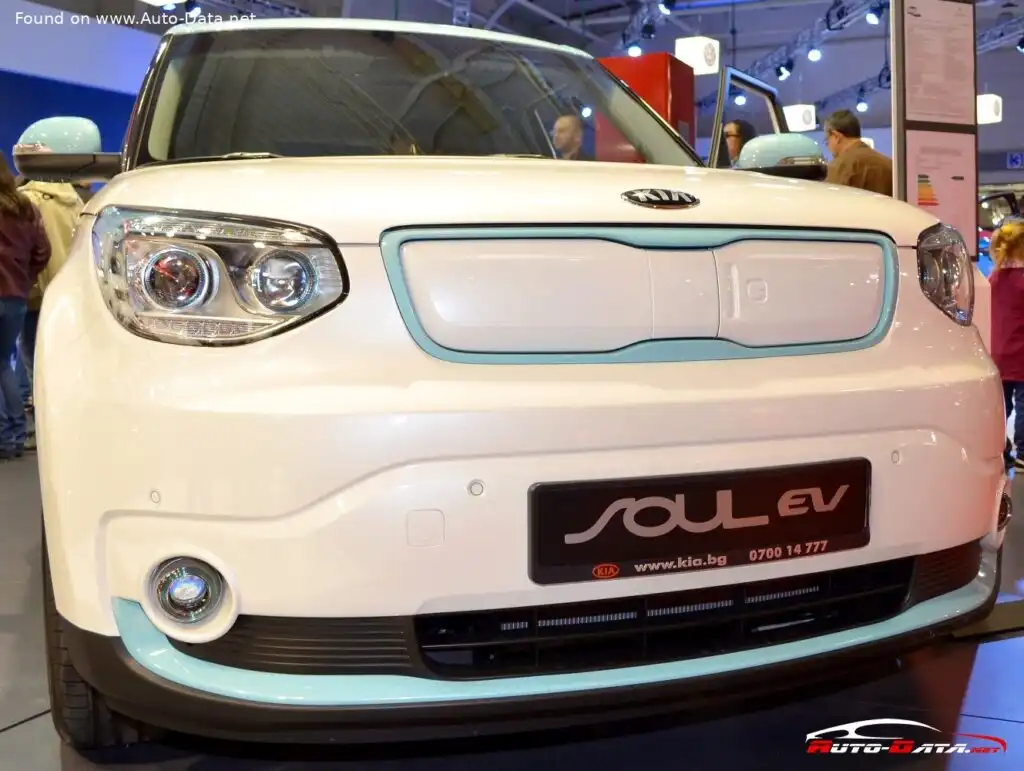
The Kia Soul first generation, produced from 2009 to 2011, represented a bold step for the Korean automaker into the increasingly popular subcompact crossover segment. The 1.6-liter engine variant, producing 126 horsepower, served as the entry-level offering in many markets, including North America, aiming to attract budget-conscious buyers seeking a stylish and practical vehicle. This model, internally designated as the Soul I, was built on Kia’s MB platform, shared with the Hyundai Venue and other compact models. It quickly gained recognition for its distinctive boxy design and surprisingly spacious interior, challenging conventional expectations for vehicles in its class.
Technical Specifications
| Brand | Kia |
| Model | Soul |
| Generation | Soul I |
| Type (Engine) | 1.6 (126 Hp) |
| Start of production | 2009 |
| End of production | 2011 |
| Powertrain Architecture | Internal Combustion engine |
| Body type | Crossover |
| Seats | 5 |
| Doors | 5 |
| Fuel consumption (urban) | 7.9 l/100 km (29.8 US mpg) |
| Fuel consumption (extra urban) | 5.7 l/100 km (41.3 US mpg) |
| Fuel consumption (combined) | 6.5 l/100 km (36.2 US mpg) |
| Fuel Type | Petrol (Gasoline) |
| Acceleration 0 – 100 km/h | 11 sec |
| Acceleration 0 – 62 mph | 11 sec |
| Acceleration 0 – 60 mph | 10.5 sec |
| Maximum speed | 177 km/h (109.98 mph) |
| Emission standard | Euro 4 |
| Weight-to-power ratio | 10.1 kg/Hp |
| Weight-to-torque ratio | 8.4 kg/Nm |
| Power | 126 Hp @ 6200 rpm |
| Torque | 151 Nm @ 4200 rpm (111.37 lb.-ft. @ 4200 rpm) |
| Engine layout | Front, Transverse |
| Engine Model/Code | G4FC |
| Engine displacement | 1591 cm3 (97.09 cu. in.) |
| Number of cylinders | 4 |
| Engine configuration | Inline |
| Number of valves per cylinder | 4 |
| Fuel injection system | Direct injection |
| Engine aspiration | Naturally aspirated engine |
| Valvetrain | DOHC |
| Engine oil capacity | 3.3 l (3.49 US qt | 2.9 UK qt) |
| Coolant capacity | 6.5 l (6.87 US qt | 5.72 UK qt) |
| Kerb Weight | 1270 kg (2799.87 lbs) |
| Max. weight | 1680 kg (3703.77 lbs) |
| Max load | 410 kg (903.9 lbs) |
| Trunk (boot) space – minimum | 370 l (13.07 cu. ft.) |
| Trunk (boot) space – maximum | 570 l (20.13 cu. ft.) |
| Fuel tank capacity | 48 l (12.68 US gal | 10.56 UK gal) |
| Length | 4105 mm (161.61 in) |
| Width | 1785 mm (70.28 in) |
| Height | 1661 mm (65.39 in) |
| Wheelbase | 2550 mm (100.39 in) |
| Front track | 1570 mm (61.81 in) |
| Rear track | 1575 mm (62.01 in) |
| Minimum turning circle | 10.5 m (34.45 ft) |
| Drivetrain | Front wheel drive |
| Number of gears | 5 gears, manual transmission |
| Front suspension | Independent, McPherson with coil spring and anti-roll bar |
| Rear suspension | Trailing arm |
| Front brakes | Ventilated discs |
| Rear brakes | Disc |
| Assisting systems | ABS (Anti-lock braking system) |
| Steering type | Steering rack and pinion |
| Power steering | Electric |
| Tires size | 195/65R15 |
Introduction
The 2009-2011 Kia Soul 1.6, equipped with the G4FC engine, was positioned as the entry point into the Soul lineup. It aimed to provide affordable transportation with a unique aesthetic. In the US market, where the Soul was relatively new, this trim level was crucial for establishing brand recognition and attracting first-time Kia buyers. The Soul’s unconventional design, resembling a small box on wheels, immediately set it apart from competitors like the Toyota Yaris and Honda Fit, appealing to a younger demographic seeking individuality. The 1.6L engine and manual transmission combination offered a balance between fuel efficiency and acceptable performance for urban driving.
Powertrain & Engine Architecture
The heart of the Soul 1.6 is the G4FC 1.6-liter inline-four cylinder gasoline engine. This engine utilizes a dual continuously variable valve timing (CVVT) system, enhancing both power and fuel efficiency. The G4FC features multi-point fuel injection, delivering fuel directly into the intake ports. The engine’s aluminum cylinder head and cast iron block contribute to a relatively lightweight construction. The 5-speed manual transmission was the standard offering for this trim, providing drivers with direct control over gear selection. The transmission’s gear ratios were tuned for fuel economy and smooth acceleration in typical city driving conditions. While not a powerhouse, the G4FC engine was known for its reliability and relatively low maintenance costs.
Driving Characteristics
The 1.6-liter Soul, with its 126 horsepower and 111 lb-ft of torque, offered adequate, but not exhilarating, performance. Acceleration from 0-60 mph took around 10.5 seconds, making it suitable for commuting and everyday errands. The 5-speed manual transmission allowed drivers to keep the engine in its optimal power band, but the engine could feel strained when fully loaded or climbing hills. Compared to the more powerful 2.0-liter engine option, the 1.6L felt noticeably slower, but it provided a more economical driving experience. The steering was light and easy, making it maneuverable in tight spaces, while the suspension provided a comfortable, if somewhat soft, ride.
Equipment & Trim Levels
The base-level Soul 1.6 typically came standard with features such as air conditioning, power windows and locks, and a basic audio system with an auxiliary input jack. Safety features included dual front airbags, side airbags, and ABS brakes. Interior upholstery was typically cloth, and the dashboard featured a simple, functional design. Optional extras included alloy wheels, a sunroof, and an upgraded audio system with more speakers and a CD player. The Soul’s interior, while not luxurious, was surprisingly spacious for its size, offering ample headroom and legroom for both front and rear passengers.
Chassis & Braking
The Soul 1.6 utilized a front-wheel-drive layout with an independent McPherson strut suspension in the front and a trailing arm suspension in the rear. The front suspension incorporated a stabilizer bar to reduce body roll during cornering. Braking duties were handled by ventilated discs in the front and solid discs in the rear. The braking system, combined with ABS, provided adequate stopping power for everyday driving conditions. The relatively lightweight nature of the 1.6L model contributed to its nimble handling characteristics.
Market Reception & Comparison
Critics generally praised the Kia Soul for its unique styling, spacious interior, and affordable price. However, the 1.6-liter engine was often criticized for its lack of power, particularly when compared to the more potent 2.0-liter option. Fuel economy was a strong point, with the 1.6L model achieving around 36 mpg combined. In terms of reliability, the Soul proved to be a fairly dependable vehicle, with few major issues reported. Compared to competitors like the Honda Fit and Toyota Yaris, the Soul offered a more distinctive design and a more generous standard feature list, but it lacked the established reputation for reliability of its Japanese rivals.
Legacy
The Kia Soul 1.6, while not the most powerful or refined version of the Soul, played a significant role in establishing the model as a popular choice in the subcompact crossover segment. The G4FC engine proved to be a reliable unit, and many examples are still on the road today. In the used car market, the 1.6L Soul is often sought after by budget-conscious buyers looking for an affordable and practical vehicle with a unique personality. Its simple mechanical design and relatively low maintenance costs make it an attractive option for those seeking a dependable and economical mode of transportation.