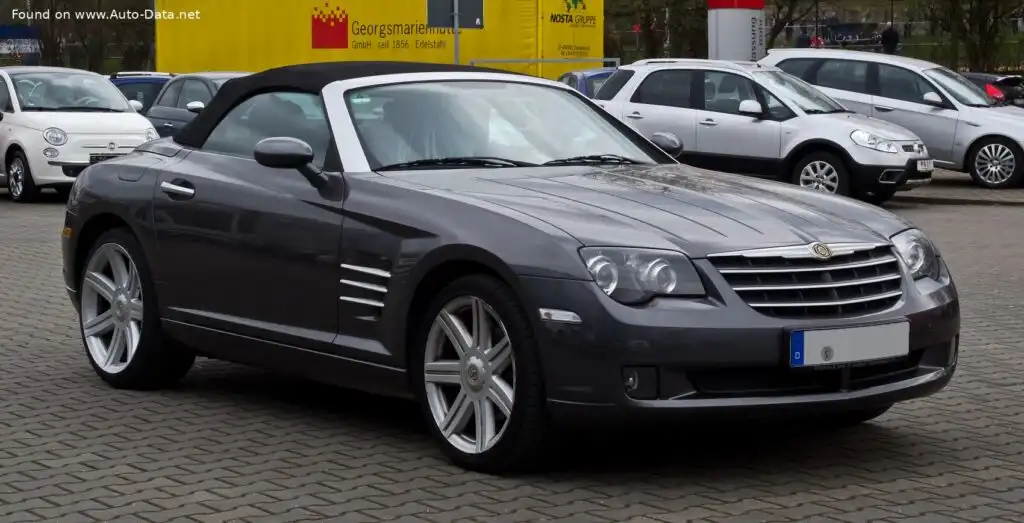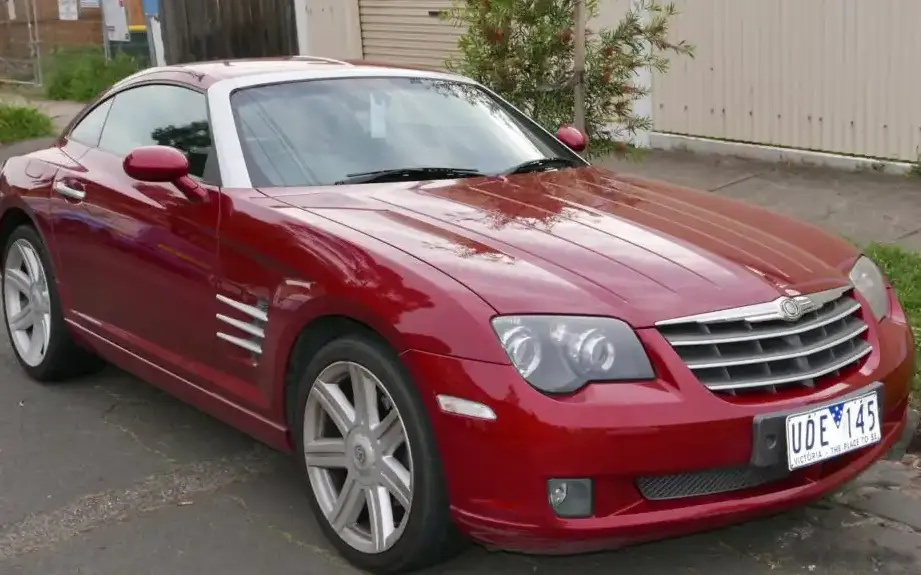
The Chrysler Crossfire 3.2i, produced from 2003 to 2007, represented a significant effort by DaimlerChrysler to introduce a sporting vehicle into the Chrysler lineup. Constructed in Germany by Karmann, the Crossfire was fundamentally based on the Mercedes-Benz SLK platform (R170), inheriting its shortened chassis and numerous mechanical components. The 3.2i variant, featuring a 3.2-liter naturally aspirated V6 engine generating 215 horsepower, stood as the top-of-the-line model in the Crossfire range, delivering a more dynamic driving experience than the base 2.2-liter four-cylinder version. It was positioned as a stylish, two-seat roadster/coupe aimed at driving enthusiasts seeking a distinctive and comparatively affordable sports car.
Technical Specifications
| Brand | Chrysler |
| Model | Crossfire |
| Generation | Crossfire |
| Type (Engine) | 3.2i V6 18V (215 Hp) |
| Start of production | 2003 |
| End of production | 2007 |
| Powertrain Architecture | Internal Combustion engine |
| Body type | Coupe |
| Seats | 2 |
| Doors | 2 |
| Fuel consumption (economy) – urban | 15.4 l/100 km (15.3 US mpg, 18.3 UK mpg, 6.5 km/l) |
| Fuel consumption (economy) – extra urban | 7.6 l/100 km (30.9 US mpg, 37.2 UK mpg, 13.2 km/l) |
| Fuel consumption (economy) – combined | 10.4 l/100 km (22.6 US mpg, 27.2 UK mpg, 9.6 km/l) |
| CO2 emissions | 250 g/km |
| Fuel Type | Petrol (Gasoline) |
| Acceleration 0 – 100 km/h | 6.8 sec |
| Acceleration 0 – 62 mph | 6.8 sec |
| Acceleration 0 – 60 mph | 6.5 sec |
| Maximum speed | 250 km/h (155.34 mph) |
| Weight-to-power ratio | 6.4 kg/Hp, 156.1 Hp/tonne |
| Weight-to-torque ratio | 4.4 kg/Nm, 225.1 Nm/tonne |
| Power | 215 Hp @ 5700 rpm |
| Power per litre | 67.2 Hp/l |
| Torque | 310 Nm @ 3000 rpm (228.64 lb.-ft. @ 3000 rpm) |
| Engine layout | Front, Longitudinal |
| Engine Model/Code | M112 E32 |
| Engine displacement | 3199 cm3 (195.21 cu. in.) |
| Number of cylinders | 6 |
| Engine configuration | V-engine |
| Cylinder Bore | 89.9 mm (3.54 in.) |
| Piston Stroke | 84 mm (3.31 in.) |
| Compression ratio | 10:1 |
| Number of valves per cylinder | 3 |
| Fuel injection system | Multi-port manifold injection |
| Engine aspiration | Naturally aspirated engine |
| Valvetrain | OHC |
| Engine oil capacity | 8 l (8.45 US qt | 7.04 UK qt) |
| Coolant | 11.2 l (11.83 US qt | 9.85 UK qt) |
| Kerb Weight | 1377 kg (3035.77 lbs.) |
| Max. weight | 1665 kg (3670.7 lbs.) |
| Max load | 288 kg (634.93 lbs.) |
| Trunk (boot) space – minimum | 215 l (7.59 cu. ft.) |
| Fuel tank capacity | 60 l (15.85 US gal | 13.2 UK gal) |
| Length | 4058 mm (159.76 in.) |
| Width | 1766 mm (69.53 in.) |
| Height | 1296 mm (51.02 in.) |
| Wheelbase | 2400 mm (94.49 in.) |
| Front track | 1493 mm (58.78 in.) |
| Rear (Back) track | 1502 mm (59.13 in.) |
| Minimum turning circle | 10.6 m (34.78 ft.) |
| Drivetrain Architecture | Rear wheel drive |
| Drive wheel | Rear wheel drive |
| Number of gears and type of gearbox | 6 gears, manual transmission |
| Front suspension | Double wishbone |
| Rear suspension | Spring Strut |
| Front brakes | Ventilated discs |
| Rear brakes | Disc |
| Assisting systems | ABS (Anti-lock braking system) |
| Tires size | 225/40 R18; 255/35 R19 |
| Wheel rims size | 7.5J x 18; 8J x 19 |
Powertrain & Engine Architecture
The core of the Crossfire 3.2i is the Mercedes-Benz M112 E32 engine, a 3.2-liter (3199 cc) naturally aspirated V6. This engine is characterized by a 60-degree V-angle, three valves per cylinder (two intake, one exhaust), and a double overhead camshaft (DOHC) configuration. The M112 is well-regarded for its smooth operation and robust build quality. Fuel delivery is managed by a multi-port fuel injection system, and the engine features a compression ratio of 10:1. Crucially, the 3.2i was exclusively offered with a six-speed manual transmission, granting drivers enhanced control over the engine’s power output. This transmission, also sourced from Mercedes-Benz, was known for its precise and satisfying gear changes.
Driving Characteristics
The 3.2i delivered a markedly more engaging driving experience compared to the base 2.2-liter model. The 215 horsepower and 228 lb-ft of torque enabled brisk acceleration, with 0-60 mph times consistently around 6.5 seconds. The rear-wheel-drive layout contributed to a balanced feel, and the manual transmission allowed for precise gear selection. While not a dedicated track car, the Crossfire 3.2i was a capable and enjoyable sports car for everyday driving. The six-speed manual transmission’s gear ratios were carefully tuned to the engine’s powerband, providing strong acceleration in each gear. In contrast to the automatic transmission available on the 2.2L model, the manual offered a more direct connection to the engine and a more rewarding driving experience.
Equipment & Trim Levels
The Crossfire 3.2i was generally well-equipped, with optional extras available to further personalize the interior. Standard features typically included leather upholstery, air conditioning, power windows and locks, and a premium sound system. The interior design, while sharing some elements with the SLK, featured a unique dashboard and center console layout. Optional extras included heated seats, a sunroof, and upgraded audio systems. The 3.2i was often distinguished by its unique exterior styling cues, including a more aggressive front fascia and larger alloy wheels.
Chassis & Braking
The Crossfire utilized the shortened R170 SLK platform, providing a relatively rigid chassis. Suspension consisted of a double wishbone setup at the front and a multi-link setup at the rear, offering a good compromise between ride comfort and handling performance. Brakes were ventilated discs at all four corners, providing ample stopping power. An anti-lock braking system (ABS) was standard equipment. The suspension tuning was geared towards a sporty feel, with relatively firm damping and minimized body roll.
Market Reception & Comparison
The Chrysler Crossfire received a mixed reception upon its introduction. Critics lauded its distinctive styling and engaging driving dynamics, particularly in the 3.2i version. However, some criticisms were directed towards the interior quality and the limited rear visibility. Compared to the 2.2-liter model, the 3.2i carried a significantly higher price tag but offered a substantial performance improvement. Fuel economy was reasonable for a sports car of its era, averaging around 22.6 mpg combined. Reliability was generally good, benefiting from the Mercedes-Benz-sourced components, although some owners reported occasional issues with the electronic systems.
Legacy
The Chrysler Crossfire, despite its relatively short production run, remains a distinctive and increasingly collectible vehicle. The 3.2i variant, with its more powerful engine and manual transmission, is particularly favored by enthusiasts. The M112 engine is known for its durability, and well-maintained examples can provide many years of reliable service. Today, the Crossfire represents a unique chapter in Chrysler’s history, a bold attempt to create a European-inspired sports car with American character. Used examples are relatively affordable, making them an accessible entry point into the world of sports car ownership.