Technical Specifications
| Brand | Hyundai |
| Model | Verna |
| Generation | Verna V (facelift 2020) |
| Type (Engine) | 1.5 MPi (115 Hp) IVT |
| Start of production | March, 2020 |
| End of production | February, 2023 |
| Powertrain Architecture | Internal Combustion engine |
| Body type | Sedan |
| Seats | 5 |
| Doors | 4 |
| Fuel Type | Petrol (Gasoline) |
| Power | 115 Hp @ 6300 rpm |
| Power per litre | 76.8 Hp/l |
| Torque | 144 Nm @ 4500 rpm / 106.21 lb.-ft. @ 4500 rpm |
| Engine layout | Front, Transverse |
| Engine Model/Code | Smartstream / G4FL |
| Engine displacement | 1497 cm3 / 91.35 cu. in. |
| Number of cylinders | 4 |
| Engine configuration | Inline |
| Number of valves per cylinder | 4 |
| Fuel injection system | Multi-port manifold injection |
| Engine aspiration | Naturally aspirated engine |
| Valvetrain | DOHC, VIS |
| Engine oil capacity | 3.8 l / 4.02 US qt | 3.34 UK qt |
| Fuel tank capacity | 45 l / 11.89 US gal | 9.9 UK gal |
| Length | 4440 mm / 174.8 in. |
| Width | 1729 mm / 68.07 in. |
| Height | 1475 mm / 58.07 in. |
| Wheelbase | 2600 mm / 102.36 in. |
| Drivetrain Architecture | The Internal combustion engine (ICE) drives the front wheels of the vehicle. |
| Drive wheel | Front wheel drive |
| Number of gears and type of gearbox | automatic transmission IVT |
| Front suspension | Coil spring, Independent type McPherson |
| Rear suspension | Torsion |
| Front brakes | Disc |
| Rear brakes | Drum |
| Assisting systems | ABS (Anti-lock braking system) |
| Steering type | Steering rack and pinion |
| Power steering | Electric Steering |
| Tires size | 195/55 R16 |
| Wheel rims size | 16 |
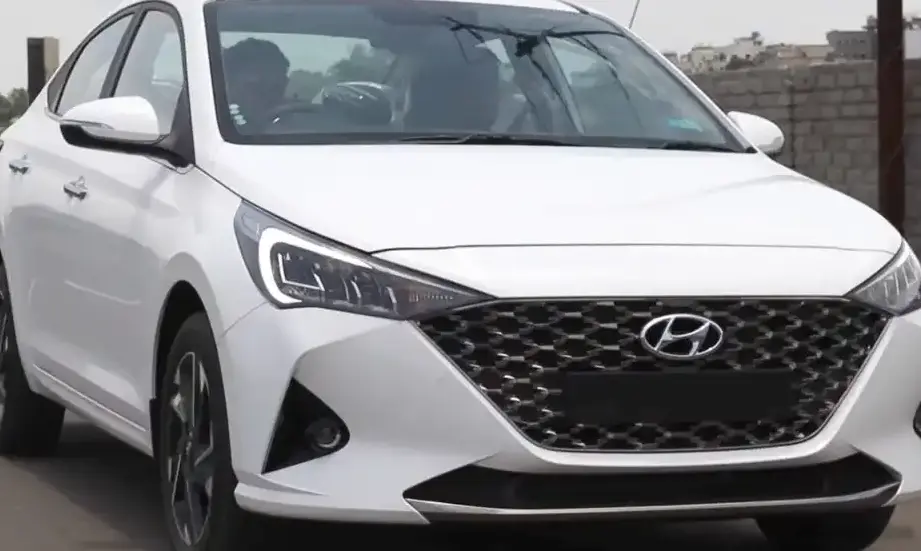
The Hyundai Verna V (facelift, introduced in March 2020 and continuing through February 2023) represents a mid-cycle refresh of the fifth-generation Verna, a compact sedan primarily aimed at the Asian and select emerging markets. This particular variant, powered by a 1.5-liter Smartstream MPI engine producing 115 horsepower and paired with an Intelligent Variable Transmission (IVT), occupied a key position in the Verna lineup as a balance between affordability and modern convenience. It served as a step up from the base models, offering improved fuel efficiency and a smoother driving experience compared to the standard manual transmission options.
Powertrain & Engine Architecture
The heart of this Verna variant is the Hyundai Smartstream G4FL 1.5-liter inline-four cylinder engine. This engine utilizes a naturally aspirated configuration with multi-point fuel injection, a design choice prioritizing reliability and cost-effectiveness over outright performance. The engine features a Double Overhead Camshaft (DOHC) valvetrain with Variable Intake System (VIS) technology, which optimizes airflow into the cylinders at different engine speeds, improving both power and fuel efficiency. The G4FL engine is known for its relatively simple design, contributing to its durability and ease of maintenance.
The IVT (Intelligent Variable Transmission) replaces a traditional automatic transmission with a belt-and-pulley system. This allows for a continuously variable gear ratio, optimizing engine speed for fuel efficiency or power as needed. The IVT in the Verna is programmed for smooth, comfortable shifts and contributes to the vehicle’s overall refinement. While not offering the sporty responsiveness of a dual-clutch transmission, the IVT prioritizes fuel economy and a relaxed driving experience.
Driving Characteristics
The 115 horsepower and 144 Nm (106 lb-ft) of torque produced by the 1.5L engine and IVT combination deliver adequate performance for everyday driving. Acceleration is linear and predictable, though not particularly brisk. The IVT effectively keeps the engine within its optimal power band, providing sufficient power for merging onto highways and navigating city streets. Compared to the manual transmission versions of the same engine, the IVT offers a smoother, more effortless driving experience. However, it does sacrifice some responsiveness. Higher-output engine options, such as those found in some international Verna trims, provide significantly more spirited acceleration, but at the cost of fuel economy.
The IVT’s continuously variable nature means there are no distinct gear changes, resulting in a seamless power delivery. This can feel somewhat disconnected to drivers accustomed to traditional automatics, but it contributes to a quieter and more comfortable ride. The IVT is programmed to mimic traditional gear shifts under hard acceleration, providing a more familiar feel when needed.
Equipment & Trim Levels
The 1.5 MPi IVT trim of the Verna V (facelift) typically included a solid array of standard features. These generally included power windows and locks, air conditioning, a touchscreen infotainment system with Bluetooth connectivity, and basic safety features like dual airbags and ABS. Higher trim levels added features like alloy wheels, a rearview camera, and more advanced safety systems. Interior upholstery was typically cloth, with options for upgraded materials available. The dashboard layout was functional and modern, with a focus on ease of use. Optional extras often included a sunroof, upgraded audio system, and keyless entry.
Chassis & Braking
The Verna V utilizes a front-wheel-drive layout with a McPherson strut independent suspension in the front and a torsion beam suspension in the rear. This suspension setup provides a comfortable ride quality, absorbing bumps and imperfections in the road effectively. The front brakes are disc brakes, providing adequate stopping power, while the rear brakes are drum brakes, a cost-saving measure common in this segment. The electric power steering provides light and easy steering, making it maneuverable in urban environments. Stabilizer bars were included to reduce body roll during cornering, enhancing handling stability.
Market Reception & Comparison
The 1.5 MPi IVT Verna V was generally well-received by critics as a practical and fuel-efficient compact sedan. It was praised for its comfortable ride, smooth IVT transmission, and reasonable price point. However, some reviewers noted that the engine lacked significant power, particularly when fully loaded or driving uphill. Compared to other trims in the Verna lineup, the 1.5 MPi IVT offered a compelling balance between performance and fuel economy. The manual transmission versions of the same engine were slightly more fuel-efficient, while the higher-output engine options provided more exhilarating performance but at a higher cost.
Legacy
The Hyundai Verna V (facelift) 1.5 MPi IVT has proven to be a reliable and durable vehicle in the used car market. The Smartstream engine is known for its longevity, and the IVT transmission, while requiring proper maintenance, has generally proven to be dependable. The relatively simple design of the powertrain contributes to lower maintenance costs compared to more complex engine and transmission technologies. As a result, this variant remains a popular choice for budget-conscious buyers seeking a comfortable and efficient compact sedan.