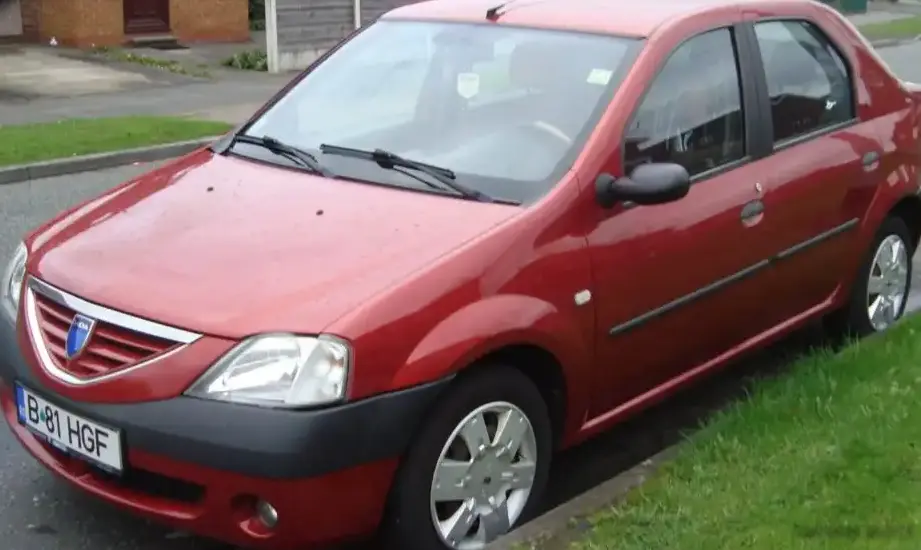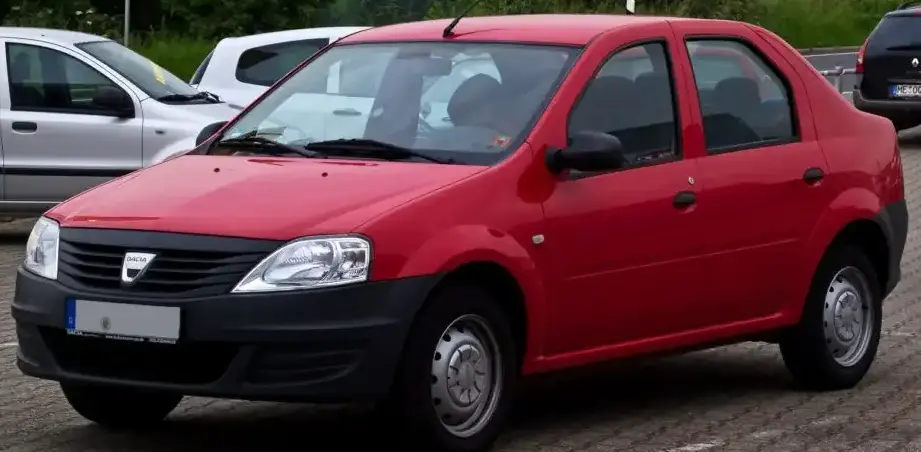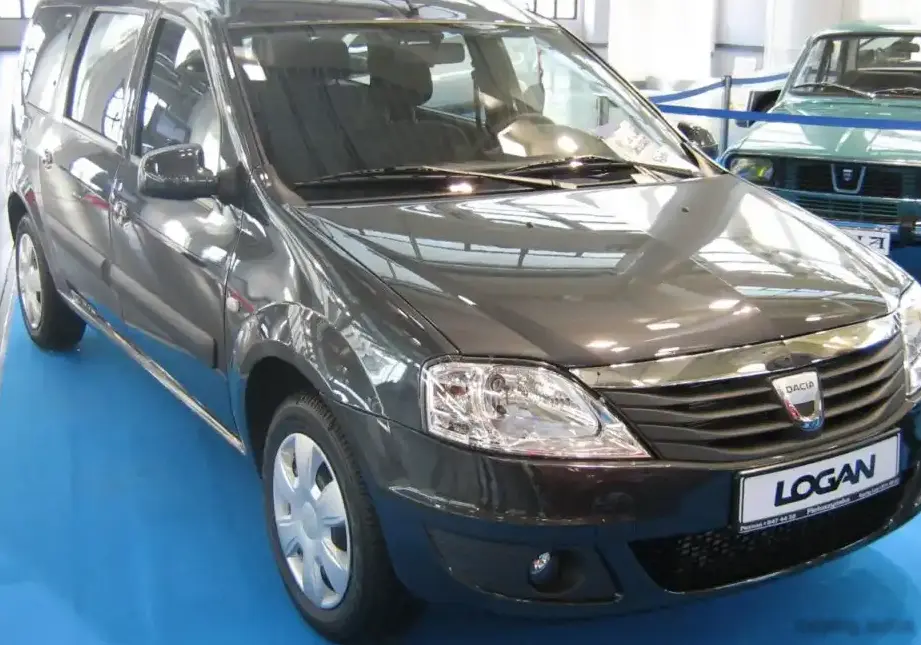
The Dacia Logan I MCV (facelift, 2008) 1.6 MPI 8V 7-seat variant represents a practical and affordable option within the first generation Logan MCV (Multi-Capacity Vehicle) lineup. Introduced in 2008 as part of a mid-cycle refresh, this version combined the 1.6-liter gasoline engine with an automatic transmission and the unique selling point of seven-passenger seating, aimed at families and those needing versatile cargo space. The Logan MCV, based on the 1HX0/A3 platform, was initially designed to offer a spacious and robust vehicle at a budget-friendly price point, primarily targeting emerging markets and value-conscious buyers in Europe. This facelift brought subtle styling updates and improvements to the interior, enhancing the overall appeal of the model.
Technical Specifications
| Brand | Dacia |
| Model | Logan |
| Generation | Logan I MCV (facelift 2008) |
| Type (Engine) | 1.6 MPI 8V (87 Hp) 7 Seats |
| Start of production | 2008 |
| End of production | 2010 |
| Powertrain Architecture | Internal Combustion engine |
| Body type | Station wagon (estate) |
| Seats | 7 |
| Doors | 5 |
| Fuel consumption (urban) | 10.3 l/100 km (22.8 US mpg, 27.4 UK mpg, 9.7 km/l) |
| Fuel consumption (extra urban) | 6.3 l/100 km (37.3 US mpg, 44.8 UK mpg, 15.9 km/l) |
| Fuel consumption (combined) | 7.8 l/100 km (30.2 US mpg, 36.2 UK mpg, 12.8 km/l) |
| CO2 emissions | 185 g/km |
| Fuel Type | Petrol (Gasoline) |
| Acceleration 0 – 100 km/h | 13.7 sec |
| Acceleration 0 – 62 mph | 13.7 sec |
| Acceleration 0 – 60 mph | 13 sec |
| Maximum speed | 167 km/h (103.77 mph) |
| Emission standard | Euro 4 |
| Weight-to-power ratio | 13.7 kg/Hp, 72.8 Hp/tonne |
| Weight-to-torque ratio | 9.3 kg/Nm, 107.1 Nm/tonne |
| Power | 87 Hp @ 5500 rpm |
| Power per litre | 54.4 Hp/l |
| Torque | 128 Nm @ 3000 rpm (94.41 lb.-ft. @ 3000 rpm) |
| Engine layout | Front, Transverse |
| Engine Model/Code | K7M 710 |
| Engine displacement | 1598 cm3 (97.52 cu. in.) |
| Number of cylinders | 4 |
| Engine configuration | Inline |
| Cylinder Bore | 79.5 mm (3.13 in.) |
| Piston Stroke | 80.5 mm (3.17 in.) |
| Compression ratio | 9.5:1 |
| Number of valves per cylinder | 2 |
| Fuel injection system | Multi-port manifold injection |
| Engine aspiration | Naturally aspirated |
| Valvetrain | SOHC |
| Engine oil capacity | 3.3 l (3.49 US qt | 2.9 UK qt) |
| Coolant capacity | 4.5 l (4.76 US qt | 3.96 UK qt) |
| Kerb Weight | 1195 kg (2634.52 lbs.) |
| Max. weight | 1810 kg (3990.37 lbs.) |
| Max load | 615 kg (1355.84 lbs.) |
| Trunk (boot) space – minimum | 198 l (6.99 cu. ft.) |
| Trunk (boot) space – maximum | 2350 l (82.99 cu. ft.) |
| Fuel tank capacity | 50 l (13.21 US gal | 11 UK gal) |
| Max. roof load | 80 kg (176.37 lbs.) |
| Permitted trailer load (braked) | 1300 kg (2866.01 lbs.) |
| Permitted trailer load (unbraked) | 635 kg (1399.94 lbs.) |
| Permitted towbar download | 75 kg (165.35 lbs.) |
| Length | 4473 mm (176.1 in.) |
| Width | 1740 mm (68.5 in.) |
| Width including mirrors | 1993 mm (78.46 in.) |
| Height | 1640 mm (64.57 in.) |
| Wheelbase | 2905 mm (114.37 in.) |
| Front track | 1469 mm (57.83 in.) |
| Rear track | 1466 mm (57.72 in.) |
| Front overhang | 797 mm (31.38 in.) |
| Rear overhang | 771 mm (30.35 in.) |
| Ride height (ground clearance) | 160 mm (6.3 in.) |
| Drag coefficient (Cd) | 0.36 |
| Minimum turning circle | 11.25 m (36.91 ft.) |
| Drivetrain | Front wheel drive |
| Number of gears | 5 |
| Gearbox type | Automatic transmission |
| Front suspension | Independent type McPherson, Transverse stabilizer |
| Rear suspension | Coil spring, Torsion |
| Front brakes | Ventilated discs, 259 mm |
| Rear brakes | Drum, 203 mm |
| Assisting systems | ABS (Anti-lock braking system) |
| Steering type | Steering rack and pinion |
| Power steering | Hydraulic |
| Tires size | 185/65 R15 |
| Wheel rims size | 6J x 15 |
Powertrain & Engine Architecture
The heart of this Logan MCV variant is the K7M 710 engine, a 1.6-liter inline-four cylinder gasoline engine. This engine, a staple in many Renault and Dacia models, features a single overhead camshaft (SOHC) valvetrain with two valves per cylinder. It utilizes a multi-point fuel injection system, delivering fuel directly into the intake ports. The K7M engine is known for its simplicity and robustness, rather than outright performance. Paired with this engine is a four-speed automatic transmission, which was relatively uncommon in this segment at the time. This transmission, while providing convenience, contributes to slightly lower fuel economy and slower acceleration compared to the available manual gearbox.
Driving Characteristics
The 1.6L 87 hp automatic Logan MCV is not a performance-oriented vehicle. Acceleration is leisurely, taking approximately 13.7 seconds to reach 62 mph. The automatic transmission, while smooth in operation, has relatively long gear ratios, prioritizing fuel efficiency over responsiveness. In real-world driving, the engine feels strained when fully loaded with passengers and cargo, particularly on inclines. The automatic transmission does offer a degree of convenience, especially in urban environments, but drivers seeking a more engaging experience would likely prefer the manual transmission option. The suspension is tuned for comfort, providing a reasonably smooth ride on most road surfaces, but body roll is noticeable during cornering.
Equipment & Trim Levels
The 7-seat configuration was a defining feature of this trim level. Standard equipment typically included power steering, central locking, and an anti-lock braking system (ABS). Interior appointments were basic, with durable cloth upholstery and a functional dashboard layout. Optional extras could include air conditioning, a radio/CD player, and power windows. The focus was on providing essential features at an affordable price, rather than luxury or advanced technology.
Chassis & Braking
The Logan MCV utilizes a McPherson strut front suspension and a torsion beam rear suspension. The front brakes are ventilated discs, providing adequate stopping power, while the rear brakes are drums. This configuration was typical for vehicles in this price range at the time. The chassis is designed for durability and load-carrying capacity, reflecting the vehicle’s intended use as a practical family vehicle. Stabilizer bars were included to reduce body roll, but the overall handling characteristics are geared towards comfort and stability rather than sporty driving.
Market Reception & Comparison
The Dacia Logan I MCV 1.6 MPI 8V 7-seat variant was generally well-received as a practical and affordable family vehicle. Critics praised its spacious interior, large cargo capacity, and low price point. However, the engine’s lack of power and the automatic transmission’s sluggishness were common criticisms. Compared to other trims in the Logan lineup, such as the 1.5 dCi diesel, this variant offered less fuel efficiency and lower performance. However, it provided the convenience of an automatic transmission and the added versatility of seven-passenger seating, appealing to a specific segment of buyers.
Legacy
The K7M engine, while not known for its sophistication, has proven to be remarkably reliable over the long term. The automatic transmission, however, can be prone to issues if not properly maintained. Today, the Logan I MCV 1.6 MPI 8V 7-seat variant is a relatively common sight in the used car market, often appealing to buyers seeking an affordable and practical vehicle for family use. Its simplicity and robust construction make it relatively easy and inexpensive to maintain, contributing to its continued popularity among budget-conscious buyers.