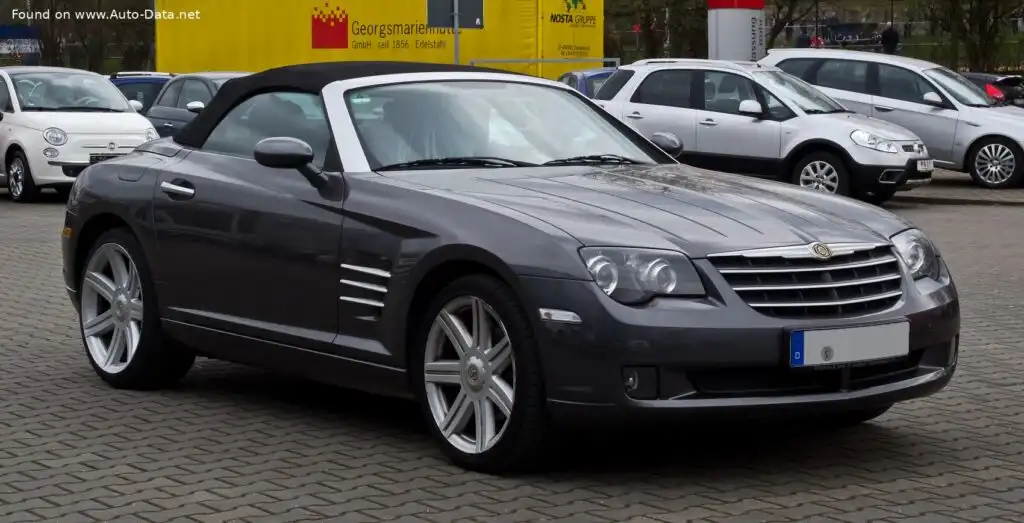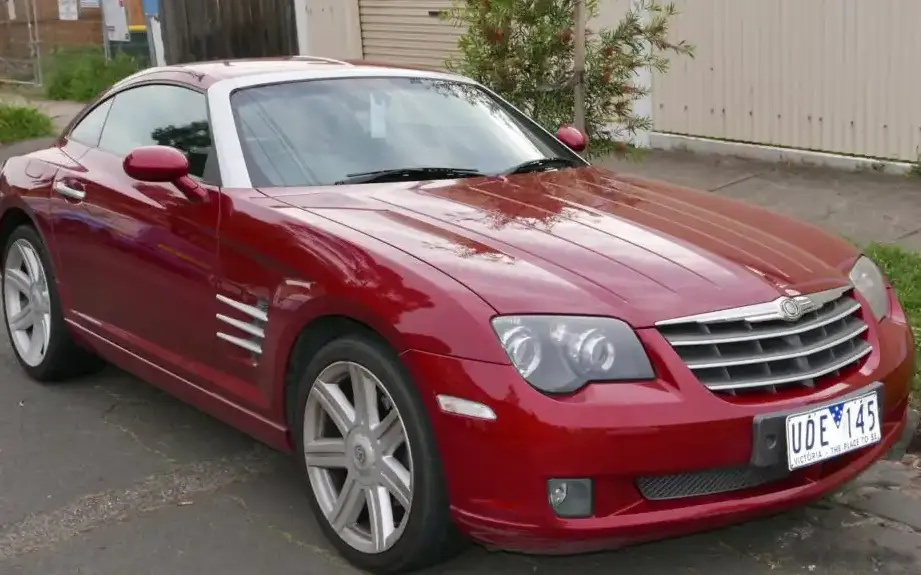
The Chrysler Crossfire 3.2i, produced from 2003 to 2007, represented a bold attempt by DaimlerChrysler to inject some excitement into the Chrysler lineup. Built in Germany by Karmann, the Crossfire was a two-seat, rear-wheel drive coupe (and later a roadster) that blended American styling with European engineering. The 3.2i variant, equipped with a 3.2-liter V6 engine and a five-speed automatic transmission, occupied the premium position within the Crossfire range, offering a significant performance upgrade over the base 2.5-liter model. It was positioned as a sporty grand tourer, aimed at buyers seeking a distinctive and relatively affordable alternative to established European sports cars.
Technical Specifications
| Brand | Chrysler |
| Model | Crossfire |
| Generation | Crossfire |
| Type (Engine) | 3.2i V6 18V (215 Hp) Automatic |
| Start of production | 2003 |
| End of production | 2007 |
| Powertrain Architecture | Internal Combustion engine |
| Body type | Coupe |
| Seats | 2 |
| Doors | 2 |
| Fuel consumption (urban) | 14.3 l/100 km (16.4 US mpg) |
| Fuel consumption (extra urban) | 7.7 l/100 km (30.5 US mpg) |
| Fuel consumption (combined) | 10.1 l/100 km (23.3 US mpg) |
| CO2 emissions | 243 g/km |
| Fuel Type | Petrol (Gasoline) |
| Acceleration 0 – 100 km/h | 6.9 sec |
| Acceleration 0 – 62 mph | 6.9 sec |
| Acceleration 0 – 60 mph | 6.6 sec |
| Maximum speed | 250 km/h (155.34 mph) |
| Weight-to-power ratio | 6.4 kg/Hp |
| Weight-to-torque ratio | 4.5 kg/Nm |
| Power | 215 Hp @ 5700 rpm |
| Torque | 310 Nm @ 3000 rpm (228.64 lb.-ft. @ 3000 rpm) |
| Engine layout | Front, Longitudinal |
| Engine Model/Code | M112 E32 |
| Engine displacement | 3199 cm3 (195.21 cu. in.) |
| Number of cylinders | 6 |
| Engine configuration | V-engine |
| Cylinder Bore | 89.9 mm (3.54 in.) |
| Piston Stroke | 84 mm (3.31 in.) |
| Compression ratio | 10:1 |
| Number of valves per cylinder | 3 |
| Fuel injection system | Multi-port manifold injection |
| Engine aspiration | Naturally aspirated engine |
| Valvetrain | OHC |
| Engine oil capacity | 8 l (8.45 US qt | 7.04 UK qt) |
| Coolant capacity | 11.2 l (11.83 US qt | 9.85 UK qt) |
| Kerb Weight | 1382 kg (3046.79 lbs.) |
| Max. weight | 1665 kg (3670.7 lbs.) |
| Max load | 283 kg (623.91 lbs.) |
| Trunk (boot) space – minimum | 215 l (7.59 cu. ft.) |
| Fuel tank capacity | 60 l (15.85 US gal | 13.2 UK gal) |
| Length | 4058 mm (159.76 in.) |
| Width | 1766 mm (69.53 in.) |
| Height | 1296 mm (51.02 in.) |
| Wheelbase | 2400 mm (94.49 in.) |
| Front track | 1493 mm (58.78 in.) |
| Rear (Back) track | 1502 mm (59.13 in.) |
| Minimum turning circle | 10.6 m (34.78 ft.) |
| Drivetrain Architecture | Rear wheel drive |
| Drive wheel | Rear wheel drive |
| Number of gears | 5 |
| Gearbox type | Automatic transmission |
| Front suspension | Double wishbone |
| Rear suspension | Spring Strut |
| Front brakes | Ventilated discs |
| Rear brakes | Disc |
| Assisting systems | ABS (Anti-lock braking system) |
| Tires size | 225/40 R18; 255/35 R19 |
| Wheel rims size | 7.5J x 18; 8J x 19 |
INTRODUCTION
The Chrysler Crossfire 3.2i debuted in 2004 as an upgrade to the initial 2.5-liter model. It was built on the R170 platform, originally developed for the first-generation Mercedes-Benz SLK. The Crossfire aimed to offer a unique blend of American muscle car aesthetics and European handling characteristics. The 3.2i, with its larger engine and automatic transmission, was intended to appeal to buyers who desired a more refined and powerful driving experience. Production continued until 2007, with a limited-edition Roadster version also available.
Powertrain & Engine Architecture
The heart of the Crossfire 3.2i is the M112 E32 3.2-liter V6 engine, a naturally aspirated powerplant originally designed by Mercedes-Benz. This engine features a 60-degree V-angle, three valves per cylinder (two intake, one exhaust), and a double overhead camshaft (DOHC) valvetrain. The engine utilizes a multi-port fuel injection system, delivering fuel directly into the intake ports. The 3.2-liter V6 produces 215 horsepower at 5700 rpm and 310 Nm (228.64 lb-ft) of torque at 3000 rpm. The engine is longitudinally mounted, driving the rear wheels. The five-speed automatic transmission, sourced from Mercedes-Benz, is a conventional torque converter automatic. It’s known for its smooth shifts but lacks the responsiveness of a manual transmission or more modern automatic designs. The transmission’s gear ratios are tuned for a balance of acceleration and highway cruising, but it doesn’t offer the aggressive downshifts found in sportier applications.
Driving Characteristics
The Crossfire 3.2i Automatic delivers a respectable, if not exhilarating, driving experience. Acceleration from 0 to 60 mph takes around 6.6 seconds, making it reasonably quick for its time. The automatic transmission, while smooth, can feel somewhat hesitant during quick acceleration or when attempting to downshift for passing maneuvers. Compared to the six-speed manual transmission available on the 3.2i, the automatic sacrifices some responsiveness. The rear-wheel-drive layout provides a balanced feel, and the double wishbone front suspension and spring strut rear suspension contribute to relatively good handling. However, the car’s weight (approximately 3047 lbs) is noticeable, and it doesn’t feel as nimble as some lighter sports cars. The steering is precise, but lacks significant feedback.
Equipment & Trim Levels
The Crossfire 3.2i came reasonably well-equipped as standard. Interior features included leather upholstery, power-adjustable seats, air conditioning, a premium sound system, and power windows and locks. Optional extras included a sunroof, upgraded audio systems, and various cosmetic enhancements. The dashboard layout was relatively straightforward, with a focus on functionality. The interior materials, while generally of good quality, didn’t quite match the luxury of some European competitors. The 3.2i trim typically featured unique exterior styling cues, such as specific wheel designs and body-colored accents.
Chassis & Braking
The Crossfire’s chassis is based on the Mercedes-Benz SLK platform, providing a solid foundation for handling. The front suspension utilizes a double wishbone design, while the rear employs a spring strut setup. Braking duties are handled by ventilated discs at the front and solid discs at the rear. Anti-lock braking system (ABS) is standard. The braking performance is adequate for the car’s weight and performance level, but the rear disc brakes are smaller than those found on some competing models. Stabilizer bars are fitted to both the front and rear axles to reduce body roll during cornering.
Market Reception & Comparison
The Chrysler Crossfire 3.2i received mixed reviews from automotive critics. While praised for its distinctive styling and relatively strong performance, it was often criticized for its compromised interior space, somewhat dated platform, and the automatic transmission’s lack of responsiveness. Compared to the base 2.5-liter model, the 3.2i offered a significant performance boost, but at a higher price point. Fuel economy was also a concern, with combined fuel consumption around 23.3 US mpg. The Crossfire competed with cars like the BMW Z4, Audi TT, and Porsche Boxster, but generally offered a lower price point, albeit with some compromises in refinement and handling.
Legacy
The Chrysler Crossfire, while not a commercial success, remains a unique and somewhat collectible vehicle. The 3.2i variant, with its more powerful engine, is generally considered the more desirable version. The M112 engine is known for its reliability, provided it receives regular maintenance. However, some Crossfire owners have reported issues with the automatic transmission and various electrical components. On the used car market, the Crossfire 3.2i can be found at relatively affordable prices, making it an attractive option for buyers seeking a distinctive and sporty coupe. Its blend of American styling and German engineering continues to appeal to a niche audience.