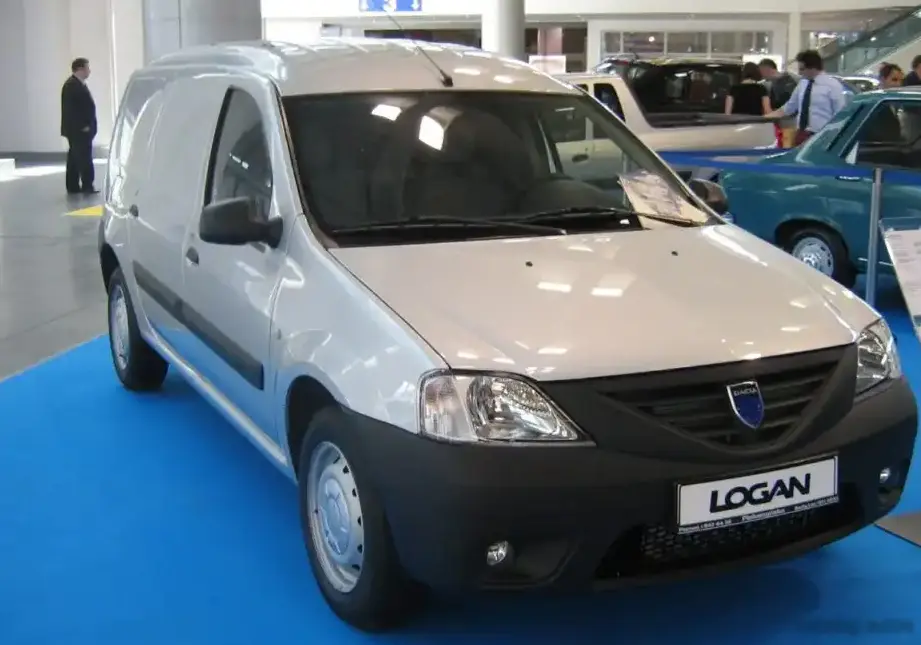
The Dacia Logan I Van 1.5 dCi, producing 75 horsepower, was a commercially-oriented variant of the first-generation Dacia Logan, manufactured from January 2007 to August 2012. Designed primarily for small businesses and tradespeople, the Van offered a practical and affordable solution for light commercial duties within the European market. It represented Dacia’s entry into the small van segment, leveraging the Logan’s robust platform and focusing on maximizing cargo space and minimizing running costs. This particular engine and transmission combination – the 1.5 dCi with a five-speed manual – occupied the entry-level position in the Logan Van lineup, prioritizing fuel efficiency and affordability over outright performance.
Technical Specifications
| Brand | Dacia |
| Model | Logan |
| Generation | Logan I Van |
| Type (Engine) | 1.5 dCi (75 Hp) |
| Start of production | January, 2007 |
| End of production | August, 2012 |
| Powertrain Architecture | Internal Combustion engine |
| Body type | Station wagon (estate) |
| Seats | 2 |
| Doors | 5 |
| Fuel consumption (urban) | 6.1 l/100 km (38.6 US mpg, 46.3 UK mpg, 16.4 km/l) |
| Fuel consumption (extra urban) | 4.6 l/100 km (51.1 US mpg, 61.4 UK mpg, 21.7 km/l) |
| Fuel consumption (combined) | 5.1 l/100 km (46.1 US mpg, 55.4 UK mpg, 19.6 km/l) |
| Fuel Type | Diesel |
| Acceleration 0 – 100 km/h | 15.2 sec |
| Acceleration 0 – 62 mph | 15.2 sec |
| Acceleration 0 – 60 mph | 14.4 sec |
| Maximum speed | 157 km/h (97.56 mph) |
| Weight-to-power ratio | 16.1 kg/Hp, 62.2 Hp/tonne |
| Weight-to-torque ratio | 6.7 kg/Nm, 149.3 Nm/tonne |
| Power | 75 Hp @ 4000 rpm |
| Power per litre | 51.3 Hp/l |
| Torque | 180 Nm @ 1750 rpm (132.76 lb.-ft. @ 1750 rpm) |
| Engine layout | Front, Transverse |
| Engine Model/Code | K9K |
| Engine displacement | 1461 cm3 (89.16 cu. in.) |
| Number of cylinders | 4 |
| Engine configuration | Inline |
| Number of valves per cylinder | 2 |
| Fuel injection system | Diesel Commonrail |
| Engine aspiration | Turbocharger, Intercooler |
| Engine oil capacity | 4.5 l (4.76 US qt, 3.96 UK qt) |
| Coolant capacity | 4.5 l (4.76 US qt, 3.96 UK qt) |
| Kerb Weight | 1206 kg (2658.77 lbs) |
| Max. weight | 2006 kg (4422.47 lbs) |
| Max load | 800 kg (1763.7 lbs) |
| Fuel tank capacity | 50 l (13.21 US gal, 11 UK gal) |
| Length | 4450 mm (175.2 in) |
| Width | 1740 mm (68.5 in) |
| Height | 1640 mm (64.57 in) |
| Wheelbase | 2905 mm (114.37 in) |
| Drivetrain Architecture | The Internal combustion engine (ICE) drives the front wheels of the vehicle. |
| Drive wheel | Front wheel drive |
| Number of gears and type of gearbox | 5 gears, manual transmission |
| Assisting systems | ABS (Anti-lock braking system) |
| Steering type | Steering rack and pinion |
| Tires size | 185/65 R15 |
| Wheel rims size | 15 |
Powertrain & Engine Architecture
The heart of the Logan I Van 1.5 dCi (75 Hp) is the K9K engine, a 1.5-liter inline-four cylinder diesel engine. This engine was developed jointly by Renault and Nissan and is known for its robustness and fuel efficiency. The 75 horsepower version utilizes a fixed-geometry turbocharger and an intercooler to improve performance. Fuel is delivered via a common rail direct injection system, allowing for precise fuel metering and optimized combustion. The engine features two valves per cylinder (SOHC) and operates with a compression ratio of approximately 16.5:1. The five-speed manual transmission, a standard feature, was chosen for its simplicity and cost-effectiveness. It’s a relatively basic gearbox, prioritizing durability over sporty shift feel.
Driving Characteristics
The 1.5 dCi 75 hp engine in the Logan Van provides adequate, but not exhilarating, performance. Acceleration is modest, with a 0-60 mph time of around 14.4 seconds. The engine’s torque peak of 180 Nm (132.76 lb-ft) at 1750 rpm provides reasonable pulling power for carrying loads, but it requires downshifting on inclines or when fully laden. The gear ratios are geared towards economy, meaning the engine operates at relatively low RPMs at highway speeds. Compared to the higher-output versions of the 1.5 dCi (typically around 90-105 hp), this variant feels noticeably slower, especially when accelerating or overtaking. The manual transmission allows for greater driver control, but the shift quality is not particularly refined.
Equipment & Trim Levels
The Logan I Van 1.5 dCi (75 Hp) was typically offered with a basic level of equipment, reflecting its commercial focus. Standard features generally included power steering, a driver’s airbag, and ABS brakes. The interior was functional and durable, with hard-wearing plastic trim and cloth upholstery. Air conditioning, power windows, and a radio/CD player were often optional extras. The van’s rear cargo area was the primary focus, offering a substantial load volume. Trim levels were minimal, with most variations stemming from optional equipment packages.
Chassis & Braking
The Logan Van utilizes a simple yet effective chassis design. It features a MacPherson strut front suspension and a torsion beam rear suspension. The rear brakes were typically drum brakes, while the front brakes were disc brakes. This configuration was chosen to keep costs down and provide adequate stopping power for the vehicle’s weight and intended use. Stabilizer bars were often omitted on the base models to further reduce cost. The steering is a rack and pinion system, providing reasonable precision and feedback.
Market Reception & Comparison
The Dacia Logan I Van 1.5 dCi (75 Hp) was well-received in the European market as a no-frills, affordable workhorse. Critics praised its practicality, fuel efficiency, and low running costs. However, it was often criticized for its basic interior, lack of refinement, and modest performance. Compared to other small vans of the time, such as the Fiat Doblo or Renault Kangoo, the Logan Van offered a lower price point but lacked some of their features and sophistication. The 90 hp version of the 1.5 dCi offered a noticeable improvement in performance, but at a higher cost. The 1.5 dCi engine, in general, was considered reliable, but regular maintenance was crucial to ensure longevity.
Legacy
The Dacia Logan I Van 1.5 dCi (75 Hp) remains a popular choice in the used commercial vehicle market, particularly for businesses seeking an affordable and reliable van. The K9K engine is known for its durability, and with proper maintenance, it can provide many years of service. While it may not offer the comfort or performance of more modern vans, its simplicity and low running costs continue to appeal to budget-conscious buyers. The Logan Van helped establish Dacia as a major player in the European automotive market, demonstrating that a practical and affordable vehicle could be successful even without extensive features or a prestigious brand image.