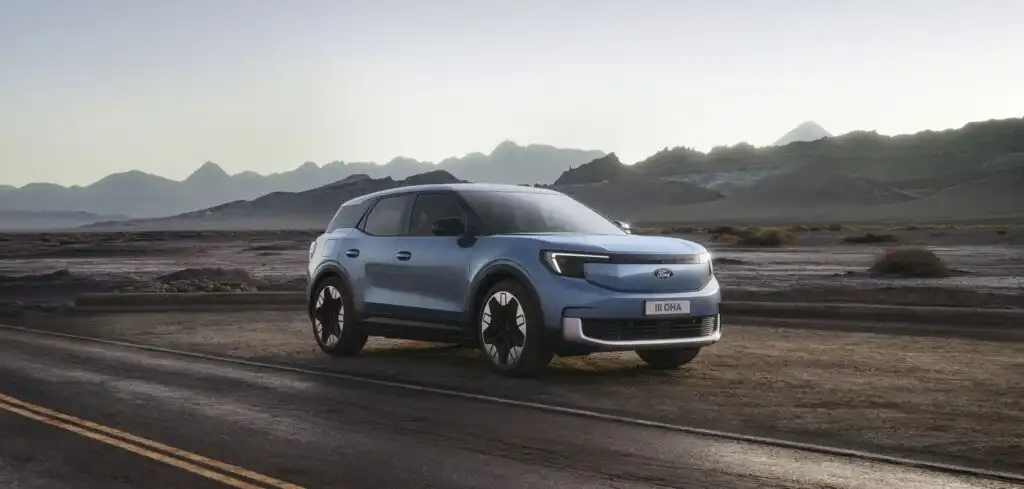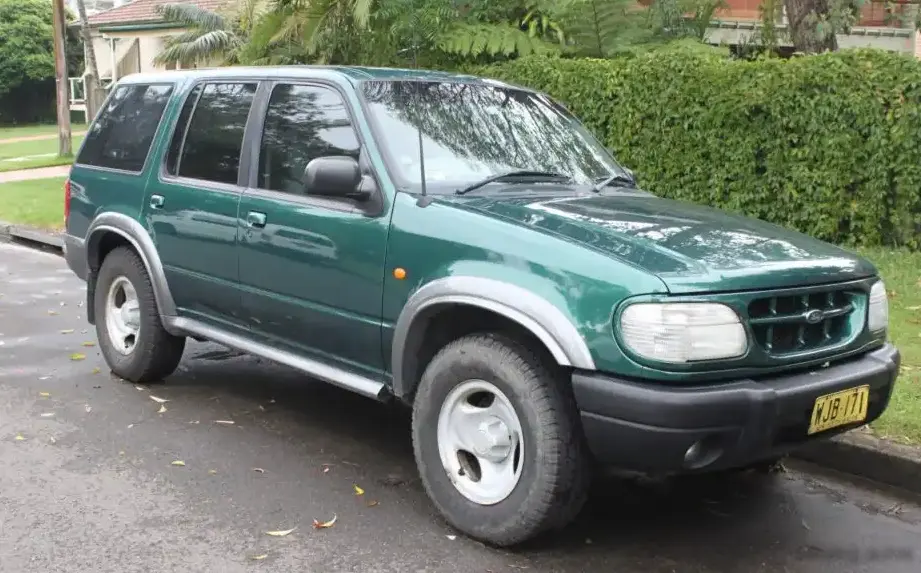
The Ford Explorer V, specifically the facelifted version produced from 2018 to 2019, represented a significant evolution of Ford’s popular mid-size SUV. This iteration, built on the D4 platform, aimed to balance family practicality with a more refined driving experience and updated technology. Among the engine options available, the 3.5 EcoBoost V6 paired with a six-speed automatic transmission and four-wheel drive (4WD) stood out as a premium offering, positioned towards the higher end of the Explorer lineup. This variant catered to buyers seeking strong performance and all-weather capability without sacrificing comfort or space.
Technical Specifications
| Brand | Ford |
| Model | Explorer |
| Generation | Explorer V (facelift 2018) |
| Type (Engine) | 3.5 EcoBoost V6 (365 Hp) 4WD Automatic |
| Start of production | 2018 |
| End of production | 2019 |
| Powertrain Architecture | Internal Combustion engine |
| Body type | SUV |
| Seats | 7 |
| Doors | 5 |
| Fuel consumption (urban) | 14.7 l/100 km (16 US mpg, 19.2 UK mpg, 6.8 km/l) |
| Fuel consumption (extra urban) | 10.6 l/100 km (22.2 US mpg, 26.6 UK mpg, 9.4 km/l) |
| Fuel consumption (combined) | 13 l/100 km (18.1 US mpg, 21.7 UK mpg, 7.7 km/l) |
| Fuel Type | Petrol (Gasoline) |
| Weight-to-power ratio | 6.1 kg/Hp, 164.6 Hp/tonne |
| Weight-to-torque ratio | 4.7 kg/Nm, 214.2 Nm/tonne |
| Power | 365 Hp @ 5500 rpm |
| Power per litre | 104.4 Hp/l |
| Torque | 475 Nm @ 3500 rpm (350.34 lb.-ft. @ 3500 rpm) |
| Engine layout | Front, Transverse |
| Engine displacement | 3496 cm3 (213.34 cu. in.) |
| Number of cylinders | 6 |
| Engine configuration | V-engine |
| Cylinder Bore | 92.5 mm (3.64 in.) |
| Piston Stroke | 86.7 mm (3.41 in.) |
| Compression ratio | 10:1 |
| Number of valves per cylinder | 4 |
| Fuel injection system | Direct injection |
| Engine aspiration | Turbocharger, Intercooler |
| Valvetrain | Ti-VCT |
| Engine oil capacity | 5.7 l (6.02 US qt | 5.02 UK qt) |
| Coolant | 12.4 l (13.1 US qt | 10.91 UK qt) |
| Kerb Weight | 2218 kg (4889.85 lbs.) |
| Trunk (boot) space – minimum | 595 l (21.01 cu. ft.) |
| Trunk (boot) space – maximum | 2313 l (81.68 cu. ft.) |
| Fuel tank capacity | 70 l (18.49 US gal | 15.4 UK gal) |
| Permitted trailer load with brakes (12%) | 907 kg (1999.59 lbs.) |
| Length | 5047 mm (198.7 in.) |
| Width | 2004 mm (78.9 in.) |
| Width with mirrors folded | 2096 mm (82.52 in.) |
| Width including mirrors | 2291 mm (90.2 in.) |
| Height | 1778 mm (70 in.) |
| Wheelbase | 2865 mm (112.8 in.) |
| Front track | 1702 mm (67.01 in.) |
| Rear (Back) track | 1702 mm (67.01 in.) |
| Ride height (ground clearance) | 198 mm (7.8 in.) |
| Drag coefficient (Cd) | 0.35 |
| Approach angle | 15.6° |
| Departure angle | 20.9° |
| Ramp-over (brakeover) angle | 16.9° |
| Drive wheel | All wheel drive (4×4) |
| Number of gears and type of gearbox | 6 gears, automatic transmission |
| Front suspension | Independent, type McPherson with coil spring and anti-roll bar |
| Rear suspension | Independent multi-link spring suspension with stabilizer |
| Front brakes | Ventilated discs |
| Rear brakes | Ventilated discs |
| Assisting systems | ABS (Anti-lock braking system) |
| Steering type | Steering rack and pinion |
| Power steering | Electric Steering |
| Tires size | 245/60 R18; 255/50 R20 |
| Wheel rims size | 18; 20 |
INTRODUCTION
The 2018-2019 Ford Explorer facelift brought a refreshed look and enhanced features to the fifth-generation Explorer (introduced in 2010). The 3.5 EcoBoost V6 4WD Automatic variant occupied a premium position within the Explorer range, offering a significant step up in performance compared to the base 3.5L naturally aspirated V6. It was designed to appeal to families needing space and capability, but also desiring a more engaging driving experience. This model year saw updates to the exterior styling, interior materials, and available technology, further solidifying the Explorer’s position as a competitive SUV in the American market.
Powertrain & Engine Architecture
At the heart of this Explorer variant lies Ford’s 3.5-liter EcoBoost V6 engine, internally designated as the 3.5 GTDI. This engine utilizes direct fuel injection and a twin-turbocharger setup to deliver a robust 365 horsepower and 475 lb-ft of torque. The engine features Ford’s Ti-VCT (Twin Independent Variable Camshaft Timing) technology, optimizing valve timing for improved efficiency and performance across the rev range. The six-speed automatic transmission, a staple in Ford vehicles of this era, was specifically tuned to handle the EcoBoost engine’s substantial torque output. While not the most modern transmission by today’s standards, it provided smooth and reliable shifts. The 4WD system is an intelligent system that automatically engages when wheel slip is detected, providing enhanced traction in various conditions.
Driving Characteristics
The 3.5 EcoBoost Explorer delivers a noticeably more spirited driving experience than its naturally aspirated counterparts. Acceleration is brisk, and the engine provides ample power for merging onto highways and overtaking slower traffic. The six-speed automatic transmission, while not offering the lightning-fast shifts of some newer transmissions, is well-programmed and generally provides smooth transitions between gears. The 4WD system enhances stability and control, particularly in inclement weather. Compared to the base V6, the EcoBoost model feels significantly more responsive and capable. However, the added power does come at the cost of slightly reduced fuel economy. The gear ratios are optimized for a balance of acceleration and highway cruising, with a focus on providing usable torque in everyday driving situations.
Equipment & Trim Levels
The 3.5 EcoBoost 4WD Explorer typically came standard with a generous array of features. These included leather upholstery, heated and ventilated front seats, a power-adjustable driver’s seat with memory function, a premium sound system (often Sony branded), and a large touchscreen infotainment system with navigation. Available options included a panoramic sunroof, rear-seat entertainment system, and advanced safety features like adaptive cruise control and lane-keeping assist. Trim levels varied, but the EcoBoost engine was generally offered on higher-spec trims like the Limited and Platinum, which added even more luxury features and premium materials.
Chassis & Braking
The Explorer’s chassis features an independent front suspension with McPherson struts and a multi-link independent rear suspension. This setup provides a comfortable ride quality while maintaining reasonable handling characteristics. The 3.5 EcoBoost models typically came equipped with larger brakes – ventilated discs on all four wheels – to cope with the increased power and weight. Anti-lock brakes (ABS) and electronic stability control were standard safety features. The suspension tuning was geared towards providing a comfortable and composed ride, rather than outright sporty handling.
Market Reception & Comparison
The 3.5 EcoBoost Explorer was generally well-received by automotive critics. Reviewers praised its strong performance, spacious interior, and comfortable ride. However, some criticisms were leveled at its fuel economy, which was lower than that of the base V6 model. Compared to competitors like the Chevrolet Traverse and Honda Pilot, the Explorer offered a more powerful engine option, but often at a slightly higher price point. The EcoBoost engine’s complexity also raised some concerns about long-term reliability, although reports of major issues were relatively infrequent.
Legacy
The 3.5 EcoBoost engine proved to be a reliable and durable powerplant when properly maintained. While some early EcoBoost engines experienced issues with timing chain guides, these problems were largely addressed in later model years. Today, used 2018-2019 Ford Explorer 3.5 EcoBoost models represent a good value for buyers seeking a spacious, capable, and well-equipped SUV. Regular maintenance, including oil changes and spark plug replacements, is crucial for ensuring the long-term health of the engine and transmission. The combination of power, space, and features continues to make this Explorer variant a popular choice in the used car market.