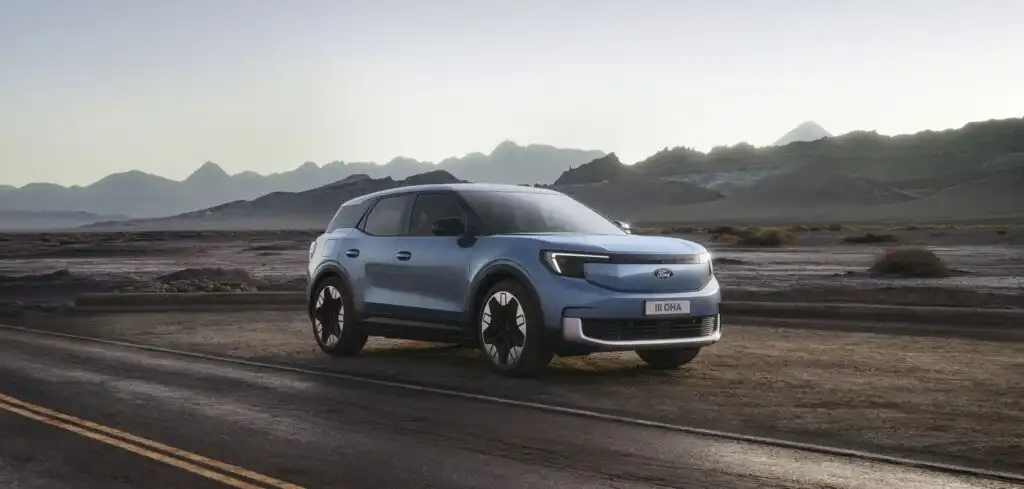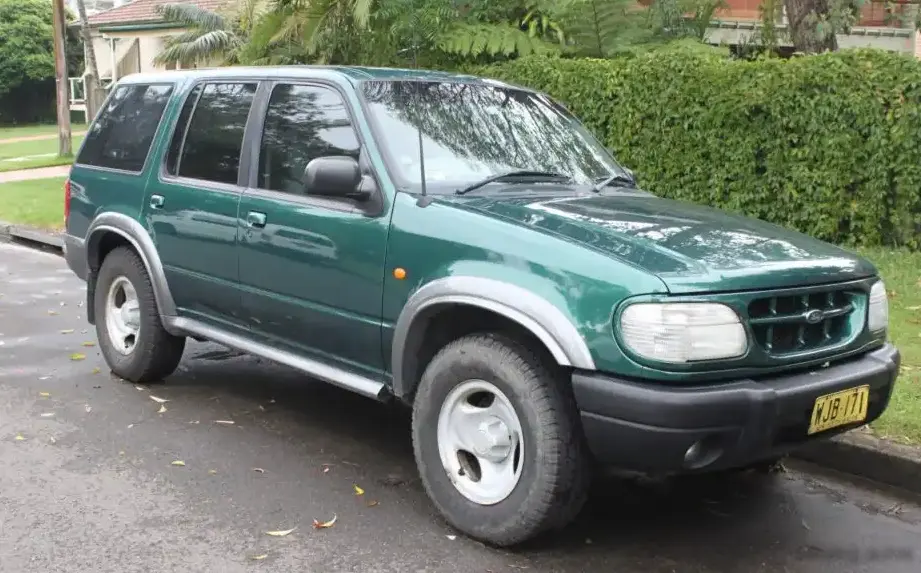
The Ford Explorer V, specifically the facelifted version produced from 2018 to 2019, represented a significant evolution of Ford’s popular mid-size SUV. This iteration, built on the D4 platform, continued the Explorer’s tradition of offering a spacious, family-oriented vehicle with a focus on comfort and capability. The 3.5 Ti-VCT V6 engine paired with a six-speed automatic transmission and four-wheel drive was a prominent configuration within the Explorer V lineup, positioned as a strong mid-range offering balancing performance and fuel efficiency. It served as a step up from the base 3.5L naturally aspirated engine, while remaining more accessible than the higher-performance EcoBoost variants.
Technical Specifications
| Brand | Ford |
| Model | Explorer |
| Generation | Explorer V (facelift 2018) |
| Type (Engine) | 3.5 Ti-VCT V6 (290 Hp) 4WD Automatic |
| Start of production | 2018 |
| End of production | 2019 |
| Powertrain Architecture | Internal Combustion engine |
| Body type | SUV |
| Seats | 7 |
| Doors | 5 |
| Fuel consumption (urban) | 13.8 l/100 km (17 US mpg, 20.5 UK mpg, 7.2 km/l) |
| Fuel consumption (extra urban) | 9.8 l/100 km (24 US mpg, 28.8 UK mpg, 10.2 km/l) |
| Fuel consumption (combined) | 11.7 l/100 km (20.1 US mpg, 24.1 UK mpg, 8.5 km/l) |
| Fuel Type | Petrol (Gasoline) |
| Weight-to-power ratio | 7.2 kg/Hp, 138 Hp/tonne |
| Weight-to-torque ratio | 6.1 kg/Nm, 164.6 Nm/tonne |
| Power | 290 Hp @ 6500 rpm |
| Power per litre | 83 Hp/l |
| Torque | 346 Nm @ 4000 rpm (255.2 lb.-ft. @ 4000 rpm) |
| Engine layout | Front, Transverse |
| Engine displacement | 3496 cm3 (213.34 cu. in.) |
| Number of cylinders | 6 |
| Engine configuration | V-engine |
| Cylinder Bore | 92.5 mm (3.64 in.) |
| Piston Stroke | 86.7 mm (3.41 in.) |
| Compression ratio | 10.8:1 |
| Number of valves per cylinder | 4 |
| Fuel injection system | Multi-port manifold injection |
| Engine aspiration | Naturally aspirated engine |
| Valvetrain | Ti-VCT |
| Engine oil capacity | 5.7 l (6.02 US qt | 5.02 UK qt) |
| Coolant capacity | 12.4 l (13.1 US qt | 10.91 UK qt) |
| Kerb Weight | 2102 kg (4634.12 lbs.) |
| Max. weight | 3225 kg (7109.91 lbs.) |
| Max load | 1123 kg (2475.79 lbs.) |
| Trunk (boot) space – minimum | 595 l (21.01 cu. ft.) |
| Trunk (boot) space – maximum | 2313 l (81.68 cu. ft.) |
| Fuel tank capacity | 70 l (18.49 US gal | 15.4 UK gal) |
| Length | 5047 mm (198.7 in.) |
| Width | 2004 mm (78.9 in.) |
| Width with mirrors folded | 2096 mm (82.52 in.) |
| Width including mirrors | 2291 mm (90.2 in.) |
| Height | 1803 mm (70.98 in.) |
| Wheelbase | 2865 mm (112.8 in.) |
| Front track | 1702 mm (67.01 in.) |
| Rear (Back) track | 1702 mm (67.01 in.) |
| Ride height (ground clearance) | 198 mm (7.8 in.) |
| Drag coefficient (Cd) | 0.35 |
| Approach angle | 15.6° |
| Departure angle | 20.9° |
| Ramp-over (brakeover) angle | 16.9° |
| Drive wheel | All wheel drive (4×4) |
| Number of gears and type of gearbox | 6 gears, automatic transmission |
| Front suspension | Independent, type McPherson with coil spring and anti-roll bar |
| Rear suspension | Independent multi-link spring suspension with stabilizer |
| Front brakes | Ventilated discs |
| Rear brakes | Ventilated discs |
| Assisting systems | ABS (Anti-lock braking system) |
| Steering type | Steering rack and pinion |
| Power steering | Electric Steering |
| Tires size | 245/60 R18 |
| Wheel rims size | 18 |
Powertrain & Engine Architecture
The heart of this Explorer variant is the 3.5-liter Ti-VCT V6 engine. “Ti-VCT” stands for Twin Independent Variable Camshaft Timing, a technology that allows for independent control of intake and exhaust valve timing on each cylinder head. This optimizes engine performance across the rev range, improving both power and fuel efficiency. The engine utilizes multi-port fuel injection, delivering fuel directly to the intake ports. The 6-speed automatic transmission, a staple in Ford vehicles of this era, was chosen for its balance of responsiveness and smoothness. It features a torque converter for smooth launches and low-speed driving, and allows for manual gear selection. The four-wheel-drive system is primarily front-wheel drive, engaging the rear wheels automatically when traction is lost.
Driving Characteristics
The 290 horsepower and 255 lb-ft of torque provided by the 3.5L V6 and six-speed automatic offered a comfortable and capable driving experience. Acceleration was adequate for everyday driving and highway merging, though not as brisk as the EcoBoost models. The automatic transmission was tuned for smooth shifts, prioritizing comfort over aggressive performance. The gear ratios were optimized for cruising, contributing to reasonable fuel economy on the highway. Compared to the manual transmission equipped Explorers, the automatic offered greater convenience, especially in city traffic. However, the manual versions generally felt more responsive and engaging to drive.
Equipment & Trim Levels
The 3.5L V6 with automatic transmission was typically offered on mid-level trims like the XLT and Limited. Standard features generally included tri-zone automatic climate control, a rearview camera, Ford’s SYNC infotainment system, and cloth upholstery. Higher trims added features like leather seats, power-adjustable front seats, a premium sound system, and advanced safety technologies like blind-spot monitoring and rear cross-traffic alert. Optional extras included a panoramic sunroof, navigation system, and a tow package.
Chassis & Braking
The Explorer V utilized an independent front suspension with McPherson struts and a multi-link independent rear suspension. This setup provided a comfortable ride quality, absorbing bumps and irregularities in the road effectively. Stabilizer bars were fitted to both the front and rear axles to reduce body roll during cornering. Braking duties were handled by ventilated discs on all four wheels, providing adequate stopping power for the vehicle’s weight. The anti-lock braking system (ABS) was standard, enhancing safety during emergency braking situations.
Market Reception & Comparison
Critics generally praised the Explorer V for its spacious interior, comfortable ride, and user-friendly technology. The 3.5L V6 automatic combination was seen as a good all-around choice for families who prioritized comfort and convenience over outright performance. Fuel economy was considered average for the segment, falling slightly behind some of the more fuel-efficient competitors. Reliability was generally good, though some owners reported minor issues with the infotainment system and the automatic transmission. Compared to the EcoBoost variants, the 3.5L V6 offered a lower price point but sacrificed some performance.
Legacy
The 3.5L Ti-VCT V6 engine proved to be a relatively reliable powertrain in the Explorer V. While not known for exceptional longevity like some of Toyota’s engines, it generally provided years of dependable service with proper maintenance. On the used car market, Explorers equipped with this engine and transmission are often seen as a good value, offering a comfortable and capable SUV at a reasonable price. The six-speed automatic transmission, while not the most advanced, has proven to be durable and relatively easy to maintain. As with any used vehicle, a thorough inspection by a qualified mechanic is recommended before purchase.