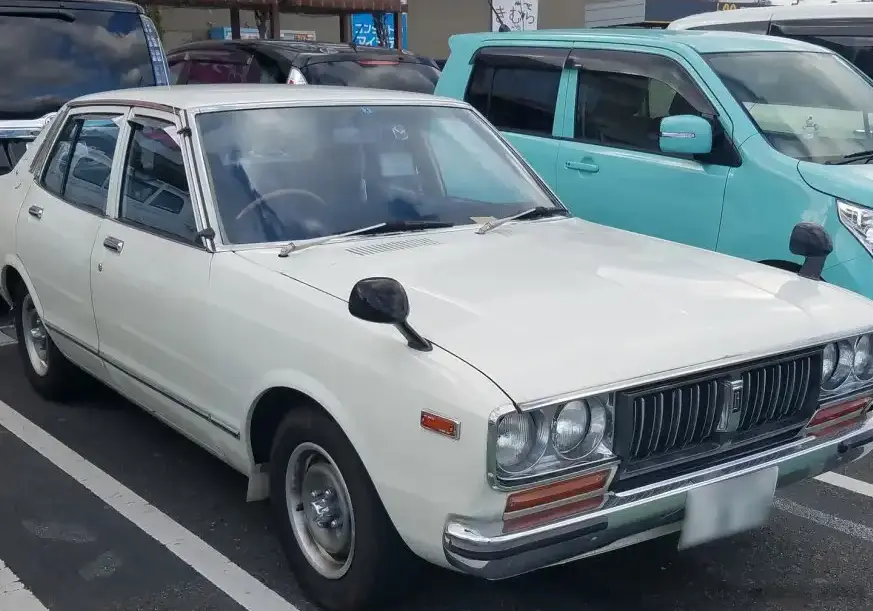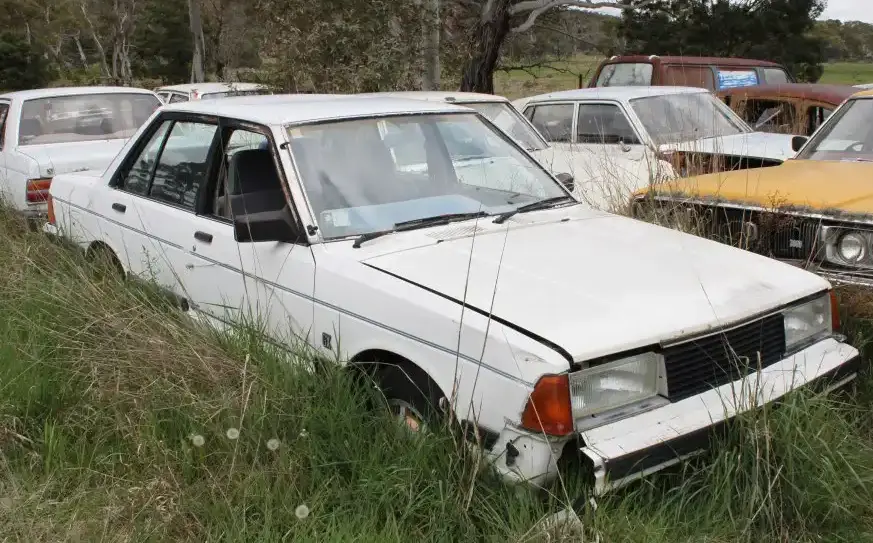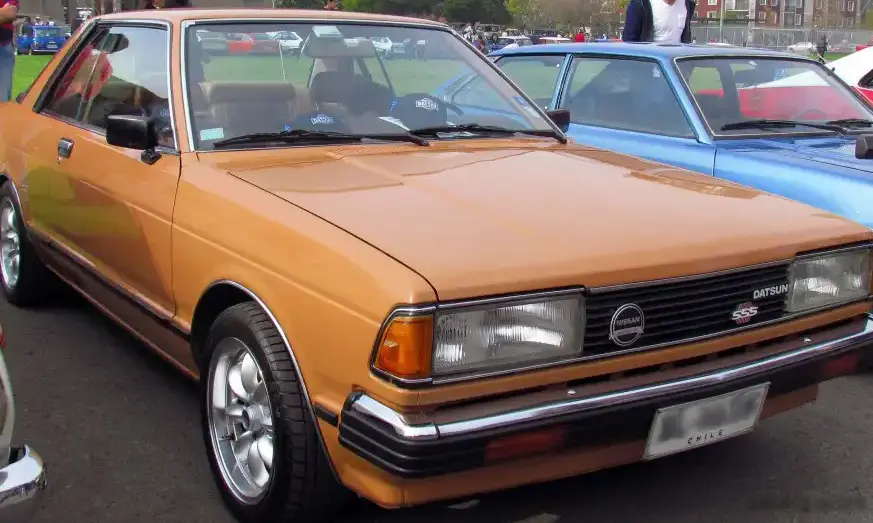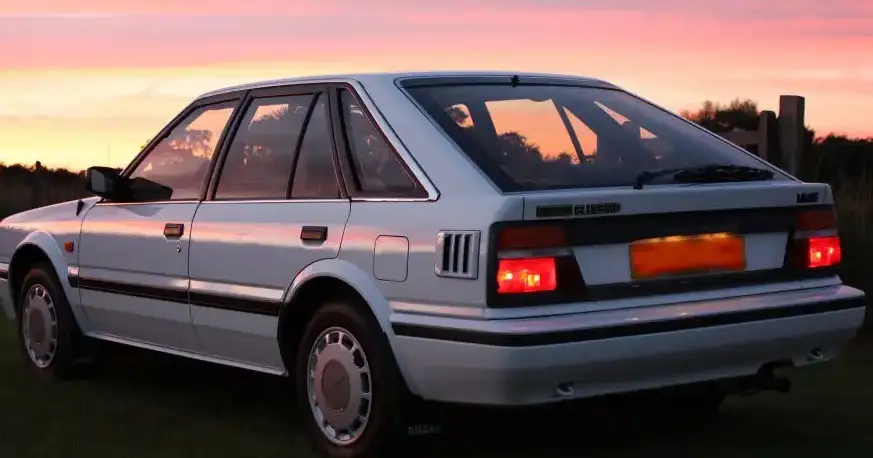
The Nissan Bluebird U12, produced between 1987 and 1991, represented a significant evolution of Nissan’s long-running Bluebird lineage. This generation, designated U12, aimed to offer a comfortable and reliable family sedan, primarily targeted at the Japanese domestic market and export markets like Australia and parts of Europe. The 1.6-liter (79 hp) automatic variant occupied an entry-level position within the U12 range, offering a balance of affordability and practicality. It served as a stepping stone into the Bluebird family, positioned below the more powerful 1.8 and 2.0-liter options, and the more sporting variants.
Technical Specifications
| Brand | Nissan |
| Model | Bluebird |
| Generation | Bluebird (U12) |
| Type | 1.6 (79 Hp) Automatic |
| Start of production | 1987 |
| End of production | 1991 |
| Powertrain Architecture | Internal Combustion engine |
| Body type | Sedan |
| Seats | 5 |
| Doors | 4 |
| Fuel Type | Petrol (Gasoline) |
| Power | 79 Hp @ 5200 rpm |
| Power per litre | 49.4 Hp/l |
| Torque | 123 Nm @ 3200 rpm / 90.72 lb.-ft. @ 3200 rpm |
| Engine layout | Front, Transverse |
| Engine Model/Code | CA16S |
| Engine displacement | 1598 cm3 / 97.52 cu. in. |
| Number of cylinders | 4 |
| Engine configuration | Inline |
| Cylinder Bore | 78 mm / 3.07 in. |
| Piston Stroke | 83.6 mm / 3.29 in. |
| Compression ratio | 9:1 |
| Number of valves per cylinder | 2 |
| Engine aspiration | Naturally aspirated engine |
| Valvetrain | OHC |
| Fuel tank capacity | 60 l / 15.85 US gal | 13.2 UK gal |
| Length | 4520 mm / 177.95 in. |
| Width | 1690 mm / 66.54 in. |
| Height | 1375 mm / 54.13 in. |
| Wheelbase | 2550 mm / 100.39 in. |
| Front track | 1460 mm / 57.48 in. |
| Rear (Back) track | 1440 mm / 56.69 in. |
| Minimum turning circle (turning diameter) | 10 m / 32.81 ft. |
| Drivetrain Architecture | The Internal combustion engine (ICE) drives the front wheels of the vehicle. |
| Drive wheel | Front wheel drive |
| Number of gears and type of gearbox | 4 gears, automatic transmission |
| Front brakes | Ventilated discs |
| Rear brakes | Drum |
Powertrain & Engine Architecture
The heart of the Bluebird 1.6 Automatic was the CA16S engine, a 1.6-liter inline-four cylinder gasoline engine. This engine utilized a single overhead camshaft (OHC) valvetrain, operating two valves per cylinder. Fuel delivery was managed by a carburetor system, typical for the era and market segment. The CA16S was known for its relative simplicity and durability, prioritizing reliability over outright performance. The engine’s 9:1 compression ratio was a compromise between efficiency and power output. Paired with this engine was a four-speed automatic transmission, designed for smooth and effortless driving. This transmission wasn’t particularly sophisticated, lacking features like overdrive or selectable modes, but it suited the intended use case of comfortable, everyday transportation.
Driving Characteristics
The 1.6-liter engine, producing 79 horsepower, delivered modest acceleration. The automatic transmission, while convenient, contributed to a somewhat sluggish feel compared to the available manual transmission options. Gear ratios were optimized for fuel economy and smooth cruising rather than spirited driving. In real-world conditions, the U12 1.6 Automatic was best suited for city driving and highway cruising at moderate speeds. Overtaking maneuvers required careful planning, and the engine could feel strained when pushed hard. Compared to the 1.8 and 2.0-liter variants, the 1.6 offered significantly less power and responsiveness. However, it provided a more relaxed driving experience, particularly appealing to drivers prioritizing comfort and ease of use.
Equipment & Trim Levels
The 1.6-liter automatic variant of the Bluebird U12 typically represented the base trim level. Standard features generally included cloth upholstery, a basic AM/FM radio, and manual windows and door locks. Air conditioning was often an optional extra, as were power windows and a more advanced audio system. The dashboard layout was functional and straightforward, prioritizing usability over aesthetic flair. Interior space was adequate for a family sedan of its size, offering comfortable seating for five passengers. The overall interior ambiance was practical and durable, reflecting the car’s focus on affordability and reliability.
Chassis & Braking
The U12 Bluebird featured a conventional front-engine, front-wheel-drive layout. The suspension consisted of MacPherson struts at the front and a semi-independent torsion beam setup at the rear. This suspension configuration provided a comfortable ride quality, absorbing bumps and imperfections in the road surface effectively. Braking duties were handled by ventilated disc brakes at the front and drum brakes at the rear. While adequate for normal driving conditions, the braking system lacked the stopping power and sophistication of more advanced setups found in higher-end vehicles. The car’s relatively light weight helped to mitigate the limitations of the drum brakes at the rear.
Market Reception & Comparison
The Nissan Bluebird U12 1.6 Automatic was generally well-received as a practical and reliable family car. Critics praised its comfortable ride, spacious interior, and fuel efficiency. However, the engine’s lack of power was a common criticism, particularly when compared to competitors offering more potent engines. In terms of fuel economy, the 1.6-liter variant offered a slight advantage over the larger-displacement engines in the Bluebird lineup. Reliability was a strong point, with the CA16S engine proving to be durable and relatively maintenance-free. Compared to rivals like the Toyota Corolla and Honda Civic, the Bluebird offered a similar level of practicality and reliability, often at a slightly lower price point.
Legacy
The Nissan Bluebird U12 1.6 Automatic, while not a performance icon, holds a respectable place in automotive history as a dependable and affordable family sedan. The CA16S engine, despite its age, is known for its longevity and relatively simple maintenance requirements. In the used car market today, these Bluebirds are often sought after by enthusiasts looking for a classic Japanese car that is easy to maintain and relatively inexpensive to repair. Parts availability can be a challenge in some regions, but the engine’s simplicity means that many repairs can be carried out by experienced DIY mechanics. The U12 Bluebird 1.6 Automatic represents a bygone era of automotive engineering, prioritizing practicality, reliability, and affordability over outright performance and technological innovation.