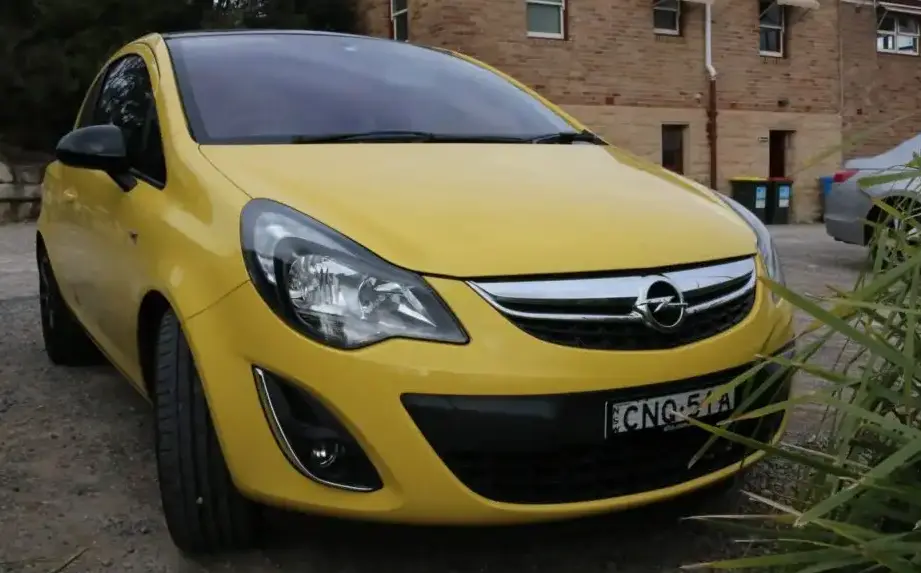
The Opel Corsa D (Facelift 2011) 1.3 CDTI ecoFLEX 3-door, producing 95 horsepower, was a key variant within the Corsa D range, manufactured from 2011 to August 2014. Positioned as an economy-focused option, it aimed to deliver low running costs and reasonable practicality within the subcompact hatchback segment. This model represented Opel’s efforts to balance fuel efficiency with everyday usability, particularly appealing to buyers in European markets where diesel engines and smaller cars were highly prevalent. It sat within the Corsa D lineup alongside petrol variants and a higher-output 1.7 CDTI diesel, offering a more affordable entry point into the range.
Technical Specifications
| Brand | Opel |
| Model | Corsa |
| Generation | Corsa D (Facelift 2011) 3-door |
| Type (Engine) | 1.3 CDTI ecoFLEX (95 Hp) Start/Stop |
| Start of production | 2011 |
| End of production | August, 2014 |
| Powertrain Architecture | Internal Combustion engine |
| Body type | Hatchback |
| Seats | 5 |
| Doors | 3 |
| Fuel consumption (urban) | 4.4 l/100 km (53.5 US mpg, 64.2 UK mpg, 22.7 km/l) |
| Fuel consumption (extra urban) | 3.1 l/100 km (75.9 US mpg, 91.1 UK mpg, 32.3 km/l) |
| Fuel consumption (combined) | 3.6 l/100 km (65.3 US mpg, 78.5 UK mpg, 27.8 km/l) |
| CO2 emissions | 104 g/km |
| Fuel Type | Diesel |
| Acceleration 0 – 100 km/h | 12.3 sec |
| Acceleration 0 – 62 mph | 12.3 sec |
| Acceleration 0 – 60 mph | 11.7 sec |
| Maximum speed | 177 km/h (109.98 mph) |
| Emission standard | Euro 5 |
| Weight-to-power ratio | 11.9 kg/Hp, 84.1 Hp/tonne |
| Weight-to-torque ratio | 5.9 kg/Nm, 168.1 Nm/tonne |
| Power | 95 Hp @ 4000 rpm |
| Power per litre | 76.1 Hp/l |
| Torque | 190 Nm @ 1750-3250 rpm (140.14 lb.-ft. @ 1750-3250 rpm) |
| Engine layout | Front, Transverse |
| Engine Model/Code | A13DTE |
| Engine displacement | 1248 cm3 (76.16 cu. in.) |
| Number of cylinders | 4 |
| Engine configuration | Inline |
| Cylinder Bore | 69.6 mm (2.74 in.) |
| Piston Stroke | 82 mm (3.23 in.) |
| Compression ratio | 16.8:1 |
| Number of valves per cylinder | 4 |
| Fuel injection system | Diesel Commonrail |
| Engine aspiration | Turbocharger, Intercooler |
| Engine oil capacity | 3.5 l (3.7 US qt | 3.08 UK qt) |
| Coolant | 6.3 l (6.66 US qt | 5.54 UK qt) |
| Kerb Weight | 1130 kg (2491.22 lbs.) |
| Max. weight | 1555 kg (3428.19 lbs.) |
| Max load | 425 kg (936.96 lbs.) |
| Trunk (boot) space – minimum | 285 l (10.06 cu. ft.) |
| Trunk (boot) space – maximum | 1050 l (37.08 cu. ft.) |
| Fuel tank capacity | 42 l (11.1 US gal | 9.24 UK gal) |
| Length | 3999 mm (157.44 in.) |
| Width | 1737 mm (68.39 in.) |
| Width including mirrors | 1944 mm (76.54 in.) |
| Height | 1488 mm (58.58 in.) |
| Wheelbase | 2511 mm (98.86 in.) |
| Front track | 1485 mm (58.46 in.) |
| Rear (Back) track | 1478 mm (58.19 in.) |
| Ride height (ground clearance) | 140 mm (5.51 in.) |
| Minimum turning circle | 10.4 m (34.12 ft.) |
| Drivetrain Architecture | ICE, Front wheel drive |
| Drive wheel | Front wheel drive |
| Number of gears and type of gearbox | 5 gears, manual transmission |
| Assisting systems | ABS (Anti-lock braking system) |
| Steering type | Steering rack and pinion |
| Tires size | 185/65 R15 |
| Wheel rims size | 15 |
Powertrain & Engine Architecture
The heart of this Corsa variant is the A13DTE engine, a 1.3-liter inline-four cylinder diesel. This engine is a common design within the General Motors/Fiat powertrain family, known for its relatively simple construction and fuel efficiency. It utilizes a common rail direct injection system, delivering fuel directly into the combustion chamber at high pressure for optimized combustion. A turbocharger with an intercooler is employed to boost power output and improve torque across a wider rev range. The engine produces 95 horsepower at 4000 rpm and 190 Nm (140 lb-ft) of torque between 1750 and 3250 rpm. The engine features a Start/Stop system, automatically shutting off the engine when the vehicle is stationary to further reduce fuel consumption and emissions. The engine is paired with a five-speed manual transmission, chosen for its cost-effectiveness and contribution to overall fuel economy.
Driving Characteristics
The 1.3 CDTI ecoFLEX with the manual transmission offers a driving experience focused on economy rather than outright performance. Acceleration from 0-60 mph takes around 11.7 seconds, and top speed is 177 km/h (109.98 mph). The engine feels responsive enough for everyday driving, with the torque band providing adequate pulling power for overtaking and climbing hills. However, it lacks the punch of higher-output diesel variants or petrol engines. The five-speed gearbox is well-matched to the engine’s characteristics, with gear ratios optimized for fuel efficiency. Compared to the 1.7 CDTI, this engine feels less powerful, but it offers superior fuel economy. The manual transmission provides more driver engagement than an automatic would, but also requires more effort in stop-and-go traffic.
Equipment & Trim Levels
The 1.3 CDTI ecoFLEX typically came with a modest level of standard equipment. Basic features included central locking, power steering, electric front windows, and an ABS anti-lock braking system. Interior upholstery was typically cloth, and the dashboard featured a simple, functional design. Optional extras included air conditioning, alloy wheels, a CD/radio system, and parking sensors. Trim levels varied slightly depending on the market, but generally, this variant represented the entry-level diesel option in the Corsa D range.
Chassis & Braking
The Corsa D’s chassis is a typical front-wheel-drive configuration with MacPherson strut suspension at the front and a torsion beam axle at the rear. The braking system consisted of disc brakes on the front wheels and drum brakes on the rear wheels, a cost-saving measure common in this segment. The suspension setup prioritized comfort and ride quality over sporty handling. Stabilizer bars were fitted to both the front and rear axles to reduce body roll during cornering. The relatively light weight of the vehicle (1130 kg / 2491 lbs) helped to compensate for the modest braking performance.
Market Reception & Comparison
The Opel Corsa D 1.3 CDTI ecoFLEX was generally well-received by critics for its fuel efficiency and low running costs. It was praised as a practical and affordable option for urban commuters and those seeking a cost-effective hatchback. However, some reviewers noted the engine’s lack of power and the somewhat basic interior. Compared to the 1.7 CDTI, the 1.3 offered better fuel economy but less performance. Against petrol-powered Corsas, the diesel provided superior fuel efficiency but came with a higher purchase price and potentially higher maintenance costs.
Legacy
The A13DTE engine, while not known for being particularly exciting, proved to be relatively reliable. Common issues included turbocharger wear and potential problems with the diesel particulate filter (DPF), particularly on vehicles used primarily for short journeys. Today, used examples of the Corsa D 1.3 CDTI ecoFLEX are readily available and represent an affordable entry point into diesel hatchback ownership. However, potential buyers should be aware of the potential maintenance costs associated with diesel engines, particularly the DPF. The Corsa D, in general, remains a popular choice for budget-conscious buyers seeking a practical and economical small car.