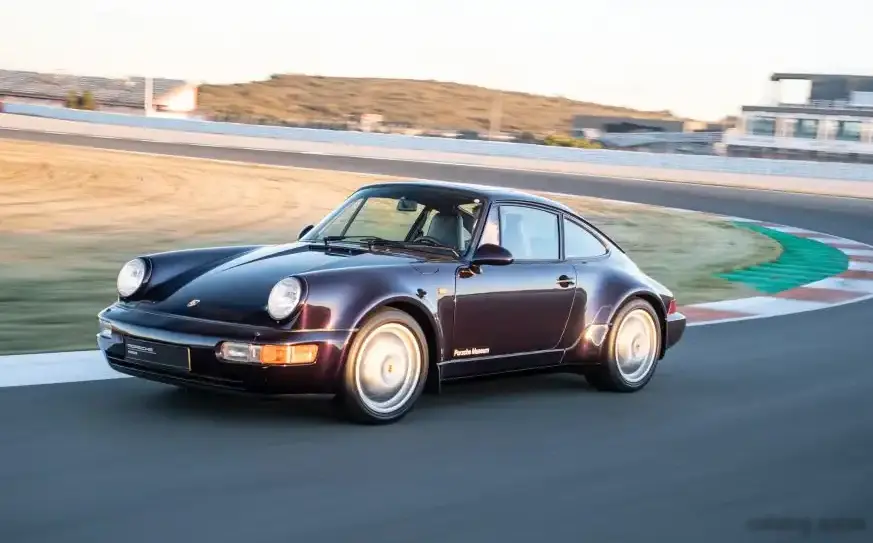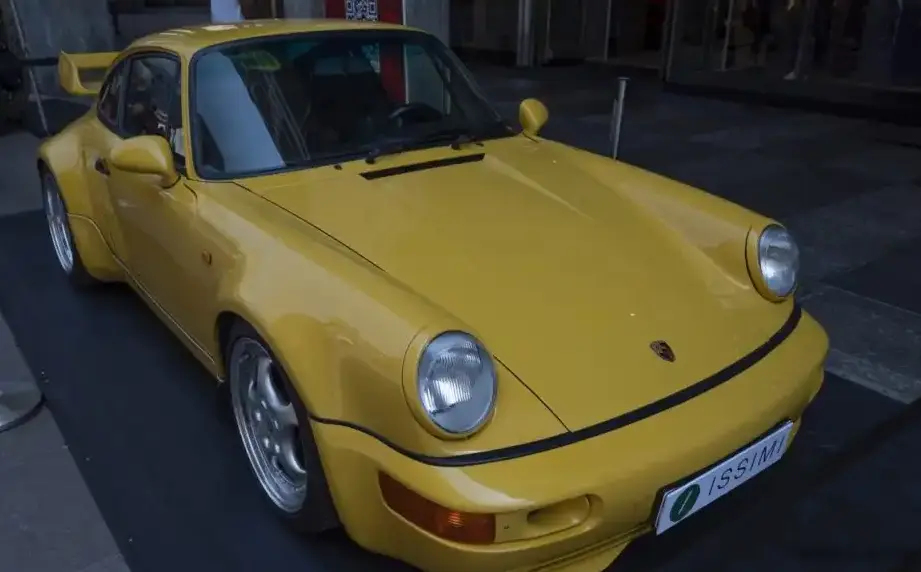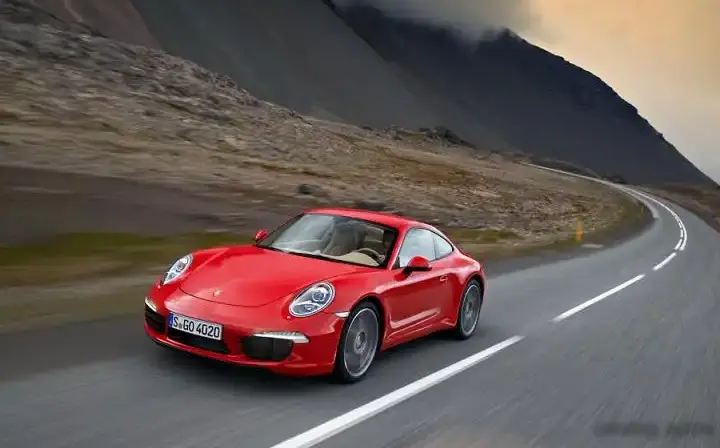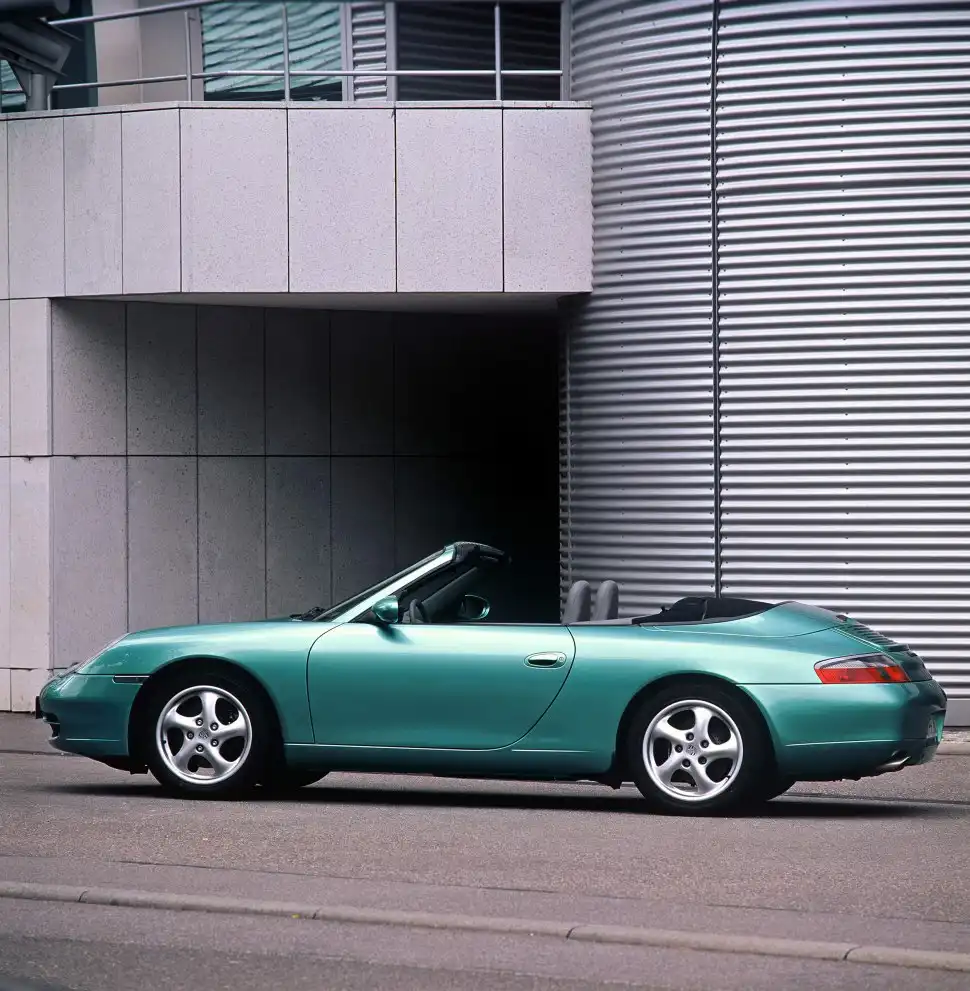
The Porsche 911 Cabriolet (996) Carrera 4 3.4, equipped with the Tiptronic S automatic transmission, represents a significant evolution in the iconic 911 lineage. Produced from 1998 to 2001, this variant occupied a middle ground within the 996 generation, offering all-wheel drive capability and a more accessible automatic transmission option compared to the more performance-focused Carrera models and the higher-spec Turbo variants. It was positioned as a luxurious and capable grand tourer, blending the 911’s inherent sporting character with added comfort and convenience. The 996 generation itself was a pivotal moment for Porsche, marking the first complete redesign of the 911 since its original introduction in 1963, and the Carrera 4 3.4 Tiptronic S embodied many of the advancements made during this period.
Technical Specifications
| Brand | Porsche |
| Model | 911 |
| Generation | 911 Cabriolet (996) |
| Type | Carrera 4 3.4 (300 Hp) Tiptronic S |
| Start of production | 1998 |
| End of production | 2001 |
| Powertrain Architecture | Internal Combustion engine |
| Body type | Cabriolet |
| Seats | 4 |
| Doors | 2 |
| Fuel consumption (urban) | 18.2 l/100 km (12.9 US mpg, 15.5 UK mpg, 5.5 km/l) |
| Fuel consumption (extra urban) | 8.5 l/100 km (27.7 US mpg, 33.2 UK mpg, 11.8 km/l) |
| Fuel consumption (combined) | 12 l/100 km (19.6 US mpg, 23.5 UK mpg, 8.3 km/l) |
| Fuel Type | Petrol (Gasoline) |
| Acceleration 0 – 100 km/h | 6.2 sec |
| Acceleration 0 – 62 mph | 6.2 sec |
| Acceleration 0 – 60 mph | 5.9 sec |
| Maximum speed | 275 km/h (170.88 mph) |
| Power | 300 Hp @ 6800 rpm |
| Power per litre | 88.6 Hp/l |
| Torque | 350 Nm @ 4600 rpm (258.15 lb.-ft. @ 4600 rpm) |
| Engine layout | Rear, Longitudinal |
| Engine Model/Code | M96.01, M96.04 |
| Engine displacement | 3387 cm3 (206.69 cu. in.) |
| Number of cylinders | 6 |
| Engine configuration | Boxer |
| Cylinder Bore | 96 mm (3.78 in.) |
| Piston Stroke | 78 mm (3.07 in.) |
| Compression ratio | 11.3:1 |
| Number of valves per cylinder | 4 |
| Fuel injection system | Multi-port manifold injection |
| Engine aspiration | Naturally aspirated engine |
| Engine oil capacity | 8.3 l (8.77 US qt, 7.3 UK qt) |
| Coolant | 22.5 l (23.78 US qt, 19.8 UK qt) |
| Length | 4430 mm (174.41 in.) |
| Width | 1765 mm (69.49 in.) |
| Height | 1305 mm (51.38 in.) |
| Wheelbase | 2350 mm (92.52 in.) |
| Front track | 1455 mm (57.28 in.) |
| Rear track | 1500 mm (59.06 in.) |
| Drive wheel | All wheel drive (4×4) |
| Number of gears and type of gearbox | 5 gears, automatic transmission Tiptronic S |
| Front suspension | Independent, type McPherson with coil spring and anti-roll bar |
| Rear suspension | Independent multi-link suspension |
| Front brakes | Ventilated discs |
| Rear brakes | Ventilated discs |
| Assisting systems | ABS (Anti-lock braking system) |
| Steering type | Steering rack and pinion |
| Power steering | Hydraulic Steering |
| Tires size | 205/50 R17; 255/40 R17 |
| Wheel rims size | 7J x 17; 9J x 17 |
Introduction
The 996 Carrera 4 3.4 Tiptronic S, launched in 1998, represented Porsche’s attempt to modernize the 911 while retaining its core characteristics. The 996 platform was a radical departure from previous generations, featuring a completely new chassis, engine, and interior. The Carrera 4 designation signified the inclusion of Porsche’s all-wheel-drive system, providing enhanced traction and stability, particularly in inclement weather. The 3.4-liter engine, coupled with the Tiptronic S five-speed automatic transmission, aimed to deliver a balance between performance and ease of use, appealing to buyers who desired a more relaxed driving experience without sacrificing the 911’s inherent sporting nature.
Powertrain & Engine Architecture
At the heart of the Carrera 4 3.4 Tiptronic S lies the M96.01 or M96.04 flat-six engine. This 3.4-liter naturally aspirated powerplant featured a water-cooled design – a first for the 911 – and utilized multi-port fuel injection. The engine produced 300 horsepower at 6800 rpm and 350 Nm (258 lb-ft) of torque at 4600 rpm. The boxer configuration, with its horizontally opposed cylinders, contributed to a low center of gravity, enhancing handling. The Tiptronic S transmission was a five-speed automatic with a manual shift mode, allowing drivers to select gears for more spirited driving. It featured adaptive shift programming, adjusting shift points based on driving style. While not as quick-shifting as a traditional manual, the Tiptronic S offered a smoother and more convenient driving experience, especially in urban environments.
Driving Characteristics
The Carrera 4 3.4 Tiptronic S offered a refined and capable driving experience. While not as brutally fast as the Carrera models with manual transmissions or the Turbo variants, it still delivered respectable acceleration, reaching 60 mph in around 5.9 seconds and a top speed of 171 mph. The all-wheel-drive system provided excellent grip, inspiring confidence in various driving conditions. The Tiptronic S transmission, while smooth, did introduce a slight efficiency penalty compared to the manual gearbox. The gear ratios were tuned for a balance of acceleration and fuel economy, but the automatic nature of the transmission meant that some of the engine’s responsiveness was lost. Compared to the 3.6-liter Carrera 2 or 4, the 3.4-liter engine felt less potent, but the all-wheel drive provided a more planted feel, especially during cornering.
Equipment & Trim Levels
The Carrera 4 3.4 Tiptronic S came standard with a comprehensive list of features, including leather upholstery, power-adjustable seats, automatic climate control, and a high-end audio system. Optional extras were plentiful, allowing buyers to personalize their vehicles. Popular options included sport seats, a sunroof, navigation system, and upgraded interior trim materials. The interior design of the 996 was a significant departure from previous 911s, featuring a more modern and ergonomic layout. The dashboard was dominated by a central gauge cluster, and the overall ambiance was one of understated luxury.
Chassis & Braking
The 996 chassis was a major advancement over previous 911 generations, utilizing a monocoque construction for increased rigidity. The Carrera 4 3.4 Tiptronic S featured an independent suspension system with McPherson struts at the front and a multi-link setup at the rear. Ventilated disc brakes were fitted on all four wheels, providing ample stopping power. The all-wheel-drive system employed a viscous coupling to distribute torque between the front and rear axles, ensuring optimal traction. Stabilizer bars were used at both ends to reduce body roll during cornering.
Market Reception & Comparison
The 996 Carrera 4 3.4 Tiptronic S was generally well-received by automotive critics. It was praised for its comfortable ride, refined interior, and all-weather capability. However, some critics noted that the Tiptronic S transmission lacked the engagement of a manual gearbox and that the 3.4-liter engine felt somewhat underpowered compared to the larger-displacement options. Compared to the 996 Carrera 2 or 4 with a manual transmission, the Tiptronic S version was typically priced slightly lower. Fuel economy was reasonable for a sports car of its caliber, averaging around 19.6 US mpg in combined driving.
Legacy
The 996 Carrera 4 3.4 Tiptronic S has become a desirable entry point into the world of Porsche ownership. While early 996 models were sometimes plagued by intermediate shaft (IMS) bearing failures, many owners have proactively addressed this issue with preventative maintenance. Today, well-maintained examples command respectable prices in the used car market. The combination of all-wheel drive, automatic transmission, and a relatively affordable price point makes it an attractive option for buyers seeking a classic Porsche experience with a touch of modern convenience. The 996 generation, and this variant in particular, played a crucial role in bridging the gap between the traditional air-cooled 911s and the more technologically advanced models that followed.