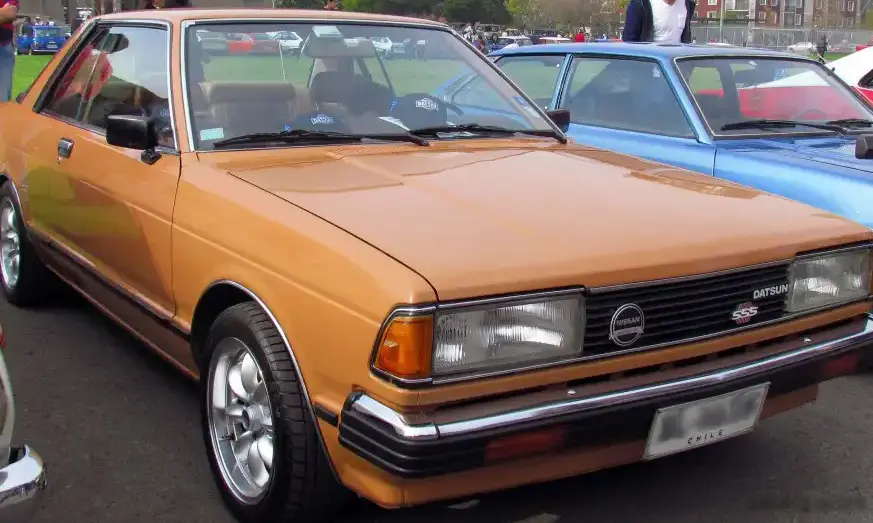
The Nissan Bluebird U12, produced between 1987 and 1991, represented a significant evolution in Nissan’s mid-size sedan offerings. This generation, known for its comfortable ride and practical design, aimed to provide a reliable and affordable family vehicle. The 1.8i variant, equipped with an 88 horsepower engine and a four-speed automatic transmission, occupied a central position within the U12 Bluebird lineup, offering a balance between performance and economy. It was primarily marketed towards buyers seeking a comfortable and easy-to-drive sedan for daily commuting and family use, particularly in markets where manual transmissions were less popular.
Technical Specifications
| Brand | Nissan |
| Model | Bluebird |
| Generation | Bluebird (U12) |
| Type | 1.8i (88 Hp) Automatic |
| Start of production | 1987 |
| End of production | 1991 |
| Powertrain Architecture | Internal Combustion engine |
| Body type | Sedan |
| Seats | 5 |
| Doors | 4 |
| Fuel consumption (urban) | 7.4 l/100 km (31.8 US mpg, 38.2 UK mpg, 13.5 km/l) |
| Fuel Type | Petrol (Gasoline) |
| Power | 88 Hp @ 5200 rpm |
| Power per litre | 48.6 Hp/l |
| Torque | 142 Nm @ 3200 rpm (104.73 lb.-ft. @ 3200 rpm) |
| Engine layout | Front, Transverse |
| Engine displacement | 1809 cm3 (110.39 cu. in.) |
| Number of cylinders | 4 |
| Engine configuration | Inline |
| Engine aspiration | Naturally aspirated |
| Fuel tank capacity | 60 l (15.85 US gal, 13.2 UK gal) |
| Length | 4520 mm (177.95 in.) |
| Width | 1690 mm (66.54 in.) |
| Height | 1375 mm (54.13 in.) |
| Wheelbase | 2550 mm (100.39 in.) |
| Front track | 1460 mm (57.48 in.) |
| Rear track | 1440 mm (56.69 in.) |
| Minimum turning circle | 10 m (32.81 ft.) |
| Drivetrain | Front wheel drive |
| Number of gears | 4 |
| Gearbox type | Automatic transmission |
| Front brakes | Ventilated discs |
| Rear brakes | Drum |
Powertrain & Engine Architecture
The heart of the Bluebird 1.8i Automatic was Nissan’s GA16DE engine, an inline four-cylinder, naturally aspirated powerplant. This engine, part of Nissan’s ‘E’ series, featured a single overhead camshaft (SOHC) valvetrain with two valves per cylinder. Fuel delivery was managed by a multi-point fuel injection system, contributing to improved fuel efficiency and smoother operation compared to earlier carbureted designs. The GA16DE was known for its relatively simple design, making it reasonably reliable and easy to maintain. The four-speed automatic transmission, a common unit in Nissan vehicles of the era, was chosen for its convenience and ease of use, appealing to a broader customer base. While not particularly sporty, the transmission provided smooth shifts and adequate performance for everyday driving. The engine code, often found as GA16DE, is crucial for identifying specific parts and service information.
Driving Characteristics
The 1.8i Automatic Bluebird offered a comfortable, rather than exhilarating, driving experience. With 88 horsepower and 104.73 lb-ft of torque, acceleration was adequate for merging onto highways and navigating city streets, but it wasn’t designed for rapid acceleration. The automatic transmission’s gear ratios were tuned for fuel economy and smooth cruising, resulting in a somewhat leisurely pace. Compared to the manual transmission versions of the Bluebird, the automatic suffered a slight performance penalty. The higher-output engines, such as the 2.0-liter variants, offered significantly more power and a more engaging driving experience. However, the automatic transmission provided a level of convenience that many drivers appreciated, particularly in congested urban environments.
Equipment & Trim Levels
The 1.8i Automatic trim typically included features such as power steering, a basic audio system, and cloth upholstery. Depending on the market and optional packages selected, additional features could include air conditioning, power windows, and central locking. Interior appointments were generally functional and durable, prioritizing practicality over luxury. The dashboard layout was straightforward and easy to use, with clearly labeled controls. Higher trim levels within the U12 Bluebird range offered more luxurious features, such as upgraded upholstery, alloy wheels, and a more sophisticated audio system. The 1.8i Automatic served as a solid base model, offering essential features at an affordable price point.
Chassis & Braking
The Bluebird U12 utilized a front-engine, front-wheel-drive layout. The suspension consisted of MacPherson struts at the front and a semi-independent torsion beam at the rear. This setup provided a comfortable ride quality, absorbing bumps and irregularities in the road surface effectively. Braking duties were handled by ventilated disc brakes at the front and drum brakes at the rear. While adequate for normal driving conditions, the rear drum brakes were a cost-saving measure and didn’t offer the same stopping power as disc brakes. Stabilizer bars were typically included to reduce body roll during cornering, enhancing handling stability.
Market Reception & Comparison
The Nissan Bluebird U12 1.8i Automatic was generally well-received by critics as a practical and reliable family sedan. It was praised for its comfortable ride, spacious interior, and fuel efficiency. However, some reviewers noted that the engine lacked significant power, and the automatic transmission could feel sluggish at times. Compared to competitors like the Toyota Corolla and Honda Accord, the Bluebird offered a competitive package in terms of price and features. The 1.8i Automatic variant typically achieved better fuel economy than the higher-output engines, making it an attractive option for budget-conscious buyers. Reliability was a strong point, with the GA16DE engine proving to be durable and long-lasting.
Legacy
The Nissan Bluebird U12, and specifically the 1.8i Automatic variant, has maintained a reputation for reliability and affordability in the used car market. The GA16DE engine is known for its longevity, and parts availability remains relatively good. While not a particularly sought-after model by enthusiasts, the U12 Bluebird represents a solid and dependable choice for those seeking a classic Japanese sedan. Its simple design and robust construction contribute to its continued usability and appeal as a practical and economical transportation option. The 1.8i Automatic, while not the most powerful or sporty version, remains a testament to Nissan’s commitment to building reliable and accessible vehicles.