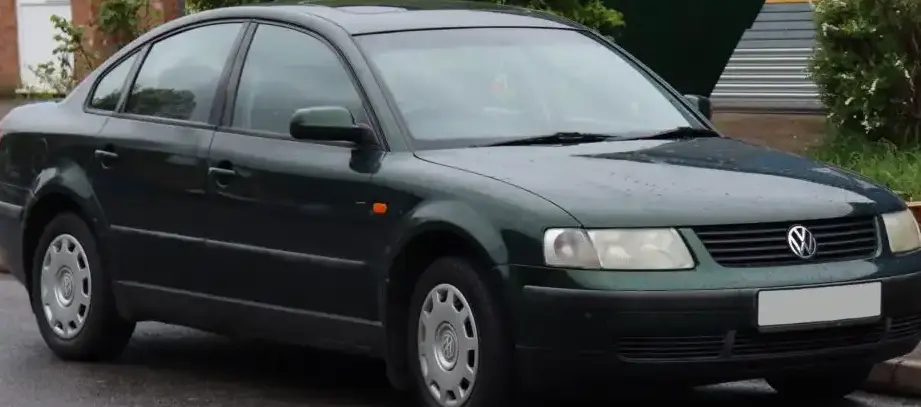
The Volkswagen Passat B5 2.0i Automatic, produced between 1997 and 2000, represented a significant step forward for Volkswagen’s mid-size offering. Positioned as a comfortable and practical family sedan, this variant utilized a 2.0-liter inline-four engine paired with a four-speed automatic transmission. It occupied a middle ground within the B5 Passat lineup, offering a balance between affordability and refinement compared to the more powerful VR6 models or the fuel-efficient TDI diesels. The B5 generation, built on the 1HX0/A3 platform, aimed to elevate the Passat’s image and compete more effectively with established rivals like the Ford Mondeo and Opel Vectra in the European market, and the Honda Accord and Toyota Camry in North America.
Technical Specifications
| Brand | Volkswagen |
| Model | Passat |
| Generation | Passat (B5) |
| Type (Engine) | 2.0 i (115 Hp) Automatic |
| Start of production | 1997 |
| End of production | 2000 |
| Powertrain Architecture | Internal Combustion engine |
| Body type | Sedan |
| Seats | 5 |
| Doors | 4 |
| Fuel consumption (urban) | 13.3 l/100 km (17.7 US mpg, 21.2 UK mpg, 7.5 km/l) |
| Fuel consumption (extra urban) | 7.5 l/100 km (31.4 US mpg, 37.7 UK mpg, 13.3 km/l) |
| Fuel consumption (combined) | 9.6 l/100 km (24.5 US mpg, 29.4 UK mpg, 10.4 km/l) |
| Fuel Type | Petrol (Gasoline) |
| Acceleration 0 – 100 km/h | 12.4 sec |
| Acceleration 0 – 62 mph | 12.4 sec |
| Acceleration 0 – 60 mph | 11.8 sec |
| Maximum speed | 193 km/h (119.92 mph) |
| Weight-to-power ratio | 11.7 kg/Hp, 85.8 Hp/tonne |
| Weight-to-torque ratio | 7.8 kg/Nm, 128.4 Nm/tonne |
| Power | 115 Hp @ 5400 rpm |
| Power per litre | 58 Hp/l |
| Torque | 172 Nm @ 3200 rpm (126.86 lb.-ft. @ 3200 rpm) |
| Engine layout | Front, Longitudinal |
| Engine Model/Code | AZM, BFF |
| Engine displacement | 1984 cm3 (121.07 cu. in.) |
| Number of cylinders | 4 |
| Engine configuration | Inline |
| Cylinder Bore | 82.5 mm (3.25 in.) |
| Piston Stroke | 92.8 mm (3.65 in.) |
| Compression ratio | 10.3:1 |
| Number of valves per cylinder | 2 |
| Fuel injection system | Multi-port manifold injection |
| Engine aspiration | Naturally aspirated engine |
| Engine oil capacity | 4 l (4.23 US qt | 3.52 UK qt) |
| Coolant capacity | 7 l (7.4 US qt | 6.16 UK qt) |
| Kerb Weight | 1340 kg (2954.19 lbs.) |
| Max. weight | 1900 kg (4188.78 lbs.) |
| Max load | 560 kg (1234.59 lbs.) |
| Trunk (boot) space – minimum | 475 l (16.77 cu. ft.) |
| Trunk (boot) space – maximum | 800 l (28.25 cu. ft.) |
| Fuel tank capacity | 62 l (16.38 US gal | 13.64 UK gal) |
| Length | 4703 mm (185.16 in.) |
| Width | 1746 mm (68.74 in.) |
| Height | 1462 mm (57.56 in.) |
| Wheelbase | 2703 mm (106.42 in.) |
| Front track | 1515 mm (59.65 in.) |
| Rear (Back) track | 1515 mm (59.65 in.) |
| Drivetrain Architecture | The Internal combustion engine (ICE) drives the front wheels of the vehicle. |
| Drive wheel | Front wheel drive |
| Number of gears and type of gearbox | 4 gears, automatic transmission |
| Front suspension | Coil spring |
| Rear suspension | Coil spring |
| Front brakes | Ventilated discs |
| Rear brakes | Disc |
| Assisting systems | ABS (Anti-lock braking system) |
| Steering type | Steering rack and pinion |
| Power steering | Hydraulic Steering |
| Tires size | 195/65 R15 |
| Wheel rims size | 15 |
Powertrain & Engine Architecture
The heart of the Passat 2.0i Automatic was the Volkswagen AZM or BFF engine, a 1.984-liter (121.07 cubic inches) inline-four cylinder gasoline engine. This engine featured a cast iron block and an aluminum cylinder head, employing a single overhead camshaft (SOHC) design with two valves per cylinder. Fuel delivery was managed by a Bosch Motronic multi-port fuel injection system, providing adequate, though not exceptional, performance. The engine’s 115 horsepower at 5400 rpm and 172 Nm (126.86 lb-ft) of torque at 3200 rpm were respectable for its displacement and intended purpose. The four-speed automatic transmission, while providing convenience, was a relatively older design compared to the five-speed manual available on other Passat models. It prioritized smooth shifts over outright performance, and its gear ratios were tuned for fuel economy and comfortable cruising rather than spirited acceleration.
Driving Characteristics
The 2.0i Automatic Passat offered a comfortable and predictable driving experience. Acceleration was adequate for everyday driving, with a 0-60 mph time of around 11.8 seconds. However, it lacked the punch of the VR6 models and felt noticeably slower than the versions equipped with a manual transmission. The automatic transmission, while smooth, could sometimes feel hesitant during overtaking maneuvers, requiring a deliberate kickdown to access more power. The suspension, tuned for comfort, provided a relatively soft ride, absorbing bumps and imperfections in the road well. Steering was light and precise, making the car easy to maneuver in urban environments. Overall, the driving experience was geared towards practicality and ease of use rather than sporty performance.
Equipment & Trim Levels
The 2.0i Automatic trim typically included features such as power windows, central locking, power steering, and an AM/FM radio. Air conditioning was often standard, though it could be an optional extra depending on the market. Interior upholstery was typically cloth, with options for upgraded materials available. Higher trim levels within the 2.0i range might have included features like alloy wheels, a sunroof, and upgraded audio systems. Safety features included ABS anti-lock brakes and driver and passenger airbags. The overall interior design was functional and well-built, reflecting Volkswagen’s reputation for quality.
Chassis & Braking
The Passat B5 featured an independent suspension setup at all four wheels, utilizing coil springs and shock absorbers. The front suspension employed MacPherson struts, while the rear suspension used a multi-link design. This configuration provided a good balance between ride comfort and handling. Braking duties were handled by ventilated discs at the front and solid discs at the rear. The ABS anti-lock braking system was standard, enhancing safety and control during emergency braking situations. The chassis was robust and well-engineered, contributing to the car’s overall stability and handling characteristics.
Market Reception & Comparison
The Passat 2.0i Automatic was generally well-received by critics as a practical and comfortable family sedan. However, it was often criticized for its relatively lackluster performance compared to the VR6 models and its competitors. Fuel economy was considered average for its class. Compared to the 1.8-liter turbocharged versions or the 1.9 TDI diesel, the 2.0i Automatic offered less power and torque but was generally considered more reliable and less prone to expensive repairs. The TDI models were favored by those prioritizing fuel efficiency, while the VR6 appealed to drivers seeking more performance. The 2.0i Automatic occupied a middle ground, appealing to buyers who valued comfort, practicality, and affordability.
Legacy
The Volkswagen Passat B5 2.0i Automatic has proven to be a relatively reliable and durable vehicle. The 2.0-liter engine, while not particularly exciting, is known for its longevity and relatively low maintenance costs. The automatic transmission, while older, is generally robust if properly maintained. Today, these Passats can be found in the used car market at affordable prices, making them attractive options for budget-conscious buyers. However, potential buyers should be aware of potential issues such as corrosion, particularly in areas with harsh winters. Overall, the Passat B5 2.0i Automatic remains a testament to Volkswagen’s commitment to building practical, well-engineered, and long-lasting vehicles.