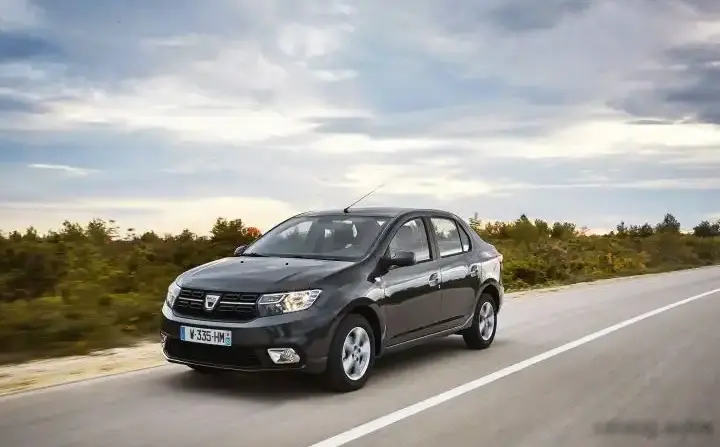
The Dacia Logan II (facelift 2016) 1.0 ECO-G (101 hp) LPG represents a specific variant within the second generation of Dacia’s popular Logan sedan. Introduced in January 2020 and produced until September of the same year, this model combined a three-cylinder, turbocharged engine with the flexibility of both petrol and Liquefied Petroleum Gas (LPG) fuel options. Positioned as an economical choice within the Logan II range, it catered to buyers seeking low running costs and a practical, no-frills vehicle. This variant was primarily aimed at the European market, where LPG conversions and bi-fuel vehicles are more common and benefit from favorable tax incentives.
Technical Specifications
| Brand | Dacia |
| Model | Logan |
| Generation | Logan II (facelift 2016) |
| Type (Engine) | 1.0 ECO-G (101 Hp) LPG |
| Start of production | January, 2020 |
| End of production | September, 2020 |
| Powertrain Architecture | Internal Combustion engine |
| Body type | Sedan |
| Seats | 5 |
| Doors | 4 |
| Fuel consumption (combined NEDC) | 4.4-4.8 l/100 km (53.5 – 49 US mpg, 64.2 – 58.9 UK mpg, 22.7 – 20.8 km/l) |
| CO2 emissions (NEDC) | 98-108 g/km |
| Fuel Type | Petrol / LPG |
| Emission standard | Euro 6d-TEMP |
| Weight-to-power ratio | 11.5 kg/Hp, 87.1 Hp/tonne |
| Weight-to-torque ratio | 6.8 kg/Nm, 146.7 Nm/tonne |
| Power | 101 Hp @ 5000 rpm |
| Power per litre | 101.1 Hp/l |
| Torque | 170 Nm @ 2000 rpm (125.39 lb.-ft. @ 2000 rpm) |
| Engine layout | Front, Transverse |
| Engine Model/Code | H4Dt |
| Engine displacement | 999 cm3 (60.96 cu. in.) |
| Number of cylinders | 3 |
| Engine configuration | Inline |
| Number of valves per cylinder | 4 |
| Fuel injection system | Multi-port manifold injection |
| Engine aspiration | Turbocharger |
| Engine oil capacity | 4.1 l (4.33 US qt | 3.61 UK qt) |
| Coolant capacity | 4.5 l (4.76 US qt | 3.96 UK qt) |
| Kerb Weight | 1159 kg (2555.16 lbs.) |
| Max. weight | 1590 kg (3505.35 lbs.) |
| Max load | 431 kg (950.19 lbs.) |
| Trunk (boot) space – minimum | 510 l (18.01 cu. ft.) |
| Trunk (boot) space – maximum | 1257 l (44.39 cu. ft.) |
| Fuel tank capacity | 50 l (13.21 US gal | 11 UK gal) |
| Fuel tank capacity (LPG) | 32 l |
| Permitted trailer load with brakes (12%) | 1090 kg (2403.04 lbs.) |
| Permitted trailer load without brakes | 575 kg (1267.66 lbs.) |
| Length | 4346 mm (171.1 in.) |
| Width | 1733 mm (68.23 in.) |
| Width including mirrors | 1994 mm (78.5 in.) |
| Height | 1517 mm (59.72 in.) |
| Wheelbase | 2634 mm (103.7 in.) |
| Front track | 1497 mm (58.94 in.) |
| Rear track | 1486 mm (58.5 in.) |
| Front overhang | 827 mm (32.56 in.) |
| Rear overhang | 885 mm (34.84 in.) |
| Ride height (ground clearance) | 130 mm (5.12 in.) |
| Minimum turning circle | 10.8 m (35.43 ft.) |
| Drivetrain Architecture | The Internal combustion engine (ICE) drives the front wheels of the vehicle. |
| Drive wheel | Front wheel drive |
| Number of gears and type of gearbox | 5 gears, manual transmission |
| Front brakes | Ventilated discs, 258×22 mm |
| Rear brakes | Drum |
| Assisting systems | ABS (Anti-lock braking system) |
| Steering type | Steering rack and pinion |
| Power steering | Hydraulic Steering |
| Tires size | 185/65 R15 |
| Wheel rims size | 6J x 15 |
INTRODUCTION
The Dacia Logan II facelift, launched in 2016, represented a significant refresh of the already popular second-generation Logan. The 1.0 ECO-G (101 hp) LPG variant, introduced in 2020, was a late addition to the range, capitalizing on growing demand for alternative fuel vehicles. Built on the 1HX0/A3 platform, the Logan II offered a spacious interior and a large trunk, making it a practical choice for families and businesses. The ECO-G version specifically targeted cost-conscious buyers looking to reduce their fuel expenses through the use of LPG, a readily available and often cheaper fuel source in many European countries.
Powertrain & Engine Architecture
At the heart of the Logan II 1.0 ECO-G lies the H4Dt engine, a 999cc three-cylinder petrol unit. This engine is turbocharged, providing a reasonable power output of 101 horsepower at 5000 rpm and 170 Nm (125.39 lb-ft) of torque at 2000 rpm. The engine utilizes multi-point fuel injection and is designed to run on both petrol and LPG. A key feature is its compatibility with the Euro 6d-TEMP emissions standard. The LPG system is factory-installed, ensuring optimal integration and reliability. The engine’s compact size and lightweight construction contribute to the Logan’s overall efficiency. The transmission paired with this engine was a five-speed manual gearbox, chosen for its simplicity and cost-effectiveness. While an automatic transmission was available on other Logan II variants, it was not offered with the 1.0 ECO-G engine.
Driving Characteristics
The 1.0 ECO-G variant, with its 101 hp output and manual transmission, offered a driving experience focused on economy rather than outright performance. Acceleration was adequate for everyday driving, but it wasn’t particularly brisk. The turbocharger helped to mitigate the effects of the small engine displacement, providing a noticeable boost in power when needed. The five-speed gearbox was well-matched to the engine’s characteristics, with gear ratios optimized for fuel efficiency. Compared to the 0.9 TCe 90 hp petrol version, the ECO-G offered similar performance but with the added benefit of lower fuel costs when running on LPG. Compared to higher-powered Logan II variants, such as those with the 1.5 dCi diesel engine, the 1.0 ECO-G felt noticeably less powerful, especially when fully loaded or tackling steep inclines.
Equipment & Trim Levels
The 1.0 ECO-G variant was typically offered in a single, well-equipped trim level, often based on the mid-range specification of the standard Logan II. Standard features generally included air conditioning, power steering, electric front windows, a basic audio system with USB connectivity, and ABS brakes. Safety features such as driver and passenger airbags were also standard. Optional extras could include alloy wheels, parking sensors, and a more advanced infotainment system. Interior upholstery was typically cloth, with a durable and practical design. The dashboard layout was functional and straightforward, prioritizing ease of use over aesthetic flair.
Chassis & Braking
The Logan II 1.0 ECO-G utilized a conventional MacPherson strut front suspension and a torsion beam rear suspension. This setup provided a comfortable ride quality, although it wasn’t particularly sporty. The front brakes were ventilated discs, providing adequate stopping power, while the rear brakes were drums, a cost-saving measure common in this segment. The hydraulic power steering offered light and easy steering, making it well-suited for urban driving. The 185/65 R15 tires provided a good balance between comfort and grip.
Market Reception & Comparison
The Dacia Logan II 1.0 ECO-G (101 hp) LPG was generally well-received by critics and buyers alike, particularly in markets where LPG was widely available and affordable. It was praised for its low running costs, spacious interior, and practical design. Compared to other Logan II variants, the ECO-G offered a compelling value proposition for those willing to utilize LPG. Fuel economy on petrol was comparable to other 1.0-liter engines, but the ability to switch to LPG significantly reduced fuel expenses. Reliability was generally good, although the LPG system required periodic maintenance to ensure optimal performance.
Legacy
The Logan II 1.0 ECO-G (101 hp) LPG, despite its short production run, has established a reputation as a reliable and economical vehicle in the used car market. The three-cylinder turbo engine, while not known for its refinement, has proven to be durable and relatively easy to maintain. The LPG system, if properly maintained, can provide years of trouble-free service. Today, these models represent a cost-effective option for buyers seeking a practical and fuel-efficient sedan, particularly in regions with well-developed LPG infrastructure. The ECO-G variant demonstrated Dacia’s commitment to offering affordable and environmentally conscious vehicles, paving the way for future alternative fuel options in their lineup.