
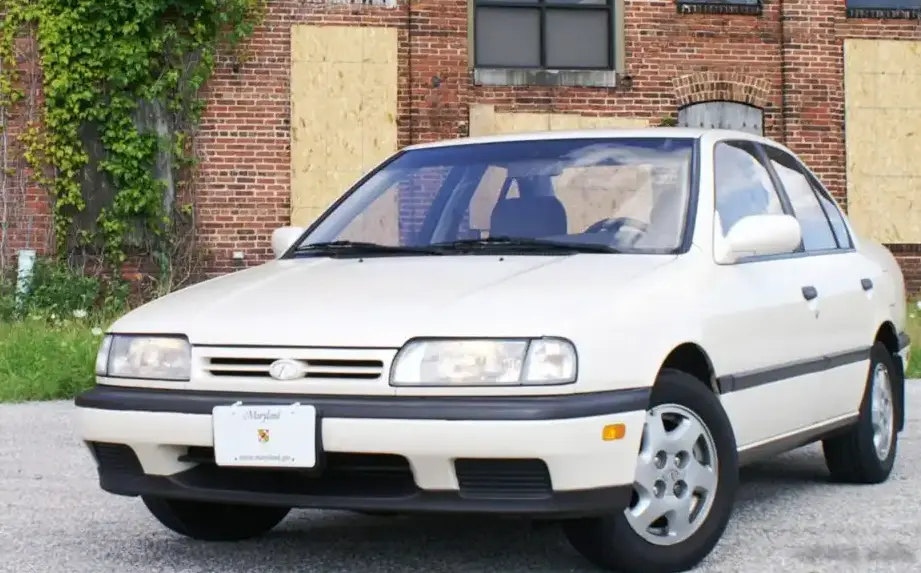
The Infiniti G20 2.0 16V (145 hp) represents a significant entry into the burgeoning luxury sport sedan market of the early 1990s. Produced from 1992 through 2000, this model served as the foundational offering for the Infiniti brand in North America, aiming to provide a blend of Japanese reliability, sporty handling, and upscale features at a competitive price point. It was part of the first generation of the G-series, internally designated as the KG10, and shared its platform with the Nissan Primera, though with substantial modifications for the North American market. The 2.0-liter, 16-valve engine paired with a five-speed manual transmission was the standard configuration, establishing the G20 as a driver-focused alternative to larger, more expensive luxury sedans.
Technical Specifications
| Brand | Infiniti |
| Model | G |
| Generation | G20 |
| Type (Engine) | 2.0 16V (145 Hp) |
| Start of production | 1992 |
| End of production | 2000 |
| Powertrain Architecture | Internal Combustion engine |
| Body type | Sedan |
| Seats | 5 |
| Doors | 4 |
| Fuel consumption (urban) | 10.2 l/100 km (23.1 US mpg) |
| Fuel consumption (extra urban) | 7.8 l/100 km (30.2 US mpg) |
| Fuel Type | Petrol (Gasoline) |
| Acceleration 0 – 100 km/h | 9.5 sec |
| Acceleration 0 – 62 mph | 9.5 sec |
| Acceleration 0 – 60 mph | 9 sec |
| Maximum speed | 210 km/h (130.49 mph) |
| Weight-to-power ratio | 9.1 kg/Hp |
| Weight-to-torque ratio | 7.2 kg/Nm |
| Power | 145 Hp @ 6000 rpm |
| Power per litre | 72.6 Hp/l |
| Torque | 185 Nm @ 4800 rpm (136.45 lb.-ft. @ 4800 rpm) |
| Engine layout | Front, Transverse |
| Engine displacement | 1998 cm3 (121.93 cu. in.) |
| Number of cylinders | 4 |
| Engine configuration | Inline |
| Cylinder Bore | 86 mm (3.39 in.) |
| Piston Stroke | 86 mm (3.39 in.) |
| Compression ratio | 9.5:1 |
| Number of valves per cylinder | 4 |
| Fuel injection system | Multi-port manifold injection |
| Engine aspiration | Naturally aspirated engine |
| Valvetrain | DOHC |
| Kerb Weight | 1325 kg (2921.12 lbs.) |
| Trunk (boot) space | 380 l (13.42 cu. ft.) |
| Fuel tank capacity | 60 l (15.85 US gal | 13.2 UK gal) |
| Length | 4510 mm (177.56 in.) |
| Width | 1695 mm (66.73 in.) |
| Height | 1400 mm (55.12 in.) |
| Wheelbase | 2600 mm (102.36 in.) |
| Front track | 1415 mm (55.71 in.) |
| Rear track | 1455 mm (57.28 in.) |
| Drivetrain Architecture | Front wheel drive |
| Number of gears | 5 |
| Gearbox type | Manual transmission |
| Front suspension | Coil spring |
| Rear suspension | Coil spring |
| Front brakes | Ventilated discs |
| Rear brakes | Disc |
| Assisting systems | ABS (Anti-lock braking system) |
| Steering type | Steering rack and pinion |
| Power steering | Hydraulic Steering |
| Tires size | 185/65 R15 |
Powertrain & Engine Architecture
The heart of the G20 is the GA16DE engine, a 1.998-liter inline-four cylinder powerplant. This engine utilizes a double overhead camshaft (DOHC) valvetrain with four valves per cylinder, contributing to its relatively high output for its displacement. Fuel delivery is managed by a multi-port fuel injection system, ensuring precise fuel metering for optimal combustion. The engine’s 9.5:1 compression ratio strikes a balance between performance and fuel efficiency. The GA16DE is known for its robust construction and relatively simple design, contributing to its long-term reliability. The standard transmission for the G20 was a smooth-shifting five-speed manual gearbox. This transmission was chosen to enhance the driving experience and appeal to enthusiasts.
Driving Characteristics
The G20 2.0 16V, with its 145 horsepower and manual transmission, offered a surprisingly engaging driving experience. While not a powerhouse, the engine provided adequate acceleration, reaching 60 mph in around 9 seconds. The five-speed manual allowed drivers to fully utilize the engine’s powerband, and the relatively lightweight chassis contributed to nimble handling. Compared to later, more powerful G20 variants, this base model prioritized responsiveness and driver involvement over outright speed. The gear ratios were well-matched for everyday driving, providing good acceleration in lower gears and comfortable cruising at highway speeds. The steering was precise and well-weighted, further enhancing the car’s sporty feel.
Equipment & Trim Levels
The G20, even in its base trim, was reasonably well-equipped for its time. Standard features typically included air conditioning, power windows and locks, a cassette stereo system, and a tilt steering wheel. Interior upholstery was typically cloth, available in a range of colors. Optional extras included a sunroof, upgraded audio systems, and alloy wheels. The G20 aimed to provide a premium feel without the premium price tag, offering a comfortable and well-appointed interior. The dashboard layout was functional and straightforward, prioritizing ease of use.
Chassis & Braking
The G20’s chassis featured independent coil spring suspension at all four corners, providing a comfortable ride and good handling characteristics. The front suspension utilized MacPherson struts, while the rear employed a multi-link setup. Braking duties were handled by ventilated discs at the front and solid discs at the rear. An anti-lock braking system (ABS) was standard, enhancing safety and control during hard braking. The G20’s suspension was tuned to provide a balance between comfort and handling, making it suitable for both daily commuting and spirited driving.
Market Reception & Comparison
The Infiniti G20 was generally well-received by automotive critics, who praised its sporty handling, comfortable ride, and competitive price. It was often compared to other entry-level luxury sedans, such as the Acura Integra and the Lexus ES. The G20’s fuel economy was also a strong point, with EPA estimates of around 23 mpg in the city and 30 mpg on the highway. Compared to the later G20 models with the larger 2.4-liter engine, the 2.0-liter version offered better fuel economy but less overall performance. Reliability was also a key strength, with the GA16DE engine proving to be durable and long-lasting.
Legacy
The Infiniti G20 2.0 16V established Infiniti as a credible player in the luxury car market. The GA16DE engine, while not particularly powerful by modern standards, earned a reputation for reliability and longevity. Today, well-maintained G20s are sought after by enthusiasts who appreciate their simple design, engaging driving experience, and classic styling. Parts availability is generally good, and the car’s relatively straightforward mechanicals make it a popular choice for DIY mechanics. The G20 remains a testament to the principles of Japanese engineering: reliability, efficiency, and a focus on the driving experience.
