
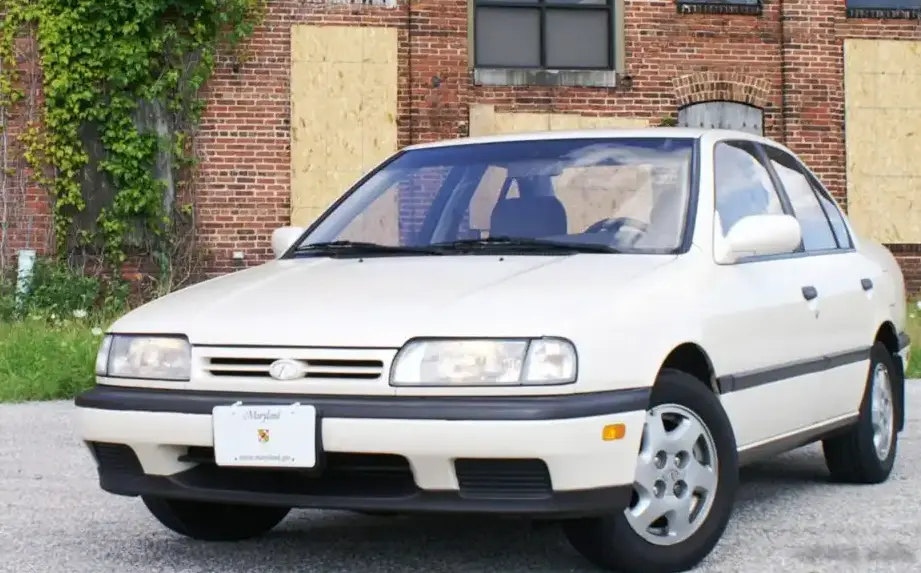
The Infiniti G20 2.0 16V (145 hp) Automatic, produced between 1992 and 2000, represented Infiniti’s entry-level offering in the compact luxury sedan segment. Positioned as a more affordable alternative to its larger siblings, the G20 was based on the Nissan Primera, and was a key model in establishing the brand’s presence in the North American market. This particular variant, featuring the 2.0-liter inline-four engine paired with a four-speed automatic transmission, aimed to provide a balance of fuel efficiency, comfort, and reasonable performance for everyday driving. It occupied the lower end of the G20 lineup, with the five-speed manual transmission being the enthusiast’s choice, and no higher-powered engine options were available.
Technical Specifications
| Brand | Infiniti |
| Model | G |
| Generation | G20 |
| Type (Engine) | 2.0 16V (145 Hp) Automatic |
| Start of production | 1992 |
| End of production | 2000 |
| Powertrain Architecture | Internal Combustion engine |
| Body type | Sedan |
| Seats | 5 |
| Doors | 4 |
| Fuel consumption (urban) | 10.2 l/100 km (23.1 US mpg) |
| Fuel consumption (extra urban) | 7.8 l/100 km (30.2 US mpg) |
| Fuel Type | Petrol (Gasoline) |
| Acceleration 0 – 100 km/h | 9.5 sec |
| Acceleration 0 – 62 mph | 9.5 sec |
| Acceleration 0 – 60 mph | 9 sec |
| Maximum speed | 210 km/h (130.49 mph) |
| Weight-to-power ratio | 9.1 kg/Hp |
| Weight-to-torque ratio | 7.2 kg/Nm |
| Power | 145 Hp @ 6000 rpm |
| Power per litre | 72.6 Hp/l |
| Torque | 185 Nm @ 4800 rpm (136.45 lb.-ft. @ 4800 rpm) |
| Engine layout | Front, Transverse |
| Engine displacement | 1998 cm3 (121.93 cu. in.) |
| Number of cylinders | 4 |
| Engine configuration | Inline |
| Cylinder Bore | 86 mm (3.39 in.) |
| Piston Stroke | 86 mm (3.39 in.) |
| Compression ratio | 9.5:1 |
| Number of valves per cylinder | 4 |
| Fuel injection system | Multi-port manifold injection |
| Engine aspiration | Naturally aspirated engine |
| Valvetrain | DOHC |
| Kerb Weight | 1325 kg (2921.12 lbs.) |
| Trunk (boot) space | 380 l (13.42 cu. ft.) |
| Fuel tank capacity | 60 l (15.85 US gal | 13.2 UK gal) |
| Length | 4510 mm (177.56 in.) |
| Width | 1695 mm (66.73 in.) |
| Height | 1400 mm (55.12 in.) |
| Wheelbase | 2600 mm (102.36 in.) |
| Front track | 1415 mm (55.71 in.) |
| Rear track | 1455 mm (57.28 in.) |
| Drivetrain Architecture | Front wheel drive |
| Number of gears | 4 |
| Gearbox type | Automatic transmission |
| Front suspension | Coil spring |
| Rear suspension | Coil spring |
| Front brakes | Ventilated discs |
| Rear brakes | Disc |
| Assisting systems | ABS (Anti-lock braking system) |
| Steering type | Steering rack and pinion |
| Power steering | Hydraulic Steering |
| Tires size | 185/65 R15 |
| Wheel rims size | 15 |
Powertrain & Engine Architecture
The heart of the G20 Automatic was Nissan’s 1998cc (121.93 cu. in.) SR20DE inline-four engine. This engine featured a double overhead camshaft (DOHC) valvetrain with four valves per cylinder, contributing to its relatively high output for its displacement. The SR20DE utilized multi-port fuel injection, delivering fuel directly into each intake port for improved combustion efficiency. The engine’s 9.5:1 compression ratio was a compromise between performance and the ability to run on readily available octane fuels. The four-speed automatic transmission, a Jatco unit, was chosen for its smoothness and ease of use, catering to a broader audience than the available five-speed manual. While the automatic offered convenience, it did come with a slight performance penalty compared to the manual due to its torque converter and gear ratios.
Driving Characteristics
The G20 Automatic delivered a comfortable and predictable driving experience. With 145 horsepower and 136 lb-ft of torque, acceleration was adequate for daily commuting and highway merging, but not particularly sporty. The 0-60 mph time of around 9 seconds reflects this. The automatic transmission’s gear ratios were tuned for fuel economy and smooth shifts, rather than aggressive acceleration. Compared to the five-speed manual version, the automatic felt noticeably less responsive, especially during quick overtaking maneuvers. The SR20DE engine itself was known for its smooth operation and willingness to rev, but the automatic transmission somewhat muted this characteristic. The front-wheel-drive configuration provided predictable handling, but lacked the dynamic capabilities of rear-wheel-drive competitors.
Equipment & Trim Levels
The G20 Automatic typically came standard with features such as air conditioning, power windows and locks, a cassette stereo, and cloth upholstery. Higher trim levels, often denoted by packages, could add features like a sunroof, upgraded audio systems, and leather upholstery. The interior design was functional and well-built, reflecting Infiniti’s focus on providing a premium experience at a competitive price point. Optional extras included alloy wheels, a CD changer, and a premium sound system. The dashboard layout was straightforward and driver-focused, with easy-to-read gauges and logically placed controls.
Chassis & Braking
The G20’s chassis featured independent coil spring suspension at all four corners, providing a comfortable ride quality. The front suspension utilized MacPherson struts, while the rear employed a multi-link setup. Front brakes were ventilated discs, offering good stopping power, while rear brakes were solid discs. Anti-lock braking system (ABS) was standard, enhancing safety and control during emergency braking situations. The G20’s suspension tuning prioritized ride comfort over sporty handling, resulting in a relatively soft and forgiving ride. Stabilizer bars were included at both the front and rear to reduce body roll during cornering.
Market Reception & Comparison
The Infiniti G20 Automatic was generally well-received by automotive critics as a solid and reliable entry-level luxury sedan. It was praised for its comfortable ride, well-appointed interior, and strong value proposition. However, some critics noted that its performance was not as exciting as some of its competitors, such as the Acura Integra or BMW 3 Series. Fuel economy was a strong point, with the G20 Automatic achieving around 23 mpg in the city and 30 mpg on the highway. Compared to the G20 with the five-speed manual transmission, the automatic version offered slightly lower fuel economy. The 1.8L versions of the Acura Integra and Honda Accord were direct competitors, offering similar levels of refinement and fuel efficiency, but often at a slightly higher price point.
Legacy
The Infiniti G20, particularly the 2.0 16V Automatic variant, has developed a reputation for long-term reliability. The SR20DE engine is known for its durability and relatively simple maintenance requirements. While finding parts for older models can sometimes be a challenge, the engine’s robust design and widespread use in other Nissan and Infiniti vehicles mean that components are generally available. Today, well-maintained G20s are sought after by enthusiasts and collectors who appreciate their classic styling, comfortable ride, and reliable powertrain. The G20 Automatic remains a viable and affordable option for those seeking a dependable and reasonably fuel-efficient compact sedan.
