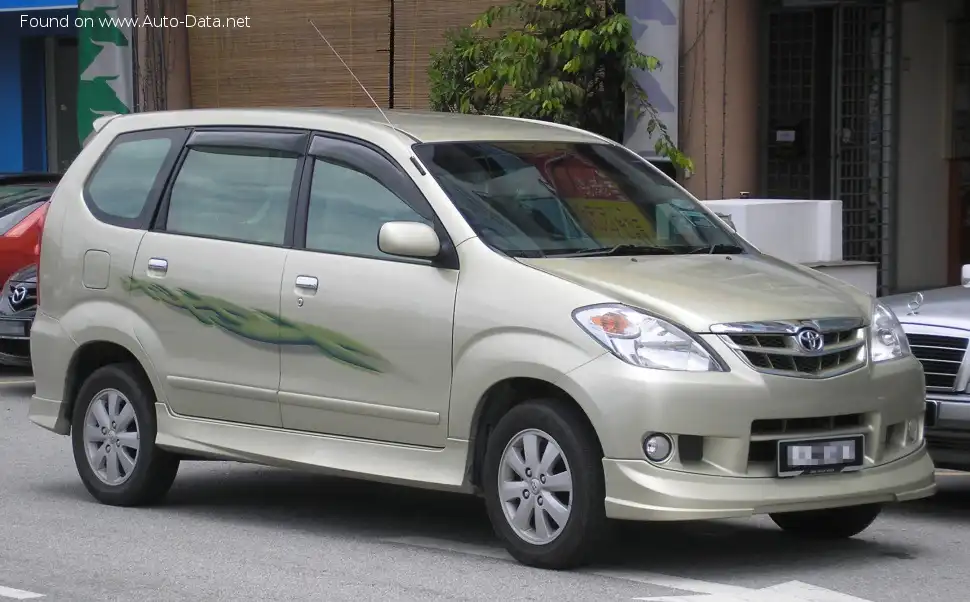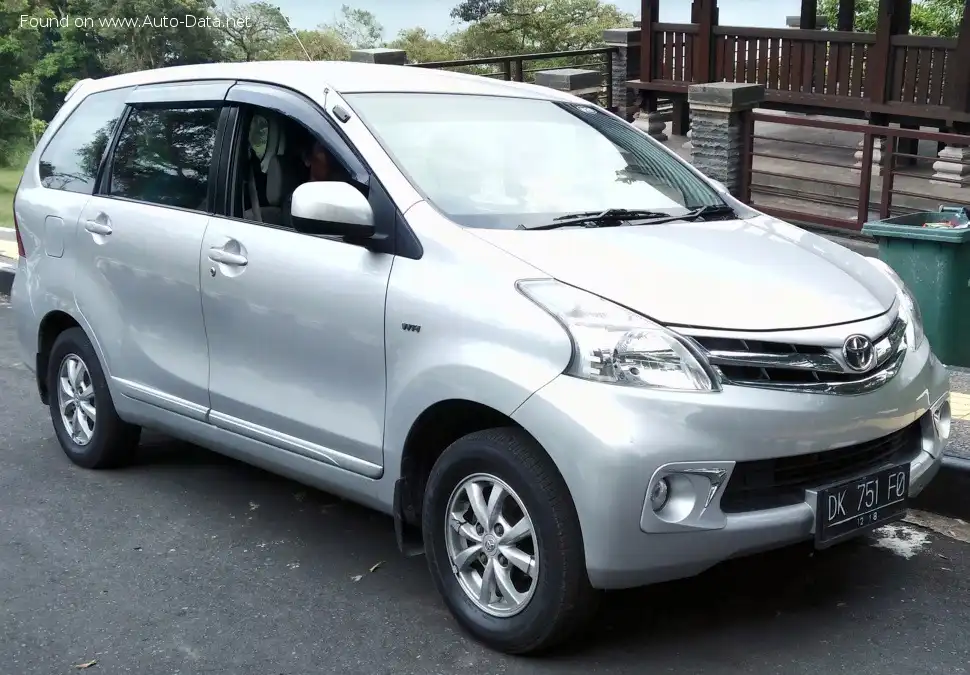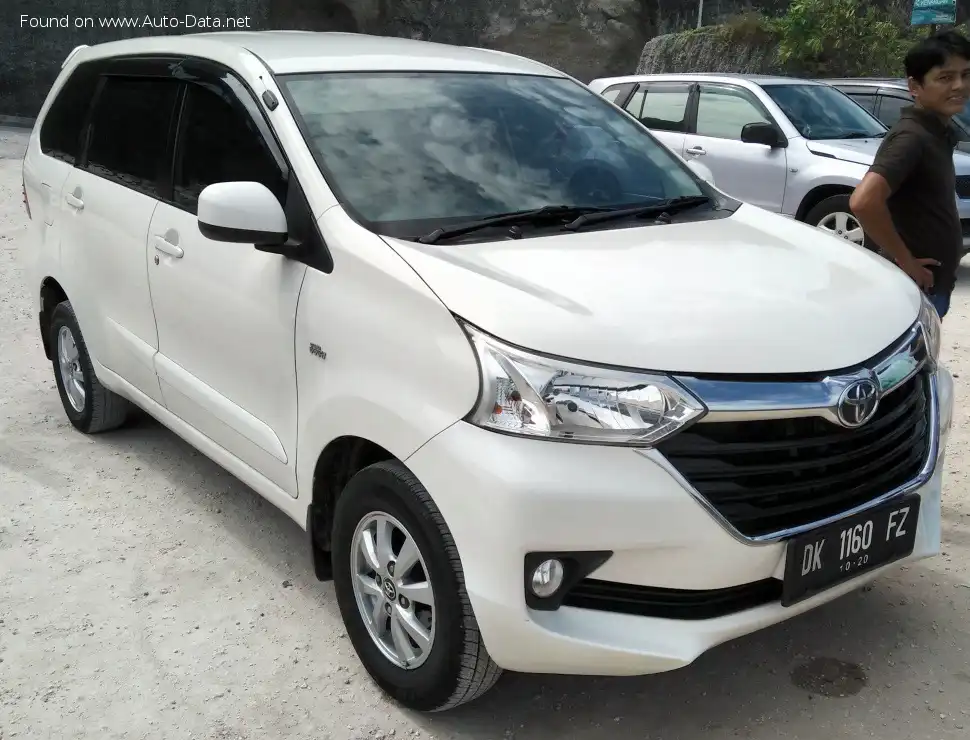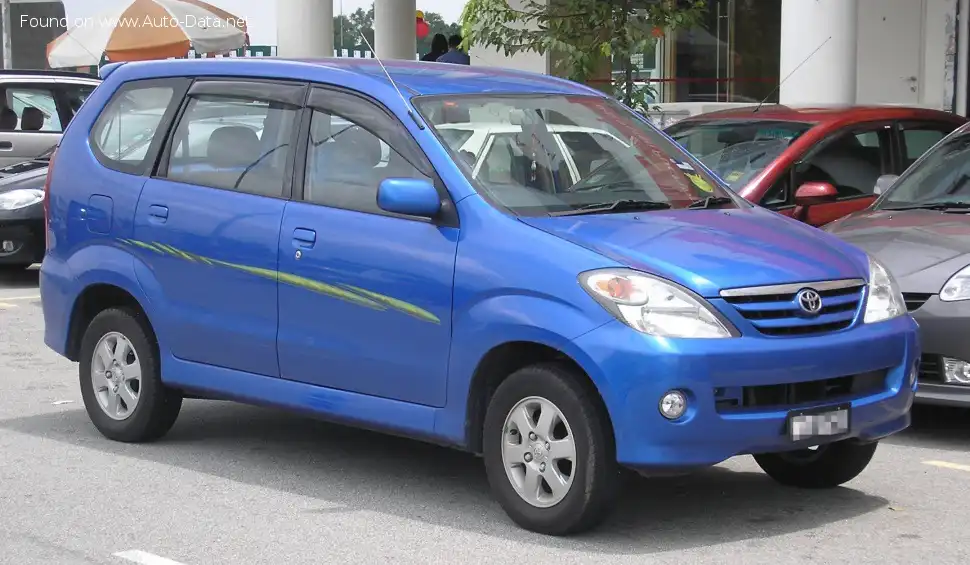
The Toyota Avanza, launched in 2003, represented Toyota’s entry into the burgeoning Asian multi-purpose vehicle (MPV) market. Designed primarily for the Indonesian market and other Southeast Asian nations, the Avanza offered an affordable and practical transportation solution for families. The first generation, known internally as the Avanza I, was produced from 2003 to 2006 and quickly became a popular choice due to its spacious interior, relatively low cost, and Toyota’s reputation for reliability. Within the initial lineup, the 1.3-liter variant, producing 86 horsepower, served as the entry-level model, prioritizing affordability and fuel efficiency over outright performance. This trim was aimed at buyers seeking a basic, dependable family vehicle.
Technical Specifications
| Brand | Toyota |
| Model | Avanza |
| Generation | Avanza I |
| Type (Engine) | 1.3 (86 Hp) |
| Start of production | 2003 |
| End of production | 2006 |
| Powertrain Architecture | Internal Combustion engine |
| Body type | MPV |
| Seats | 5-7 |
| Doors | 5 |
| Fuel Type | Petrol (Gasoline) |
| Weight-to-power ratio | 12.6 kg/Hp, 79.3 Hp/tonne |
| Weight-to-torque ratio | 9.3 kg/Nm, 107.8 Nm/tonne |
| Power | 86 Hp @ 6000 rpm |
| Power per litre | 66.3 Hp/l |
| Torque | 117 Nm @ 3200 rpm (86.29 lb.-ft. @ 3200 rpm) |
| Engine layout | Front, Longitudinal |
| Engine Model/Code | K3-VE |
| Engine displacement | 1298 cm3 (79.21 cu. in.) |
| Number of cylinders | 4 |
| Engine configuration | Inline |
| Cylinder Bore | 72 mm (2.83 in.) |
| Piston Stroke | 79.7 mm (3.14 in.) |
| Number of valves per cylinder | 4 |
| Fuel injection system | Multi-port manifold injection |
| Engine aspiration | Naturally aspirated engine |
| Valvetrain | DOHC |
| Engine oil capacity | 3.2 l (3.38 US qt | 2.82 UK qt) |
| Kerb Weight | 1085 kg (2392.02 lbs.) |
| Fuel tank capacity | 45 l (11.89 US gal | 9.9 UK gal) |
| Length | 4070 mm (160.24 in.) |
| Width | 1630 mm (64.17 in.) |
| Height | 1685 mm (66.34 in.) |
| Wheelbase | 2655 mm (104.53 in.) |
| Front track | 1405 mm (55.31 in.) |
| Rear (Back) track | 1415 mm (55.71 in.) |
| Drivetrain Architecture | The Internal combustion engine (ICE) drives the rear wheels of the vehicle. |
| Drive wheel | Rear wheel drive |
| Number of gears and type of gearbox | 5 gears, manual transmission |
| Front suspension | Independent, type McPherson with coil spring and anti-roll bar |
| Rear suspension | Independent multi-link spring suspension with stabilizer |
| Front brakes | Disc |
| Rear brakes | Drum |
| Assisting systems | ABS (Anti-lock braking system) |
| Tires size | 185/70 R14 |
| Wheel rims size | 14 |
Powertrain & Engine Architecture
The Avanza 1.3 was powered by the Toyota K3-VE engine, a 1.3-liter inline-four cylinder gasoline engine. This engine utilized a multi-point fuel injection system and a double overhead camshaft (DOHC) valvetrain, contributing to reasonable efficiency and power output for its displacement. The K3-VE engine was known for its simplicity and durability, characteristics valued in the target markets. The engine’s longitudinal mounting, coupled with a rear-wheel-drive configuration, was a somewhat unusual setup for a modern MPV, but it allowed for a flatter floor and maximized interior space. The 5-speed manual transmission was the standard offering for this variant, providing a direct connection between the engine and the rear wheels. The engine produced 86 horsepower at 6000 rpm and 117 Nm (86.29 lb-ft) of torque at 3200 rpm.
Driving Characteristics
The 1.3-liter Avanza, with its 86 horsepower, offered adequate, but not exhilarating, performance. Acceleration was modest, particularly when fully loaded with passengers and cargo. The rear-wheel-drive configuration provided a different driving feel compared to front-wheel-drive MPVs, offering a slightly more balanced handling characteristic. The 5-speed manual transmission allowed drivers to keep the engine in its optimal power band, but frequent downshifting was often necessary when climbing hills or overtaking. Compared to the later 1.5-liter variants, the 1.3 felt noticeably less powerful, making it more suitable for urban driving and shorter trips. The gear ratios were tuned for fuel economy rather than outright speed.
Equipment & Trim Levels
The base 1.3-liter Avanza was typically equipped with basic amenities. Standard features generally included manual windows, manual door locks, and a simple audio system. The interior upholstery was typically cloth, and the dashboard featured a functional, but spartan, design. Air conditioning was often an optional extra. Higher trim levels, such as the 1.5-liter models, offered features like power windows, power steering, and upgraded audio systems. The 1.3 model was positioned as the most affordable option, appealing to budget-conscious buyers who prioritized practicality over luxury.
Chassis & Braking
The Avanza I utilized a body-on-frame construction, which contributed to its robustness and durability, particularly on rough roads. The front suspension consisted of an independent McPherson strut setup with coil springs and an anti-roll bar, while the rear suspension employed an independent multi-link system with a stabilizer bar. This suspension configuration aimed to provide a comfortable ride and reasonable handling. The braking system featured disc brakes on the front wheels and drum brakes on the rear wheels. Anti-lock Braking System (ABS) was available, but not standard on all models. The 14-inch wheels were fitted with 185/70 R14 tires.
Market Reception & Comparison
The Toyota Avanza 1.3 was well-received in its target markets, particularly in Indonesia and other Southeast Asian countries. Critics praised its affordability, spaciousness, and Toyota’s reputation for reliability. However, the 1.3-liter engine was often criticized for being underpowered, especially when the vehicle was fully loaded. Compared to the 1.5-liter variants, the 1.3 offered better fuel economy but significantly less performance. The rear-wheel-drive layout was also a point of discussion, with some drivers preferring the more common front-wheel-drive configuration. Despite these criticisms, the Avanza 1.3 remained a popular choice for families and small businesses.
Legacy
The Toyota Avanza I, including the 1.3-liter variant, established a strong foundation for the Avanza model line. The K3-VE engine proved to be a reliable and durable powerplant, and many examples are still on the road today. While not known for its blistering performance, the 1.3-liter Avanza offered a practical and affordable transportation solution for a wide range of buyers. In the used car market, these early Avanzas are often sought after for their simplicity, low maintenance costs, and Toyota’s enduring reputation for dependability. The first generation Avanza paved the way for subsequent iterations, solidifying Toyota’s presence in the competitive MPV segment.