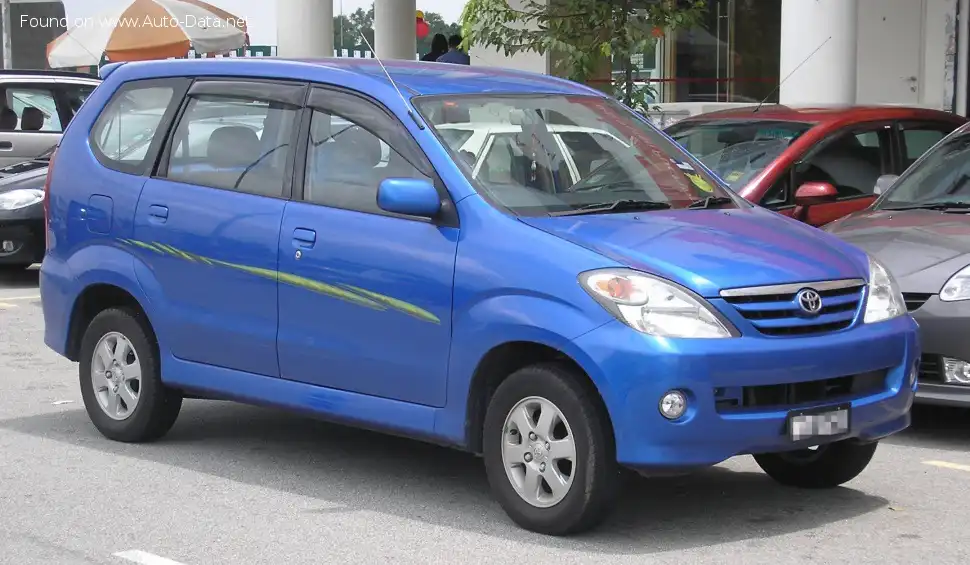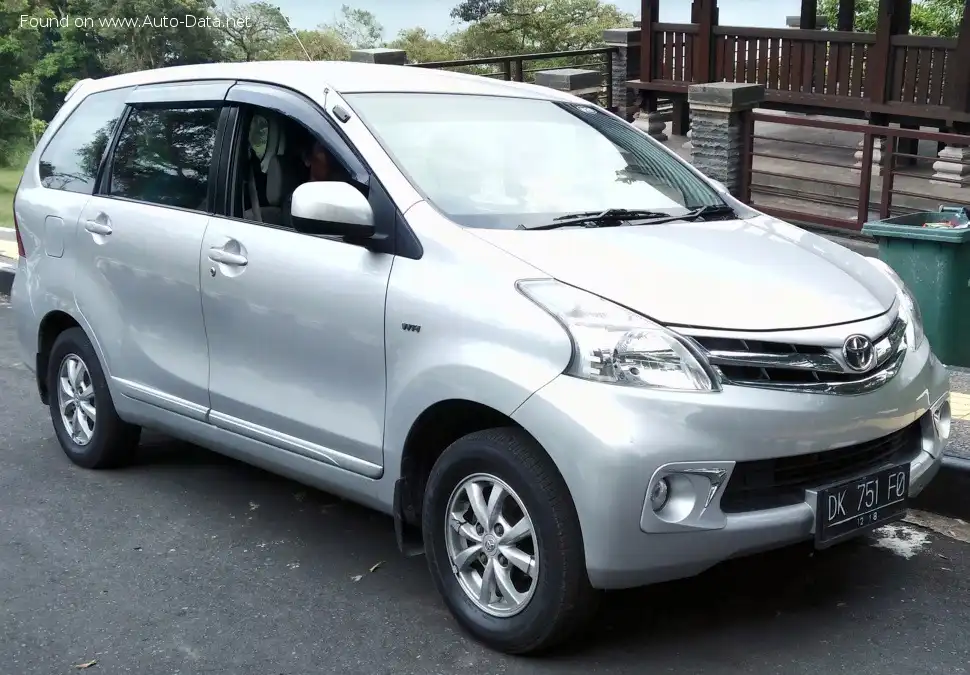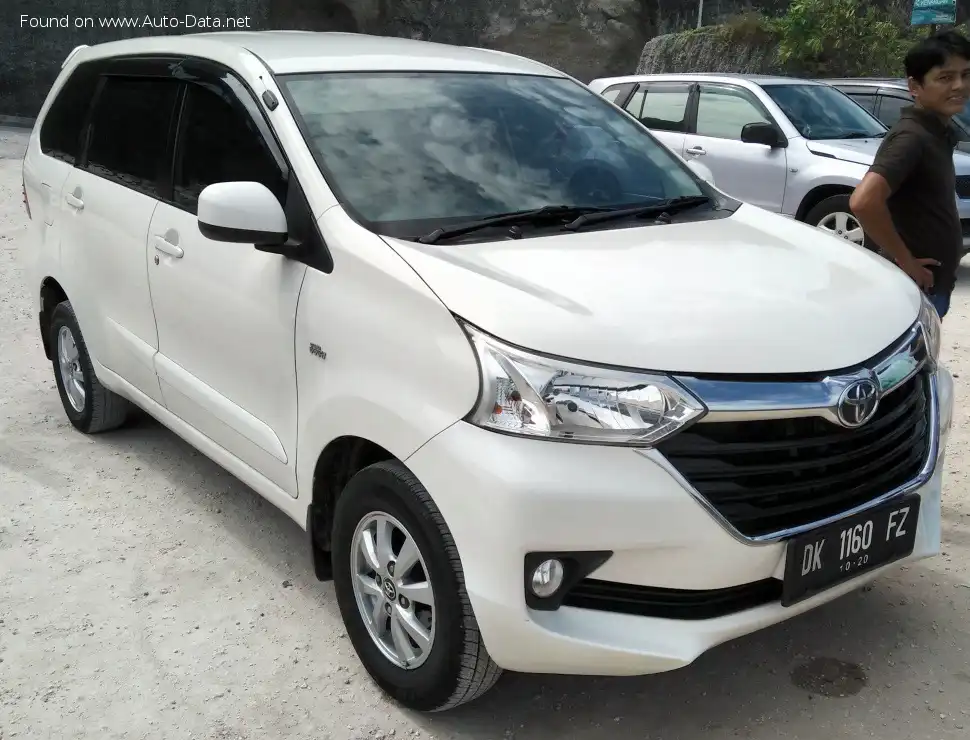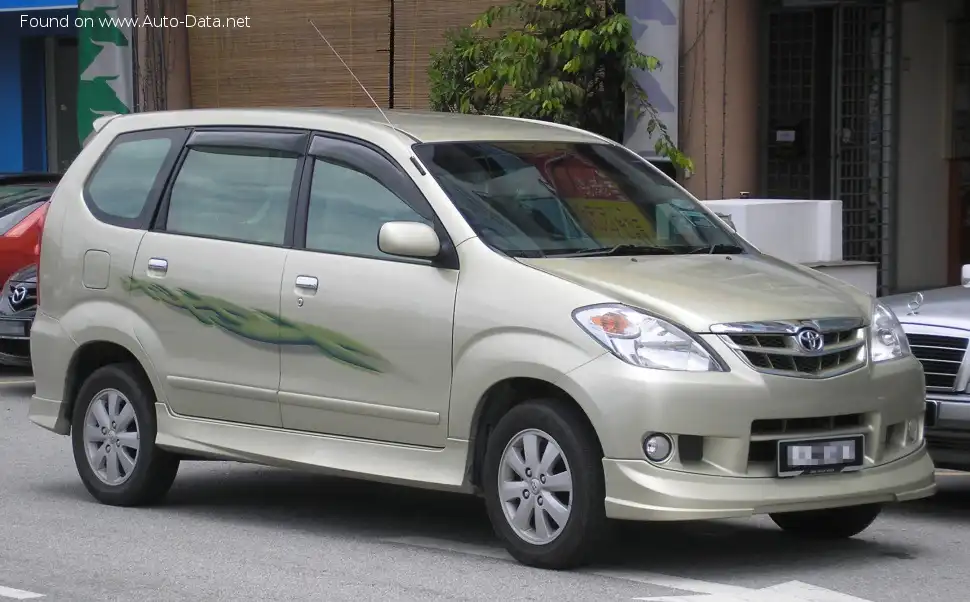
The Toyota Avanza, first introduced in 2003, quickly became a popular choice in Southeast Asian markets, particularly Indonesia and the Philippines, as an affordable and practical multi-purpose vehicle (MPV). The first generation, designated as the Avanza I, underwent a significant facelift in 2006, bringing updated styling and minor mechanical revisions. This article focuses specifically on the 1.3-liter (94 hp) variant of the facelifted Avanza I, produced between 2006 and 2011. This engine and trim level represented the entry point into the Avanza range, targeting budget-conscious families seeking a spacious and versatile vehicle. It was positioned below the 1.5-liter variants in terms of performance and features.
Technical Specifications
| Brand | Toyota |
| Model | Avanza |
| Generation | Avanza I (facelift 2006) |
| Type (Engine) | 1.3 (94 Hp) |
| Start of production | 2006 |
| End of production | 2011 |
| Powertrain Architecture | Internal Combustion engine |
| Body type | MPV |
| Seats | 7 |
| Doors | 5 |
| Fuel Type | Petrol (Gasoline) |
| Weight-to-power ratio | 11.1 kg/Hp, 90 Hp/tonne |
| Weight-to-torque ratio | 8.7 kg/Nm, 114.8 Nm/tonne |
| Power | 94 Hp @ 6000 rpm |
| Power per litre | 72.4 Hp/l |
| Torque | 120 Nm @ 4400 rpm (88.51 lb.-ft. @ 4400 rpm) |
| Engine layout | Front, Longitudinal |
| Engine Model/Code | K3-VE |
| Engine displacement | 1298 cm3 (79.21 cu. in.) |
| Number of cylinders | 4 |
| Engine configuration | Inline |
| Cylinder Bore | 72 mm (2.83 in.) |
| Piston Stroke | 79.7 mm (3.14 in.) |
| Number of valves per cylinder | 4 |
| Fuel injection system | Multi-port manifold injection |
| Engine aspiration | Naturally aspirated engine |
| Valvetrain | DOHC |
| Engine oil capacity | 3.2 l (3.38 US qt | 2.82 UK qt) |
| Kerb Weight | 1045 kg (2303.83 lbs.) |
| Fuel tank capacity | 45 l (11.89 US gal | 9.9 UK gal) |
| Length | 4120 mm (162.2 in.) |
| Width | 1630 mm (64.17 in.) |
| Height | 1695 mm (66.73 in.) |
| Wheelbase | 2655 mm (104.53 in.) |
| Front track | 1405 mm (55.31 in.) |
| Rear (Back) track | 1415 mm (55.71 in.) |
| Drivetrain Architecture | The Internal combustion engine (ICE) drives the rear wheels of the vehicle. |
| Drive wheel | Rear wheel drive |
| Number of gears and type of gearbox | 5 gears, manual transmission |
| Front suspension | Independent, type McPherson with coil spring and anti-roll bar |
| Rear suspension | Independent multi-link spring suspension with stabilizer |
| Front brakes | Disc |
| Rear brakes | Drum |
| Assisting systems | ABS (Anti-lock braking system) |
| Tires size | 185/70 R14 |
| Wheel rims size | 14 |
Introduction
The 2006 facelift of the Toyota Avanza I brought subtle cosmetic changes, including a revised front grille, updated headlights, and a redesigned rear bumper. However, the core mechanicals remained largely unchanged. The 1.3-liter variant, powered by the K3-VE engine, was specifically designed for markets where fuel efficiency and affordability were paramount. It served as the base model, offering essential transportation for families and small businesses. The Avanza, in general, filled a niche between smaller city cars and larger, more expensive MPVs, offering a compelling combination of space, practicality, and value.
Powertrain & Engine Architecture
The heart of the Avanza 1.3 was the Toyota K3-VE engine, a 1.3-liter inline-four cylinder gasoline engine. This engine featured a double overhead camshaft (DOHC) valvetrain and multi-point fuel injection. While not a powerhouse, the K3-VE was known for its reliability and relatively good fuel economy. The engine produced 94 horsepower at 6000 rpm and 120 Nm (88.51 lb-ft) of torque at 4400 rpm. The engine was longitudinally mounted, driving the rear wheels. The 5-speed manual transmission was the standard offering for this variant, providing a direct connection between the engine and the wheels. The transmission was chosen for its simplicity and cost-effectiveness, contributing to the overall affordability of the vehicle.
Driving Characteristics
The Avanza 1.3, with its 94 hp engine and rear-wheel drive configuration, offered a driving experience focused on practicality rather than performance. Acceleration was modest, particularly when fully loaded with passengers and cargo. The 5-speed manual transmission allowed drivers to keep the engine in its optimal power band, but overtaking maneuvers required careful planning. The rear-wheel drive layout provided a slightly different feel compared to front-wheel drive MPVs, offering a more balanced handling characteristic, although it wasn’t particularly sporty. The suspension, tuned for comfort, absorbed bumps reasonably well, but body roll was noticeable in corners. Overall, the driving experience was geared towards everyday usability and fuel efficiency.
Equipment & Trim Levels
As the entry-level variant, the Avanza 1.3 typically came with a basic level of equipment. Standard features generally included air conditioning, power steering, and basic instrumentation. The interior upholstery was typically cloth, and the dashboard featured a functional, if somewhat spartan, design. Options were limited but could include power windows, central locking, and an upgraded audio system. The focus was on providing essential features at an affordable price point. The trim level was often identified by minimal badging and standard wheel covers.
Chassis & Braking
The Avanza I utilized a body-on-frame construction, which contributed to its robustness and durability. The front suspension employed a McPherson strut setup with coil springs and an anti-roll bar, while the rear suspension featured an independent multi-link design with a stabilizer bar. This suspension configuration aimed to balance ride comfort with handling stability. The braking system consisted of disc brakes on the front wheels and drum brakes on the rear. Anti-lock Braking System (ABS) was often included as standard equipment, enhancing safety. The tires were typically 185/70 R14, mounted on 14-inch steel wheels with wheel covers.
Market Reception & Comparison
The Avanza 1.3 was well-received in its target markets as a practical and affordable MPV. Critics praised its spacious interior, versatility, and fuel efficiency. However, the engine’s modest power output was often noted as a drawback, particularly when compared to the 1.5-liter variants. The 1.5-liter models offered significantly more power and torque, resulting in improved acceleration and overall performance. The 1.3-liter version was favored by buyers prioritizing fuel economy and affordability over outright performance. Compared to competitors like the Mitsubishi Xpander (introduced later), the Avanza 1.3 offered a more basic but equally reliable transportation solution.
Legacy
The Toyota Avanza I, particularly the 1.3-liter variant, established a strong reputation for reliability and durability. The K3-VE engine proved to be a robust and long-lasting unit, and the overall mechanical simplicity of the vehicle contributed to its low maintenance costs. In the used car market, these Avanzas remain popular choices for budget-conscious buyers seeking a practical and dependable MPV. While newer generations of the Avanza have been introduced, the first generation continues to be valued for its affordability, spaciousness, and Toyota’s renowned reliability. The 1.3L engine, while not the fastest, is still considered a viable option for those prioritizing fuel efficiency and low running costs.