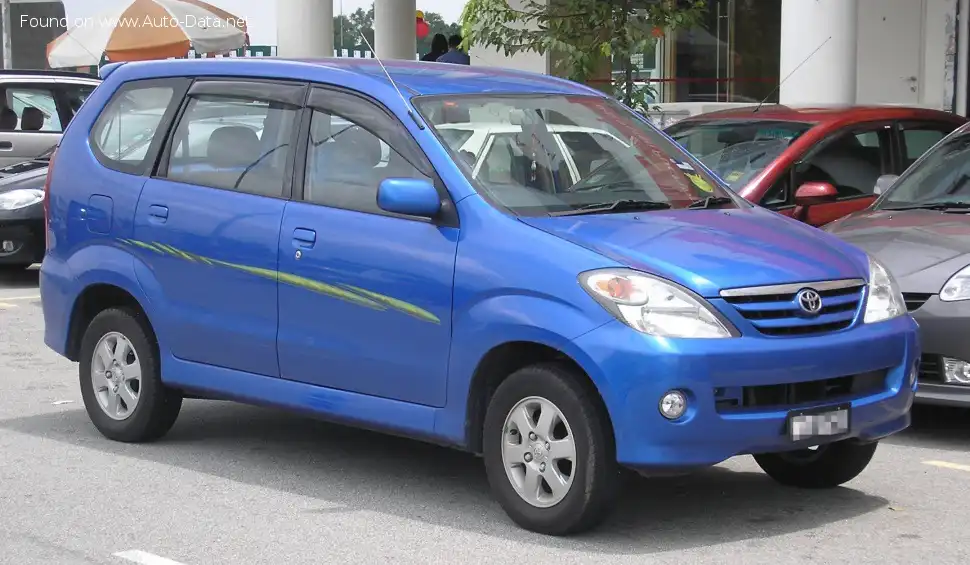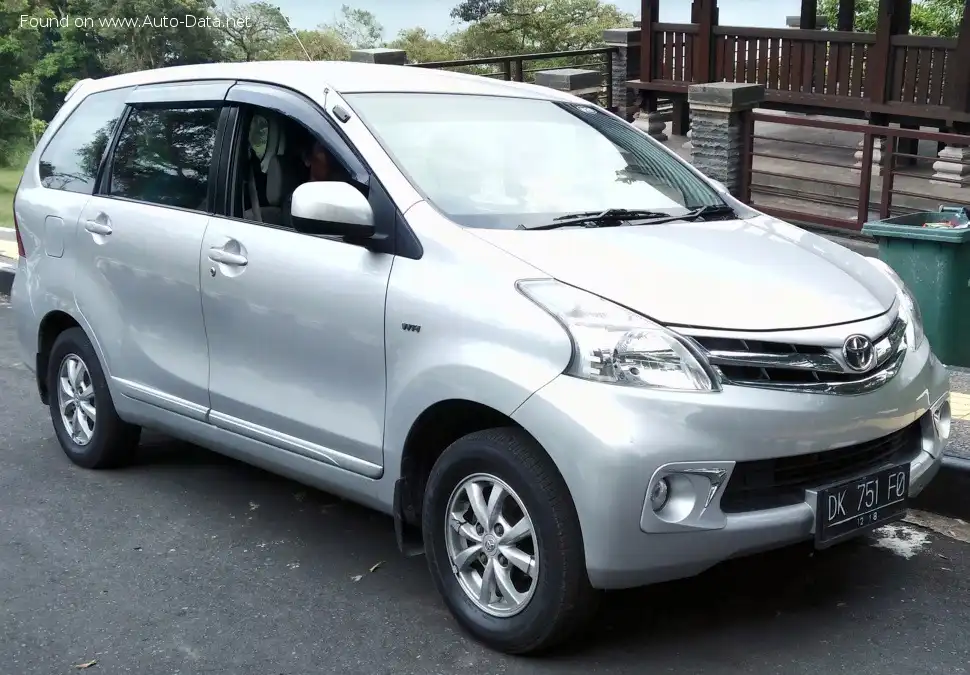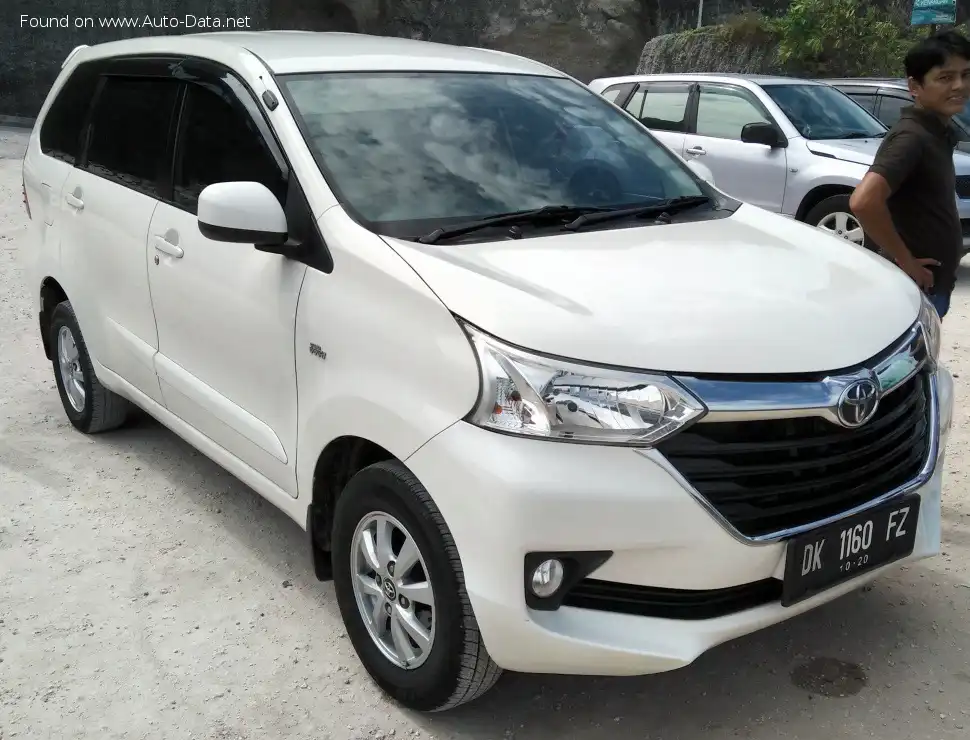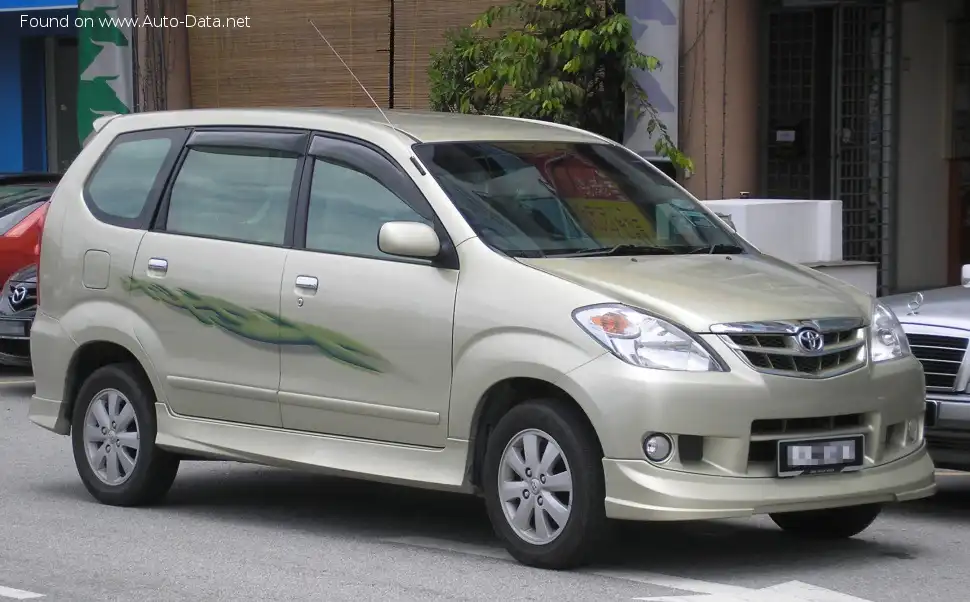
The Toyota Avanza, first introduced in 2003, quickly became a popular choice in the Southeast Asian market as an affordable and practical multi-purpose vehicle (MPV). The first generation, designated as the Avanza I, underwent a significant facelift in 2006, bringing updated styling and minor mechanical revisions. Among the various configurations offered, the 1.5-liter (109 hp) automatic variant occupied a crucial middle ground in the lineup, balancing affordability with convenience. Produced from 2006 to 2011, this version aimed to appeal to families seeking a spacious and easy-to-drive vehicle for daily commuting and weekend trips. It was primarily sold in Indonesia, the Philippines, Malaysia, and other regional markets, and was not officially offered in the United States.
Technical Specifications
| Brand | Toyota |
| Model | Avanza |
| Generation | Avanza I (facelift 2006) |
| Type (Engine) | 1.5 (109 Hp) Automatic |
| Start of production | 2006 |
| End of production | 2011 |
| Powertrain Architecture | Internal Combustion engine |
| Body type | MPV |
| Seats | 7 |
| Doors | 5 |
| Fuel Type | Petrol (Gasoline) |
| Weight-to-power ratio | 10 kg/Hp, 100.5 Hp/tonne |
| Weight-to-torque ratio | 7.7 kg/Nm, 130 Nm/tonne |
| Power | 109 Hp @ 6000 rpm |
| Power per litre | 72.9 Hp/l |
| Torque | 141 Nm @ 4400 rpm, 104 lb.-ft. @ 4400 rpm |
| Engine layout | Front, Longitudinal |
| Engine Model/Code | 3SZ-VE |
| Engine displacement | 1495 cm3, 91.23 cu. in. |
| Number of cylinders | 4 |
| Engine configuration | Inline |
| Cylinder Bore | 72 mm, 2.83 in. |
| Piston Stroke | 91.8 mm, 3.61 in. |
| Compression ratio | 10:1 |
| Number of valves per cylinder | 4 |
| Fuel injection system | Multi-port manifold injection |
| Engine aspiration | Naturally aspirated engine |
| Valvetrain | DOHC |
| Engine oil capacity | 3.2 l, 3.38 US qt | 2.82 UK qt |
| Kerb Weight | 1085 kg, 2392.02 lbs |
| Fuel tank capacity | 45 l, 11.89 US gal | 9.9 UK gal |
| Length | 4120 mm, 162.2 in |
| Width | 1630 mm, 64.17 in |
| Height | 1695 mm, 66.73 in |
| Wheelbase | 2655 mm, 104.53 in |
| Front track | 1405 mm, 55.31 in |
| Rear (Back) track | 1415 mm, 55.71 in |
| Drivetrain Architecture | The Internal combustion engine (ICE) drives the rear wheels of the vehicle. |
| Drive wheel | Rear wheel drive |
| Number of gears and type of gearbox | 4 gears, automatic transmission |
| Front suspension | Independent, type McPherson with coil spring and anti-roll bar |
| Rear suspension | Independent multi-link spring suspension with stabilizer |
| Front brakes | Disc |
| Rear brakes | Drum |
| Assisting systems | ABS (Anti-lock braking system) |
| Tires size | 185/70 R14 |
| Wheel rims size | 14 |
Powertrain & Engine Architecture
The heart of the Avanza 1.5 Automatic is the 3SZ-VE engine, a 1.5-liter inline-four cylinder gasoline engine. This engine utilizes a multi-port fuel injection system, delivering fuel directly to the intake ports for efficient combustion. The engine features a double overhead camshaft (DOHC) valvetrain, optimizing airflow into and out of the cylinders for improved performance. The 3SZ-VE is known for its relatively simple design, contributing to its reliability and ease of maintenance. Paired with the engine is a four-speed automatic transmission. This transmission, while not offering the sophistication of more modern gearboxes, provided a convenient driving experience for the target market. The transmission’s gear ratios were tuned for everyday drivability rather than outright performance, prioritizing fuel efficiency and smooth shifts.
Driving Characteristics
The 109 horsepower output of the 1.5-liter engine, combined with the four-speed automatic transmission, resulted in a driving experience focused on practicality rather than sportiness. Acceleration was adequate for typical urban and highway driving, but not particularly brisk. The automatic transmission, while convenient, could sometimes feel sluggish during overtaking maneuvers. Compared to the available manual transmission, the automatic version offered less direct control and slightly reduced fuel economy. However, it provided a more relaxed driving experience, especially in congested traffic. The rear-wheel-drive layout, while uncommon in modern MPVs, contributed to a stable feel, particularly when fully loaded with passengers and cargo.
Equipment & Trim Levels
The Avanza 1.5 Automatic typically came equipped with basic amenities, reflecting its position as a value-oriented MPV. Standard features generally included air conditioning, power windows, and a basic audio system. Interior upholstery was typically cloth, with a durable and easy-to-clean finish. Higher trim levels, available as optional upgrades, could add features such as alloy wheels, a more advanced audio system, and power door locks. The dashboard layout was functional and straightforward, prioritizing usability over aesthetic flair. Safety features were relatively basic, typically including only ABS (Anti-lock Braking System) as a standard offering.
Chassis & Braking
The Avanza I utilized a body-on-frame construction, a relatively traditional approach that contributed to its robustness and affordability. The front suspension employed a McPherson strut setup with coil springs and an anti-roll bar, providing a comfortable ride. The rear suspension featured an independent multi-link design with a stabilizer bar, further enhancing ride quality and handling. Braking duties were handled by disc brakes at the front and drum brakes at the rear. While adequate for the vehicle’s weight and intended use, the drum brakes at the rear were less effective than disc brakes in terms of stopping power and heat dissipation.
Market Reception & Comparison
The Toyota Avanza 1.5 Automatic was generally well-received in its target markets. Critics praised its spacious interior, affordability, and practicality. However, some reviewers noted the engine’s lack of power and the automatic transmission’s somewhat sluggish performance. Compared to other MPVs in the same segment, such as the Mitsubishi Xpander or the Honda Mobilio (depending on the market), the Avanza offered a more basic but also more affordable package. Its fuel economy was competitive, but not class-leading. Reliability was a strong point, as is typical for Toyota vehicles.
Legacy
The 2006-2011 Toyota Avanza 1.5 Automatic remains a common sight on the roads of Southeast Asia. The 3SZ-VE engine and the four-speed automatic transmission have proven to be relatively durable and reliable, with many examples still in active service today. While maintenance costs are generally low, finding replacement parts for older models can sometimes be a challenge. In the used car market, this variant represents a good value proposition for buyers seeking an affordable and practical MPV. Its simple design and robust construction make it a popular choice for families and small businesses alike. The Avanza’s success paved the way for subsequent generations, which have continued to build on its reputation for practicality and affordability.