
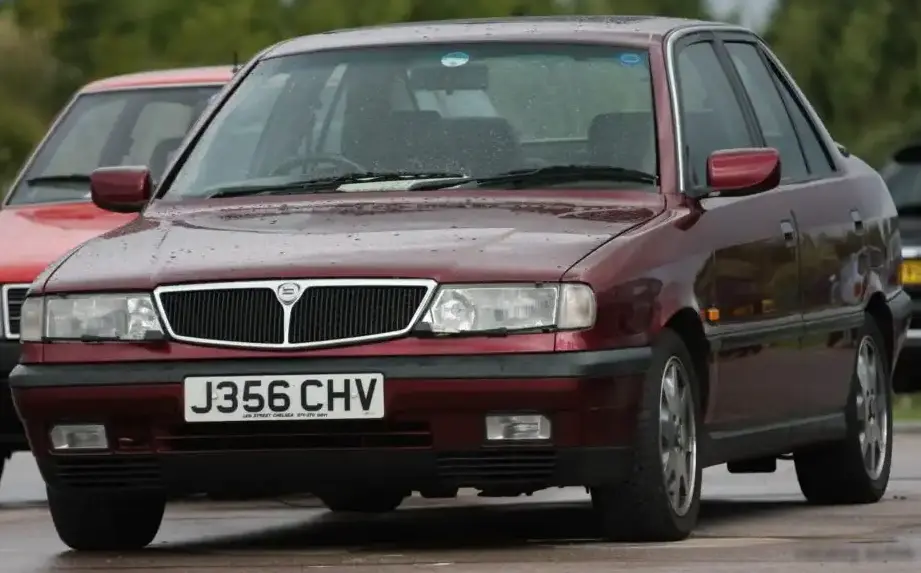
The Lancia Dedra 2.0 i.e. Automatic, produced between 1989 and 1999, represented a significant offering in the upper-midsize segment for the Italian automaker. Part of the 835 series, the Dedra was Lancia’s replacement for the aging Trevi, and aimed to compete with vehicles like the Ford Sierra, Opel/Vauxhall Carlton, and Fiat Croma. The 2.0 i.e. Automatic variant occupied a middle ground within the Dedra lineup, offering a balance between performance, comfort, and price. It was positioned above the base 1.6-liter models but below the more powerful 2.0-liter turbocharged versions, catering to buyers seeking a refined and capable family sedan with the convenience of an automatic transmission.
Technical Specifications
| Brand | Lancia |
| Model | Dedra |
| Generation | Dedra (835) |
| Type (Engine) | 2.0 i.e. (113 Hp) Automatic |
| Start of production | 1989 |
| End of production | 1999 |
| Powertrain Architecture | Internal Combustion engine |
| Body type | Sedan |
| Seats | 5 |
| Doors | 4 |
| Fuel consumption (combined) | 8.9 l/100 km |
| Fuel consumption (US mpg) | 26.4 US mpg |
| Fuel consumption (UK mpg) | 31.7 UK mpg |
| Fuel consumption (km/l) | 11.2 km/l |
| Fuel Type | Petrol (Gasoline) |
| Acceleration 0 – 100 km/h | 10.8 sec |
| Acceleration 0 – 62 mph | 10.8 sec |
| Acceleration 0 – 60 mph | 10.3 sec |
| Maximum speed | 195 km/h (121.17 mph) |
| Weight-to-power ratio | 10.8 kg/Hp |
| Weight-to-torque ratio | 7.8 kg/Nm |
| Power | 113 Hp @ 5750 rpm |
| Power per litre | 56.6 Hp/l |
| Torque | 156 Nm @ 3300 rpm (115.06 lb.-ft. @ 3300 rpm) |
| Engine layout | Front, Transverse |
| Engine Model/Code | 835 A5.046 |
| Engine displacement | 1995 cm3 (121.74 cu. in.) |
| Number of cylinders | 4 |
| Engine configuration | Inline |
| Cylinder Bore | 84 mm (3.31 in.) |
| Piston Stroke | 90 mm (3.54 in.) |
| Compression ratio | 9.5:1 |
| Number of valves per cylinder | 2 |
| Fuel injection system | Multi-port manifold injection |
| Engine aspiration | Naturally aspirated engine |
| Valvetrain | DOHC |
| Engine oil capacity | 5.2 l (5.49 US qt | 4.58 UK qt) |
| Coolant capacity | 7 l (7.4 US qt | 6.16 UK qt) |
| Kerb Weight | 1218 kg (2685.23 lbs.) |
| Max. weight | 1710 kg (3769.9 lbs.) |
| Max load | 492 kg (1084.67 lbs.) |
| Trunk (boot) space – minimum | 480 l (16.95 cu. ft.) |
| Fuel tank capacity | 63 l (16.64 US gal | 13.86 UK gal) |
| Length | 4340 mm (170.87 in.) |
| Width | 1700 mm (66.93 in.) |
| Height | 1417 mm (55.79 in.) |
| Wheelbase | 2540 mm (100 in.) |
| Front track | 1436 mm (56.54 in.) |
| Rear track | 1417 mm (55.79 in.) |
| Drivetrain Architecture | Front wheel drive |
| Number of gears | 4 |
| Gearbox type | Automatic transmission |
| Front suspension | Spring Strut |
| Rear suspension | Trailing arm |
| Front brakes | Ventilated discs |
| Rear brakes | Disc |
| Assisting systems | ABS (Anti-lock braking system) |
| Steering type | Steering rack and pinion |
| Power steering | Hydraulic Steering |
| Tires size | 185/60 R14 |
| Wheel rims size | 14 |
Powertrain & Engine Architecture
The Dedra 2.0 i.e. Automatic was powered by the 835 A5.046 engine, a 1995cc inline-four cylinder unit. This engine featured a dual overhead camshaft (DOHC) valvetrain operating two valves per cylinder. Fuel delivery was handled by a multi-port fuel injection system, contributing to improved efficiency and smoother power delivery compared to earlier carbureted Lancia engines. The engine produced 113 horsepower at 5750 rpm and 156 Nm (115 lb-ft) of torque at 3300 rpm. The automatic transmission was a four-speed unit, designed to provide comfortable and effortless cruising. While the specific transmission manufacturer varied depending on the year, it was generally a conventional hydraulic automatic, prioritizing smooth shifts over outright performance.
Driving Characteristics
The 2.0 i.e. Automatic Dedra offered a comfortable and relaxed driving experience. Acceleration from 0-60 mph took around 10.3 seconds, and top speed was approximately 121 mph. Compared to the manual transmission version of the same engine, the automatic resulted in a slight performance decrease due to the inherent power losses within the torque converter. However, the automatic transmission’s gear ratios were tuned for fuel efficiency and ease of use, making it well-suited for long highway journeys. The power delivery was linear, with usable torque available from relatively low engine speeds. It wasn’t a sporty car, but it provided adequate power for overtaking and maintaining comfortable cruising speeds.
Equipment & Trim Levels
The Dedra 2.0 i.e. Automatic typically came equipped with features such as central locking, electric windows, power steering, and an anti-lock braking system (ABS). Interior trim levels varied, but generally included cloth upholstery. Optional extras included air conditioning, a sunroof, and upgraded audio systems. The Dedra aimed for a level of sophistication, with a well-appointed interior and a focus on comfort. Higher trim levels offered features like leather upholstery and wood trim, elevating the interior ambiance.
Chassis & Braking
The Dedra utilized a front-wheel-drive layout with independent front suspension using spring struts and a trailing arm rear suspension. The front brakes were ventilated discs, providing good stopping power, while the rear brakes were solid discs. The suspension was tuned for comfort, offering a relatively soft ride quality. Stabilizer bars were fitted to both the front and rear axles to reduce body roll during cornering. The steering was rack and pinion with hydraulic assistance, providing light and precise steering feel.
Market Reception & Comparison
The Dedra 2.0 i.e. Automatic was generally well-received by automotive critics as a comfortable and practical family sedan. However, it wasn’t considered a particularly exciting car to drive. Compared to the more powerful turbocharged versions of the Dedra, the 2.0 i.e. Automatic offered less performance but better fuel economy. Against competitors like the Ford Sierra and Opel Carlton, the Dedra offered a unique Italian flair and a focus on comfort, but often lacked the brand recognition and established reputation of its rivals. Fuel economy was respectable for the time, averaging around 26.4 US mpg in combined driving.
Legacy
The Lancia Dedra, while not a massive sales success, remains a fondly remembered car among enthusiasts. The 2.0 i.e. Automatic powertrain, while not known for being particularly groundbreaking, proved to be relatively reliable. Today, well-maintained examples are becoming increasingly rare and sought after by collectors. The automatic transmission, while not as desirable as the manual for performance enthusiasts, offers a comfortable and convenient driving experience. Parts availability can be a challenge, but a dedicated community of Lancia owners helps to keep these cars on the road. The Dedra represents a unique chapter in Lancia’s history, showcasing the brand’s commitment to comfort, style, and Italian engineering.
