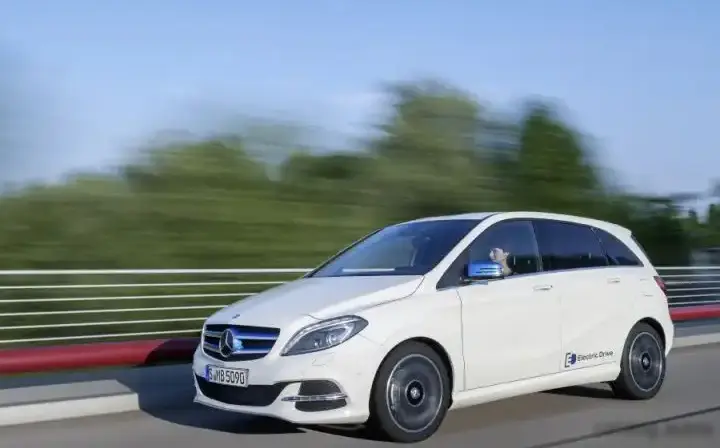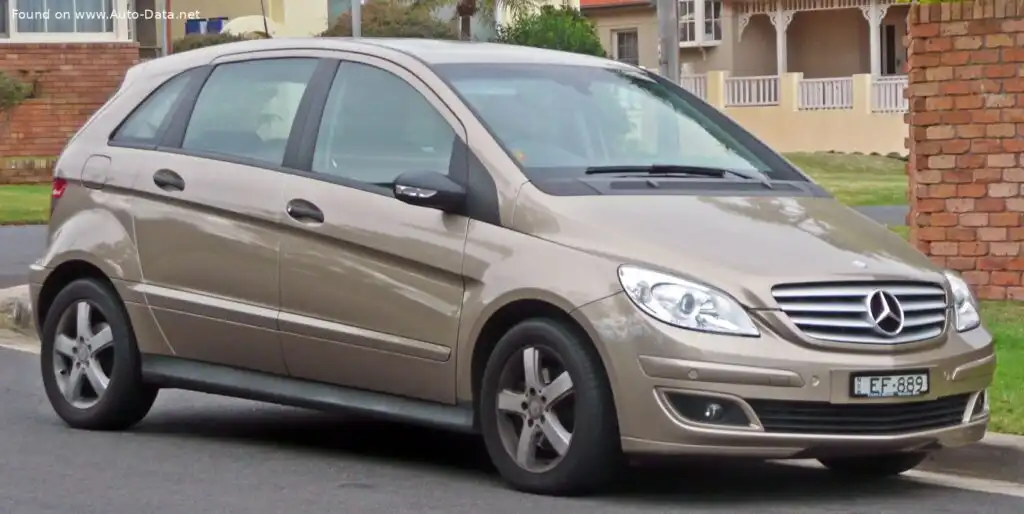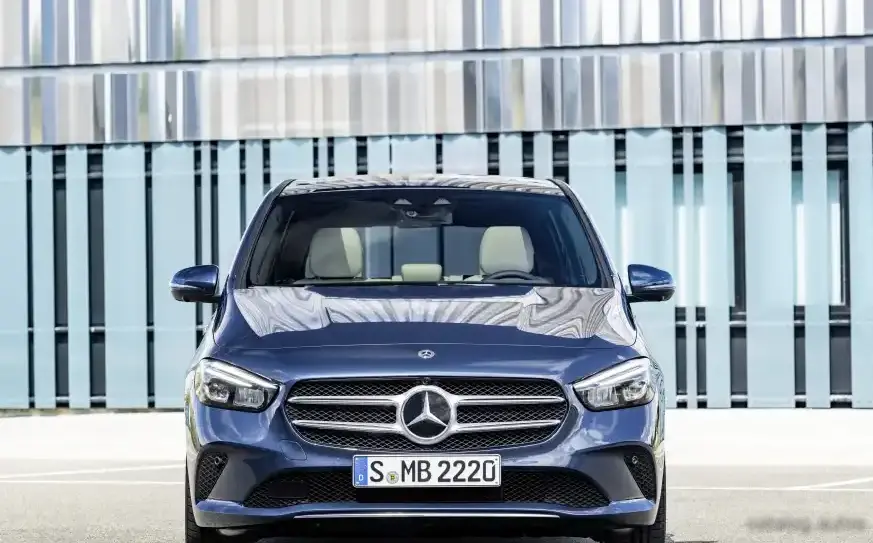
The Mercedes-Benz B 250e, a plug-in hybrid variant of the W247 B-Class, was produced from June 2020 to 2022. Positioned as a premium offering within the B-Class range, it aimed to combine the practicality of a compact hatchback with the efficiency and reduced emissions of a plug-in hybrid powertrain. The B 250e was primarily marketed in Europe and other regions with established infrastructure for electric vehicles, offering a stepping stone for consumers transitioning towards full electrification. It utilized the 1HX0/A3 platform shared with other compact Mercedes-Benz models.
Technical Specifications
| Brand | Mercedes-Benz |
| Model | B-class |
| Generation | B-class (W247) |
| Type (Engine) | B 250e (218 Hp) Plug-in Hybrid 8G-DCT |
| Start of production | June, 2020 |
| End of production | 2022 |
| Powertrain Architecture | PHEV (Plug-in Hybrid Electric Vehicle) |
| Body type | Hatchback |
| Seats | 5 |
| Doors | 5 |
| Combined fuel consumption (WLTP) | 1.2 l/100 km (196 US mpg, 235.4 UK mpg, 83.3 km/l) |
| CO2 emissions (WLTP) | 25 g/km |
| Fuel consumption (economy) – combined (NEDC) | 1.4-1.6 l/100 km (168 – 147 US mpg, 201.8 – 176.6 UK mpg, 71.4 – 62.5 km/l) |
| CO2 emissions (NEDC) | 32-36 g/km |
| Fuel Type | Petrol / electricity |
| Acceleration 0 – 100 km/h | 6.8 sec |
| Acceleration 0 – 62 mph | 6.8 sec |
| Acceleration 0 – 60 mph | 6.5 sec |
| Maximum speed | 235 km/h (146.02 mph) |
| Emission standard | Euro 6d-ISC-FCM |
| Weight-to-power ratio | 7.6 kg/Hp, 132.1 Hp/tonne |
| Weight-to-torque ratio | 3.7 kg/Nm, 272.7 Nm/tonne |
| Gross battery capacity | 15.6 kWh |
| Net (usable) battery capacity | 10.9 kWh |
| Battery technology | Lithium-ion (Li-Ion) |
| Battery location | Under the trunk |
| All-electric range (WLTP) | 56-67 km (34.8 – 41.63 mi) |
| All-electric range (NEDC) | 70-77 km (43.5 – 47.85 mi) |
| Average Energy consumption (WLTP) | 17.7 kWh/100 km (28.49 kWh/100 mi, 118 MPGe, 5.6 km/kWh, 3.5 mi/kWh) |
| Average Energy consumption (NEDC) | 14.7-15.4 kWh/100 km (23.66 – 24.78 kWh/100 mi, 142 – 136 MPGe, 6.8 – 6.5 km/kWh, 4.2 – 4 mi/kWh) |
| Max speed (electric) | 140 km/h (86.99 mph) |
| Electric motor power | 102 Hp @ 2500 rpm (330 Nm @ 2000 rpm / 243.4 lb.-ft. @ 2000 rpm) |
| System power | 218 Hp |
| System torque | 450 Nm (331.9 lb.-ft.) |
| Engine Power | 160 Hp @ 5500 rpm |
| Engine Torque | 230 Nm @ 1620-4000 rpm (169.64 lb.-ft. @ 1620-4000 rpm) |
| Engine layout | Front, Transverse |
| Engine Model/Code | M 282.914 |
| Engine displacement | 1332 cm3 (81.28 cu. in.) |
| Number of cylinders | 4 |
| Engine configuration | Inline |
| Cylinder Bore | 72.2 mm (2.84 in.) |
| Piston Stroke | 81.4 mm (3.2 in.) |
| Compression ratio | 10.6:1 |
| Number of valves per cylinder | 4 |
| Fuel injection system | Direct injection |
| Engine aspiration | Turbocharger, Intercooler |
| Valvetrain | DOHC |
| Engine oil capacity | 5.1 l (5.39 US qt | 4.49 UK qt) |
| Coolant | 6.8 l (7.19 US qt | 5.98 UK qt) |
| Kerb Weight | 1650 kg (3637.63 lbs.) |
| Max. weight | 2225 kg (4905.29 lbs.) |
| Max load | 575 kg (1267.66 lbs.) |
| Trunk (boot) space – minimum | 405 l (14.3 cu. ft.) |
| Trunk (boot) space – maximum | 1440 l (50.85 cu. ft.) |
| Fuel tank capacity | 35 l (9.25 US gal | 7.7 UK gal) |
| Max. roof load | 75 kg (165.35 lbs.) |
| Permitted trailer load with brakes (12%) | 1600 kg (3527.4 lbs.) |
| Permitted trailer load without brakes | 750 kg (1653.47 lbs.) |
| Permitted towbar download | 80 kg (176.37 lbs.) |
| Length | 4419 mm (173.98 in.) |
| Width | 1796 mm (70.71 in.) |
| Width including mirrors | 2020 mm (79.53 in.) |
| Height | 1562 mm (61.5 in.) |
| Wheelbase | 2729 mm (107.44 in.) |
| Front track | 1567 mm (61.69 in.) |
| Rear (Back) track | 1547 mm (60.91 in.) |
| Front overhang | 914 mm (35.98 in.) |
| Rear overhang | 776 mm (30.55 in.) |
| Drag coefficient (Cd) | 0.25 |
| Minimum turning circle (turning diameter) | 11 m (36.09 ft.) |
| Front suspension | Independent type McPherson |
| Rear suspension | Coil spring, Elastic beam |
| Front brakes | Ventilated discs |
| Rear brakes | Disc |
| Drive wheel | Front wheel drive |
| Number of gears and type of gearbox | 8 gears, automatic transmission DCT |
Powertrain & Engine Architecture
The B 250e utilizes a combination of a 1.3-liter turbocharged four-cylinder gasoline engine (M 282.914) and an electric motor. The internal combustion engine produces 160 horsepower and 230 Nm (169.64 lb-ft) of torque, while the electric motor contributes 102 horsepower and 330 Nm (243.4 lb-ft) of torque. Combined, the system delivers a total output of 218 horsepower and 450 Nm (331.9 lb-ft) of torque. The engine features direct fuel injection and a turbocharger with intercooling, optimizing for both power and efficiency. The electric motor is positioned between the engine and the 8-speed dual-clutch transmission (8G-DCT), allowing for seamless transitions between electric, hybrid, and gasoline power. The 15.6 kWh lithium-ion battery pack is located under the vehicle floor, minimizing impact on passenger space, but reducing trunk volume.
Driving Characteristics
The B 250e offers a refined driving experience, particularly in electric mode. With a usable battery capacity of 10.9 kWh, it can travel between 56-67 kilometers (34.8 – 41.63 miles) on a single charge under WLTP testing. The 8G-DCT transmission provides quick and smooth gear changes, enhancing both acceleration and fuel economy. In hybrid mode, the powertrain intelligently manages the interplay between the engine and electric motor, prioritizing electric power at lower speeds and supplementing it with the gasoline engine during more demanding situations. While the 0-60 mph acceleration of 6.5 seconds is respectable, it’s not as brisk as some higher-performance B-Class variants. The added weight of the battery pack does slightly impact handling compared to lighter models, but the B 250e remains a comfortable and capable daily driver.
Equipment & Trim Levels
The B 250e typically came well-equipped, reflecting its position as a premium variant. Standard features often included Mercedes-Benz’s MBUX infotainment system with a touchscreen display, navigation, Apple CarPlay and Android Auto integration, and a suite of driver-assistance systems such as automatic emergency braking, lane-keeping assist, and adaptive cruise control. Interior upholstery was typically a combination of Artico leather and fabric, with options for full leather upgrades. Available options included a panoramic sunroof, premium sound system, and various interior trim packages. The dashboard configuration was similar to other B-Class models, with a focus on modern design and user-friendliness.
Chassis & Braking
The B 250e utilizes a McPherson strut front suspension and an elastic beam rear suspension. This setup provides a good balance between ride comfort and handling. The added weight of the battery pack necessitated slightly stiffer spring rates compared to non-hybrid B-Class models. Braking duties are handled by ventilated discs at the front and solid discs at the rear. ABS (Anti-lock Braking System) is standard, along with electronic brake-force distribution and brake assist. The electric motor also contributes to regenerative braking, helping to recapture energy and extend the vehicle’s electric range.
Market Reception & Comparison
The B 250e was generally well-received by automotive critics, who praised its fuel efficiency, comfortable ride, and refined driving experience. However, some reviewers noted that the trunk space was compromised by the battery pack. Compared to the B 200 (powered by a 1.3-liter gasoline engine), the B 250e offered significantly better fuel economy and the ability to drive in all-electric mode, but at a higher purchase price. Against other plug-in hybrid competitors, the B 250e offered a compelling combination of practicality, luxury, and efficiency. Reliability reports have been generally positive, with few major issues reported regarding the hybrid powertrain.
Legacy
The Mercedes-Benz B 250e represents an important step in Mercedes-Benz’s transition towards electrification. While production was relatively short-lived, the B 250e demonstrated the viability of plug-in hybrid technology in a compact hatchback format. On the used car market, the B 250e remains a desirable option for buyers seeking a fuel-efficient and environmentally friendly vehicle with the prestige of the Mercedes-Benz brand. The powertrain has proven to be relatively reliable, although regular maintenance of the hybrid components is essential to ensure long-term performance. The B 250e paved the way for future generations of electric and plug-in hybrid models from Mercedes-Benz.