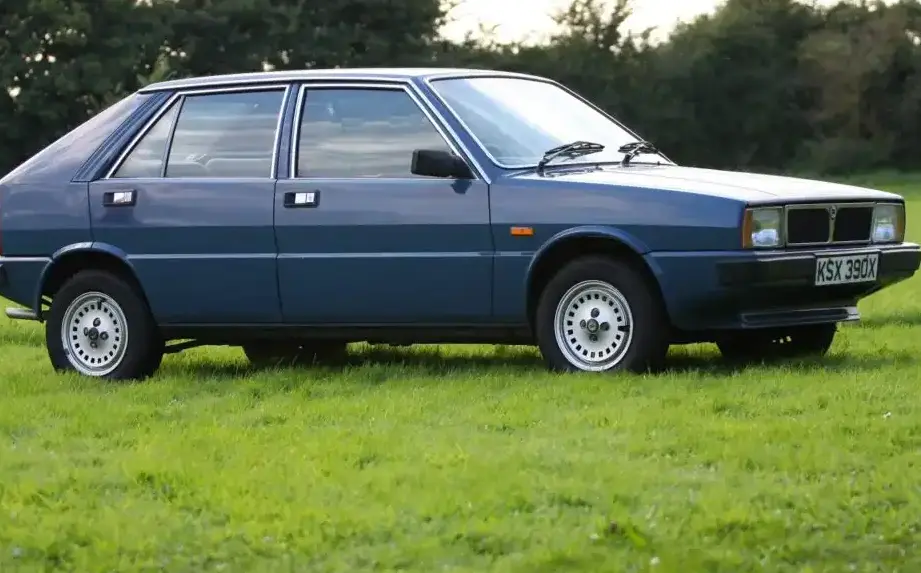
Technical Specifications
| Brand | Lancia |
| Model | Delta |
| Generation | Delta I (831) |
| Type (Engine) | 1300 1.3 (75 Hp) |
| Start of production | September, 1979 |
| End of production | October, 1982 |
| Powertrain Architecture | Internal Combustion engine |
| Body type | Hatchback |
| Seats | 5 |
| Doors | 5 |
| Fuel consumption (urban) | 10.2 l/100 km (23.1 US mpg, 27.7 UK mpg, 9.8 km/l) |
| Fuel consumption (extra urban) | 6.4 l/100 km (36.8 US mpg, 44.1 UK mpg, 15.6 km/l) |
| Fuel Type | Petrol (Gasoline) |
| Acceleration 0 – 100 km/h | 15 sec |
| Acceleration 0 – 62 mph | 15 sec |
| Acceleration 0 – 60 mph | 14.3 sec |
| Maximum speed | 155 km/h (96.31 mph) |
| Weight-to-power ratio | 12.9 kg/Hp, 77.3 Hp/tonne |
| Weight-to-torque ratio | 9.2 kg/Nm, 108.2 Nm/tonne |
| Power | 75 Hp @ 5800 rpm |
| Power per litre | 57.6 Hp/l |
| Torque | 105 Nm @ 3500 rpm (77.44 lb.-ft. @ 3500 rpm) |
| Maximum engine speed | 6200 rpm |
| Engine layout | Front, Transverse |
| Engine Model/Code | 831A2000 |
| Engine displacement | 1301 cm3 (79.39 cu. in.) |
| Number of cylinders | 4 |
| Engine configuration | Inline |
| Cylinder Bore | 86.4 mm (3.4 in.) |
| Piston Stroke | 55.5 mm (2.19 in.) |
| Compression ratio | 9.1:1 |
| Number of valves per cylinder | 2 |
| Fuel injection system | Carburettor |
| Engine aspiration | Naturally aspirated engine |
| Valvetrain | SOHC |
| Engine oil capacity | 4.3 l (4.54 US qt | 3.78 UK qt) |
| Coolant | 6 l (6.34 US qt | 5.28 UK qt) |
| Kerb Weight | 970 kg (2138.48 lbs.) |
| Max. weight | 1420 kg (3130.56 lbs.) |
| Max load | 450 kg (992.08 lbs.) |
| Trunk (boot) space – minimum | 260 l (9.18 cu. ft.) |
| Trunk (boot) space – maximum | 1000 l (35.31 cu. ft.) |
| Fuel tank capacity | 45 l (11.89 US gal | 9.9 UK gal) |
| Permitted trailer load with brakes (12%) | 1040 kg (2292.81 lbs.) |
| Length | 3885 mm (152.95 in.) |
| Width | 1620 mm (63.78 in.) |
| Height | 1380 mm (54.33 in.) |
| Wheelbase | 2465 mm (97.05 in.) |
| Front track | 1400 mm (55.12 in.) |
| Rear (Back) track | 1400 mm (55.12 in.) |
| Minimum turning circle | 10.5 m (34.45 ft.) |
| Climb angle | 19.8° |
| Drivetrain Architecture | The Internal combustion engine (ICE) drives the front wheels of the vehicle. |
| Drive wheel | Front wheel drive |
| Number of gears and type of gearbox | 5 gears, manual transmission |
| Front suspension | Independent, type McPherson with coil spring and anti-roll bar |
| Rear suspension | McPherson, Transverse stabilizer |
| Front brakes | Disc |
| Rear brakes | Drum |
| Steering type | Steering rack and pinion |
| Tires size | 165/70 R13 |
| Wheel rims size | 5J x 13 |
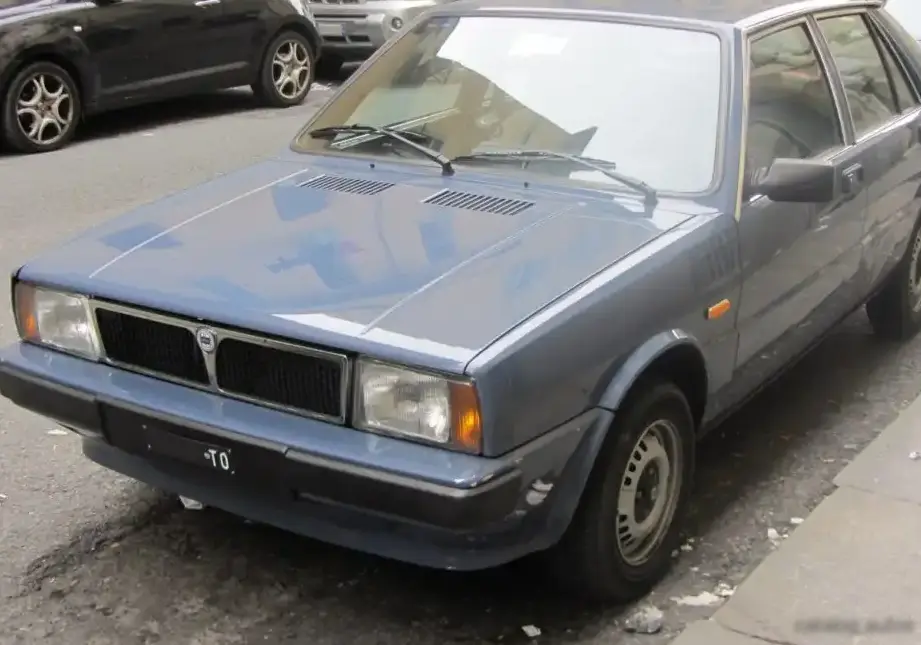
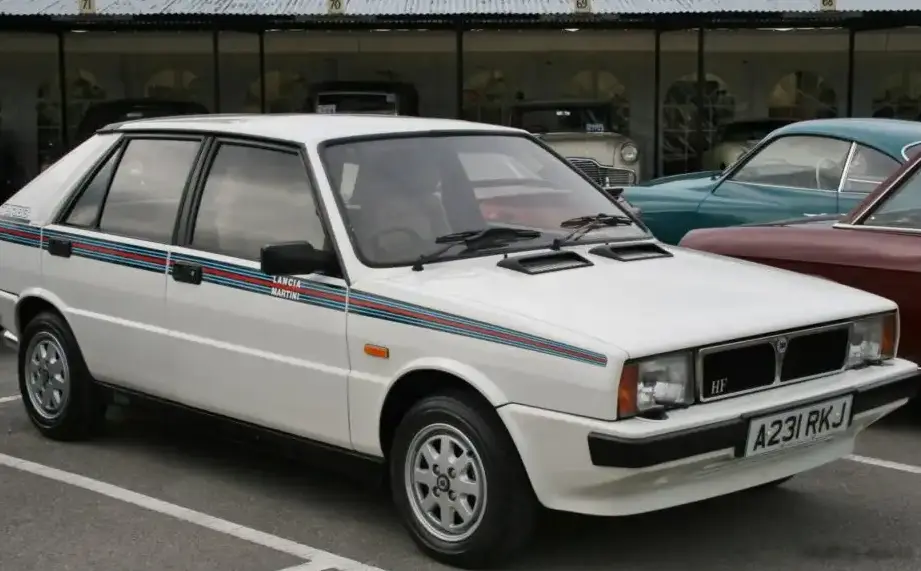
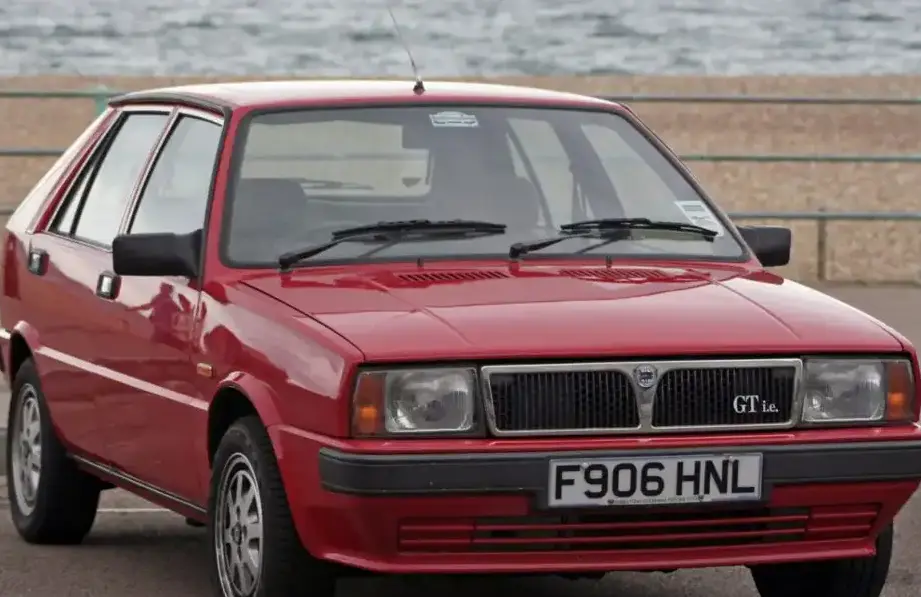
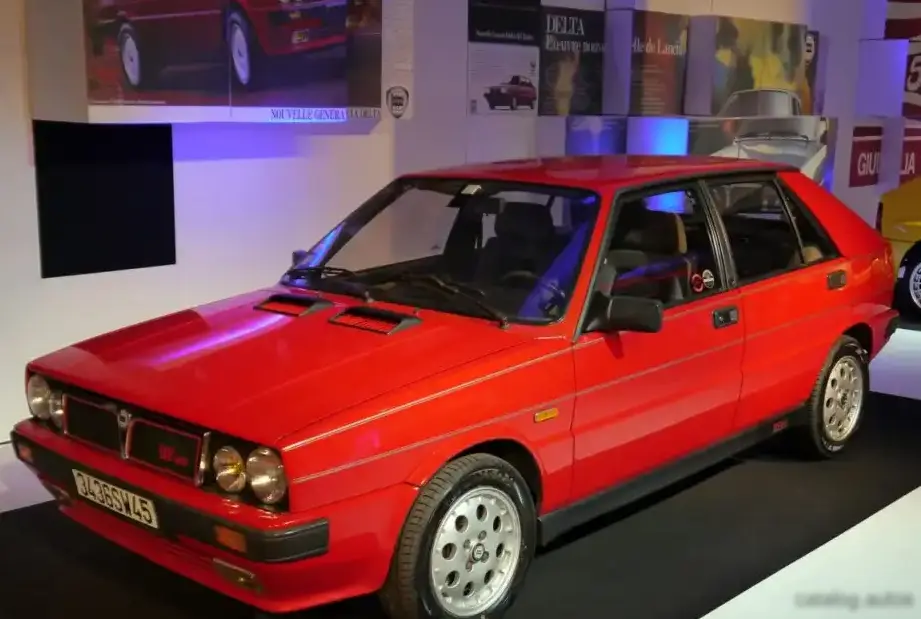
The Lancia Delta 1300, produced between September 1979 and October 1982, represents the entry point into the innovative first generation (831) of Lancia’s hugely successful Delta hatchback. Positioned as the most affordable variant in the initial Delta lineup, the 1300 aimed to bring Lancia’s reputation for engineering and style to a broader audience. It served as the foundation upon which the more powerful and technologically advanced Delta variants – including the HF Turbo and the later inline-six models – would be built. The Delta I, designed by Giorgetto Giugiaro of Italdesign, was a significant departure for Lancia, moving away from their traditionally more conservative designs and embracing a modern, aerodynamic aesthetic. This model established the Delta as a benchmark in the compact hatchback segment, particularly noted for its spacious interior and sophisticated engineering.
Powertrain & Engine Architecture
The Lancia Delta 1300 was powered by the 831A2000 engine, a 1301cc inline-four cylinder unit. This engine, a mainstay in several Fiat and Lancia models of the era, featured a single overhead camshaft (SOHC) valvetrain operating two valves per cylinder. Fuel delivery was managed by a Weber 32 DHFA carburetor, a relatively simple system compared to the fuel injection found in later Delta variants. The engine’s modest 75 horsepower at 5800 rpm and 105 Nm (77.44 lb-ft) of torque at 3500 rpm were sufficient for the car’s weight, but didn’t offer particularly brisk performance. The engine was transversely mounted, a configuration that maximized interior space and contributed to the Delta’s balanced handling. The 831 engine was known for its durability, but its carbureted fuel system required periodic adjustment and maintenance. The 5-speed manual transmission, standard on the 1300, provided a reasonable spread of gears for both city driving and highway cruising.
Driving Characteristics
The Delta 1300 offered a comfortable, if not exhilarating, driving experience. Acceleration to 60 mph took around 14.3 seconds, and top speed was approximately 96 mph. The 5-speed gearbox allowed drivers to keep the engine in its optimal power band, but the engine lacked the low-end torque of larger displacement units. Compared to the later Delta 1.6 or the high-performance HF Turbo, the 1300 felt noticeably slower. However, its lighter weight and well-tuned suspension provided a surprisingly agile feel in corners. The steering was light and precise, making it easy to maneuver in urban environments. The ride quality was generally good, absorbing bumps and imperfections in the road surface effectively. The gear ratios were spaced to prioritize fuel economy and everyday usability over outright performance.
Equipment & Trim Levels
The Delta 1300 was typically equipped with basic, but functional, features. Standard equipment included cloth upholstery, a basic instrument cluster, and manually operated windows and door locks. The interior was characterized by its simple, functional design. Optional extras included a sunroof, upgraded stereo system, and metallic paint. The trim level was fairly basic, reflecting its position as the entry-level model. The dashboard layout was straightforward, with clearly labeled controls. The seats offered adequate support for both front and rear passengers. The Delta 1300 was designed to be a practical and affordable family car, and its equipment levels reflected this.
Chassis & Braking
The Delta 1300 featured an independent McPherson strut suspension at the front, providing good handling and ride comfort. The rear suspension utilized a McPherson strut design with a transverse stabilizer bar, further enhancing stability. Front brakes were ventilated discs, offering adequate stopping power, while the rear brakes were drums. This combination was typical for cars in this class at the time. The steering system was a rack and pinion setup, providing precise and responsive steering. The car rode on 165/70 R13 tires, mounted on 5J x 13 steel wheels. The chassis was relatively lightweight, contributing to the car’s nimble handling characteristics.
Market Reception & Comparison
The Lancia Delta 1300 was generally well-received by automotive critics, who praised its spacious interior, comfortable ride, and stylish design. However, some critics noted its modest performance and relatively basic equipment levels. Compared to other hatchbacks in its class, such as the Volkswagen Golf and the Ford Escort, the Delta 1300 offered a more sophisticated driving experience and a more distinctive design. Fuel economy was reasonable for the time, averaging around 36.8 US mpg on the highway. Reliability was generally good, although the carbureted engine required regular maintenance. The 1300 was positioned as a more affordable alternative to the higher-spec Delta models, appealing to buyers who prioritized practicality and value.
Legacy
The Lancia Delta 1300 laid the groundwork for the Delta’s success as a class-leading hatchback. While the 1300 itself is not particularly sought after by collectors, it represents an important chapter in the Delta’s history. The 831 engine proved to be durable and reliable, and many examples are still on the road today. In the used car market, the Delta 1300 is often available at very affordable prices, making it an attractive option for enthusiasts looking for a classic Italian hatchback. Its simple mechanicals make it relatively easy to maintain and repair. The Delta 1300 remains a testament to Lancia’s engineering prowess and design flair, and it continues to be appreciated by those who value its unique character and charm.