The Renault Megane II Classic: A European Mainstay
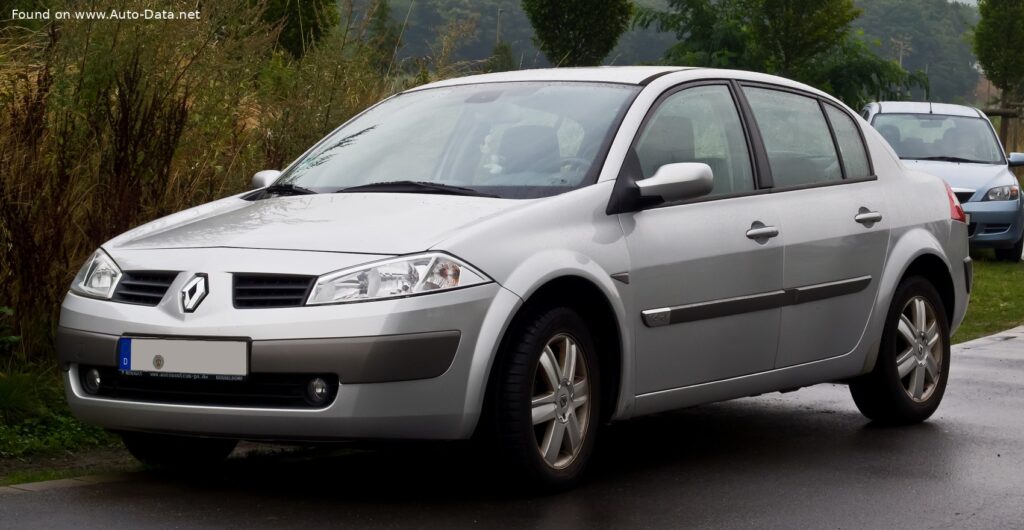
The Renault Megane II Classic 1.5 dCi (101 Hp) Automatic represents a significant offering from the French automaker in the highly competitive European C-segment during the mid-2000s. Produced between 2004 and 2005, this particular variant of the second-generation Megane was specifically designed as a four-door sedan, catering to markets where traditional three-box configurations were preferred over the more radical “bustle-back” styling of its hatchback sibling. While never officially imported to the United States, the Megane II Classic was a familiar sight across Europe, Asia, and other international territories, renowned for its blend of practicality, comfort, and impressive fuel efficiency, particularly with its advanced common-rail diesel powertrain.
As part of the broader Megane II family, which garnered the prestigious European Car of the Year award in 2003, the Classic sedan aimed to extend the model’s appeal to a wider customer base. It offered a more conventional, albeit still distinctively styled, alternative to the innovative hatchback and coupe models. The 1.5 dCi engine, a cornerstone of Renault’s diesel offerings, provided a compelling balance of performance and economy, further enhanced by the convenience of an automatic transmission in this configuration. This combination positioned the Renault Megane II Classic as an ideal choice for families and business users seeking a reliable, economical, and spacious vehicle for daily commuting and longer journeys.
Powertrain and Driving Dynamics of the Renault Megane II Classic
Under the hood, the Renault Megane II Classic 1.5 dCi (101 Hp) Automatic featured the well-regarded K9K engine, a 1.5-liter (1461 cm³ or 89.16 cu. in.) inline four-cylinder diesel unit. This engine was a testament to Renault’s expertise in diesel technology, incorporating a common rail fuel injection system, a turbocharger, and an intercooler to optimize performance and efficiency. It delivered a respectable 101 horsepower at 4000 rpm, paired with a robust 147.51 lb-ft (200 Nm) of torque arriving at a low 1900 rpm. This ample low-end torque was crucial for effortless urban driving and comfortable highway cruising, characteristic of European diesel vehicles.
Power was sent to the front wheels via a 4-speed automatic transmission, a configuration chosen for its smoothness and ease of use in diverse driving conditions. While not designed for outright speed, the Megane II Classic 1.5 dCi could accelerate from 0 to 60 mph in 14.2 seconds and reach a top speed of 108 mph (174 km/h). These figures underscored its role as a practical family sedan rather than a performance machine. Its true strength lay in its fuel economy, which was outstanding for its time. The vehicle achieved an impressive combined fuel consumption of 40.6 US mpg (5.8 l/100 km). Urban driving yielded 30.5 US mpg (7.7 l/100 km), while extra-urban cycles saw it achieve an remarkable 50 US mpg (4.7 l/100 km), making it a highly economical choice for long-distance travel. Emissions were rated at 153 g/km CO2, meeting the Euro 3 emission standard of the period.
The driving dynamics were characterized by a comfortable and composed ride, a hallmark of French automotive engineering. The front suspension utilized an independent McPherson strut design, while the rear featured a torsion beam setup, a common and cost-effective solution for compact cars that provides a good balance of handling and ride comfort. Ventilated disc brakes at the front and disc brakes at the rear, complemented by an Anti-lock Braking System (ABS), ensured confident stopping power. The electric power steering system provided light and precise control, making maneuvering in tight city spaces easy, with a minimum turning circle of 35.1 feet (10.7 meters).
Design Philosophy and Practicality
The Renault Megane II Classic adopted a more conventional sedan profile compared to its groundbreaking hatchback counterpart, yet it retained much of the Megane II’s distinctive design language. Its dimensions—a length of 177.09 inches (4498 mm), a width of 69.96 inches (1777 mm), and a height of 57.48 inches (1460 mm)—provided a substantial road presence for a compact car. The wheelbase of 105.75 inches (2686 mm) contributed to a stable ride and a surprisingly spacious interior for five occupants.
The exterior design featured clean lines and a purposeful stance, avoiding the more controversial styling elements of some of its stablemates. The interior prioritized ergonomics and passenger comfort, offering a well-appointed cabin with practical storage solutions. A key selling point for the sedan variant was its generous trunk capacity, boasting a minimum of 18.36 cubic feet (520 liters) of space. This made it highly attractive to families needing ample luggage room for vacations or daily errands. The fuel tank capacity of 15.85 US gallons (60 liters) further enhanced its long-distance touring capabilities, aligning perfectly with its economical diesel engine.
Safety features, though not exhaustively detailed in the provided data, typically included multiple airbags, seatbelt pretensioners, and the aforementioned ABS as standard for a vehicle of its class in the mid-2000s. The 195/65 R15 tires, optionally available with 195/55 R16 or 205/50 R17 sizes, provided a balance of grip and ride comfort, mounted on wheel rims sized 6.5J x 15, 6.5J x 16, or 6.5J x 17.
Detailed Technical Specifications of the Renault Megane II Classic
Below is a comprehensive table detailing the technical specifications for the Renault Megane II Classic 1.5 dCi (101 Hp) Automatic:
| Category | Specification | Value (Metric) | Value (US Equivalent) |
|---|---|---|---|
| General Information | |||
| Brand | Renault | ||
| Model | Megane | ||
| Generation | Megane II Classic | ||
| Type (Engine) | 1.5 dCi (101 Hp) Automatic | ||
| Start of production | 2004 year | ||
| End of production | 2005 year | ||
| Powertrain Architecture | Internal Combustion engine | ||
| Body type | Sedan | ||
| Seats | 5 | ||
| Doors | 4 | ||
| Performance Specs | |||
| Fuel consumption (economy) – urban | 7.7 l/100 km | 30.5 US mpg | |
| Fuel consumption (economy) – extra urban | 4.7 l/100 km | 50 US mpg | |
| Fuel consumption (economy) – combined | 5.8 l/100 km | 40.6 US mpg | |
| CO2 emissions | 153 g/km | ||
| Fuel Type | Diesel | ||
| Acceleration 0 – 60 mph | 14.2 sec | 14.2 sec | |
| Maximum speed | 174 km/h | 108.12 mph | |
| Emission standard | Euro 3 | ||
| Weight-to-power ratio | 12.6 kg/Hp | 27.78 lbs/Hp | |
| Weight-to-torque ratio | 6.4 kg/Nm | 4.33 lbs/lb.-ft. | |
| Engine Specs | |||
| Power | 101 Hp @ 4000 rpm. | 101 Hp @ 4000 rpm. | |
| Power per liter | 69.1 Hp/l | ||
| Torque | 200 Nm @ 1900 rpm. | 147.51 lb.-ft. @ 1900 rpm. | |
| Engine layout | Front, Transverse | ||
| Engine Model/Code | K9K | ||
| Engine displacement | 1461 cm³ | 1.5 liters / 89.16 cu. in. | |
| Number of cylinders | 4 | ||
| Engine configuration | Inline | ||
| Cylinder Bore | 76 mm | 2.99 in. | |
| Piston Stroke | 80.5 mm | 3.17 in. | |
| Compression ratio | 18.8:1 | ||
| Number of valves per cylinder | 2 | ||
| Fuel injection system | Diesel Commonrail | ||
| Engine aspiration | Turbocharger, Intercooler | ||
| Valvetrain | OHC | ||
| Engine oil capacity | 4.5 l | 4.76 US qt | |
| Coolant | 6.8 l | 7.19 US qt | |
| Space, Volume and Weights | |||
| Kerb Weight | 1270 kg | 2799.87 lbs. | |
| Max. weight | 1810 kg | 3990.37 lbs. | |
| Max load | 540 kg | 1190.5 lbs. | |
| Trunk (boot) space – minimum | 520 l | 18.36 cu. ft. | |
| Fuel tank capacity | 60 l | 15.85 US gal | |
| Max. roof load | 80 kg | 176.37 lbs. | |
| Permitted trailer load with brakes (12%) | 1250 kg | 2755.78 lbs. | |
| Permitted trailer load without brakes | 650 kg | 1433 lbs. | |
| Permitted towbar download | 75 kg | 165.35 lbs. | |
| Dimensions | |||
| Length | 4498 mm | 177.09 in. | |
| Width | 1777 mm | 69.96 in. | |
| Width including mirrors | 2026 mm | 79.76 in. | |
| Height | 1460 mm | 57.48 in. | |
| Wheelbase | 2686 mm | 105.75 in. | |
| Front track | 1518 mm | 59.76 in. | |
| Rear (Back) track | 1514 mm | 59.61 in. | |
| Front overhang | 842 mm | 33.15 in. | |
| Rear overhang | 970 mm | 38.19 in. | |
| Minimum turning circle (turning diameter) | 10.7 m | 35.1 ft. | |
| Drivetrain, Brakes and Suspension Specs | |||
| Drivetrain Architecture | The Internal combustion engine (ICE) drives the front wheels of the vehicle. | ||
| Drive wheel | Front wheel drive | ||
| Number of gears and type of gearbox | 4 gears, automatic transmission | ||
| Front suspension | Independent type McPherson | ||
| Rear suspension | Torsion | ||
| Front brakes | Ventilated discs | ||
| Rear brakes | Disc | ||
| Assisting systems | ABS (Anti-lock braking system) | ||
| Steering type | Steering rack and pinion | ||
| Power steering | Electric Steering | ||
| Tires size | 195/65 R15; 195/55 R16; 205/50 R17 | ||
| Wheel rims size | 6.5J x 15; 6.5J x 16; 6.5J x 17 | ||
Market Position and Enduring Legacy
In its primary European market, the Renault Megane II Classic 1.5 dCi (101 Hp) Automatic faced stiff competition from other well-established compact sedans. Key rivals included the Ford Focus Sedan, Opel Astra Sedan, and the Volkswagen Jetta (known as Bora in some regions). What set the Megane II Classic apart was its distinctive French flair, a focus on passenger comfort, and the exceptional fuel economy offered by its dCi diesel engine, especially when paired with an automatic transmission for ease of driving in congested urban environments.
The Megane II Classic carved out a niche for itself as a sensible, value-oriented choice for buyers who appreciated a traditional sedan body style combined with modern diesel efficiency. Its generous trunk space and comfortable ride made it a popular option for families and those needing a reliable workhorse. While its production run for this specific variant was relatively brief (2004-2005), it contributed to the overall success and widespread recognition of the Megane II generation, further solidifying Renault’s position as a leader in the European compact car segment.
Today, the Renault Megane II Classic is remembered as a practical and economical vehicle that successfully translated the innovative spirit of the Megane II hatchback into a more conventional yet equally competent sedan package. Its enduring legacy lies in its contribution to making advanced common-rail diesel technology accessible in the mainstream compact segment, offering a compelling blend of low running costs, sufficient performance for daily driving, and a comfortable, spacious interior that appealed to a broad demographic across international markets.