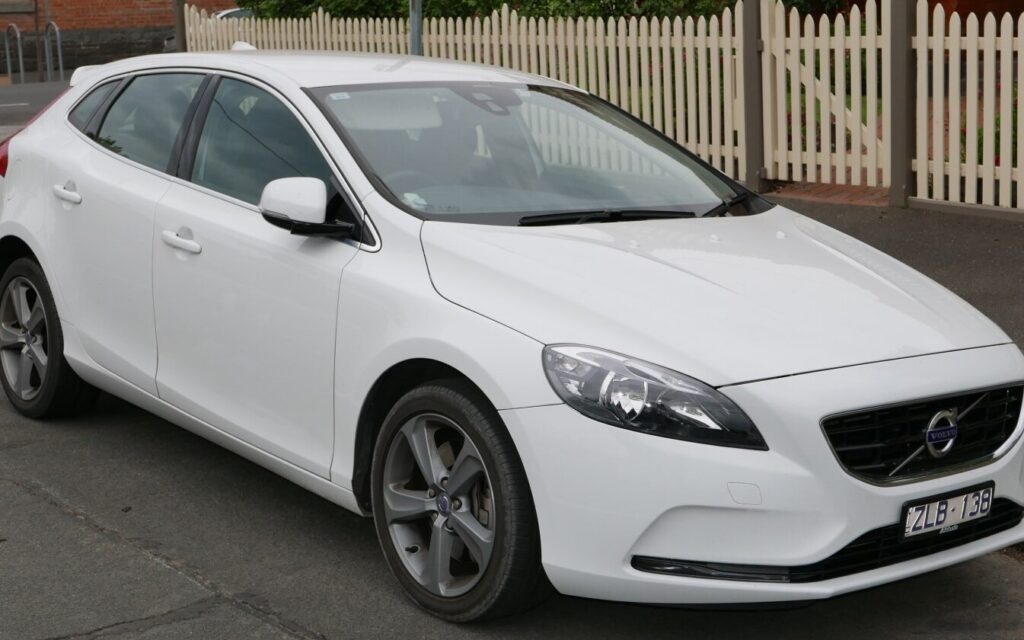
Introduction to the Volvo V40 (facelift 2016)
The Volvo V40 (facelift 2016) represents a significant refresh for Volvo’s premium compact hatchback, a model primarily targeted at and sold within the highly competitive European market. Introduced for the 2016 model year, this updated V40 carried on the tradition of Scandinavian design and advanced safety features, embodying Volvo’s commitment to both style and occupant protection. While never officially sold in the United States, the V40 played a crucial role in Volvo’s global strategy, serving as an entry point into the brand for many European consumers looking for a sophisticated, safe, and efficient compact vehicle. This particular variant, the 2.0 D2 (120 Hp) Geartronic, was positioned as an economical yet capable option within the V40 lineup, offering a compelling blend of fuel efficiency and smooth automatic transmission for daily driving.
The V40, which debuted in 2012, was Volvo’s answer to established premium compacts like the Audi A3, BMW 1 Series, and Mercedes-Benz A-Class. The 2016 facelift brought a series of aesthetic and technological enhancements, aligning its design language more closely with the brand’s larger, newer models like the XC90 and S90. It maintained its five-door hatchback body style, offering practical versatility alongside its upscale appeal. The V40’s production run for this generation extended from 2016 to 2018, marking it as a mature and refined product within its lifecycle before Volvo shifted its focus to a new generation of compact vehicles built on its CMA (Compact Modular Architecture) platform.
Engine & Performance: The 2.0 D2 (120 Hp) Geartronic Powertrain
At the heart of this particular Volvo V40 (facelift 2016) model is Volvo’s Drive-E family 2.0-liter (1969 cm³ or 120.16 cu. in.) D2 diesel engine. This inline-four, turbocharged, and intercooled powerplant was designed with a strong emphasis on efficiency and reduced emissions, meeting the stringent Euro 6 emission standard. It generates a respectable 120 horsepower at 3750 rpm, paired with a robust 206.52 lb.-ft. (280 Nm) of torque available across a broad band from 1500 to 2250 rpm. This low-end torque is characteristic of modern diesel engines and contributes significantly to the V40’s responsive feel in everyday driving conditions.
Power is delivered to the front wheels via a smooth-shifting 6-speed Geartronic automatic transmission. This combination allows the V40 D2 to accelerate from 0 to 60 mph in a computed 10 seconds (0-100 km/h in 10.5 seconds), with a maximum speed of 118.06 mph (190 km/h). While not a performance-oriented variant, these figures indicate adequate power for highway cruising and comfortable urban maneuvering.
Fuel economy is a standout feature of the 2.0 D2 Geartronic. Volvo reported a combined fuel consumption of 3.8 liters per 100 km, which translates to an impressive 61.9 US mpg. Urban consumption was rated at 4.4 l/100 km (53.5 US mpg), and extra-urban at 3.5 l/100 km (67.2 US mpg). These figures, combined with CO2 emissions of just 101 g/km, highlight the V40 D2’s commitment to economical and environmentally conscious driving. The engine also features a particulate filter, a common and necessary component for modern diesel engines to reduce harmful emissions.
Design & Features: Scandinavian Elegance and Practicality
The 2016 facelift brought a refreshed aesthetic to the V40, most notably incorporating Volvo’s signature “Thor’s Hammer” LED daytime running lights into the headlights, giving it a more modern and recognizable face in line with the brand’s larger S90 and XC90 models. The V40 maintains its five-door hatchback configuration, a practical choice offering versatility for passengers and cargo. With seating for five, the interior is characterized by Volvo’s minimalist Scandinavian design, emphasizing clean lines, high-quality materials, and ergonomic functionality.
Measuring 172.01 inches (4369 mm) in length, 70.2 inches (1783 mm) in width (80.35 inches or 2041 mm including mirrors), and 56.65 inches (1439 mm) in height, the V40 is a compact vehicle well-suited for European cityscapes. Its wheelbase of 104.21 inches (2647 mm) contributes to a stable ride. The cargo area offers a minimum trunk space of 11.83 cu. ft. (335 liters), expanding significantly to 52.97 cu. ft. (1500 liters) with the rear seats folded down, making it surprisingly practical for its class.
As a Volvo, safety features are paramount. While the detailed list isn’t provided, it’s safe to assume the V40 came equipped with a comprehensive suite of active and passive safety systems typical of the brand, including multiple airbags, stability control, and advanced driver-assistance systems (ADAS) appropriate for its era. The car features independent McPherson strut front suspension and independent coil spring rear suspension, providing a balanced ride and handling. Braking is handled by ventilated discs at the front and disc brakes at the rear, assisted by ABS (Anti-lock braking system). Electric power steering ensures a responsive and comfortable driving experience.
Technical Specifications
| Category | Specification | US Equivalent / Notes |
|---|---|---|
| General Information | ||
| Brand | Volvo | |
| Model | V40 (facelift 2016) | |
| Type (Engine) | 2.0 D2 (120 Hp) Geartronic | |
| Production Start | 2016 | |
| Production End | 2018 | |
| Body Type | Hatchback | 5 Doors, 5 Seats |
| Powertrain Architecture | Internal Combustion engine | |
| Performance Specifications | ||
| Fuel Consumption (Urban) | 4.4 l/100 km | 53.5 US mpg |
| Fuel Consumption (Extra Urban) | 3.5 l/100 km | 67.2 US mpg |
| Fuel Consumption (Combined) | 3.8 l/100 km | 61.9 US mpg |
| CO2 Emissions | 101 g/km | Euro 6 Emission Standard |
| Fuel Type | Diesel | |
| Acceleration 0-60 mph | 10 seconds (Calculated) | 0-100 km/h in 10.5 seconds |
| Maximum Speed | 190 km/h | 118.06 mph |
| Weight-to-Power Ratio | 12.4 kg/Hp | 80.8 Hp/tonne |
| Weight-to-Torque Ratio | 5.3 kg/Nm | 188.4 Nm/tonne |
| Engine Specifications | ||
| Power | 120 Hp @ 3750 rpm | |
| Power per liter | 60.9 Hp/l | |
| Torque | 280 Nm @ 1500-2250 rpm | 206.52 lb.-ft. @ 1500-2250 rpm |
| Engine Layout | Front, Transverse | |
| Engine Model/Code | D4204T8 | |
| Engine Displacement | 1969 cm³ | 2.0 liters / 120.16 cu. in. |
| Number of Cylinders | 4 | Inline configuration |
| Cylinder Bore | 82 mm | 3.23 in. |
| Piston Stroke | 93.2 mm | 3.67 in. |
| Compression Ratio | 16:1 | |
| Valves per Cylinder | 4 | |
| Fuel Injection System | Diesel Commonrail | |
| Engine Aspiration | Turbocharger, Intercooler | |
| Engine Oil Capacity | 5.2 l | 5.49 US qt |
| Coolant Capacity | 8 l | 8.45 US qt |
| Engine Systems | Particulate filter | |
| Space, Volume, and Weights | ||
| Kerb Weight | 1486 kg | 3276.07 lbs. |
| Maximum Weight | 1980 kg | 4365.15 lbs. |
| Maximum Load | 494 kg | 1089.08 lbs. |
| Trunk (Boot) Space – Minimum | 335 l | 11.83 cu. ft. |
| Trunk (Boot) Space – Maximum | 1500 l | 52.97 cu. ft. |
| Fuel Tank Capacity | 62 l | 16.38 US gal |
| Maximum Roof Load | 75 kg | 165.35 lbs. |
| Permitted Trailer Load with Brakes (12%) | 1500 kg | 3306.93 lbs. |
| Dimensions | ||
| Length | 4369 mm | 172.01 in. |
| Width | 1783 mm | 70.2 in. |
| Width including Mirrors | 2041 mm | 80.35 in. |
| Height | 1439 mm | 56.65 in. |
| Wheelbase | 2647 mm | 104.21 in. |
| Front Track | 1559 mm | 61.38 in. |
| Rear Track | 1546 mm | 60.87 in. |
| Ride Height (Ground Clearance) | 133-144 mm | 5.24 – 5.67 in. |
| Drag Coefficient (Cd) | 0.32 | |
| Minimum Turning Circle | 10.8 m | 35.43 ft. |
| Drivetrain, Brakes, and Suspension | ||
| Drivetrain Architecture | Front-wheel drive | Internal Combustion engine drives front wheels |
| Drive Wheel | Front wheel drive | |
| Gearbox Type | 6 gears, automatic transmission Geartronic | |
| Front Suspension | Independent, McPherson with coil spring and anti-roll bar | |
| Rear Suspension | Independent coil spring | |
| Front Brakes | Ventilated discs | |
| Rear Brakes | Disc | |
| Assisting Systems | ABS (Anti-lock braking system) | |
| Steering Type | Steering rack and pinion | |
| Power Steering | Electric Steering | |
Legacy & Market Impact of the Volvo V40 (facelift 2016)
The Volvo V40 (facelift 2016), particularly in its efficient 2.0 D2 Geartronic guise, solidified its position as a strong contender in the European premium compact segment. While it faced stiff competition from the well-established German trio—the Audi A3 Sportback, BMW 1 Series, and Mercedes-Benz A-Class—the V40 carved out its niche by offering a distinct Scandinavian alternative. Its appeal lay in its understated elegance, renowned safety credentials, and a more relaxed, comfortable driving experience compared to some of its sportier rivals.
In its primary markets, the V40 was well-regarded for its robust build quality and a high level of standard equipment, often presenting a compelling value proposition. The D2 diesel engine, in particular, was popular among European buyers due to its exceptional fuel economy and low running costs, making it an attractive option for both private owners and company car fleets. The Geartronic automatic transmission further enhanced its appeal, offering convenience and refinement in congested urban environments.
The V40’s design, especially after the 2016 facelift, was instrumental in bridging the aesthetic gap between Volvo’s older models and its new generation of vehicles, which were beginning to redefine the brand’s image globally. It showcased elements of Volvo’s contemporary design language, hinting at the future direction of the brand. Although it never made it to North American shores, the V40’s success in Europe contributed to Volvo’s overall financial health and brand perception during a period of significant transformation for the automaker.
Ultimately, the V40 represented the last of its kind for Volvo’s compact offerings before the full transition to the CMA platform, which underpins models like the XC40. Its legacy is one of a well-executed premium compact that stayed true to Volvo’s core values of safety, design, and practicality, while successfully competing in one of the most demanding automotive segments outside the United States. It remains a testament to Volvo’s ability to innovate and adapt its products to specific market needs, even as its global strategy continued to evolve.