Skoda Octavia III 1.6 TDI (105 Hp) 4×4: A Comprehensive Overview
The Skoda Octavia, a cornerstone of the Czech automaker’s lineup, has long been celebrated for its blend of practicality, value, and robust engineering, largely thanks to its integration within the Volkswagen Group. The third generation, known as the Octavia III, launched in 2013, continued this tradition, offering significant advancements in technology, efficiency, and comfort. Among its diverse powertrain options, the Skoda Octavia III 1.6 TDI (105 Hp) 4×4 variant, produced between 2013 and 2015, stood out as a particularly compelling choice for European consumers seeking a fuel-efficient and capable all-wheel-drive family car. While Skoda models are not typically sold in the United States, the Octavia’s success in its primary markets underscores its global significance as a well-engineered, accessible vehicle that delivers substantial utility without compromising on modern automotive standards.
This particular iteration of the Octavia III combined a frugal diesel engine with an intelligent all-wheel-drive system, making it an ideal companion for varied climates and road conditions prevalent across Europe. Its hatchback body style further enhanced its appeal, offering a cavernous cargo area that rivaled many station wagons. The Skoda Octavia III 1.6 TDI (105 Hp) 4×4 represented a sweet spot in the range, balancing performance, economy, and enhanced traction, all wrapped in a refined and understated package that epitomized Skoda’s “Simply Clever” philosophy.
Engine and Performance: The Heart of the Skoda Octavia III 1.6 TDI (105 Hp) 4×4
At the core of the Skoda Octavia III 1.6 TDI (105 Hp) 4×4 lies a highly efficient 1.6-liter (1598 cm3 or 97.52 cu. in.) inline four-cylinder turbodiesel engine, identified by the EA288 / CLHA code. This powertrain was a testament to Volkswagen Group’s commitment to diesel technology, delivering a commendable 105 horsepower at a broad range of 3000-4000 rpm. More significantly for daily driving and load-hauling, the engine produced a robust 184.39 lb.-ft. (250 Nm) of torque, available from a low 1500 rpm up to 2750 rpm. This wide torque band ensured flexible and responsive acceleration, particularly useful for overtaking or when the vehicle was fully loaded.
The engine’s design featured a DOHC (Double Overhead Camshaft) valvetrain with four valves per cylinder, optimizing airflow and combustion efficiency. Fuel delivery was handled by a sophisticated common rail direct injection system, which, coupled with a turbocharger and intercooler, allowed for precise fuel atomization and strong power delivery across the rev range. With a compression ratio of 16:1, typical for a modern diesel, the engine was designed for optimal thermal efficiency.
Performance figures for the Octavia III 1.6 TDI (105 Hp) 4×4 were respectable for its class and intended purpose. It could accelerate from 0 to 60 mph in a calculated 10.9 seconds (0-100 km/h in 11.5 seconds) and reach a maximum speed of 118.68 mph (191 km/h). These figures highlighted its capability as a competent cruiser suitable for long-distance travel on European highways. Crucially, the engine was engineered to meet Euro 5 emission standards, with CO2 emissions rated at just 119 g/km, reflecting a strong emphasis on environmental responsibility for its production era.
Fuel economy was a major selling point. The NEDC (New European Driving Cycle) ratings were impressive: 42.8 US mpg (5.5 l/100 km) in urban conditions, an outstanding 58.8 US mpg (4 l/100 km) on the extra-urban cycle, and a combined average of 52.3 US mpg (4.5 l/100 km). These figures positioned the Skoda Octavia III 1.6 TDI (105 Hp) 4×4 as an exceptionally economical vehicle, particularly appealing to drivers facing high fuel prices in Europe. The powertrain was mated to a precise 6-speed manual transmission, offering drivers full control over gear selection and further contributing to its efficiency.
Design and Features: Practicality Meets Subtle Elegance
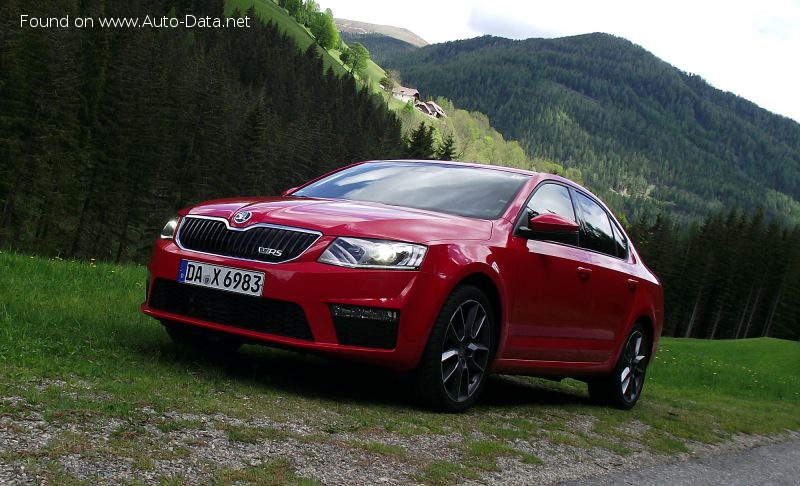
The Skoda Octavia III, including the 1.6 TDI (105 Hp) 4×4 variant, adopted a more angular and contemporary design language compared to its predecessor, aligning it with the broader Volkswagen Group aesthetic of the time. Its hatchback body style, featuring five doors and seating for five occupants, was a hallmark of its practicality. The exterior dimensions were substantial for a compact family car, measuring 183.43 inches (4659 mm) in length, 71.42 inches (1814 mm) in width (79.41 inches or 2017 mm including mirrors), and 57.48 inches (1460 mm) in height. The generous 105.51-inch (2680 mm) wheelbase contributed significantly to interior space and ride comfort.
One of the Octavia’s most celebrated features was its expansive cargo capacity. The hatchback design allowed for a minimum trunk space of 20.84 cu. ft. (590 l), which could be expanded to a cavernous 55.8 cu. ft. (1580 l) with the rear seats folded down. This made the Octavia an incredibly versatile vehicle, capable of swallowing luggage for family vacations or large hauls for home improvement projects. The kerb weight of 2949.79 lbs. (1338 kg) underscored its solid build quality, while the maximum permissible weight of 4239.49 lbs. (1923 kg) highlighted its robust carrying capacity.
The 4×4 drivetrain architecture was a key differentiator for this model. It employed an intelligent system where the internal combustion engine primarily drove the front wheels, with the rear wheels engaging through an electrically or mechanically operated clutch when additional traction was needed. This on-demand all-wheel-drive system provided enhanced stability and grip in adverse conditions, such as snow, ice, or loose gravel, without significantly penalizing fuel economy under normal driving circumstances. The vehicle’s ground clearance of 5.51 inches (140 mm), combined with approach and departure angles of 14° and 12.3° respectively, hinted at its capability to handle light off-road excursions or challenging winter roads.
Suspension components were designed for a comfortable yet controlled ride: independent McPherson struts with coil springs and an anti-roll bar at the front, and an independent multi-link spring suspension with a stabilizer bar at the rear. Braking was handled by ventilated discs at the front and solid discs at the rear, complemented by an Anti-lock Braking System (ABS) for enhanced safety. The electric power steering system offered light and precise control, making urban maneuvers and parking effortless, despite the minimum turning circle of 36.25 feet (11.05 meters).
Technical Specifications: Skoda Octavia III 1.6 TDI (105 Hp) 4×4
| Category | Specification |
|---|---|
| General Information | |
| Brand | Skoda |
| Model | Octavia |
| Generation | Octavia III |
| Type (Engine) | 1.6 TDI (105 Hp) 4×4 |
| Start of Production | 2013 year |
| End of Production | 2015 year |
| Powertrain Architecture | Internal Combustion engine |
| Body type | Hatchback |
| Seats | 5 |
| Doors | 5 |
| Performance Specs | |
| Fuel consumption (economy) – urban (NEDC) | 5.5 l/100 km | 42.8 US mpg |
| Fuel consumption (economy) – extra urban (NEDC) | 4 l/100 km | 58.8 US mpg |
| Fuel consumption (economy) – combined (NEDC) | 4.5 l/100 km | 52.3 US mpg |
| CO2 emissions (NEDC) | 119 g/km |
| Fuel Type | Diesel |
| Acceleration 0 – 60 mph (Calculated) | 10.9 sec |
| Acceleration 0 – 100 km/h | 11.5 sec |
| Maximum speed | 191 km/h | 118.68 mph |
| Emission standard | Euro 5 |
| Weight-to-power ratio | 12.7 kg/Hp | 78.5 Hp/tonne |
| Weight-to-torque ratio | 5.4 kg/Nm | 186.8 Nm/tonne |
| Engine Specs | |
| Power | 105 Hp @ 3000-4000 rpm |
| Power per liter | 65.7 Hp/l |
| Torque | 250 Nm @ 1500-2750 rpm | 184.39 lb.-ft. @ 1500-2750 rpm |
| Engine layout | Front, Transverse |
| Engine Model/Code | EA288 / CLHA |
| Engine displacement | 1598 cm3 | 97.52 cu. in. |
| Number of cylinders | 4 |
| Engine configuration | Inline |
| Cylinder Bore | 79.5 mm | 3.13 in. |
| Piston Stroke | 80.5 mm | 3.17 in. |
| Compression ratio | 16:1 |
| Number of valves per cylinder | 4 |
| Fuel injection system | Diesel Commonrail |
| Engine aspiration | Turbocharger, Intercooler |
| Valvetrain | DOHC |
| Engine oil capacity | 4.6 l | 4.86 US qt |
| Engine oil specification | Not specified |
| Coolant capacity | 8.4 l | 8.88 US qt |
| Engine Systems | |
| Start & Stop System | Yes |
| Particulate filter | Yes |
| Space, Volume and Weights | |
| Kerb Weight | 1338 kg | 2949.79 lbs. |
| Max. weight | 1923 kg | 4239.49 lbs. |
| Max load | 585 kg | 1289.7 lbs. |
| Trunk (boot) space – minimum | 590 l | 20.84 cu. ft. |
| Trunk (boot) space – maximum | 1580 l | 55.8 cu. ft. |
| Fuel tank capacity | 50 l | 13.21 US gal |
| Max. roof load | 75 kg | 165.35 lbs. |
| Permitted trailer load with brakes (12%) | 1600 kg | 3527.4 lbs. |
| Permitted trailer load without brakes | 700 kg | 1543.24 lbs. |
| Permitted towbar download | 75 kg | 165.35 lbs. |
| Dimensions | |
| Length | 4659 mm | 183.43 in. |
| Width | 1814 mm | 71.42 in. |
| Width including mirrors | 2017 mm | 79.41 in. |
| Height | 1460 mm | 57.48 in. |
| Wheelbase | 2680 mm | 105.51 in. |
| Front track | 1529-1551 mm | 60.2 – 61.06 in. |
| Rear (Back) track | 1504-1520 mm | 59.21 – 59.84 in. |
| Ride height (ground clearance) | 140 mm | 5.51 in. |
| Drag coefficient (Cd) | 0.296 |
| Minimum turning circle (turning diameter) | 11.05 m | 36.25 ft. |
| Approach angle | 14° |
| Departure angle | 12.3° |
| Drivetrain, Brakes and Suspension Specs | |
| Drivetrain Architecture | ICE drives front wheels permanently; rear wheels driven through electrically/mechanically operated clutch if necessary. |
| Drive wheel | All wheel drive (4×4) |
| Number of gears and type of gearbox | 6 gears, manual transmission |
| Front suspension | Independent, type McPherson with coil spring and anti-roll bar |
| Rear suspension | Independent multi-link spring suspension with stabilizer |
| Front brakes | Ventilated discs |
| Rear brakes | Disc |
| Assisting systems | ABS (Anti-lock braking system) |
| Steering type | Steering rack and pinion |
| Power steering | Electric Steering |
| Tires size | 205/55 R16 |
| Wheel rims size | 6.5J x 16 |
Legacy and Market Impact
The Skoda Octavia III, and particularly the 1.6 TDI (105 Hp) 4×4 variant, solidified Skoda’s reputation as a brand that offered exceptional value, reliability, and practicality. In the highly competitive European C-segment, where it faced rivals such as its platform-mates the Volkswagen Golf and SEAT Leon, as well as competitors like the Ford Focus, Opel Astra, and Peugeot 308, the Octavia carved out a distinct niche. It consistently offered more interior and cargo space for its price point, often being compared favorably to vehicles from the D-segment (mid-size car segment) in terms of sheer utility.
The 1.6 TDI (105 Hp) 4×4 was particularly impactful in regions with challenging winter conditions or rural areas where enhanced traction was highly valued. Its combination of a fuel-efficient diesel engine and an intelligent all-wheel-drive system made it a highly practical and economical choice for families, small businesses, and individuals needing a dependable daily driver with extra capability. The manual transmission further appealed to drivers who preferred a more engaging driving experience and the efficiency benefits often associated with manual gearboxes.
The Octavia III’s legacy is one of quiet competence. It wasn’t designed to be a flashy or overtly sporty car, but rather a robust, dependable, and supremely functional vehicle. Its understated styling and focus on core automotive values resonated strongly with a broad spectrum of European buyers. The use of proven Volkswagen Group platforms and powertrains ensured a high degree of mechanical sophistication and reliability, contributing to its strong resale values and enduring popularity.
Even years after its production ceased, the Skoda Octavia III 1.6 TDI (105 Hp) 4×4 remains a sought-after used vehicle in many European markets, a testament to its robust construction, low running costs, and versatile capabilities. It stands as a prime example of Skoda’s successful strategy: delivering intelligent, well-built vehicles that cater precisely to the practical needs of their target audience, embodying the “Simply Clever” ethos that has become synonymous with the brand.