The Renault Megane II Classic: An Overview of a European Compact Sedan
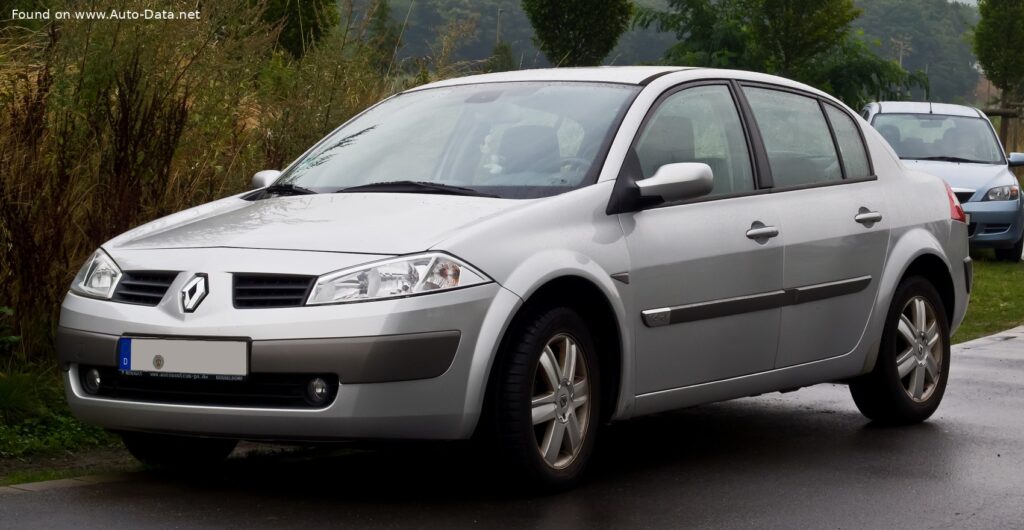
The Renault Megane II Classic 1.6 16V (112 Hp) Automatic represents a specific variant of the second-generation Renault Megane, a popular compact car primarily sold in European and other international markets, as it was not officially offered in the United States. Launched in 2005, this particular model year served as a refinement of the Megane II platform, which had debuted in 2002. The “Classic” designation typically referred to the sedan body style, distinguishing it from the more common hatchback, coupé, and wagon variants. This generation of Megane was renowned for its distinctive styling, safety innovations, and a focus on comfort and practicality, aiming to capture a significant share of the highly competitive European C-segment.
The Megane II Classic, with its conventional three-box sedan silhouette, offered a more traditional appeal compared to the avant-garde rear styling of the hatchback. It was designed to cater to families and individuals seeking greater trunk capacity and a more formal appearance. The 1.6-liter 16-valve engine, paired with an automatic transmission, positioned this variant as a comfortable and accessible option for daily commuting and longer journeys, balancing adequate performance with reasonable fuel economy for its time.
Engine and Performance of the Renault Megane II Classic
Powering the 2005 Renault Megane II Classic 1.6 16V Automatic was Renault’s widely used K4M engine, a naturally aspirated 1.6-liter (1598 cm³, or 97.52 cubic inches) inline four-cylinder unit. This engine featured a double overhead camshaft (DOHC) design with four valves per cylinder, a configuration common for achieving a good balance of power and efficiency in compact vehicles. It delivered a respectable 112 horsepower at 6000 rpm, with a power per liter rating of 70.1 Hp/l. Torque output stood at 152 Nm, or approximately 112.11 lb-ft, peaking at 4200 rpm, providing sufficient pulling power for a vehicle of its class.
The engine’s power was channeled to the front wheels via a 4-speed automatic transmission. While modern vehicles often feature more gears, a 4-speed automatic was a common offering in the mid-2000s for compact cars, prioritizing smooth shifts and ease of driving over ultimate performance or fuel efficiency. This powertrain allowed the Megane II Classic to accelerate from 0 to 60 mph in a calculated 12.4 seconds (0-100 km/h in 13.1 seconds), reaching a maximum speed of 113.09 mph (182 km/h). These figures positioned it as a capable, if not overtly sporty, performer suitable for typical European driving conditions, including city traffic and highway cruising.
In terms of fuel economy, the Megane II Classic 1.6 16V Automatic achieved a combined rating of 7.7 liters per 100 kilometers, which translates to approximately 30.5 US mpg. Urban consumption was rated at 10.7 l/100 km (22 US mpg), while extra-urban driving yielded 6 l/100 km (39.2 US mpg). These figures were competitive for its segment and engine size at the time, underscoring its role as an economical family car. The vehicle adhered to the Euro 4 emission standard, with CO2 emissions of 184 g/km, reflecting the environmental regulations of its primary markets.
Design and Features
The Renault Megane II Classic adopted a four-door sedan body type, offering seating for five occupants. Its design language, while more conservative than the controversial “bustle-back” hatchback, still carried the distinctive Renault styling cues of the era, characterized by smooth lines and a robust stance. With a length of 177.09 inches (4498 mm), a width of 69.96 inches (1777 mm), and a height of 57.48 inches (1460 mm), it was a well-proportioned compact sedan. The wheelbase of 105.75 inches (2686 mm) contributed to a stable ride and a spacious cabin for its class.
Practicality was a key aspect of the Megane II Classic. The trunk space was generous for a compact sedan, offering 18.36 cubic feet (520 liters) of cargo volume, making it suitable for family trips or significant grocery runs. The fuel tank capacity of 15.85 US gallons (60 liters) provided a decent range between fill-ups.
Underneath, the Megane II Classic featured an independent McPherson strut front suspension, a common and effective setup for front-wheel-drive vehicles, providing a good balance of comfort and handling. The rear utilized a torsion beam suspension, a compact and cost-effective solution for this segment. Braking was handled by ventilated discs at the front and solid discs at the rear, complemented by an Anti-lock Braking System (ABS) as a standard safety feature, enhancing stopping performance and control in adverse conditions. The steering system was a rack-and-pinion type with electric power steering, offering light and precise control, particularly beneficial for urban maneuvering and parking, with a minimum turning circle of 35.1 feet (10.7 meters). The car was typically fitted with 15-inch, 16-inch, or even 17-inch wheels, depending on the trim level, with tire sizes ranging from 195/65 R15 to 205/50 R17.
Technical Specifications
| Category | Specification | US Equivalent (where applicable) |
|---|---|---|
| Brand | Renault | |
| Model | Megane II Classic | |
| Type (Engine) | 1.6 16V (112 Hp) Automatic | |
| Start of Production | 2005 | |
| End of Production | 2005 | |
| Powertrain Architecture | Internal Combustion Engine (ICE) | |
| Body Type | Sedan | |
| Seats | 5 | |
| Doors | 4 | |
| Performance Specs | ||
| Fuel Consumption (Urban) | 10.7 l/100 km | 22 US mpg |
| Fuel Consumption (Extra Urban) | 6 l/100 km | 39.2 US mpg |
| Fuel Consumption (Combined) | 7.7 l/100 km | 30.5 US mpg |
| CO2 Emissions | 184 g/km | |
| Fuel Type | Petrol (Gasoline) | |
| Acceleration 0-60 mph | 12.4 sec | |
| Acceleration 0-100 km/h | 13.1 sec | |
| Maximum Speed | 182 km/h | 113.09 mph |
| Emission Standard | Euro 4 | |
| Weight-to-Power Ratio | 11.2 kg/Hp | 24.69 lbs/Hp |
| Weight-to-Torque Ratio | 8.2 kg/Nm | 18.08 lbs/Nm |
| Engine Specs | ||
| Power | 112 Hp @ 6000 rpm | |
| Power per Liter | 70.1 Hp/l | |
| Torque | 152 Nm @ 4200 rpm | 112.11 lb-ft @ 4200 rpm |
| Engine Layout | Front, Transverse | |
| Engine Model/Code | K4M | |
| Engine Displacement | 1598 cm³ | 97.52 cu. in. |
| Number of Cylinders | 4 | |
| Engine Configuration | Inline | |
| Cylinder Bore | 79.5 mm | 3.13 in. |
| Piston Stroke | 80.5 mm | 3.17 in. |
| Compression Ratio | 10:1 | |
| Number of Valves per Cylinder | 4 | |
| Fuel Injection System | Multi-port manifold injection | |
| Engine Aspiration | Naturally aspirated | |
| Valvetrain | DOHC | |
| Engine Oil Capacity | 4.8 l | 5.07 US qt |
| Coolant Capacity | 6.5 l | 6.87 US qt |
| Space, Volume and Weights | ||
| Curb Weight | 1250 kg | 2755.78 lbs |
| Max. Weight (GVWR) | 1800 kg | 3968.32 lbs |
| Max Load | 550 kg | 1212.54 lbs |
| Trunk (Boot) Space – Minimum | 520 l | 18.36 cu. ft. |
| Fuel Tank Capacity | 60 l | 15.85 US gal |
| Max. Roof Load | 80 kg | 176.37 lbs |
| Permitted Trailer Load with Brakes (12%) | 1250 kg | 2755.78 lbs |
| Permitted Trailer Load without Brakes | 650 kg | 1433 lbs |
| Permitted Towbar Download | 75 kg | 165.35 lbs |
| Dimensions | ||
| Length | 4498 mm | 177.09 in. |
| Width | 1777 mm | 69.96 in. |
| Width Including Mirrors | 2026 mm | 79.76 in. |
| Height | 1460 mm | 57.48 in. |
| Wheelbase | 2686 mm | 105.75 in. |
| Front Track | 1518 mm | 59.76 in. |
| Rear Track | 1514 mm | 59.61 in. |
| Front Overhang | 842 mm | 33.15 in. |
| Rear Overhang | 970 mm | 38.19 in. |
| Minimum Turning Circle (Diameter) | 10.7 m | 35.1 ft. |
| Drivetrain, Brakes and Suspension Specs | ||
| Drivetrain Architecture | Front-wheel drive (ICE drives front wheels) | |
| Drive Wheel | Front-wheel drive | |
| Number of Gears and Type of Gearbox | 4 gears, automatic transmission | |
| Front Suspension | Independent type McPherson | |
| Rear Suspension | Torsion beam | |
| Front Brakes | Ventilated discs | |
| Rear Brakes | Disc | |
| Assisting Systems | ABS (Anti-lock Braking System) | |
| Steering Type | Steering rack and pinion | |
| Power Steering | Electric Steering | |
| Tire Sizes | 195/65 R15; 195/55 R16; 205/50 R17 | |
| Wheel Rim Sizes | 6.5J x 15; 6.5J x 16; 6.5J x 17 | |
Legacy and Market Impact of the Renault Megane II Classic
The Renault Megane II, including its Classic sedan variant, carved out a significant niche in the European compact car market during its production run. While the hatchback’s distinctive styling often garnered more attention, the Megane II Classic offered a more conventional, yet still characterful, alternative for buyers prioritizing trunk space and a traditional sedan aesthetic. It competed fiercely against established rivals such as the Volkswagen Golf (and its Jetta/Bora sedan counterpart), Ford Focus Sedan, Opel Astra Sedan, and Peugeot 307 Sedan.
One of the most enduring legacies of the Megane II generation was its groundbreaking safety performance. It was one of the first cars in its class to achieve a full five-star rating in the Euro NCAP crash tests, setting a new benchmark for safety in the compact segment. This strong safety reputation, combined with comfortable interiors, a smooth ride, and a comprehensive list of features for its price point, made the Megane II a popular choice for families across Europe. The 1.6 16V Automatic variant, in particular, appealed to those seeking a relaxed driving experience without the need for manual gear changes, a convenience that was increasingly sought after in urban environments.
The Megane II Classic, though not as visually adventurous as its hatchback sibling, was praised for its practicality, generous rear legroom, and a large, easily accessible trunk. Its reliable K4M engine was a known quantity, offering a good balance of durability and running costs. While it might not have been a driver’s car in the same vein as some competitors, its focus on comfort, safety, and everyday usability solidified its position as a sensible and appealing option in its market. The model’s success contributed significantly to Renault’s strong presence in the European compact segment throughout the mid-2000s, reinforcing the brand’s image for innovation and value. Its discontinuation paved the way for the Megane III generation, which continued to build on the foundations laid by its successful predecessor.