
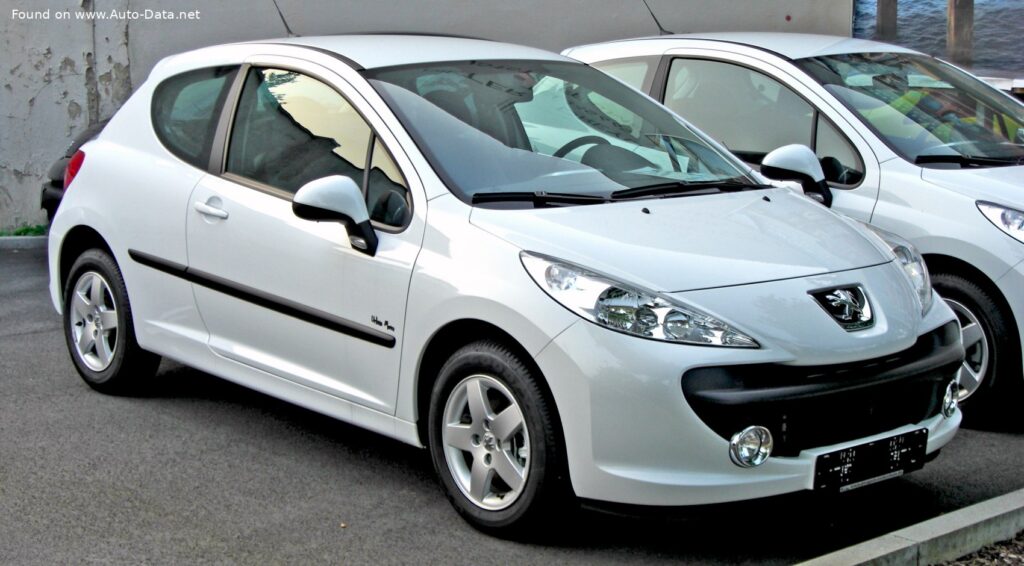
The Peugeot 207 1.6 HDi (110 Hp): A European Compact Powerhouse
The Peugeot 207, launched in 2006, represented a significant evolution for the French automaker in the highly competitive European B-segment, succeeding the immensely popular Peugeot 206. Positioned as a more mature, refined, and technologically advanced supermini, the 207 aimed to elevate Peugeot’s standing in a market dominated by practical and efficient compact vehicles. Among its diverse powertrain offerings, the Peugeot 207 1.6 HDi (110 Hp) variant stood out as a particularly compelling choice, blending spirited performance with impressive fuel economy, a hallmark of European diesel technology during its production run from 2006 to 2009.
This generation of the Peugeot 207 was designed to meet the evolving demands of European drivers who sought a balance of urban agility, highway capability, and low running costs. While never officially sold in the United States, the 207’s role in its primary European market was crucial, competing against segment stalwarts and showcasing Peugeot’s engineering prowess, particularly in diesel engine development. The 1.6 HDi (110 Hp) model, in particular, highlighted the brand’s commitment to delivering efficient and responsive powertrains in a compact, stylish package.
Engine and Performance: The Heart of the Peugeot 207 1.6 HDi (110 Hp)
At the core of this particular 207 variant was Peugeot’s widely acclaimed 1.6-liter (1560 cm3 or 95.2 cu. in.) HDi turbodiesel engine, identified by the internal code 9HZ DV6TED4. This four-cylinder, inline configuration engine featured a sophisticated common rail fuel injection system, a turbocharger, and an intercooler, technologies that were advanced for its time and crucial for extracting significant power and efficiency from a relatively small displacement. It delivered a robust 110 horsepower at 4000 rpm, translating to a power-per-liter output of 70.5 horsepower per liter, an impressive figure for a diesel engine in this class.
Perhaps even more significant than its horsepower was the engine’s torque output. The 1.6 HDi generated a substantial 177 lb.-ft. (130.55 lb.-ft.) of torque available at a low 1750 rpm. This characteristic low-end torque was instrumental in providing excellent drivability and a feeling of effortless acceleration, particularly in city driving and for overtaking maneuvers. Mated to a precise 5-speed manual transmission, this powertrain architecture, with the engine mounted front and transverse, driving the front wheels, allowed the Peugeot 207 1.6 HDi (110 Hp) to accelerate from 0 to 60 mph in a respectable 9.6 seconds. Its top speed reached nearly 120 mph (119.92 mph or 193 km/h), making it a competent performer on European highways.
Fuel efficiency was a major selling point for the 1.6 HDi. The combined fuel economy was rated at an outstanding 49 US mpg (4.8 liters per 100 km), showcasing the inherent efficiency of modern diesel engines. This low fuel consumption, combined with a 13.21 US gallon (50 liter) fuel tank, offered an impressive driving range, a significant advantage for European consumers facing higher fuel prices.
Design and Features: A Stylish and Practical Compact
The Peugeot 207’s design marked a departure from the curvaceous lines of its predecessor, the 206, adopting a more assertive and contemporary aesthetic. Its styling featured a prominent front grille, elongated headlights, and a more substantial road presence. With a length of 158.66 inches (4030 mm), a width of 67.72 inches (1720 mm), and a height of 57.95 inches (1472 mm), the 207 was larger than many of its direct competitors, contributing to improved interior space and ride comfort. The wheelbase measured 100 inches (2540 mm), providing a stable platform for its dynamic handling characteristics.
Offered in both 3-door and 5-door hatchback configurations, the 207 provided versatility for different buyer needs. The cabin, designed for five occupants, featured a contemporary layout with improved material quality compared to previous Peugeot models. Practicality was a key consideration, offering a minimum trunk space of 9.53 cubic feet (270 liters), which could expand to a generous 32.6 cubic feet (923 liters) with the rear seats folded down, making it suitable for shopping trips or weekend getaways.
In terms of driver aids and safety, the 207 1.6 HDi (110 Hp) came equipped with essential features such as an Anti-lock Braking System (ABS) as standard, enhancing control during emergency braking. The braking system itself comprised ventilated discs at the front and disc brakes at the rear, providing confident stopping power. The steering utilized a rack and pinion system, offering direct and responsive feedback, complemented by an independent McPherson strut front suspension with coil springs and an anti-roll bar, and a semi-independent rear suspension with coil springs and an elastic beam, balancing comfort with agile handling. The vehicle rode on 185/65 R15 tires, providing a good balance of grip and ride quality.
Technical Specifications: Peugeot 207 1.6 HDi (110 Hp) (2006-2009)
| Category | Feature | Value |
|---|---|---|
| General Information | Brand | Peugeot |
| Model | 207 | |
| Generation | 207 | |
| Type (Engine) | 1.6 HDi (110 Hp) | |
| Production Years | 2006 – 2009 | |
| Body Type | Hatchback (3-5 Doors, 5 Seats) | |
| Performance Specs | Fuel Consumption (Combined) | 49 US mpg (4.8 l/100 km) |
| Fuel Type | Diesel | |
| Acceleration 0-60 mph | 9.6 seconds | |
| Acceleration 0-62 mph (0-100 km/h) | 10.1 seconds | |
| Maximum Speed | 119.92 mph (193 km/h) | |
| Weight-to-Power Ratio | 11.3 kg/Hp (88.4 Hp/tonne) | |
| Weight-to-Torque Ratio | 7 kg/Nm (142.3 Nm/tonne) | |
| Drag Coefficient (Cd) | 0.30 | |
| Engine Specs | Power | 110 Hp @ 4000 rpm |
| Power per Liter | 70.5 Hp/l | |
| Torque | 130.55 lb.-ft. @ 1750 rpm (177 Nm) | |
| Engine Layout | Front, Transverse | |
| Engine Model/Code | 9HZ DV6TED4 | |
| Engine Displacement | 1.6 Liters (1560 cm3 / 95.2 cu. in.) | |
| Number of Cylinders | 4, Inline | |
| Valves per Cylinder | 4 | |
| Fuel Injection System | Diesel Commonrail | |
| Engine Aspiration | Turbocharger, Intercooler | |
| Fluids & Capacities | Engine Oil Capacity | 3.96 US quarts (3.75 l) |
| Engine Oil Specification | (Specific requirements apply) | |
| Coolant Capacity | 5.92 US quarts (5.6 l) | |
| Kerb Weight | 2742.55 lbs (1244 kg) | |
| Trunk Space (Minimum) | 9.53 cu. ft. (270 l) | |
| Trunk Space (Maximum) | 32.6 cu. ft. (923 l) | |
| Fuel Tank Capacity | 13.21 US gallons (50 l) | |
| Dimensions | Length | 158.66 in. (4030 mm) |
| Width | 67.72 in. (1720 mm) | |
| Width with Mirrors Folded | 71.57 in. (1818 mm) | |
| Width Including Mirrors | 77.64 in. (1972 mm) | |
| Height | 57.95 in. (1472 mm) | |
| Wheelbase | 100 in. (2540 mm) | |
| Front Track | 58.07 in. (1475 mm) | |
| Rear Track | 57.72 in. (1466 mm) | |
| Minimum Turning Circle | 34.12 ft. (10.4 m) | |
| Drivetrain, Brakes & Suspension | Drivetrain Architecture | Front-wheel drive (Internal Combustion Engine drives front wheels) |
| Drive Wheel | Front-wheel drive | |
| Gearbox Type | 5-speed manual transmission | |
| Front Suspension | Independent, McPherson type with coil spring and anti-roll bar | |
| Rear Suspension | Semi-independent, coil spring, Elastic beam | |
| Front Brakes | Ventilated discs | |
| Rear Brakes | Disc | |
| Assisting Systems | ABS (Anti-lock Braking System) | |
| Steering Type | Steering rack and pinion | |
| Tire Size | 185/65 R15 |
Legacy and Market Impact
The Peugeot 207, particularly its 1.6 HDi (110 Hp) variant, carved out a significant niche in the highly competitive European compact car segment during its production years. It faced formidable rivals such as the Renault Clio, Ford Fiesta, Volkswagen Polo, Opel Corsa, and Fiat Punto, all vying for dominance in a market segment that prioritized affordability, practicality, and, increasingly, fuel efficiency. The 207’s larger dimensions and more refined character aimed to position it slightly upmarket from its predecessor, offering a more comfortable and sophisticated driving experience.
While the 207 did not achieve the same iconic status or sales volume as the record-breaking 206, it was a commercially successful model for Peugeot, selling millions of units across Europe and other international markets. The 1.6 HDi (110 Hp) engine was a key contributor to this success, earning a reputation for its smooth operation, robust performance, and exceptional economy. It reinforced Peugeot’s image as a leader in diesel engine technology, a crucial factor in markets where diesel powertrains were highly favored for their efficiency and lower CO2 emissions.
The 207’s legacy is one of a well-rounded and competent supermini that offered a compelling blend of style, space, and efficiency. It represented a transitional period for Peugeot, moving towards more substantial and feature-rich compact cars, setting the stage for its successor, the 208. For those in its primary markets, the Peugeot 207 1.6 HDi (110 Hp) remains a testament to Peugeot’s engineering capabilities in delivering practical, enjoyable, and economically sensible transportation.
