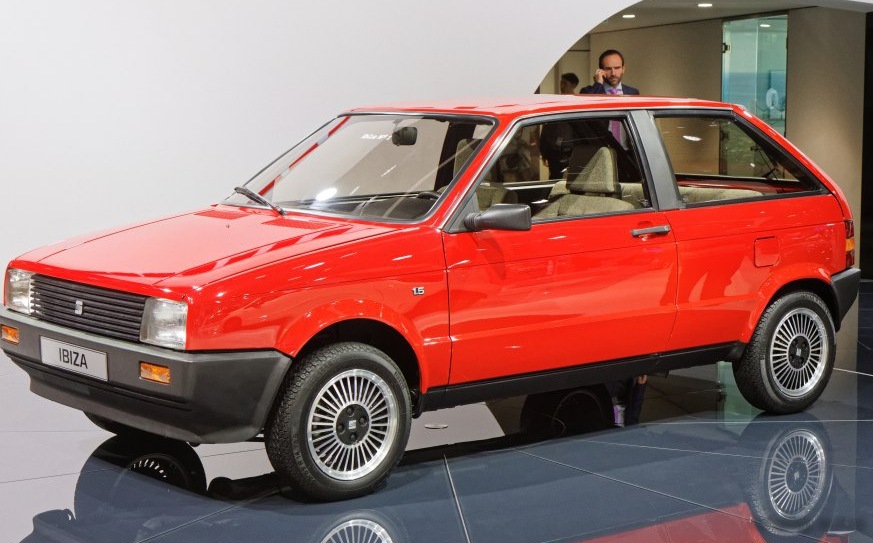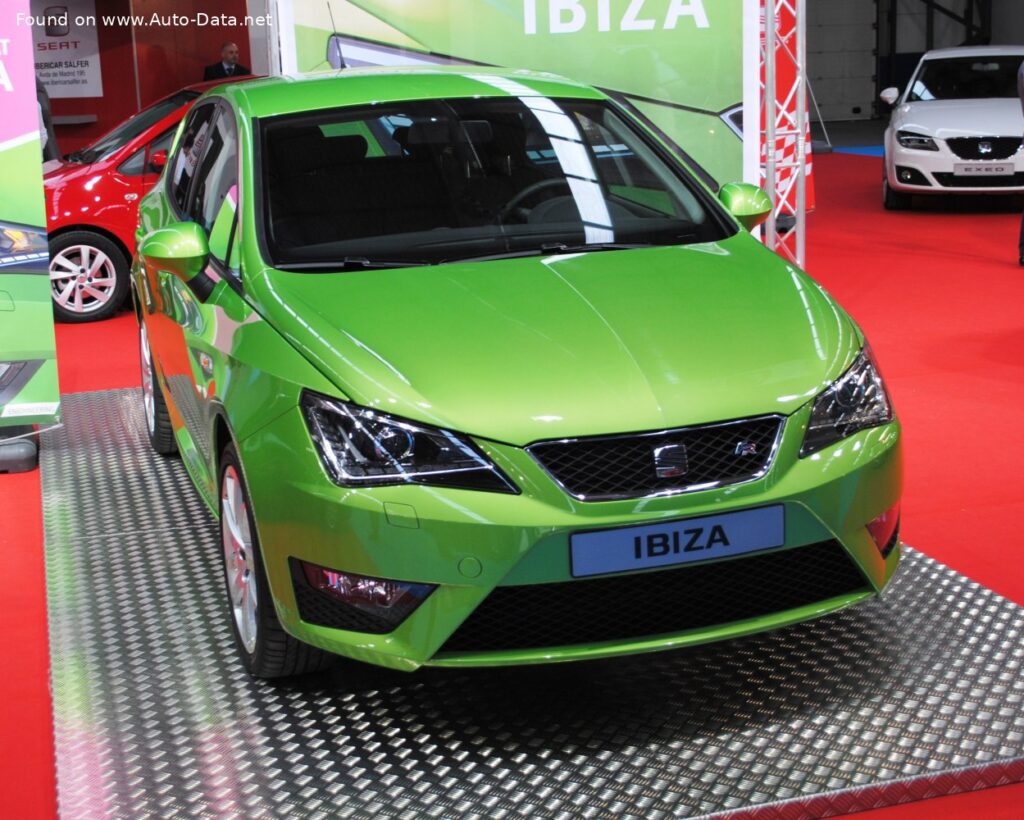
The SEAT Ibiza IV (facelift 2012) 1.2 TSI (105 Hp): A European Subcompact Icon
The SEAT Ibiza IV, specifically its 2012 facelift iteration featuring the 1.2 TSI (105 Hp) engine, represents a significant chapter for the Spanish automaker. As a prominent player in Europe’s highly competitive B-segment (subcompact car class), the Ibiza has consistently been SEAT’s best-selling model, embodying the brand’s youthful, sporty image within the Volkswagen Group. While the SEAT brand and the Ibiza model are not officially sold in the United States, their impact across European and other international markets is substantial. This particular variant, produced from 2012 to 2015, offered a compelling blend of modern design, efficient turbocharged gasoline power, and practical hatchback utility, making it a popular choice for urban dwellers and young families across the continent.
The fourth generation Ibiza, introduced in 2008, underwent a significant refresh in 2012, bringing updated styling, enhanced interior materials, and revised engine options. The 1.2 TSI engine, a hallmark of Volkswagen Group’s commitment to downsizing and forced induction, provided a lively yet economical driving experience. This article delves into the technical prowess, design philosophy, and market standing of the Seat Ibiza IV (facelift 2012) 1.2 TSI (105 Hp), offering a comprehensive look at its role in the automotive landscape.
Engine and Performance of the Seat Ibiza IV (facelift 2012)
At the heart of this particular Ibiza variant was the highly regarded 1.2-liter TSI (Turbocharged Stratified Injection) gasoline engine, identified by its CBZB code. This inline four-cylinder powerplant, featuring direct fuel injection and a turbocharger with an intercooler, was a testament to the Volkswagen Group’s engineering philosophy of extracting significant power and torque from a small displacement engine. With an engine displacement of 1197 cm³ (73.05 cubic inches), it delivered a robust 105 horsepower at 5000 revolutions per minute. This power output, impressive for its size, translated to a strong power-per-liter ratio of 87.7 Hp/l.
Perhaps even more crucial for real-world driving was the engine’s torque delivery. The 1.2 TSI generated a healthy 175 Nm (129.07 lb.-ft.) of torque, available across a broad and accessible rev range from 1550 to 4100 rpm. This flat torque curve meant that the Ibiza felt responsive and eager at lower engine speeds, reducing the need for frequent gear changes in city driving and providing confident acceleration on highways. Power was sent to the front wheels via a precise 5-speed manual transmission, a common and reliable setup for subcompact cars of this era.
Performance figures underscored the engine’s capability: the Ibiza 1.2 TSI could accelerate from 0 to 62 mph (0-100 km/h) in a respectable 9.8 seconds, with a slightly quicker 0-60 mph sprint calculated at 9.3 seconds. Its top speed was rated at 118.06 mph (190 km/h), making it perfectly capable of sustained highway cruising in European conditions.
Fuel efficiency was a key selling point for this model, aligning with the growing demand for economical vehicles in the early 2010s. The combined fuel consumption was rated at an impressive 5.1 liters per 100 kilometers, translating to approximately 46.1 US miles per gallon. Urban driving yielded 6.5 l/100 km (36.2 US mpg), while extra-urban (highway) driving was even more frugal at 4.4 l/100 km (53.5 US mpg). With CO2 emissions of 119 g/km, the vehicle met the Euro 5 emission standard, reflecting its relatively clean operation for its time. The car’s low curb weight of 2403.04 lbs (1090 kg) contributed significantly to both its nimble performance and its commendable fuel economy.
Design and Features
The 2012 facelift brought a sharper, more assertive aesthetic to the Ibiza IV. Designed under the guidance of Luc Donckerwolke, the original fourth-generation Ibiza had already introduced SEAT’s “Arrow Design” concept, characterized by angular lines and a distinctive front fascia. The facelift refined these elements, giving the Ibiza a more contemporary and aggressive look. Key exterior changes included redesigned headlights with optional LED daytime running lights, a sharper grille, and revised front and rear bumpers. These updates aimed to inject more dynamism and sophistication into the popular hatchback.
The vehicle’s body type was a practical 5-door hatchback, offering seating for five occupants. Its compact dimensions made it ideal for navigating crowded European city streets while still providing adequate interior space. Measuring 159.88 inches (4061 mm) in length, 66.65 inches (1693 mm) in width, and 56.89 inches (1445 mm) in height, the Ibiza was squarely positioned in the subcompact segment. A wheelbase of 97.2 inches (2469 mm) contributed to its stable ride and agile handling.
Inside, the 2012 facelift focused on improving material quality and ergonomics. While still a budget-conscious vehicle, SEAT aimed to enhance the tactile experience with softer plastics and updated trim options. The layout was driver-oriented, with clear instrumentation and intuitive controls. Practicality was a strong suit, with a minimum trunk space of 10.31 cubic feet (292 liters), expandable by folding down the rear seats.
In terms of chassis and safety, the Ibiza IV shared its platform (PQ25) with other Volkswagen Group models like the VW Polo and Skoda Fabia, ensuring a solid foundation. The front suspension featured an independent McPherson strut setup with coil springs and an anti-roll bar, providing a good balance of comfort and sporty handling. The rear utilized hydraulic elements, typical for the segment. Braking was handled by ventilated discs at the front and solid discs at the rear, complemented by an Anti-lock Braking System (ABS) for enhanced safety. The power steering system was hydraulic rack and pinion, offering direct feedback to the driver. Tire options ranged from 185/60 R15 to wider 215/40 R17, paired with corresponding wheel sizes, allowing for different levels of grip and aesthetic appeal.
Technical Specifications: SEAT Ibiza IV (facelift 2012) 1.2 TSI (105 Hp)
| Category | Specification |
|---|---|
| Brand | SEAT |
| Model | Ibiza |
| Generation | Ibiza IV (facelift 2012) |
| Engine Type | 1.2 TSI (105 Hp) |
| Production Start | 2012 |
| Production End | 2015 |
| Powertrain Architecture | Internal Combustion Engine, Front-wheel drive |
| Body type | Hatchback |
| Seats | 5 |
| Doors | 5 |
| Performance Specs | |
| Fuel Consumption (Urban) | 6.5 l/100 km (36.2 US mpg) |
| Fuel Consumption (Extra Urban) | 4.4 l/100 km (53.5 US mpg) |
| Fuel Consumption (Combined) | 5.1 l/100 km (46.1 US mpg) |
| CO2 Emissions | 119 g/km |
| Fuel Type | Petrol (Gasoline) |
| Acceleration 0-62 mph (0-100 km/h) | 9.8 sec |
| Acceleration 0-60 mph (Calculated) | 9.3 sec |
| Maximum Speed | 190 km/h (118.06 mph) |
| Emission Standard | Euro 5 |
| Weight-to-Power Ratio | 10.4 kg/Hp, 96.3 Hp/tonne |
| Weight-to-Torque Ratio | 6.2 kg/Nm, 160.6 Nm/tonne |
| Engine Specs | |
| Power | 105 Hp @ 5000 rpm |
| Power per liter | 87.7 Hp/l |
| Torque | 175 Nm (129.07 lb.-ft.) @ 1550-4100 rpm |
| Engine Layout | Front, Transverse |
| Engine Model/Code | CBZB |
| Engine Displacement | 1197 cm³ (73.05 cu. in.) |
| Number of Cylinders | 4 |
| Engine Configuration | Inline |
| Cylinder Bore | 71 mm (2.8 in.) |
| Piston Stroke | 75.6 mm (2.98 in.) |
| Compression Ratio | 10:1 |
| Valves per Cylinder | 2 |
| Fuel Injection System | Direct injection |
| Engine Aspiration | Turbocharger, Intercooler |
| Engine Oil Capacity | 3.9 l (4.12 US qt) |
| Coolant Capacity | 5.6 l (5.92 US qt) |
| Dimensions, Volume, and Weights | |
| Kerb Weight | 1090 kg (2403.04 lbs) |
| Max. Weight | 1580 kg (3483.3 lbs) |
| Max Load | 490 kg (1080.27 lbs) |
| Trunk Space (Minimum) | 292 l (10.31 cu. ft.) |
| Fuel Tank Capacity | 45 l (11.89 US gal) |
| Length | 4061 mm (159.88 in.) |
| Width | 1693 mm (66.65 in.) |
| Height | 1445 mm (56.89 in.) |
| Wheelbase | 2469 mm (97.2 in.) |
| Front Track | 1465 mm (57.68 in.) |
| Rear Track | 1457 mm (57.36 in.) |
| Minimum Turning Circle | 10.48 m (34.38 ft.) |
| Drivetrain, Brakes, and Suspension | |
| Drivetrain Architecture | Front-wheel drive |
| Drive Wheel | Front wheel drive |
| Gearbox Type | 5 gears, manual transmission |
| Front Suspension | Independent, McPherson with coil spring and anti-roll bar |
| Rear Suspension | Hydraulic elements |
| Front Brakes | Ventilated discs |
| Rear Brakes | Disc |
| Assisting Systems | ABS (Anti-lock braking system) |
| Steering Type | Steering rack and pinion |
| Power Steering | Hydraulic Steering |
| Tire Sizes | 185/60 R15; 215/45 R16; 215/40 R17 |
| Wheel Rim Sizes | 6J x 15; 7J x 16; 7J x 17 |
Legacy and Market Impact
The SEAT Ibiza IV (facelift 2012) 1.2 TSI (105 Hp) played a pivotal role in maintaining the Ibiza’s strong position in the European subcompact segment. While not a groundbreaking revolution, the facelifted model with this engine option represented a mature and refined offering that solidified SEAT’s reputation for producing stylish, fun-to-drive, and practical vehicles. Its direct competitors in the bustling European market included segment stalwarts such as the Volkswagen Polo (with which it shared its platform), Ford Fiesta, Renault Clio, Peugeot 208, and Opel Corsa.
What set the Ibiza apart, particularly within the Volkswagen Group, was its distinct “Spanish flair.” SEAT vehicles are often marketed as the more emotional and sporty choice compared to the rational Volkswagen or the value-oriented Skoda. The Ibiza’s sharp styling, responsive handling, and the lively character of the 1.2 TSI engine appealed to buyers seeking a more engaging driving experience without sacrificing practicality or fuel efficiency. The turbo-four engine was a key factor in this, offering performance levels previously associated with larger, naturally aspirated engines, but with significantly better fuel economy and lower emissions. This commitment to downsizing and turbocharging was a trendsetter for the industry at the time.
The Ibiza’s success also contributed to SEAT’s overall brand identity, helping it carve out a niche as a youthful and dynamic brand, especially popular among younger demographics in countries like Spain, Germany, and the UK. Its reliability, backed by Volkswagen Group engineering, and its competitive pricing made it an attractive proposition for a wide range of customers. The 1.2 TSI engine, in particular, was praised for its smooth operation, strong low-end torque, and impressive real-world fuel economy, making it one of the most popular engine choices for the model.
Even after its production ceased in 2015, the legacy of the Ibiza IV (facelift 2012) continued through its impact on subsequent generations. It cemented the Ibiza’s status as a core model for SEAT, demonstrating how a well-executed facelift and a compelling powertrain could extend a car’s market relevance. Its combination of sharp design, efficient performance, and practical packaging ensured its place as a memorable and important vehicle in the European automotive landscape.