The Renault Megane II Classic 1.9 dCi (110 Hp) FAP: A European Mainstay
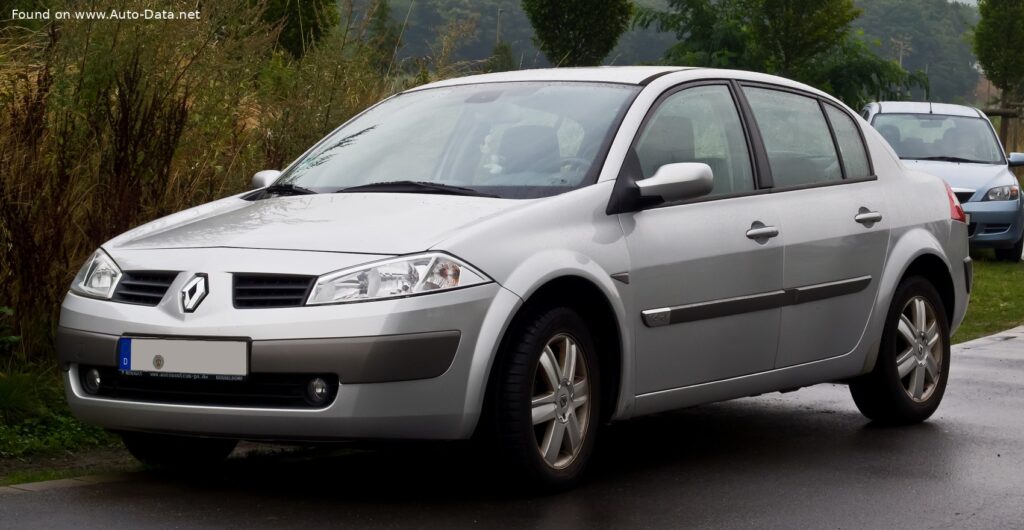
The Renault Megane II Classic 1.9 dCi (110 Hp) FAP represents a significant iteration of Renault’s popular C-segment vehicle, specifically the sedan variant of the second-generation Megane. Launched in 2005, this particular model combined the practicality of a four-door sedan with a robust and efficient diesel powertrain, catering to the strong demand for such vehicles across European and other international markets where diesel engines were, and largely remain, a preferred choice for their fuel economy and torque characteristics. While never officially sold in the United States, the Megane II played a pivotal role in Renault’s global strategy, showcasing the brand’s advancements in design, safety, and diesel technology.
The second-generation Megane, introduced in 2002, was a radical departure from its predecessor, particularly in its hatchback form, which featured a distinctive “bustle-back” rear design. The “Classic” designation, however, applied to the more conventionally styled four-door sedan, which offered greater trunk capacity and a more traditional aesthetic, appealing to a different segment of buyers. The 1.9 dCi (110 Hp) FAP variant, produced exclusively in 2005, highlighted Renault’s commitment to improving diesel engine refinement and meeting increasingly stringent emission standards with the integration of a Diesel Particulate Filter (FAP).
Engine and Performance: The Heart of the Renault Megane II Classic 1.9 dCi (110 Hp) FAP
At the core of the Renault Megane II Classic 1.9 dCi (110 Hp) FAP lies a sophisticated 1.9-liter (114.11 cu. in.) inline four-cylinder diesel engine, designated with the F9Q code. This powerplant benefited from common-rail direct fuel injection, a technology that was instrumental in delivering a fine balance of power, efficiency, and reduced emissions for its era. Coupled with a turbocharger and intercooler, the engine produced a respectable 110 horsepower at 4000 rpm. More impressively for a diesel of its size, it generated a robust 260 Nm (191.77 lb.-ft.) of torque at a low 2000 rpm, providing excellent pulling power and effortless acceleration in everyday driving scenarios.
The power was channeled to the front wheels via a slick-shifting 6-speed manual transmission, a feature that was becoming standard in more efficient European models to optimize fuel economy at higher speeds. This drivetrain configuration allowed the Megane II Classic to achieve a 0 to 60 mph acceleration time of approximately 10.2 seconds (0-100 km/h in 10.7 seconds), with a top speed of 116.82 mph (188 km/h). These figures placed it competitively within its segment, offering sufficient performance for both urban commuting and long-distance highway travel.
Fuel efficiency was a strong selling point for this diesel variant. The official combined fuel consumption was rated at 5.6 liters per 100 km, translating to an impressive 42 US mpg. Urban consumption stood at 7.1 l/100 km (33.1 US mpg), while extra-urban driving could yield as much as 4.8 l/100 km (49 US mpg). Emissions were also a key consideration, with CO2 output at 148 g/km, meeting the Euro 4 emission standard thanks in part to the integrated Particulate Filter (FAP), an advanced feature for its time designed to trap and burn off harmful soot particles.
Design and Features
The Renault Megane II Classic adopted a more conventional three-box sedan design compared to the hatchback’s avant-garde styling, appealing to buyers who preferred a traditional profile and enhanced trunk capacity. Its overall dimensions – a length of 177.09 inches (4498 mm), width of 69.96 inches (1777 mm), and height of 57.48 inches (1460 mm) – positioned it firmly within the compact sedan segment. The generous 105.75-inch (2686 mm) wheelbase contributed to a comfortable ride and ample interior space for five occupants.
Inside, the Megane II Classic offered a functional and ergonomic cabin. While specifics of interior trim and infotainment systems varied by market and trim level, common features for a 2005 model would have included air conditioning, power windows, and a decent audio system. Renault placed a strong emphasis on safety, and the Megane II generation, in general, was lauded for its safety performance, often achieving high ratings in European crash tests. Standard safety features on this model included ABS (Anti-lock Braking System), and it was designed with multiple airbags and a robust passenger cell. The presence of ventilated disc brakes at the front and disc brakes at the rear, coupled with a McPherson independent front suspension and a torsion beam rear suspension, provided stable handling and confident stopping power.
Practicality was a significant highlight of the Classic sedan. With a trunk volume of 18.36 cu. ft. (520 liters), it offered substantial cargo space, making it a suitable choice for families or those requiring more luggage capacity. The 15.85 US gallon (60-liter) fuel tank, combined with the efficient diesel engine, provided an excellent cruising range, a crucial aspect for European drivers.
Technical Specifications
| Category | Specification |
|---|---|
| Brand | Renault |
| Model | Megane II Classic |
| Type (Engine) | 1.9 dCi (110 Hp) FAP |
| Production Years | 2005 – 2005 |
| Body Type | Sedan |
| Seats / Doors | 5 / 4 |
| Fuel Type | Diesel |
| Fuel Consumption (Urban) | 7.1 l/100 km (33.1 US mpg) |
| Fuel Consumption (Extra Urban) | 4.8 l/100 km (49 US mpg) |
| Fuel Consumption (Combined) | 5.6 l/100 km (42 US mpg) |
| CO2 Emissions | 148 g/km |
| Emission Standard | Euro 4 |
| Acceleration 0-60 mph | 10.2 sec |
| Maximum Speed | 116.82 mph (188 km/h) |
| Power | 110 Hp @ 4000 rpm |
| Torque | 260 Nm (191.77 lb.-ft.) @ 2000 rpm |
| Engine Layout | Front, Transverse |
| Engine Model/Code | F9Q |
| Engine Displacement | 1870 cm3 (1.9 liters, 114.11 cu. in.) |
| Number of Cylinders | 4, Inline |
| Valves per Cylinder | 2 |
| Fuel Injection System | Diesel Commonrail |
| Engine Aspiration | Turbocharger, Intercooler |
| Valvetrain | OHC |
| Engine Oil Capacity | 4.5 l (4.76 US qt) |
| Coolant Capacity | 7.6 l (8.03 US qt) |
| Engine Systems | Particulate filter |
| Kerb Weight | 1295 kg (2854.99 lbs.) |
| Maximum Weight | 1845 kg (4067.53 lbs.) |
| Maximum Load | 550 kg (1212.54 lbs.) |
| Trunk (Boot) Space | 520 l (18.36 cu. ft.) |
| Fuel Tank Capacity | 60 l (15.85 US gal) |
| Length | 4498 mm (177.09 in.) |
| Width | 1777 mm (69.96 in.) |
| Height | 1460 mm (57.48 in.) |
| Wheelbase | 2686 mm (105.75 in.) |
| Front Track | 1518 mm (59.76 in.) |
| Rear Track | 1514 mm (59.61 in.) |
| Minimum Turning Circle | 10.7 m (35.1 ft.) |
| Drivetrain Architecture | Front-wheel drive |
| Gearbox Type | 6-speed manual transmission |
| Front Suspension | Independent type McPherson |
| Rear Suspension | Torsion beam |
| Front Brakes | Ventilated discs |
| Rear Brakes | Disc |
| Assisting Systems | ABS (Anti-lock braking system) |
| Steering Type | Steering rack and pinion, Electric Power Steering |
| Tire Sizes | 195/65 R15; 195/55 R16; 205/50 R17 |
| Wheel Rim Sizes | 6.5J x 15; 6.5J x 16; 6.5J x 17 |
Legacy and Market Impact
The Renault Megane II, and particularly its Classic sedan variant, carved out a significant niche in the highly competitive European C-segment. While the hatchback garnered attention for its bold styling and high safety ratings (being one of the first cars in its class to achieve a 5-star Euro NCAP rating), the Classic sedan offered a more conservative yet equally competent package. Its primary competitors included the likes of the Volkswagen Bora/Jetta, Opel Astra Sedan, and Ford Focus Sedan, all vying for market share among buyers seeking practical, efficient, and well-equipped compact sedans.
The 1.9 dCi (110 Hp) FAP engine was a testament to Renault’s prowess in diesel engine development. In an era when diesel powertrains were rapidly gaining popularity across Europe for their superior fuel economy and torque delivery, this engine offered a compelling blend of performance and efficiency. The inclusion of a Diesel Particulate Filter (FAP) was particularly forward-thinking for 2005, allowing the vehicle to meet stringent Euro 4 emission standards and demonstrating Renault’s commitment to environmental responsibility. This technology helped position the Megane II Classic as a modern and environmentally conscious choice, appealing to both private buyers and fleet operators.
The Megane II generation as a whole contributed significantly to Renault’s reputation for innovation and safety. Its distinctive design, technological features, and strong emphasis on occupant protection helped it achieve critical and commercial success. The Classic sedan, while perhaps less visually striking than its hatchback sibling, provided a reliable, spacious, and economical option that resonated with a broad customer base. Its legacy lies in its role as a workhorse for many European families and businesses, proving that practicality and efficiency could coexist with contemporary design and advanced engineering, even if it never crossed the Atlantic to American showrooms.