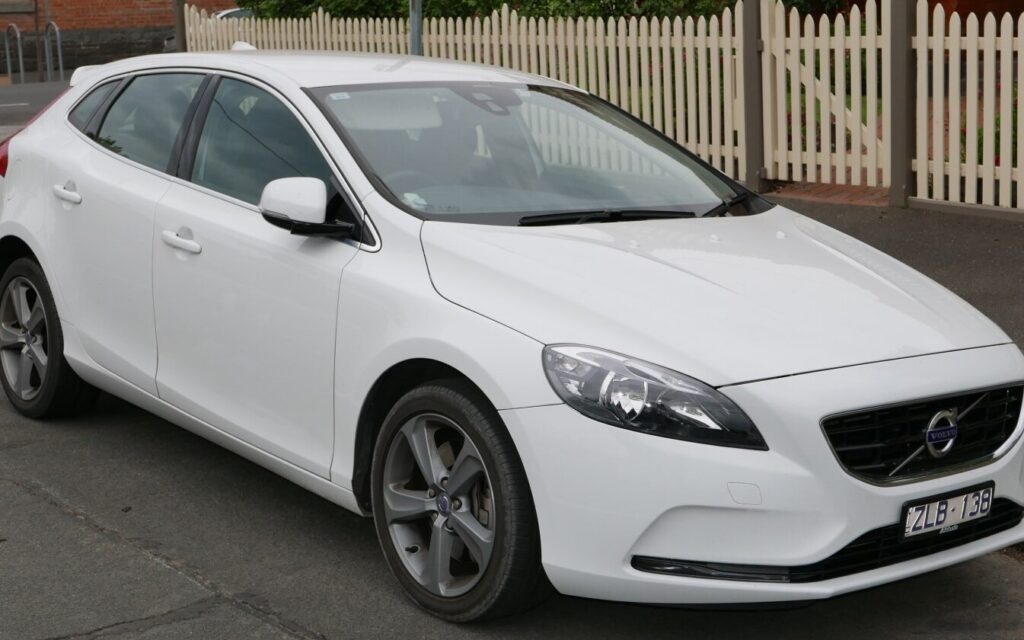
The Volvo V40 (facelift 2016) 2.0 D3 (150 Hp): A European Premium Compact Hatchback
The Volvo V40 (facelift 2016) represents a significant iteration of Volvo’s premium compact hatchback, a model primarily targeted at and highly successful within the European market. Introduced in 2012, the V40 was Volvo’s answer to established players in the competitive C-segment, offering a blend of Scandinavian design, renowned safety features, and efficient powertrains. The 2016 facelift brought a series of aesthetic and technological updates, keeping the V40 fresh and competitive until its discontinuation in 2019. This particular variant, the 2.0 D3 (150 Hp), showcased Volvo’s prowess in diesel engine technology, delivering a compelling combination of performance and exceptional fuel economy, qualities highly valued in its primary European markets. It positioned itself as a sophisticated alternative to German rivals, emphasizing a more understated luxury and a strong commitment to environmental responsibility through its Euro 6 compliant diesel engine.
Engine and Performance: The Efficient Heart of the Volvo V40 (facelift 2016)
At the core of the Volvo V40 (facelift 2016) 2.0 D3 (150 Hp) lies Volvo’s D4204T9 engine, a modern 2.0-liter (120.16 cubic inches) inline four-cylinder diesel powerplant. This unit is transversely mounted at the front, driving the front wheels, a common configuration for compact vehicles prioritizing interior space and packaging efficiency. The engine features a sophisticated common rail fuel injection system, paired with a turbocharger and intercooler, ensuring both robust power delivery and impressive fuel efficiency. It generates a healthy 150 horsepower at 3750 rpm, providing ample thrust for daily driving and highway cruising. More critically for a diesel, it produces a substantial 236.02 lb.-ft. of torque, available across a broad range from 1750 to 3000 rpm. This wide torque band translates into excellent responsiveness and effortless acceleration, making the car feel potent even with its modest horsepower figure.
Performance figures for the V40 D3 are commendable for its class. The vehicle accelerates from 0 to 60 mph in approximately 8 seconds, with a top speed of 130.49 mph. These numbers confirm its capability as a dynamic and engaging driver’s car. However, where the V40 D3 truly shines is in its fuel economy. With a combined fuel consumption rating of 3.8 liters per 100 kilometers, which translates to an outstanding 61.9 US mpg, and CO2 emissions of just 99 g/km, this engine was a benchmark for efficiency in its segment. It easily met the stringent Euro 6 emission standards, making it an environmentally conscious choice for European buyers. The power is managed by a precise 6-speed manual transmission, offering direct engagement and maximizing the engine’s efficiency potential. The combination of its lightweight structure (kerb weight of 3276.07 lbs.) and powerful yet economical engine resulted in an impressive weight-to-power ratio of 9.9 kg/Hp and a weight-to-torque ratio of 4.6 kg/Nm, underscoring its optimized performance characteristics.
Design and Features: Scandinavian Sophistication and Practicality
The Volvo V40 (facelift 2016) maintains the elegant yet assertive design language that characterized its initial launch, refined with subtle updates for the mid-cycle refresh. As a 5-door hatchback, it offers a versatile blend of sporty aesthetics and practical utility, accommodating five occupants comfortably. The facelift introduced Volvo’s signature “Thor’s Hammer” LED daytime running lights, a design element first seen on the larger XC90, which lent the V40 a more modern and cohesive family look. Its exterior dimensions – 172.01 inches in length, 70.2 inches in width (80.35 inches including mirrors), and 56.65 inches in height – underscore its compact footprint, ideal for urban environments while still providing a substantial road presence.
Inside, the V40 embodies Volvo’s commitment to clean, functional Scandinavian design. High-quality materials, ergonomic controls, and a driver-centric cockpit create a premium ambiance. While specific feature lists can vary by trim, the V40 typically offered a range of advanced infotainment options and a strong emphasis on passive and active safety systems, a hallmark of the Volvo brand. The vehicle’s structure is designed with extensive use of high-strength steel, complemented by a suite of airbags and Volvo’s IntelliSafe technologies, including City Safety – an autonomous emergency braking system designed to prevent or mitigate low-speed collisions. The V40’s independent McPherson strut front suspension and independent coil spring rear suspension, combined with electric power steering, delivered a refined and comfortable ride, balancing agility with stability.
Practicality is also a strong suit of the V40. The hatchback body style provides flexible cargo space, ranging from 11.83 cubic feet with all seats in place to a generous 52.97 cubic feet with the rear seats folded down. This adaptability makes it suitable for various lifestyles, from daily commuting to weekend getaways. The fuel tank capacity of 16.38 US gallons ensures a long range between fill-ups, further enhancing its appeal as a practical and efficient premium compact car.
Technical Specifications
| Category | Specification |
|---|---|
| Brand | Volvo |
| Model | V40 (facelift 2016) |
| Type (Engine) | 2.0 D3 (150 Hp) |
| Start of Production | 2016 |
| End of Production | 2018 |
| Powertrain Architecture | Internal Combustion Engine |
| Body Type | Hatchback |
| Seats | 5 |
| Doors | 5 |
| Fuel Type | Diesel |
| Fuel Consumption (Urban) | 4.4 l/100 km (53.5 US mpg) |
| Fuel Consumption (Extra Urban) | 3.5 l/100 km (67.2 US mpg) |
| Fuel Consumption (Combined) | 3.8 l/100 km (61.9 US mpg) |
| CO2 Emissions | 99 g/km |
| Acceleration 0-60 mph | 8 seconds |
| Maximum Speed | 210 km/h (130.49 mph) |
| Emission Standard | Euro 6 |
| Power | 150 Hp @ 3750 rpm |
| Power per liter | 76.2 Hp/l |
| Torque | 320 Nm (236.02 lb.-ft.) @ 1750-3000 rpm |
| Engine Layout | Front, Transverse |
| Engine Model/Code | D4204T9 |
| Engine Displacement | 1969 cm3 (120.16 cu. in.) |
| Number of Cylinders | 4 |
| Engine Configuration | Inline |
| Cylinder Bore | 82 mm (3.23 in.) |
| Piston Stroke | 93.2 mm (3.67 in.) |
| Compression Ratio | 16:1 |
| Valves per Cylinder | 4 |
| Fuel Injection System | Diesel Commonrail |
| Engine Aspiration | Turbocharger, Intercooler |
| Engine Oil Capacity | 5.2 l (5.49 US qt) |
| Coolant Capacity | 8 l (8.45 US qt) |
| Engine Systems | Particulate filter |
| Kerb Weight | 1486 kg (3276.07 lbs.) |
| Maximum Weight | 1980 kg (4365.15 lbs.) |
| Maximum Load | 494 kg (1089.08 lbs.) |
| Trunk Space (Minimum) | 335 l (11.83 cu. ft.) |
| Trunk Space (Maximum) | 1500 l (52.97 cu. ft.) |
| Fuel Tank Capacity | 62 l (16.38 US gal) |
| Maximum Roof Load | 75 kg (165.35 lbs.) |
| Permitted Trailer Load (with brakes) | 1500 kg (3306.93 lbs.) |
| Length | 4369 mm (172.01 in.) |
| Width | 1783 mm (70.2 in.) |
| Width (including mirrors) | 2041 mm (80.35 in.) |
| Height | 1439 mm (56.65 in.) |
| Wheelbase | 2647 mm (104.21 in.) |
| Front Track | 1559 mm (61.38 in.) |
| Rear Track | 1546 mm (60.87 in.) |
| Ride Height (Ground Clearance) | 133-144 mm (5.24 – 5.67 in.) |
| Drag Coefficient (Cd) | 0.32 |
| Minimum Turning Circle | 10.8 m (35.43 ft.) |
| Drivetrain Architecture | Front-wheel drive, Internal Combustion Engine |
| Drive Wheel | Front-wheel drive |
| Gearbox | 6-speed manual transmission |
| Front Suspension | Independent, McPherson with coil spring and anti-roll bar |
| Rear Suspension | Independent coil spring |
| Front Brakes | Ventilated discs |
| Rear Brakes | Disc |
| Assisting Systems | ABS (Anti-lock braking system) |
| Steering Type | Steering rack and pinion |
| Power Steering | Electric Steering |
Legacy and Market Impact
The Volvo V40, and particularly its facelifted 2016 version with the 2.0 D3 engine, played a crucial role in Volvo’s strategy to compete in the highly contested European premium compact segment. In a market dominated by the likes of the Audi A3, BMW 1 Series, and Mercedes-Benz A-Class, the V40 offered a distinct Scandinavian flavor. It appealed to buyers looking for something different from the German establishment, prioritizing understated elegance, unparalleled safety, and a strong commitment to environmental efficiency, particularly with its advanced diesel powertrains. While diesel engines have faced increasing scrutiny in recent years, during the V40 D3’s production run (2016-2018), they were still a highly favored option in Europe due to their superior fuel economy and torque characteristics.
The V40 D3’s low CO2 emissions and excellent fuel consumption made it a popular choice for both private buyers and fleet operators across Europe. Its Euro 6 compliance ensured it met the then-current environmental regulations, an important factor for market acceptance. The car’s reputation for robustness and reliability, combined with Volvo’s strong brand image for safety and quality, contributed to its solid market performance. For Volvo, the V40 served as an important entry point into the brand for many customers, often acting as a stepping stone to larger Volvo models. While never officially sold in the United States, where the compact premium segment is dominated by gasoline engines and SUVs, its legacy in Europe is one of a stylish, safe, and remarkably efficient hatchback that upheld Volvo’s core values in a compact package. The V40 platform ultimately paved the way for newer, more global compact models built on Volvo’s CMA (Compact Modular Architecture), ensuring its influence extended beyond its direct production years.