The Nissan Silvia (S12): A Mid-Eighties Turbocharged Icon
The Nissan Silvia (S12) represents the fourth generation of Nissan’s popular Silvia line of compact sports coupes, produced from 1984 to 1988. While known as the Silvia in its native Japan and many international markets, this generation was marketed in North America as the Nissan 200SX. The S12 series built upon the rear-wheel-drive heritage of its predecessors, offering a blend of sporty performance, distinctive 1980s styling, and a range of engine options. Among these, the 1.8 Turbo variant, specifically with the 135 horsepower (Hp) CA18ET engine, stood out as a performance-oriented choice, embodying the era’s growing fascination with forced induction technology. The Nissan Silvia (S12) aimed to capture the essence of an affordable, engaging driver’s car, competing in a segment that valued both style and dynamic capability.
Positioned as a “personal luxury coupe” in some markets and a “sports coupe” in others, the S12 generation carried the torch of the Silvia nameplate, which had already established a reputation for agile handling and appealing aesthetics. This particular 1.8 Turbo model, available from 1984 to 1988, offered a compelling package for enthusiasts seeking a blend of turbocharged thrust and traditional rear-wheel-drive dynamics, making it a significant model in Nissan’s extensive sports car lineage.
Engine and Performance: The Heart of the Nissan Silvia (S12)
At the core of the Nissan Silvia (S12) 1.8 Turbo (135 Hp) lay the CA18ET engine, an inline four-cylinder unit with a displacement of 1.8 liters (specifically, 1809 cubic centimeters or 110.39 cubic inches). This engine was a notable entry in Nissan’s lineup, featuring a single overhead camshaft (SOHC) valvetrain with two valves per cylinder, a common and reliable configuration for its time. What truly set the CA18ET apart was its turbocharger, coupled with a multi-port manifold injection system, which significantly boosted its power output and torque delivery.
The turbocharger allowed the 1.8-liter engine to produce a respectable 135 Hp at 6000 rpm, a healthy figure for a compact coupe in the mid-1980s. More importantly for real-world driving, the engine delivered 191 Newton-meters (140.87 lb.-ft.) of torque at a relatively accessible 4000 rpm. This torque characteristic, combined with a compression ratio of 8:1, provided a satisfying surge of power, particularly in the mid-range, making the car feel responsive and eager. Power was efficiently transferred to the rear wheels via a five-speed manual transmission, a setup highly favored by driving enthusiasts for its direct engagement and control.
In terms of outright performance, the Silvia (S12) 1.8 Turbo was capable of accelerating from 0 to 60 mph in an estimated 9.1 seconds, with a 0 to 100 km/h sprint taking 9.6 seconds. Its top speed reached 200 km/h (124.27 mph), placing it firmly in the category of capable sports coupes. Despite its performance aspirations, the CA18ET also demonstrated reasonable fuel efficiency for a turbocharged engine of its era. Official figures suggested an urban consumption of 10.8 liters per 100 km (21.8 US mpg) and an extra-urban economy of 6.4 liters per 100 km (36.8 US mpg), highlighting a balance between power and practicality.
Design and Features of the S12 Generation
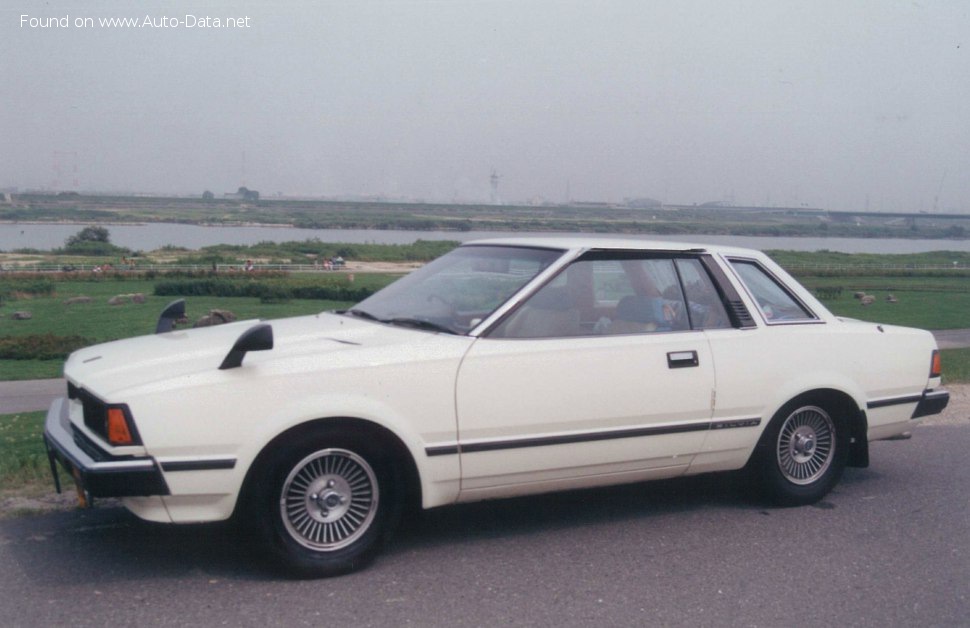
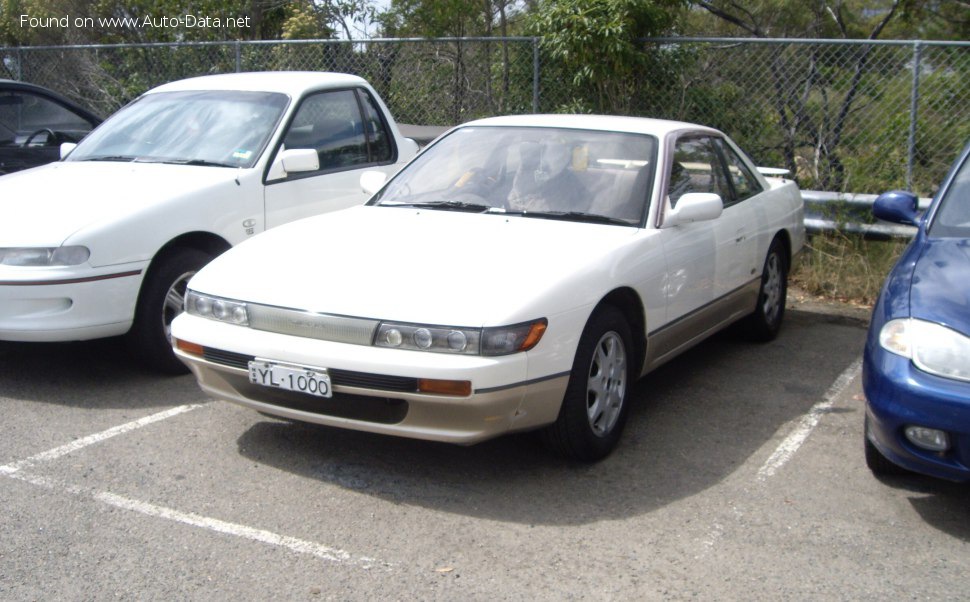
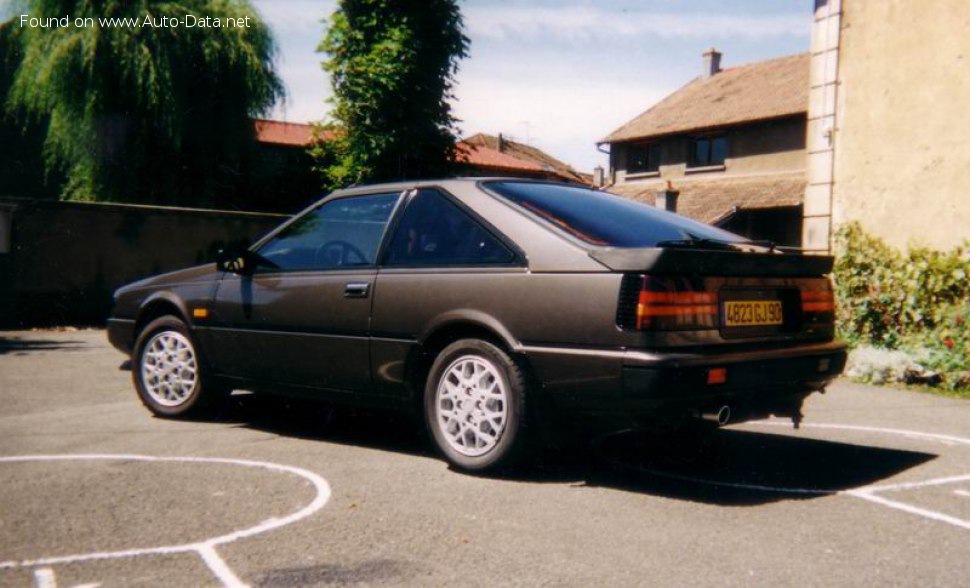
The Nissan Silvia (S12) embodied the distinctive automotive design language of the mid-1980s. Its body style was a classic two-door coupe, offering seating for four occupants. The S12’s aesthetic was characterized by sharp, angular lines and a somewhat aggressive stance, often featuring pop-up headlights—a popular styling cue for sports cars of that decade. This design contributed to a sleek, aerodynamic profile that visually communicated its performance intentions.
Underneath its stylish exterior, the S12 was engineered with a focus on driver engagement. The powertrain architecture was a classic front-engine, rear-wheel-drive (FR) layout, which provided balanced handling characteristics and a desirable platform for enthusiasts. The suspension system was comprised of an independent McPherson strut setup with coil springs and an anti-roll bar at the front, offering precise steering and good road holding. The rear suspension utilized a trailing arm design with a transverse stabilizer, further contributing to the car’s predictable and enjoyable handling dynamics.
Braking performance was handled by ventilated discs at the front and solid discs at the rear, a capable setup for a car of its weight and performance. The steering system was a rack and pinion type, augmented by hydraulic power steering, providing a good balance of assist and road feel. The S12 1.8 Turbo rode on 195/60 R15 tires mounted on 6J x 15-inch wheel rims, providing adequate grip and a period-correct appearance. With a curb weight of 2557.36 lbs (1160 kg), the S12 was relatively light, contributing to its agile feel and favorable power-to-weight ratio of 8.6 kg/Hp (116.4 Hp/tonne).
Technical Specifications
| Category | Specification |
|---|---|
| Brand | Nissan |
| Model | Silvia |
| Generation | Silvia (S12) |
| Type (Engine) | 1.8 Turbo (135 Hp) |
| Production Years | 1984 – 1988 |
| Body Type | Coupe |
| Seats | 4 |
| Doors | 2 |
| Performance Specs | |
| Fuel Consumption (Urban) | 10.8 l/100 km (21.8 US mpg) |
| Fuel Consumption (Extra Urban) | 6.4 l/100 km (36.8 US mpg) |
| Fuel Type | Petrol (Gasoline) |
| Acceleration 0 – 60 mph | 9.1 sec |
| Maximum Speed | 200 km/h (124.27 mph) |
| Weight-to-Power Ratio | 8.6 kg/Hp (116.4 Hp/tonne) |
| Engine Specs | |
| Power | 135 Hp @ 6000 rpm |
| Torque | 191 Nm (140.87 lb.-ft.) @ 4000 rpm |
| Engine Layout | Front, Longitudinal |
| Engine Model/Code | CA18ET |
| Engine Displacement | 1809 cm3 (1.8 L / 110.39 cu. in.) |
| Number of Cylinders | 4 |
| Engine Configuration | Inline |
| Cylinder Bore | 83 mm (3.27 in.) |
| Piston Stroke | 83.6 mm (3.29 in.) |
| Compression Ratio | 8:1 |
| Valves per Cylinder | 2 |
| Fuel Injection System | Multi-port manifold injection |
| Engine Aspiration | Turbocharger |
| Valvetrain | SOHC |
| Engine Oil Capacity | 3.8 L (4.02 US qt) |
| Coolant Capacity | 8.6 L (9.09 US qt) |
| Dimensions, Volume, and Weights | |
| Kerb Weight | 1160 kg (2557.36 lbs) |
| Max. Weight | 1635 kg (3604.56 lbs) |
| Max Load | 475 kg (1047.2 lbs) |
| Fuel Tank Capacity | 53 L (14 US gal) |
| Length | 4350 mm (171.26 in.) |
| Width | 1660 mm (65.35 in.) |
| Height | 1330 mm (52.36 in.) |
| Wheelbase | 2430 mm (95.67 in.) |
| Front Track | 1400 mm (55.12 in.) |
| Rear Track | 1425 mm (56.1 in.) |
| Drivetrain, Brakes, and Suspension | |
| Drivetrain Architecture | Rear-wheel drive (Internal Combustion Engine) |
| Gearbox | 5 gears, Manual Transmission |
| Front Suspension | Independent, McPherson with coil spring and anti-roll bar |
| Rear Suspension | Transverse stabilizer, Trailing arm |
| Front Brakes | Ventilated Discs |
| Rear Brakes | Discs |
| Steering Type | Rack and pinion |
| Power Steering | Hydraulic Steering |
| Front Tires Size | 195/60 R15 |
| Rear Tires Size | 195/60 R15 |
| Front Wheel Rims Size | 6J x 15 |
| Rear Wheel Rims Size | 6J x 15 |
Legacy and Market Impact
The Nissan Silvia (S12), particularly its turbocharged variants, holds a unique place in automotive history, especially within the context of Japanese sports cars. While it might not have achieved the same widespread fame in North America as its successor, the S13 (known as the 240SX), the S12 was a significant model that cemented the Silvia’s reputation as a capable and enthusiast-friendly platform. In its primary markets of Japan and Europe, the S12 was celebrated for its engaging rear-wheel-drive dynamics, making it a popular choice for both spirited road driving and early forms of motorsport, including grassroots drifting.
In North America, the S12 was sold as the Nissan 200SX, continuing the brand’s tradition of offering a compact, sporty coupe. It competed against rivals like the Toyota Celica, Honda Prelude, and various European coupes such as the Ford Sierra XR4i or Opel Manta. What set the S12 apart was its relatively lightweight chassis, robust turbocharged engine option, and the inherent tunability of its CA-series engine. This made it an attractive base for aftermarket modifications, a characteristic that would become a hallmark of the Silvia lineage.
The 1.8 Turbo model, with its 135 Hp CA18ET engine, was a precursor to the more potent turbocharged engines that would define later Silvia generations. It demonstrated Nissan’s commitment to offering performance-oriented engines in accessible packages. Although overshadowed by the more iconic S13 and S14 generations in the global tuning scene, the S12 laid crucial groundwork. Its rear-wheel-drive architecture and the availability of a factory-fitted turbocharger made it an early favorite for those seeking a fun, customizable, and drift-capable car.
Today, the Nissan Silvia (S12) is appreciated by classic Japanese car enthusiasts for its distinctive 1980s styling, straightforward mechanicals, and the raw driving experience it offers. It represents a significant step in the evolution of Nissan’s sports car philosophy, bridging the gap between earlier, more traditional coupes and the high-tech, performance-driven machines that would emerge in the 1990s. Its legacy is one of an understated but influential performer, a true driver’s car that continues to be cherished by a dedicated following.