The Suzuki Grand Vitara (FT,GT): A Rugged Contender in the Compact SUV Segment
The Suzuki Grand Vitara (FT,GT) represents a significant era for Suzuki in the global compact sport utility vehicle (SUV) market. Produced from 1999 to 2005, this generation of the Grand Vitara built upon its predecessor’s reputation for affordability and genuine off-road capability, while introducing a more refined design and enhanced features suitable for a broader consumer base. Positioned as a versatile vehicle that could handle daily commutes with ease and tackle more challenging terrain when called upon, the Grand Vitara (FT,GT) appealed to buyers seeking a blend of practicality, economy, and adventure. This particular variant, the 2.0 i 16V (3 dr) (140 Hp), highlights Suzuki’s commitment to offering capable powertrains within its compact SUV lineup, featuring a robust four-cylinder engine designed for reliability and adequate performance.
Throughout its production run, the Grand Vitara maintained its core identity as a body-on-frame SUV, distinguishing it from many car-based crossover rivals that began to emerge during this period. This architectural choice underscored its authentic SUV credentials, making it a popular choice for those who valued durability and genuine all-wheel-drive or four-wheel-drive systems. In the United States, where it was marketed simply as the Grand Vitara, it competed in a rapidly expanding segment, offering a compelling alternative to more mainstream options with its unique blend of robust engineering and compact dimensions.
Engine and Performance of the Suzuki Grand Vitara (FT,GT) 2.0 i 16V
At the heart of the Suzuki Grand Vitara (FT,GT) 2.0 i 16V (3 dr) variant was the venerable J20A engine, a 2.0-liter (1995 cm³ or 121.74 cu. in.) inline-four gasoline unit. This naturally aspirated powerplant was engineered for a balance of efficiency and power output, a crucial consideration for a compact SUV of its time. Featuring a Double Overhead Camshaft (DOHC) valvetrain with 16 valves (four per cylinder), the J20A was designed to optimize airflow and combustion, contributing to its smooth operation and respectable performance figures.
The engine delivered a healthy 140 horsepower at a relatively high 6500 revolutions per minute (rpm), showcasing its free-revving nature. This power output, combined with a power-per-liter ratio of 70.2 Hp/l, indicated a well-tuned engine for its displacement. Torque production was equally important for an SUV, and the J20A provided 186 Nm, or 137.19 lb.-ft., peaking at 4000 rpm. This mid-range torque delivery was beneficial for both city driving, allowing for confident acceleration from a stop, and for light off-road excursions, providing the necessary pulling power for moderate inclines and uneven terrain.
Fuel was delivered via a multi-port manifold injection system, a standard and reliable technology for the era, ensuring precise fuel metering and efficient combustion. The engine’s compression ratio of 9.7:1 was typical for a naturally aspirated gasoline engine, contributing to its overall efficiency. Mounted longitudinally at the front, this engine configuration was characteristic of traditional SUVs, often facilitating the integration of robust four-wheel-drive systems and contributing to better weight distribution for off-road handling. With an engine oil capacity of 5.2 liters (5.49 US quarts) and a coolant capacity of 6.5 liters (6.87 US quarts), the J20A was designed for durability and ease of maintenance, reflecting Suzuki’s reputation for building robust and long-lasting vehicles.
Design and Features
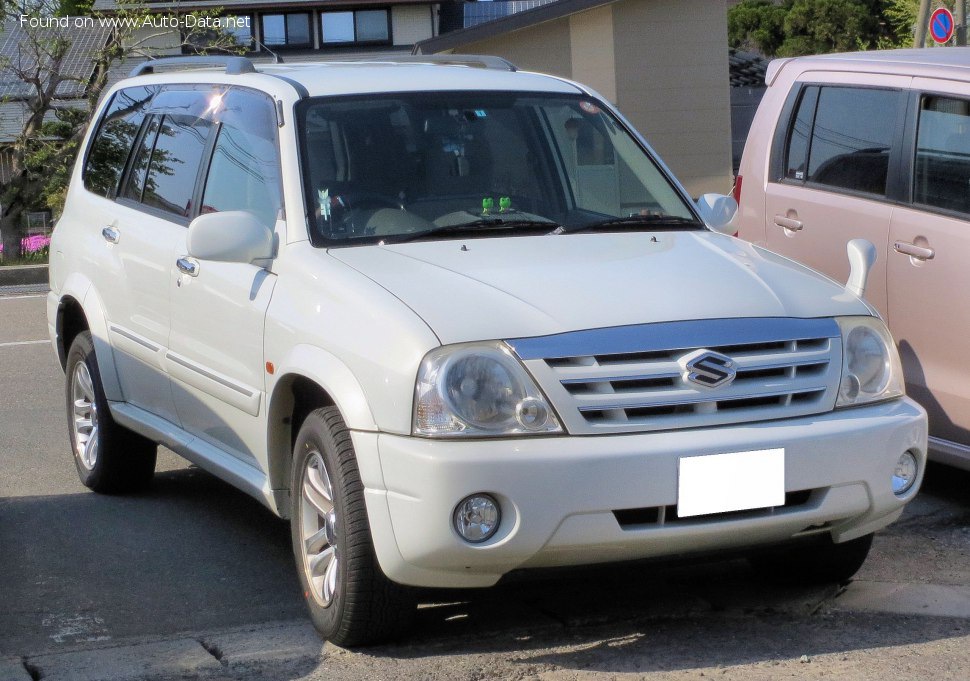
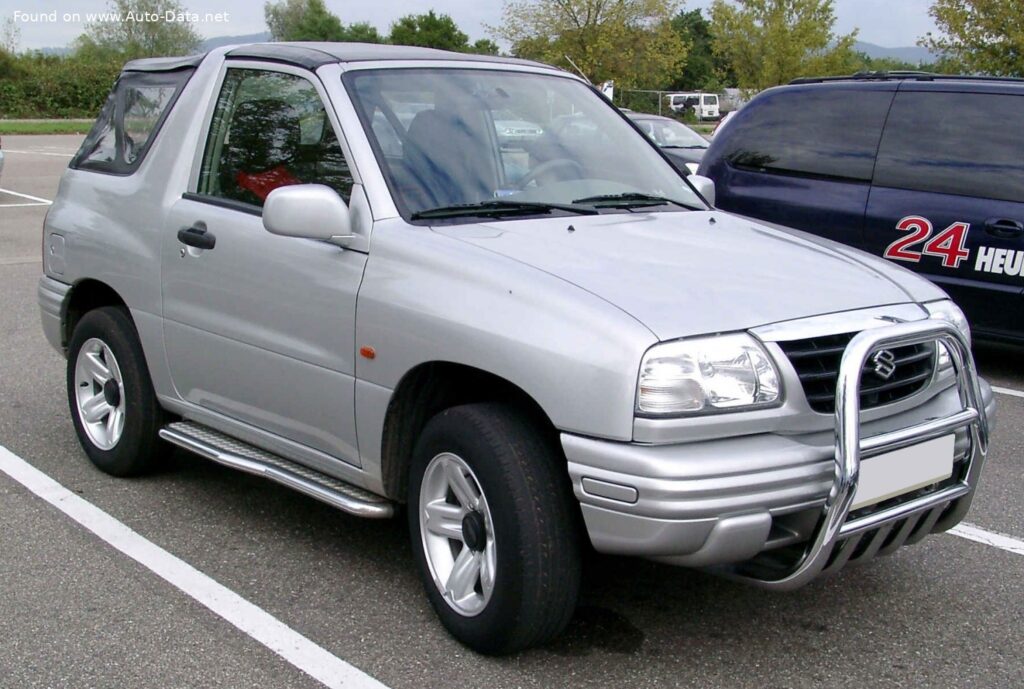
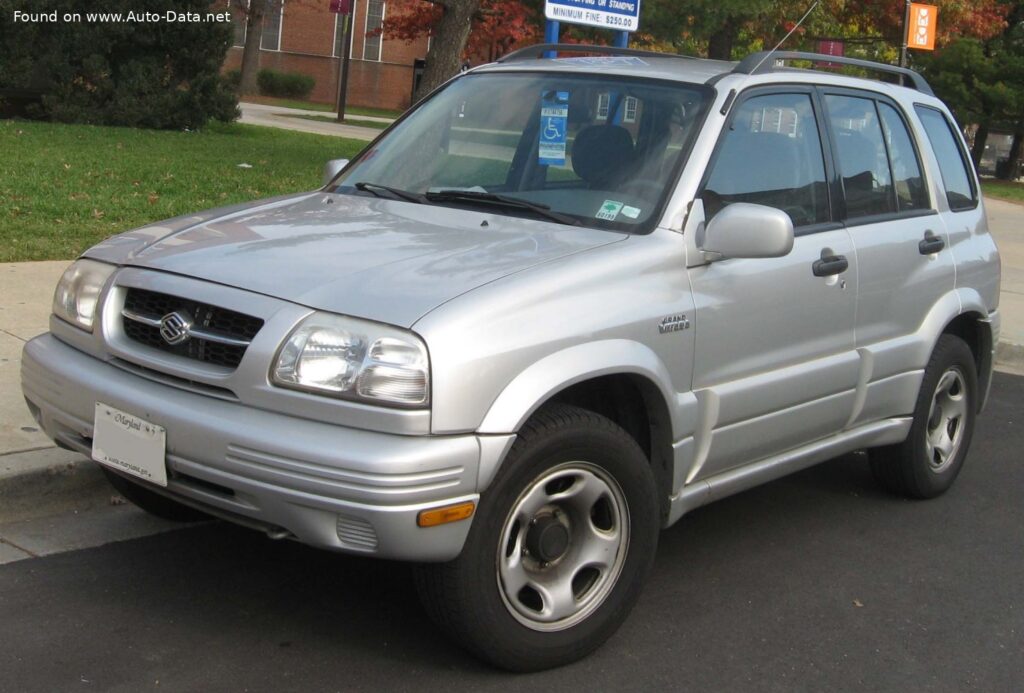
The Suzuki Grand Vitara (FT,GT) 2.0 i 16V (3 dr) was characterized by its compact and purposeful design. As a 3-door SUV, it offered a more nimble and agile form factor compared to its longer 5-door sibling, making it particularly suitable for urban environments and tighter trails. The body type, a classic SUV, featured a relatively tall stance, providing excellent ground clearance and a commanding view of the road – or trail – ahead. With seating for four occupants, the interior was designed to be functional and durable, prioritizing practicality over lavish luxury, consistent with its adventurous spirit.
Aesthetically, the Grand Vitara (FT,GT) adopted a more rounded and contemporary look compared to its predecessors, yet it retained a rugged charm. Its exterior design featured prominent wheel arches, a somewhat upright windshield for good visibility, and a tailgate-mounted spare tire, a signature element for many SUVs of the time that emphasized its utility and readiness for adventure. The compact dimensions, coupled with a relatively tight turning radius, made it highly maneuverable in crowded parking lots and on narrow tracks.
Inside, the cabin, while not opulent, was ergonomically laid out. Features typically included air conditioning, power windows and locks, and a basic but functional audio system. For its era, safety features commonly included dual front airbags and, in many markets, anti-lock braking system (ABS) as an option or standard. The emphasis was on creating a durable and easy-to-clean interior that could withstand the rigors of an active lifestyle, from hauling gear to accommodating muddy boots after an outdoor excursion. The rear seats, while adequate for two adults, could often be folded down to expand the cargo area, enhancing the vehicle’s versatility for carrying larger items.
Technical Specifications: Suzuki Grand Vitara (FT,GT) 2.0 i 16V (3 dr) (140 Hp)
| Feature | Specification |
|---|---|
| Brand | Suzuki |
| Model | Grand Vitara |
| Generation | Grand Vitara (FT,GT) |
| Type (Engine) | 2.0 i 16V (3 dr) (140 Hp) |
| Start of Production | 1999 year |
| End of Production | 2005 year |
| Powertrain Architecture | Internal Combustion engine |
| Body Type | SUV |
| Seats | 4 |
| Doors | 3 |
| Fuel Type | Petrol (Gasoline) |
| Power | 140 Hp @ 6500 rpm. |
| Power per Liter | 70.2 Hp/l |
| Torque | 186 Nm (137.19 lb.-ft.) @ 4000 rpm. |
| Engine Layout | Front, Longitudinal |
| Engine Model/Code | J20A |
| Engine Displacement | 1995 cm³ (121.74 cu. in. / 2.0 l) |
| Number of Cylinders | 4 |
| Engine Configuration | Inline |
| Cylinder Bore | 84 mm (3.31 in.) |
| Piston Stroke | 90 mm (3.54 in.) |
| Compression Ratio | 9.7:1 |
| Number of Valves per Cylinder | 4 |
| Fuel Injection System | Multi-port manifold injection |
| Engine Aspiration | Naturally aspirated engine |
| Valvetrain | DOHC |
| Engine Oil Capacity | 5.2 l (5.49 US qt) |
| Engine Oil Specification | Not specified in data |
| Coolant Capacity | 6.5 l (6.87 US qt) |
| Drivetrain | Internal Combustion engine (typically paired with 2WD/4WD options) |
Legacy and Market Impact of the Suzuki Grand Vitara (FT,GT)
The Suzuki Grand Vitara (FT,GT) carved out a significant niche in the highly competitive compact SUV market during its production run from 1999 to 2005. Its legacy is primarily defined by its reputation for reliability, exceptional value, and a level of off-road capability that often surpassed its car-based crossover contemporaries. Unlike many rivals that were transitioning to unibody construction and more car-like driving dynamics, the Grand Vitara largely retained its body-on-frame architecture, appealing to a segment of buyers who desired genuine ruggedness and durability.
In the United States, the Grand Vitara faced stiff competition from a growing array of compact SUVs. Key rivals included the Honda CR-V and Toyota RAV4, which emphasized car-like comfort and fuel efficiency, and the more rugged Nissan Xterra and Jeep Wrangler (in its smaller engine configurations), which leaned heavily into off-road prowess. The Grand Vitara positioned itself as a smart middle-ground, offering a more robust build than the car-based crossovers while being more refined and practical for daily use than some of the extreme off-roaders. Its compact size and available four-wheel-drive system made it a popular choice for adventurers, outdoor enthusiasts, and urban dwellers alike who occasionally ventured off the beaten path.
Suzuki’s brand image in the U.S. was often associated with smaller, economical vehicles and motorcycles, and the Grand Vitara helped to solidify its presence in the light truck and SUV segments, building on the success of earlier models like the Samurai and Sidekick (which the Vitara and Grand Vitara effectively succeeded). The 2.0 i 16V (3 dr) variant, with its efficient yet capable J20A engine, represented a popular configuration that balanced performance with the practical needs of its target audience. Its straightforward mechanicals contributed to its long-term reliability and relatively low maintenance costs, endearing it to owners who valued practicality and durability.
Today, the Grand Vitara (FT,GT) remains a sought-after vehicle in the used car market, particularly for those seeking an affordable and capable off-road platform or a dependable utility vehicle. Its robust construction and proven powertrain have ensured many units continue to serve their owners faithfully. The model’s success underscored Suzuki’s expertise in developing compact, capable, and cost-effective SUVs, a legacy that continues to influence the brand’s global offerings even after its departure from the U.S. automotive market. The Grand Vitara (FT,GT) stands as a testament to Suzuki’s commitment to delivering honest, no-nonsense vehicles designed for real-world utility and adventure.