
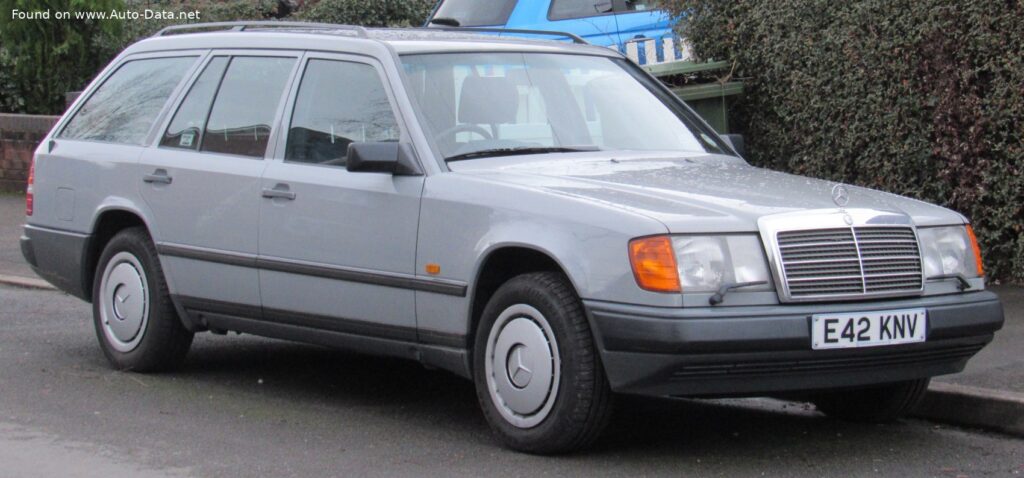
The Mercedes-Benz S124 200 TE: A Testament to Enduring German Engineering
The Mercedes-Benz S124 200 TE represents a pivotal chapter in the history of the German automaker’s acclaimed W124 generation, a series widely regarded as one of the most robust and meticulously engineered vehicles ever produced. Launched in July 1988 and produced until August 1989, the S124 200 TE was the station wagon variant of the W124 chassis, specifically the entry-level gasoline model for the European market. While not officially sold in the United States, this model embodies the core values of Mercedes-Benz from an era synonymous with unparalleled build quality, durability, and a refined driving experience. It served as a practical yet prestigious family hauler, catering to consumers who demanded the utility of a wagon without compromising on luxury, comfort, or the brand’s legendary reliability. The S124 generation, in general, set new benchmarks for safety, aerodynamics, and overall longevity in the executive car segment, solidifying Mercedes-Benz’s reputation as a leader in automotive innovation and craftsmanship.
Engine and Performance: The Heart of the Mercedes-Benz S124 200 TE
Under the hood, the Mercedes-Benz S124 200 TE was powered by the M 102 E 20 engine, specifically designated as the 102.963. This naturally aspirated, 2.0-liter (1996 cubic centimeters or 121.8 cubic inches) inline-four gasoline engine was a stalwart of Mercedes-Benz’s powertrain lineup during the late 1980s. Featuring a Single Overhead Camshaft (SOHC) and two valves per cylinder, this engine was designed for smooth operation and longevity rather than raw power. It delivered a respectable 118 horsepower at 5200 rpm, paired with 126.86 lb.-ft. (172 Newton-meters) of torque available at 3500 rpm. This output, while modest by today’s standards, was perfectly adequate for the car’s intended purpose: comfortable and reliable cruising on European autobahns and city streets.
Fueling was handled by a multi-port manifold injection system, ensuring efficient combustion and consistent power delivery. The S124 200 TE was equipped with a 4-speed manual transmission, sending power to the rear wheels—a classic Mercedes-Benz drivetrain architecture that emphasized balanced handling and a traditional driving feel. In terms of acceleration, the 200 TE could reach 60 mph from a standstill in an estimated 12.3 seconds, with a top speed of 111.85 mph (180 km/h). Fuel economy figures were competitive for its time, with an urban rating of approximately 19.3 US mpg and an extra-urban rating of around 30.9 US mpg. These figures underscored the engine’s design philosophy: an emphasis on efficiency and endurance, providing a dependable and economical ownership experience for its European clientele.
The engine’s robust construction and careful engineering contributed significantly to the W124’s reputation for being “over-engineered.” Components like the engine oil capacity of 5.28 US quarts and a coolant capacity of 8.98 US quarts reflected the generous design margins intended to ensure long service intervals and high reliability. The relatively low compression ratio of 9.1:1 further contributed to its durability and ability to run on various fuel qualities available across Europe. The M 102 engine series, in general, demonstrated remarkable resilience, often accumulating hundreds of thousands of miles with proper maintenance, a testament to its fundamental design integrity.
Design and Features: Form Meets Function in the S124
The S124 200 TE, as a station wagon (often referred to as an “estate” in Europe), perfectly blended Mercedes-Benz’s distinctive design language with exceptional practicality. Measuring 187.6 inches in length, 68.5 inches in width, and 58.66 inches in height, with a substantial 110.24-inch wheelbase, the S124 offered a remarkably spacious and comfortable cabin for five occupants. The exterior design, conceived by Bruno Sacco, was a masterclass in understated elegance and functional aerodynamics. Its clean lines, robust build, and timeless proportions have ensured its enduring appeal, making it instantly recognizable as a classic Mercedes-Benz. The large glass area provided excellent visibility, a hallmark of practical family vehicles.
Inside, the S124 200 TE prioritized ergonomics, durability, and a sense of enduring quality. The dashboard layout was logical and driver-focused, with high-quality materials and precise fit-and-finish throughout. While the 200 TE was an entry-level model, it still benefited from Mercedes-Benz’s commitment to comfort and safety. Features for the era included hydraulic power steering, providing a smooth and communicative driving experience. The braking system comprised disc brakes on both the front and rear wheels, augmented by an Anti-lock Braking System (ABS) – a significant safety advancement for the late 1980s, enhancing vehicle control during emergency braking.
The suspension system of the S124 was particularly noteworthy. It featured a wishbone setup at the front and an advanced independent multi-link suspension at the rear. This sophisticated rear suspension design, pioneering for its time, dramatically improved ride comfort, handling stability, and tire wear, setting a new standard for the segment. The combination of precise steering, capable brakes, and a well-tuned suspension contributed to the S124’s reputation for being exceptionally comfortable and composed on the road, regardless of load. The station wagon body style, with its large cargo area and practical five-door configuration, made it an ideal choice for families and professionals needing ample space and versatility.
Technical Specifications
| Category | Specification |
|---|---|
| General Information | |
| Brand | Mercedes-Benz |
| Model | W124 |
| Generation | S124 |
| Engine Type | 200 TE (118 Hp) |
| Production Start | July, 1988 |
| Production End | August, 1989 |
| Powertrain Architecture | Internal Combustion Engine |
| Body Type | Station wagon (estate) |
| Seats | 5 |
| Doors | 5 |
| Performance Specs | |
| Fuel Consumption (Urban) | 12.2 l/100 km (19.3 US mpg) |
| Fuel Consumption (Extra Urban) | 7.6 l/100 km (30.9 US mpg) |
| Fuel Type | Petrol (Gasoline) |
| Acceleration 0 – 60 mph | 12.3 sec |
| Maximum Speed | 180 km/h (111.85 mph) |
| Weight-to-Power Ratio | 11.9 kg/Hp (83.7 Hp/tonne) |
| Weight-to-Torque Ratio | 8.2 kg/Nm (122 Nm/tonne) |
| Engine Specs | |
| Power | 118 Hp @ 5200 rpm |
| Power per Liter | 59.1 Hp/l |
| Torque | 172 Nm @ 3500 rpm (126.86 lb.-ft. @ 3500 rpm) |
| Engine Layout | Front, Longitudinal |
| Engine Model/Code | M 102 E 20 / 102.963 |
| Engine Displacement | 1996 cm3 (121.8 cu. in. / 2.0 liters) |
| Number of Cylinders | 4 |
| Engine Configuration | Inline |
| Cylinder Bore | 89 mm (3.5 in.) |
| Piston Stroke | 80.2 mm (3.16 in.) |
| Compression Ratio | 9.1:1 |
| Valves per Cylinder | 2 |
| Fuel Injection System | Multi-port manifold injection |
| Engine Aspiration | Naturally aspirated |
| Valvetrain | SOHC |
| Engine Oil Capacity | 5 l (5.28 US qt) |
| Coolant Capacity | 8.5 l (8.98 US qt) |
| Space, Volume and Weights | |
| Kerb Weight | 1410 kg (3108.52 lbs.) |
| Max. Weight | 2030 kg (4475.38 lbs.) |
| Max Load | 620 kg (1366.87 lbs.) |
| Fuel Tank Capacity | 72 l (19.02 US gal) |
| Dimensions | |
| Length | 4765 mm (187.6 in.) |
| Width | 1740 mm (68.5 in.) |
| Height | 1490 mm (58.66 in.) |
| Wheelbase | 2800 mm (110.24 in.) |
| Front Track | 1497 mm (58.94 in.) |
| Rear Track | 1488 mm (58.58 in.) |
| Drivetrain, Brakes and Suspension Specs | |
| Drivetrain Architecture | Rear wheel drive, Internal Combustion Engine |
| Drive Wheel | Rear wheel drive |
| Gearbox Type | 4 gears, manual transmission |
| Front Suspension | Wishbone |
| Rear Suspension | Independent multi-link suspension |
| Front Brakes | Disc |
| Rear Brakes | Disc |
| Assisting Systems | ABS (Anti-lock braking system) |
| Steering Type | Cone worm with recirculation balls |
| Power Steering | Hydraulic Steering |
| Tires Size (Front/Rear) | 195/65 R15 |
| Wheel Rims Size (Front/Rear) | 6.5J x 15 |
Legacy and Market Impact: The Enduring Appeal of the S124
The Mercedes-Benz S124, including the 200 TE variant, left an indelible mark on the automotive landscape, particularly in Europe. Its reputation for “bulletproof” reliability and exceptional build quality quickly became legendary. These vehicles were designed and engineered with an almost obsessive attention to detail, leading many to consider the W124 generation as the pinnacle of Mercedes-Benz’s engineering prowess before cost-cutting measures became more prevalent in the industry. This dedication translated into incredible longevity, with many S124 models still on the road today, often having covered hundreds of thousands of miles, especially in roles like taxis in Germany, which further cemented their image as indestructible workhorses.
In its primary European market, the S124 200 TE competed with rivals such as the BMW 5 Series Touring (E34 generation, which followed shortly after the W124’s introduction) and the Audi 100 Avant. While these competitors offered their own strengths, the W124 consistently stood out for its blend of sophisticated ride quality, robust construction, and understated luxury. It wasn’t the fastest or the most overtly sporty, but it excelled in providing a supremely comfortable, safe, and dependable motoring experience. Its ability to serve as a luxurious family car during the week and a capable load-hauler on weekends made it an incredibly versatile and appealing proposition for discerning buyers.
The historical significance of the S124 generation cannot be overstated. It effectively set the standard for executive cars for years to come, influencing subsequent designs and engineering philosophies across the industry. Many of its innovations, such as the multi-link rear suspension and advanced safety features like ABS, became industry benchmarks. Today, the S124 models are highly sought after by classic car enthusiasts and collectors who appreciate their timeless design, mechanical integrity, and the tangible quality that defined Mercedes-Benz in that era. The Mercedes-Benz S124 200 TE, though a humble entry point into the lineup, perfectly encapsulates the engineering ethos that made the W124 a true automotive icon, a vehicle that continues to be celebrated for its heritage and enduring mechanical impact.
