The Seat Ibiza IV (facelift 2012) 1.2 TSI (105 Hp) Eco Technology: A European Supermini Standard
The Seat Ibiza IV (facelift 2012) 1.2 TSI (105 Hp) Eco Technology represents a significant iteration of the popular Spanish automaker’s subcompact or “supermini” hatchback. Unveiled in 2012, this facelifted version of the fourth-generation Ibiza aimed to refresh its appeal in the highly competitive European B-segment. Produced from 2012 to 2015, this particular variant, distinguished by its efficient 1.2-liter TSI engine and “Eco Technology” designation, underscored SEAT’s commitment to delivering a blend of sporty driving dynamics, practicality, and improved fuel economy. While the SEAT brand is not present in the United States market, the Ibiza holds a crucial role in Europe, offering a stylish and more dynamically oriented alternative within the Volkswagen Group’s small car portfolio, sharing its platform with siblings like the Volkswagen Polo and Skoda Fabia. This article delves into the specifics of this model, highlighting its engineering, design, and market positioning within its primary operating regions.
Engine and Performance: The 1.2 TSI Eco Technology Advantage
At the heart of the Seat Ibiza IV (facelift 2012) 1.2 TSI (105 Hp) Eco Technology lies a sophisticated 1.2-liter (1197 cm3) turbocharged inline-four gasoline engine, internally designated CBZB. This powerplant, a staple across various Volkswagen Group models, delivered a robust 105 horsepower at 5000 rpm, translating to a respectable 87.7 horsepower per liter. What truly set this engine apart, especially for a vehicle of its size, was its impressive torque output: 175 Nm (129.07 lb.-ft.) available across a broad rev range, from a low 1550 rpm up to 4100 rpm. This wide torque band ensured flexible performance, making the Ibiza feel responsive in urban traffic and capable on highways.
Power was delivered to the front wheels via a smooth-shifting 5-speed manual transmission, a common setup for efficiency-focused models in this segment. The combination of direct fuel injection and a turbocharger with an intercooler allowed for both spirited acceleration and commendable fuel economy. The Ibiza 1.2 TSI could accelerate from 0 to 60 mph in a brisk 9.3 seconds (0-100 km/h in 9.8 seconds) and reach a maximum speed of 118 mph (190 km/h).
The “Eco Technology” badge was not just for show; it signified SEAT’s efforts to optimize the vehicle for reduced fuel consumption and lower emissions. The combined fuel economy was rated at an impressive 5.1 liters per 100 km, which translates to approximately 46.1 US mpg. Even in urban driving, it achieved 6 liters per 100 km (39.2 US mpg), while extra-urban cruising improved to 4.5 liters per 100 km (52.3 US mpg). These figures were competitive for its class and contributed to its Euro 5 emission standard compliance, reflecting a focus on environmental responsibility alongside performance. The lightweight nature of the vehicle, with a curb weight of 2414.06 lbs (1095 kg), also played a crucial role in its agile handling and efficiency.
Design and Features: Sporty Aesthetics Meets Practicality
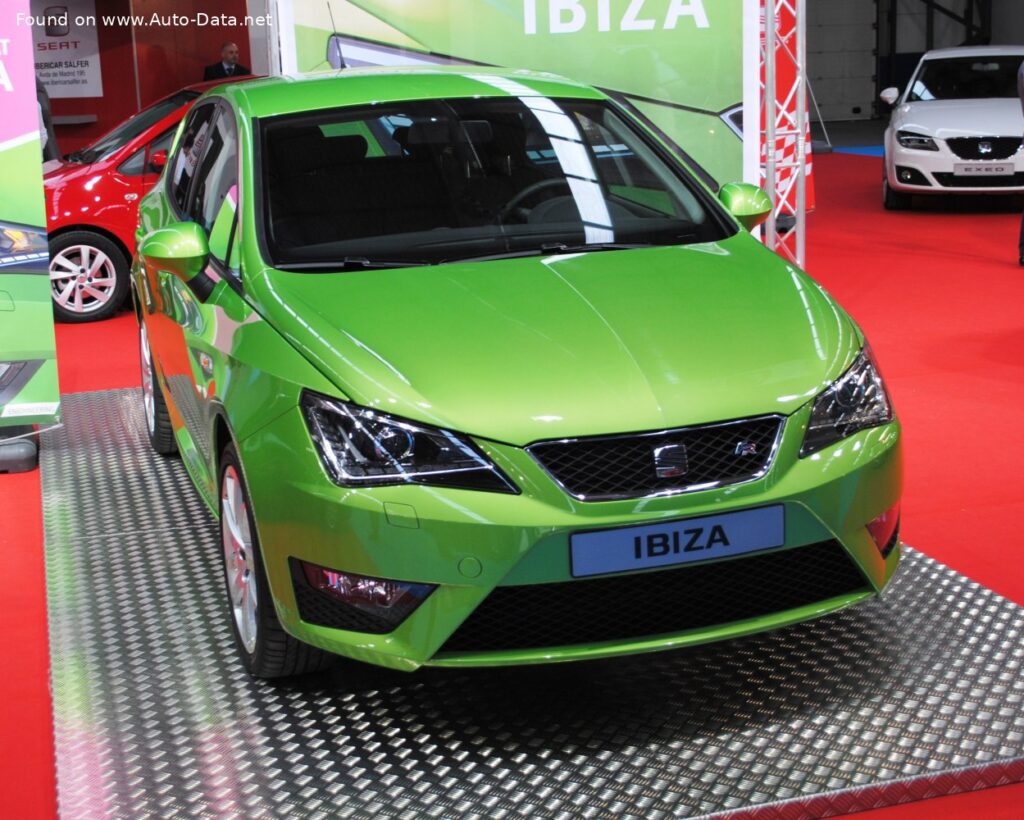
The Seat Ibiza IV (facelift 2012) retained the sharp, dynamic design language that had become a hallmark of the SEAT brand, often described as having a “Latin flair.” The facelift introduced subtle but effective revisions, including redesigned headlights with optional LED daytime running lights, a more aggressive grille, and updated bumper designs, giving the car a fresher, more contemporary look. The model in question featured a practical 5-door hatchback body type, offering easy access to both front and rear seating for its five occupants.
Dimensions were compact yet functional for urban environments: a length of 159.88 inches (4061 mm), a width of 66.65 inches (1693 mm), and a height of 56.89 inches (1445 mm). A wheelbase of 97.2 inches (2469 mm) provided a stable ride while maintaining a tight turning circle of 34.38 feet (10.48 m), ideal for navigating city streets and tight parking spaces. Despite its relatively small footprint, the Ibiza offered a respectable minimum trunk space of 10.31 cu. ft. (292 liters), expandable by folding the rear seats, which was adequate for daily errands and weekend trips.
Inside, the cabin benefited from upgraded materials and a revised instrument cluster, enhancing the perceived quality and ergonomics. Standard features for the era included power steering (hydraulic in this model), and essential safety systems like ABS (Anti-lock Braking System). The suspension setup featured an independent McPherson strut system with coil springs and an anti-roll bar at the front, paired with hydraulic elements at the rear, striking a balance between comfort and sporty handling. Braking was handled by ventilated discs at the front and solid discs at the rear, providing confident stopping power. Various tire and wheel options were available, ranging from 185/60 R15 to more aggressive 215/40 R17 setups, allowing owners to tailor the car’s look and handling characteristics.
Technical Specifications
| Category | Specification | Value |
|---|---|---|
| General Information | ||
| Brand | Seat | |
| Model | Ibiza | |
| Generation | Ibiza IV (facelift 2012) | |
| Type (Engine) | 1.2 TSI (105 Hp) Eco Technology | |
| Start of Production | 2012 year | |
| End of Production | 2015 year | |
| Powertrain Architecture | Internal Combustion engine | |
| Body Type | Hatchback | |
| Seats | 5 | |
| Doors | 5 | |
| Performance Specifications | ||
| Fuel Consumption (Economy) – Urban | 6 l/100 km | 39.2 US mpg |
| Fuel Consumption (Economy) – Extra Urban | 4.5 l/100 km | 52.3 US mpg |
| Fuel Consumption (Economy) – Combined | 5.1 l/100 km | 46.1 US mpg |
| Fuel Type | Petrol (Gasoline) | |
| Acceleration 0 – 60 mph | 9.3 sec | |
| Acceleration 0 – 100 km/h | 9.8 sec | |
| Maximum Speed | 190 km/h | 118.06 mph |
| Emission Standard | Euro 5 | |
| Weight-to-Power Ratio | 10.4 kg/Hp | 95.9 Hp/tonne |
| Weight-to-Torque Ratio | 6.3 kg/Nm | 159.8 Nm/tonne |
| Engine Specifications | ||
| Power | 105 Hp @ 5000 rpm | |
| Power per Liter | 87.7 Hp/l | |
| Torque | 175 Nm @ 1550-4100 rpm | 129.07 lb.-ft. @ 1550-4100 rpm |
| Engine Layout | Front, Transverse | |
| Engine Model/Code | CBZB | |
| Engine Displacement | 1197 cm3 | 1.2 Liters / 73.05 cu. in. |
| Number of Cylinders | 4 | |
| Engine Configuration | Inline | |
| Cylinder Bore | 71 mm | 2.8 in. |
| Piston Stroke | 75.6 mm | 2.98 in. |
| Fuel Injection System | Direct injection | |
| Engine Aspiration | Turbocharger, Intercooler | |
| Engine Oil Capacity | 3.9 l | 4.12 US qt |
| Coolant Capacity | 5.6 l | 5.92 US qt |
| Space, Volume, and Weights | ||
| Kerb Weight | 1095 kg | 2414.06 lbs. |
| Max. Weight | 1546 kg | 3408.35 lbs. |
| Max Load | 451 kg | 994.28 lbs. |
| Trunk (boot) Space – Minimum | 292 l | 10.31 cu. ft. |
| Fuel Tank Capacity | 45 l | 11.89 US gal |
| Dimensions | ||
| Length | 4061 mm | 159.88 in. |
| Width | 1693 mm | 66.65 in. |
| Height | 1445 mm | 56.89 in. |
| Wheelbase | 2469 mm | 97.2 in. |
| Front Track | 1465 mm | 57.68 in. |
| Rear (Back) Track | 1457 mm | 57.36 in. |
| Minimum Turning Circle (Turning Diameter) | 10.48 m | 34.38 ft. |
| Drivetrain, Brakes, and Suspension Specifications | ||
| Drivetrain Architecture | The Internal combustion engine (ICE) drives the front wheels of the vehicle. | |
| Drive Wheel | Front-wheel drive | |
| Number of Gears and Type of Gearbox | 5 gears, manual transmission | |
| Front Suspension | Independent, type McPherson with coil spring and anti-roll bar | |
| Rear Suspension | Hydraulic elements | |
| Front Brakes | Ventilated discs | |
| Rear Brakes | Disc | |
| Assisting Systems | ABS (Anti-lock braking system) | |
| Steering Type | Steering rack and pinion | |
| Power Steering | Hydraulic Steering | |
| Tires Size | 185/60 R15; 215/45 R16; 215/40 R17 | |
| Wheel Rims Size | 6J x 15; 7J x 16; 7J x 17 | |
Legacy and Market Impact in the European Landscape
The Seat Ibiza IV (facelift 2012) 1.2 TSI (105 Hp) Eco Technology played a crucial role in SEAT’s strategy to maintain competitiveness in the fiercely contested European supermini segment. Positioned as a sportier, more youthful alternative to its platform-sharing siblings, the Volkswagen Polo and Skoda Fabia, the Ibiza carved out its own niche. Its distinctive styling, engaging driving dynamics, and the efficiency offered by the TSI engine appealed to a broad demographic, including young professionals and small families seeking a practical yet fun-to-drive urban vehicle.
In its primary markets, the Ibiza faced formidable competition from established rivals such as the Ford Fiesta, Renault Clio, Peugeot 208, and Opel Corsa. The 1.2 TSI Eco Technology variant, in particular, was well-received for its balance of performance and operating costs, making it an attractive proposition for those prioritizing fuel efficiency without sacrificing too much power. Its compliance with Euro 5 emission standards also made it a strong contender in an era of increasing environmental awareness and stricter regulations.
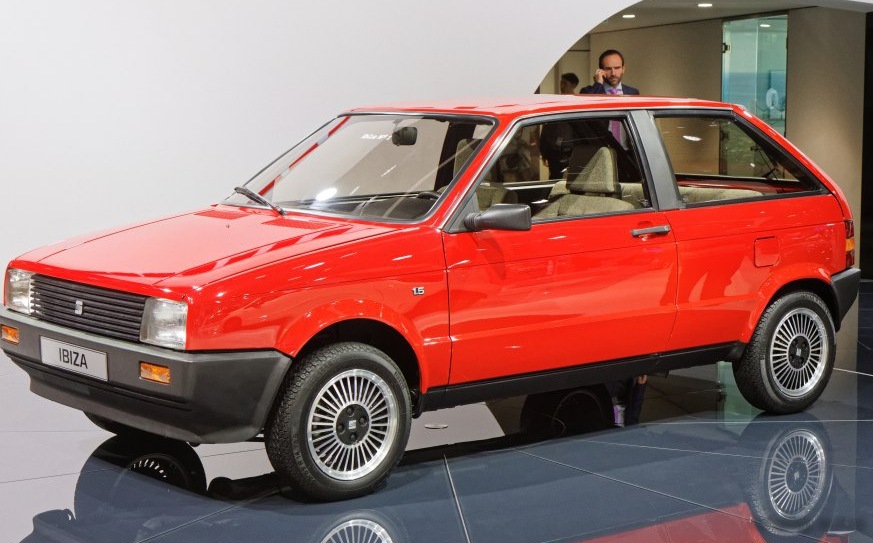
The Ibiza’s success also underscored the effectiveness of the Volkswagen Group’s modular platform strategy. By sharing components and engineering with other models, SEAT could offer a technologically advanced and refined product at a competitive price point. The Ibiza’s heritage, stretching back to its original launch in 1984, cemented its status as a core model for SEAT, embodying the brand’s “Enjoyneering” philosophy – a blend of Spanish passion and German engineering precision. Even after its production concluded in 2015, paving the way for the fifth-generation Ibiza, this facelifted model remains a testament to SEAT’s ability to deliver a compelling, well-rounded supermini that resonated with European consumers, providing a blend of style, efficiency, and driving pleasure.