
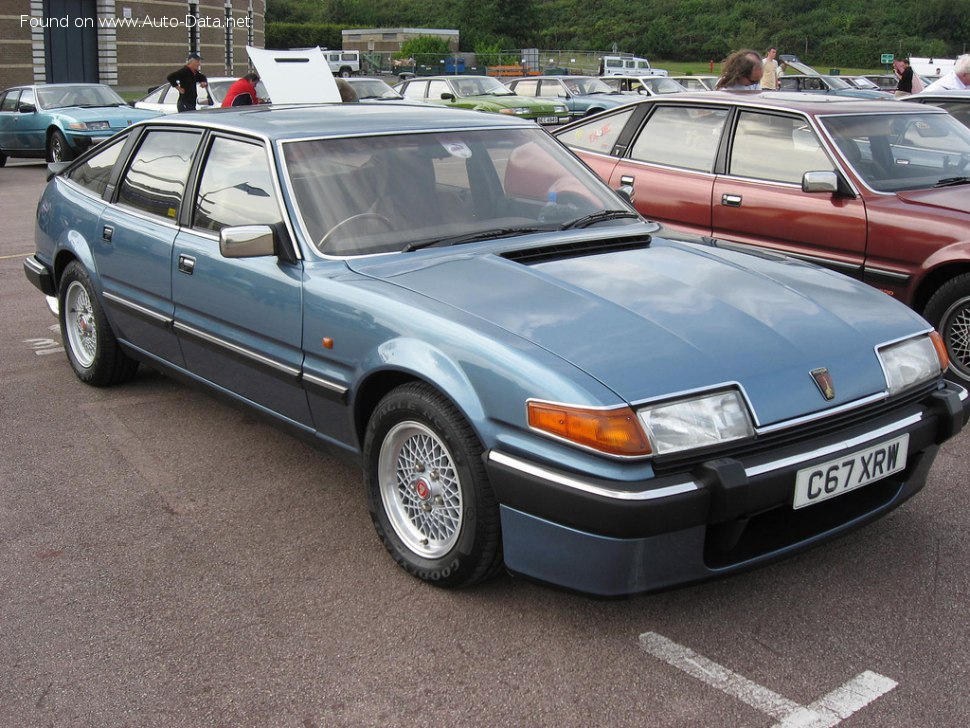
Introduction to the Rover 2000-3500 Hatchback (SD1)
The Rover SD1, officially known as the Rover 2000-3500 Hatchback (SD1), represents a significant and often debated chapter in British automotive history. Launched in 1976, the SD1 (Specialist Division 1) was an executive car produced by British Leyland, conceived as a replacement for both the stately Rover P6 and the more conventional Triumph 2000/2500. This particular article focuses on the entry-level Rover 2000-3500 Hatchback (SD1) 2000 (97 Hp) variant, which was in production from 1982 to 1986. While not officially sold in the United States, the SD1 gained considerable acclaim in its primary European markets for its groundbreaking design, which blended the practicality of a large five-door hatchback with the prestige and comfort expected of an executive sedan.
The SD1 was a bold statement from a company often plagued by industrial strife and quality concerns. Its sleek, aerodynamic silhouette, clearly inspired by contemporary Italian supercars like the Ferrari Daytona and Lancia Gamma Coupé, stood in stark contrast to its more traditional predecessors. The “2000” designation referred to its two-liter engine, offering a more fuel-efficient and accessible entry point into the broader SD1 range compared to its more powerful six-cylinder and V8 siblings. This variant aimed to broaden the SD1’s appeal, catering to buyers who sought the car’s distinctive styling and spaciousness without the higher running costs associated with the larger engines. It was an ambitious project for British Leyland, intended to showcase the best of British engineering and design on the international stage, despite the company’s internal struggles. The SD1’s innovative approach to the executive car segment, particularly its hatchback configuration, marked it as a forward-thinking vehicle, even if its execution was sometimes hampered by external factors.
Engine and Performance of the Rover 2000-3500 Hatchback (SD1) 2000 (97 Hp)
Powering the Rover 2000-3500 Hatchback (SD1) 2000 variant was a naturally aspirated, two-liter (2.0L) inline-four internal combustion engine. This unit delivered a respectable 97 horsepower (Hp) at a time when efficiency and running costs were becoming increasingly important considerations for European motorists. For an executive car in the early 1980s, this output positioned it as a competent, if not overtly sporty, performer. The engine’s design emphasized reliability and a smooth power delivery, characteristic of Rover’s engineering philosophy, which historically prioritized refinement. As a gasoline-fueled powertrain, it was designed for everyday usability, offering a sensible balance between adequate performance and reasonable economy, making it a practical choice for a wide range of buyers.
The powertrain architecture of the SD1, regardless of engine variant, was fundamentally an internal combustion engine driving the rear wheels. This traditional rear-wheel-drive layout provided a balanced driving dynamic and was favored in executive cars for its perceived robustness and handling characteristics. While the 97 Hp from the 2.0L engine might seem modest by today’s standards, it provided adequate acceleration and cruising ability for the typical European motorist of the era. This engine allowed the SD1 2000 to maintain comfortable highway speeds and navigate urban environments with ease, a crucial factor for a car positioned as a versatile executive transport. Its naturally aspirated nature meant predictable power delivery without the complexities or additional cost of forced induction, which was less common for entry-level engines during that period. The focus for this particular engine was on providing a refined and accessible driving experience, rather than outright speed, thereby making the SD1 available to a wider demographic who valued style and practicality over sheer power. The engine was typically mated to a five-speed manual transmission, offering engaging control for the driver, with an automatic option likely available to cater to different preferences for relaxed cruising.
Design and Features of the Rover 2000-3500 Hatchback (SD1)
The design of the Rover SD1 was arguably its most revolutionary aspect, earning it the prestigious European Car of the Year award in 1977, a testament to its forward-thinking aesthetics. Its five-door hatchback body type was a bold departure from traditional executive sedans prevalent in the market. This configuration offered immense practicality, combining the sleek lines of a fastback with the versatile cargo capacity of a hatchback, a feature relatively uncommon in the executive segment at the time. The car featured five seats, providing comfortable accommodation for a family or business travelers, making it a highly adaptable vehicle for various needs.
Penned by the acclaimed designer David Bache, the SD1’s exterior styling was remarkably futuristic and aerodynamic for its period. Its clean, uncluttered lines, minimal chrome accents, and distinctive full-width nose, incorporating a single-lens headlamp design (though some markets had twin lamps), gave it a timeless appeal that many still admire today. The large glasshouse and steeply sloping rear tailgate contributed to both its aesthetic appeal and its functional versatility, allowing for easy loading of bulky items into a generously sized cargo area. Inside, the SD1 embraced a modern, driver-focused cockpit. While the 2.0L model might have featured more basic trim levels than its V8 siblings, the fundamental interior architecture remained consistent across the range, offering good ergonomics and a palpable sense of spaciousness. Features typical for the early 1980s included manual window winders (power windows were often an option on higher trims or as an extra), a comprehensive instrument cluster with clear analog dials, and comfortable cloth upholstery. The dashboard design was notably avant-garde, with a distinct pod-like instrument binnacle that further emphasized the driver-centric layout. Safety, by 1980s standards, included features like front and rear seatbelts, a relatively rigid body structure designed for occupant protection in a collision, and good all-around visibility. The blend of executive presence with hatchback utility made the SD1 a truly unique proposition in its class, challenging conventional notions of what an executive car could be.
Technical Specifications
The following table details the core specifications for the Rover 2000-3500 Hatchback (SD1) 2000 (97 Hp) variant:
| Attribute | Specification |
|---|---|
| Brand | Rover |
| Model | 2000-3500 Hatchback |
| Generation | 2000-3500 Hatchback (SD1) |
| Type (Engine) | 2000 (97 Hp) |
| Start of Production | 1982 year |
| End of Production | 1986 year |
| Powertrain Architecture | Internal Combustion engine |
| Body Type | Hatchback |
| Seats | 5 |
| Doors | 5 |
| Fuel Type | Petrol (Gasoline) |
| Power | 97 Hp |
| Engine Aspiration | Naturally aspirated engine |
| Drivetrain | Rear-Wheel Drive (Internal Combustion Engine) |
Legacy and Market Impact of the Rover 2000-3500 Hatchback (SD1)
The Rover SD1 holds a complex but undeniably important place in automotive history, particularly in Europe. Upon its initial launch, it was hailed as a design triumph, a genuinely modern and attractive executive car that could compete with the best from Germany and Sweden. Its bold styling and innovative hatchback configuration set it apart from its more conservative rivals, garnering significant critical acclaim and the coveted European Car of the Year award. However, the SD1’s legacy is often overshadowed by the well-documented production and quality control issues that plagued British Leyland during its manufacturing run. These problems, stemming from chronic industrial unrest, underinvestment, and financial difficulties within the broader British Leyland conglomerate, unfortunately led to a reputation for unreliability and inconsistent build quality that severely impacted its long-term success and market perception. This was a particular tragedy given the car’s initial promise and design brilliance.
In the fiercely competitive European market, the SD1 competed against established players like the reliable Ford Granada, the elegant Opel Senator, the robust Volvo 240 and later 740, and entry-level variants of the prestigious BMW 5 Series (E28) and Mercedes-Benz W123. The 2000 (97 Hp) variant played a crucial role in the SD1 lineup by providing a more economical and accessible entry point, broadening the car’s potential customer base. While the V8-powered SD1s garnered headlines for their performance and prestige, offering a distinctly British take on the muscle sedan, the 2.0L model offered a practical alternative for company car fleets and private buyers seeking the SD1’s distinctive style and spaciousness without the higher fuel consumption and tax implications of the larger engines. It helped democratize the SD1’s appeal, making its progressive design and executive comfort available to a wider audience, even if it didn’t possess the same performance credentials as its stablemates.
Despite its challenges and the shadow cast by its build quality issues, the SD1’s design influence can still be seen in later cars, and it remains a significant design icon. Its groundbreaking hatchback executive concept paved the way for future vehicles that blended practicality with luxury. Today, the Rover SD1 is increasingly appreciated by classic car enthusiasts for its unique aesthetic, its innovative layout, and its representation of a pivotal, albeit turbulent, era in British automotive manufacturing. While the high-performance V8 models often command more attention from collectors, the 2000 (97 Hp) variant is a testament to Rover’s attempt to offer a versatile and appealing executive car to a wider audience. It stands as a powerful reminder of British Leyland’s ambition to innovate and compete on the global stage, ultimately leaving behind a vehicle that, despite its flaws, is celebrated for its forward-thinking design and its distinctive character, embodying both the triumphs and tribulations of the British auto industry of the late 20th century.
