The Renault Megane II Classic 1.9 dCi (90 Hp): A European Workhorse of the Mid-2000s
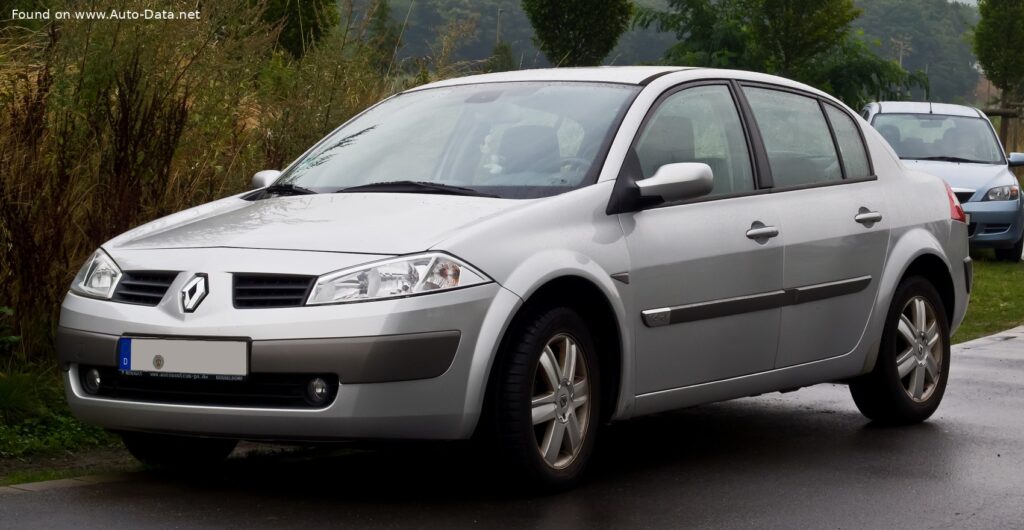
The Renault Megane II Classic 1.9 dCi (90 Hp) represents a significant chapter in Renault’s strategy for the compact family car segment in the early to mid-2000s. Launched in 2004 as part of the second generation of the Megane lineup, this particular variant, the “Classic,” was the sedan iteration, offering a more traditional three-box design compared to its hatchback sibling’s avant-garde styling. While the Megane II, especially its distinctive hatchback, garnered considerable attention and accolades across Europe, the Classic sedan was designed to appeal to buyers seeking greater practicality, a larger trunk, and a more conservative aesthetic. Produced until 2005, this diesel-powered model was a quintessential European offering, emphasizing fuel efficiency, robust build quality, and a comfortable ride, all packaged for the demanding C-segment market.
The Megane II generation itself was a bold statement from Renault, moving away from the more conventional designs of its predecessor. It introduced a distinctive rear end on the hatchback and Coupe-Cabriolet models, which was polarizing but ultimately successful in setting the car apart. The Classic sedan, however, opted for a more universally accepted silhouette, blending the Megane II’s contemporary front-end styling with a conventional trunk. The 1.9 dCi engine, a cornerstone of Renault’s diesel powertrain offerings, provided a compelling balance of everyday performance and impressive fuel economy, making it a popular choice for families and fleet operators alike across the continent.
Engine and Performance: The Heart of the Renault Megane II Classic 1.9 dCi (90 Hp)
Powering the Renault Megane II Classic 1.9 dCi (90 Hp) was Renault’s widely utilized F9Q diesel engine, a 1.9-liter (1870 cm3 or 114.11 cu. in.) inline four-cylinder unit. This engine featured an OHC (Overhead Camshaft) valvetrain with two valves per cylinder and benefited from a modern Commonrail diesel fuel injection system. Crucially for its era, it was equipped with a turbocharger and intercooler, enhancing both power delivery and efficiency. The engine produced a respectable 90 horsepower at 4000 rpm, which, while not a powerhouse, was more than adequate for daily driving and highway cruising in its primary European markets.
More impressive than its peak horsepower was the torque output: 230 Nm (169.64 lb.-ft.) available at a low 2000 rpm. This characteristic low-end torque is a hallmark of diesel engines and provided the Megane II Classic with strong pulling power, making it feel responsive in city traffic and capable of handling highway inclines without constant downshifting. The powertrain architecture was a conventional front, transverse engine layout, driving the front wheels through a precise 6-speed manual transmission. This gearbox was a key factor in maximizing both performance and fuel economy, allowing the driver to keep the engine in its optimal operating range.
In terms of outright performance, the Megane II Classic 1.9 dCi (90 Hp) accelerated from 0 to 60 mph in a measured 12.3 seconds, with a top speed of 109.36 mph (176 km/h). These figures positioned it firmly within the mainstream compact sedan segment, offering competent rather than exhilarating performance. However, where the vehicle truly shone was in its fuel economy. With a combined fuel consumption rating of 43.6 US mpg (5.4 l/100 km), and an exceptional 53.5 US mpg (4.4 l/100 km) on the extra-urban cycle, it was an incredibly economical choice for long-distance travel. Its CO2 emissions of 145 g/km meant it met the Euro 3 emission standard, reflecting its environmental considerations for the time.
Design and Features
The Renault Megane II Classic adopted a conventional four-door, five-seat sedan body style, contrasting with the more radical styling of its hatchback counterpart. Its design ethos balanced the contemporary Renault family face of the early 2000s with a timeless silhouette that appealed to a broader, more conservative audience. With a length of 177.09 inches (4498 mm), a width of 69.96 inches (1777 mm), and a height of 57.48 inches (1460 mm), the Megane II Classic offered a substantial road presence for a compact car. The wheelbase of 105.75 inches (2686 mm) contributed to a comfortable ride and generous interior space, particularly for rear passengers.
Inside, the Megane II Classic prioritized practicality and ergonomic design. The cabin was well-appointed for its class, featuring durable materials and a logical layout of controls. A significant advantage of the sedan body was its generous trunk space, offering 18.36 cu. ft. (520 liters) of cargo capacity, making it highly suitable for family trips or those needing ample luggage room. The vehicle’s kerb weight of 2854.99 lbs (1295 kg) underscored its solid construction, while a maximum load capacity of 1212.54 lbs (550 kg) further highlighted its utility.
From a chassis perspective, the Megane II Classic was engineered for a comfortable and predictable driving experience. It featured an independent McPherson strut front suspension, renowned for its balance of ride comfort and handling precision. The rear utilized a torsion beam suspension, a compact and cost-effective solution commonly found in front-wheel-drive compact cars, providing a good compromise between ride quality and cargo space. Braking duties were handled by ventilated discs at the front and solid discs at the rear, complemented by an Anti-lock Braking System (ABS) for enhanced safety during emergency stops. The electric power steering system, coupled with a rack and pinion setup, offered light and responsive steering, making the car easy to maneuver in urban environments with a minimum turning circle of 35.1 ft (10.7 m). Various tire and wheel options were available, ranging from 195/65 R15 to more sporting 205/50 R17 setups, allowing for customization of ride and handling characteristics.
Technical Specifications
| Category | Specification | US Equivalent / Notes |
|---|---|---|
General Information |
||
| Brand | Renault | |
| Model | Megane II Classic | |
| Type (Engine) | 1.9 dCi (90 Hp) | |
| Production Years | 2004 – 2005 | |
| Body Type | Sedan | 4 Doors, 5 Seats |
| Powertrain Architecture | Internal Combustion Engine | Drives front wheels |
Performance Specs |
||
| Fuel Consumption – Urban | 7.3 l/100 km | 32.2 US mpg |
| Fuel Consumption – Extra Urban | 4.4 l/100 km | 53.5 US mpg |
| Fuel Consumption – Combined | 5.4 l/100 km | 43.6 US mpg |
| CO2 Emissions | 145 g/km | Euro 3 Emission Standard |
| Fuel Type | Diesel | |
| Acceleration 0 – 60 mph | 12.3 sec | |
| Maximum Speed | 176 km/h | 109.36 mph |
| Weight-to-power ratio | 14.4 kg/Hp | 69.5 Hp/tonne |
| Weight-to-torque ratio | 5.6 kg/Nm | 177.6 Nm/tonne |
Engine Specs |
||
| Power | 90 Hp @ 4000 rpm | |
| Torque | 230 Nm @ 2000 rpm | 169.64 lb.-ft. |
| Engine Layout | Front, Transverse | |
| Engine Model/Code | F9Q | |
| Engine Displacement | 1870 cm3 | 1.9 Liters (114.11 cu. in.) |
| Number of Cylinders | 4 | Inline configuration |
| Cylinder Bore | 80 mm | 3.15 in. |
| Piston Stroke | 93 mm | 3.66 in. |
| Compression Ratio | 19:1 | |
| Valves per Cylinder | 2 | |
| Fuel Injection System | Diesel Commonrail | |
| Engine Aspiration | Turbocharger, Intercooler | |
| Valvetrain | OHC | |
| Engine Oil Capacity | 4.6 l | 4.86 US qt |
| Coolant Capacity | 7.2 l | 7.61 US qt |
Space, Volume and Weights |
||
| Kerb Weight | 1295 kg | 2854.99 lbs. |
| Max. Weight | 1845 kg | 4067.53 lbs. |
| Max Load | 550 kg | 1212.54 lbs. |
| Trunk (Boot) Space – Minimum | 520 l | 18.36 cu. ft. |
| Fuel Tank Capacity | 60 l | 15.85 US gal |
| Max. Roof Load | 80 kg | 176.37 lbs. |
| Permitted Trailer Load with Brakes (12%) | 1300 kg | 2866.01 lbs. |
| Permitted Trailer Load without Brakes | 650 kg | 1433 lbs. |
| Permitted Towbar Download | 75 kg | 165.35 lbs. |
Dimensions |
||
| Length | 4498 mm | 177.09 in. |
| Width | 1777 mm | 69.96 in. |
| Width including mirrors | 2026 mm | 79.76 in. |
| Height | 1460 mm | 57.48 in. |
| Wheelbase | 2686 mm | 105.75 in. |
| Front Track | 1518 mm | 59.76 in. |
| Rear Track | 1514 mm | 59.61 in. |
| Front Overhang | 842 mm | 33.15 in. |
| Rear Overhang | 970 mm | 38.19 in. |
| Minimum Turning Circle | 10.7 m | 35.1 ft. |
Drivetrain, Brakes and Suspension Specs |
||
| Drivetrain Architecture | Front-wheel drive | Internal Combustion Engine (ICE) drives the front wheels |
| Number of Gears and Type | 6 gears, manual transmission | |
| Front Suspension | Independent Type McPherson | |
| Rear Suspension | Torsion Beam | |
| Front Brakes | Ventilated Discs | |
| Rear Brakes | Disc | |
| Assisting Systems | ABS (Anti-lock Braking System) | |
| Steering Type | Steering rack and pinion | |
| Power Steering | Electric Steering | |
| Tire Sizes | 195/65 R15; 195/55 R16; 205/50 R17 | |
| Wheel Rim Sizes | 6.5J x 15; 6.5J x 16; 6.5J x 17 | |
Legacy and Market Impact
The Renault Megane II, including the Classic sedan, played a pivotal role in solidifying Renault’s position in the highly competitive European C-segment during the mid-2000s. While the hatchback’s distinctive “bustle-back” design garnered the most attention and helped it win the European Car of the Year award in 2003, the Megane II Classic 1.9 dCi (90 Hp) silently carved out its own niche. It was a no-nonsense, practical family car that prioritized space, comfort, and, crucially, outstanding fuel economy, which was a significant selling point in markets with high fuel prices and tax structures favoring diesel vehicles.
The 1.9 dCi engine, in its various power outputs, became synonymous with reliable and efficient diesel motoring for Renault. The 90 Hp version, while not the most powerful in the lineup, was often praised for its smooth torque delivery, refinement for a diesel of its era, and remarkable real-world fuel consumption figures. This made it a favorite among fleet buyers, taxi operators, and families who covered significant mileage. Its Euro 3 emission standard was also competitive for its production years, reflecting Renault’s commitment to evolving environmental regulations.
In its primary European markets, the Megane II Classic faced stiff competition from established players like the Volkswagen Jetta (known as Bora in some markets), the Opel Astra Sedan, the Ford Focus Sedan, and the Peugeot 307 Sedan. Against these rivals, the Megane II Classic offered a compelling package of distinctive (though more subdued than the hatchback) French styling, a comfortable and spacious interior, and a strong emphasis on safety. The Megane II range was one of the first cars in its class to achieve a five-star Euro NCAP safety rating, which was a major draw for family buyers and significantly boosted its reputation. The sedan variant carried over these safety credentials, reassuring customers of its protective capabilities.
The Megane II Classic’s legacy is one of a dependable and efficient workhorse. It may not have been as visually striking as its hatchback sibling, but its blend of practicality, economical diesel power, and robust construction ensured its popularity. It represented a sensible, value-oriented choice for those who appreciated the underlying engineering and efficiency of the Megane II platform but preferred a more traditional sedan form factor. Today, these vehicles are still a common sight on European roads, a testament to their durability and the enduring appeal of their efficient diesel powertrains.