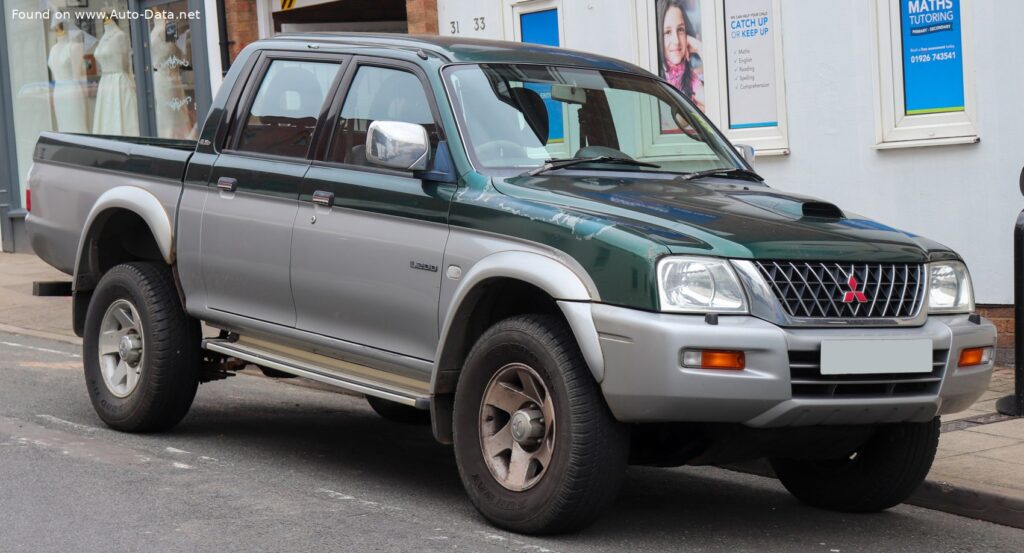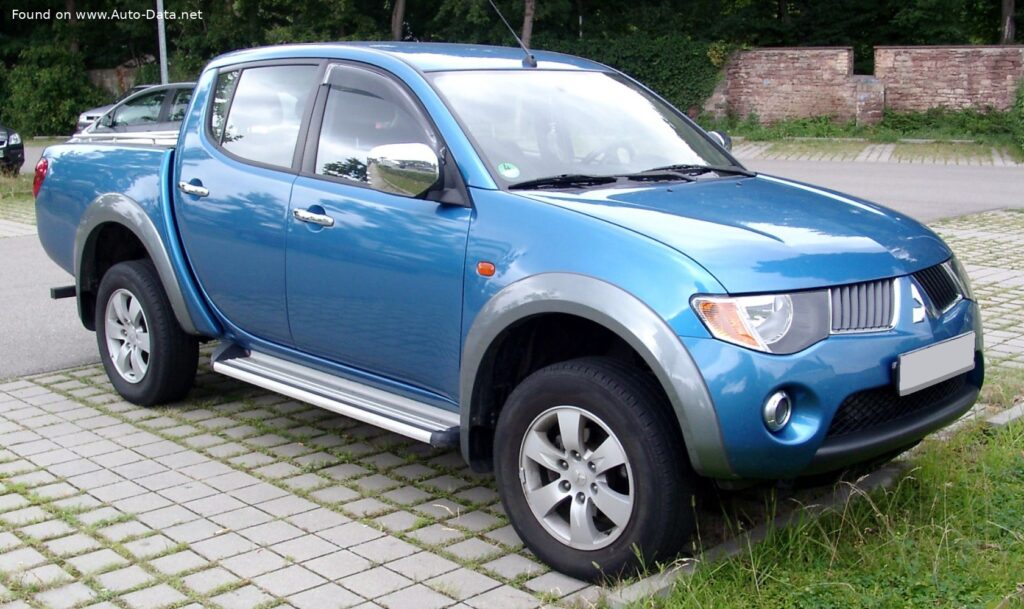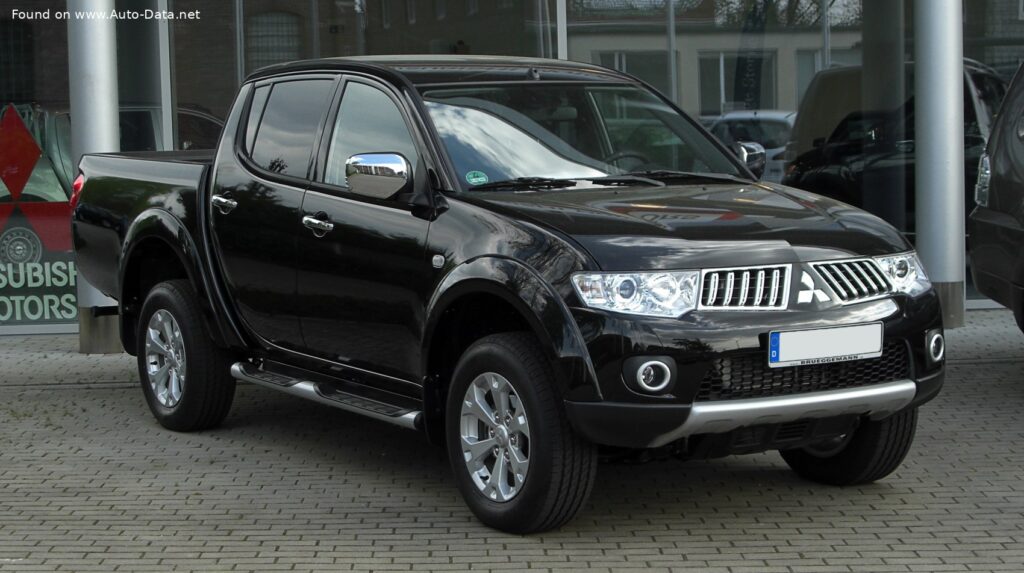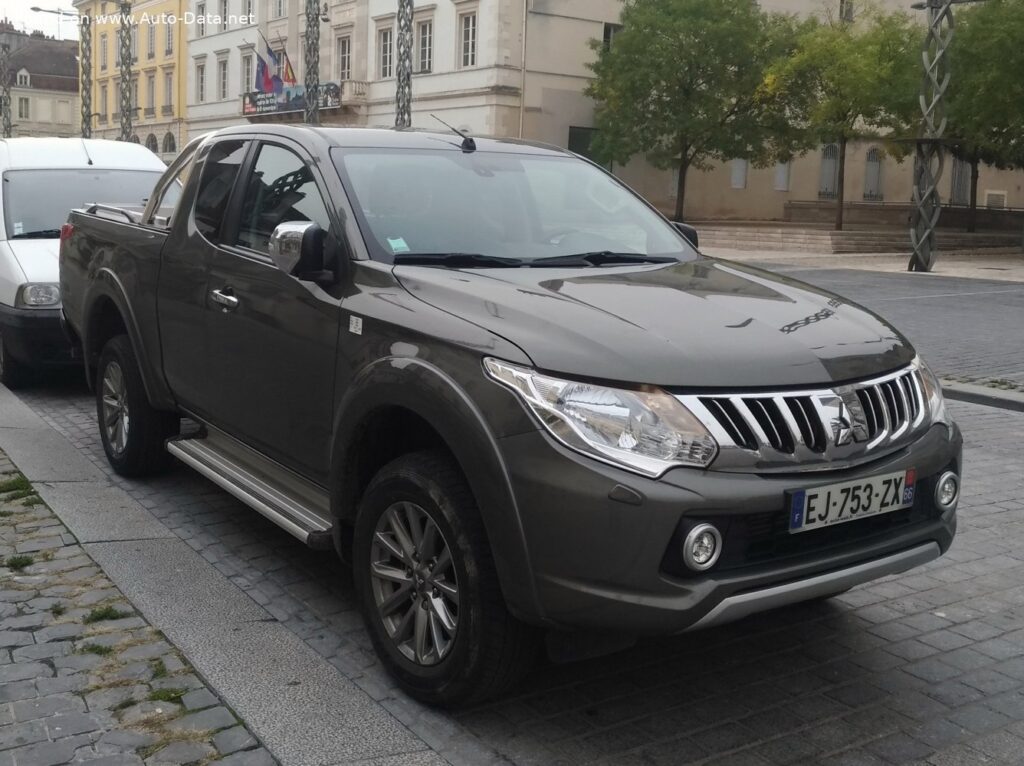
The Mitsubishi L200 V Single Cab (facelift 2019) 2.4 MIVEC (181 Hp) 4WD: A Global Workhorse
The Mitsubishi L200 V Single Cab (facelift 2019) 2.4 MIVEC (181 Hp) 4WD represents a significant iteration of Mitsubishi’s highly successful and globally recognized mid-size pickup truck. Known as the Triton in some markets, the L200 has established itself as a cornerstone of Mitsubishi’s international lineup, particularly in regions where rugged, reliable, and capable utility vehicles are in high demand, such as Southeast Asia, Australia, Europe, and parts of Africa and South America. This specific model, produced from 2019 to 2023, features a comprehensive facelift that modernized its aesthetics and enhanced its already impressive capabilities, solidifying its reputation as a dependable workhorse and an adventurous off-roader.
Unlike the North American market, which saw the discontinuation of Mitsubishi’s direct pickup offerings after the Raider (a rebadged Dodge Dakota) and has since shifted towards larger, full-size trucks, the L200 continues to thrive internationally. The fifth generation (V) L200, introduced globally in 2014, received a substantial mid-cycle refresh for the 2019 model year. This update brought a more aggressive and contemporary design, along with technological enhancements aimed at improving both on-road refinement and off-road prowess. The Single Cab variant, with its two-door, two-seat configuration, is specifically tailored for maximum cargo capacity and durability, serving a diverse clientele ranging from tradespeople and farmers to fleet operators.
Engine and Performance: The 2.4 MIVEC Powerplant in the Mitsubishi L200 V Single Cab
At the heart of the Mitsubishi L200 V Single Cab (facelift 2019) lies the robust 2.4-liter MIVEC (Mitsubishi Innovative Valve timing Electronic Control) diesel engine, designated with the code 4N15. This inline four-cylinder powerplant is engineered for a potent blend of power, torque, and fuel efficiency, critical attributes for a utility vehicle. With a displacement of 2,442 cubic centimeters (149.02 cu. in.), this engine delivers a respectable 181 horsepower at 3,500 rpm. Its power output per liter stands at 74.1 Hp/l, indicating a well-tuned and efficient design for a diesel unit.
The true strength of the 2.4 MIVEC engine, especially for a pickup truck, is its substantial torque output. It generates an impressive 430 Newton meters (317.15 lb.-ft.) of torque at a relatively low 2,500 rpm. This broad torque band is crucial for hauling heavy loads, towing trailers, and navigating challenging off-road terrain without strain. The engine’s architecture features a front, longitudinal layout, optimizing weight distribution and allowing for the integration of the sophisticated 4WD system.
Equipped with a turbocharger and an intercooler, the 4N15 engine ensures optimal air intake and combustion efficiency, contributing to its strong performance and lower emissions. The diesel Commonrail fuel injection system precisely manages fuel delivery, enhancing both power and economy. Furthermore, the DOHC (Double Overhead Camshaft) valvetrain with four valves per cylinder ensures efficient airflow and combustion, a testament to Mitsubishi’s engineering prowess in diesel technology. Power is channeled through a durable 6-speed manual transmission to a capable all-wheel-drive (4×4) system, providing the driver with maximum control and versatility across various driving conditions.
Design and Features: Form Meets Function
The 2019 facelift brought a significant visual overhaul to the Mitsubishi L200, particularly evident in its Single Cab variant. The most striking change was the adoption of Mitsubishi’s “Dynamic Shield” front design concept, which gives the pickup a more aggressive, modern, and commanding presence. This includes a revised grille, restyled headlights, and a bolder bumper design, aligning the L200 with Mitsubishi’s contemporary SUV lineup. Despite these aesthetic upgrades, the Single Cab’s primary focus remains on practicality and robustness.
As a two-door, two-seat pick-up, the Single Cab prioritizes a long cargo bed and maximum payload capacity. Its dimensions, with a length of 203.74 inches, a width of 71.46 inches, and a height of 70.08 inches, underscore its compact yet capable footprint for navigating both urban environments and tight off-road trails. The generous 118.11-inch wheelbase contributes to stability, especially when carrying heavy loads or traversing uneven terrain. With a ground clearance of 7.87 inches, coupled with impressive approach (30.0°), departure (24.0°), and ramp-over (24.0°) angles, the L200 Single Cab is well-equipped for serious off-road challenges.
Underneath its refreshed exterior, the L200 maintains its reputation for durability. The front suspension employs a double wishbone setup, providing precise steering and comfort, while the rear features a dependent suspension with two longitudinal semi-elliptic leaf springs. This robust rear leaf spring arrangement is ideal for carrying heavy loads and withstanding the rigors of commercial use. Braking is handled by ventilated discs at the front and drum brakes at the rear, a common and effective setup for vehicles in this class. An Anti-lock Braking System (ABS) is standard, enhancing safety by preventing wheel lock-up during hard braking. The electric power steering system, coupled with a rack and pinion setup, ensures light and responsive handling, making the L200 manageable in diverse driving scenarios despite its rugged nature. The vehicle rides on 16-inch wheel rims, providing a good balance between on-road comfort and off-road tire options.
Technical Specifications: Mitsubishi L200 V Single Cab (facelift 2019) 2.4 MIVEC (181 Hp) 4WD
| Category | Specification |
|---|---|
| Brand | Mitsubishi |
| Model | L200 |
| Generation | L200 V Single Cab (facelift 2019) |
| Type (Engine) | 2.4 MIVEC (181 Hp) 4WD |
| Start of Production | 2019 year |
| End of Production | 2023 year |
| Powertrain Architecture | Internal Combustion engine |
| Body Type | Pick-up |
| Seats | 2 |
| Doors | 2 |
Performance Specs |
|
| Fuel Type | Diesel |
| Power | 181 Hp @ 3500 rpm |
| Power per liter | 74.1 Hp/l |
| Torque | 430 Nm (317.15 lb.-ft.) @ 2500 rpm |
| Engine Layout | Front, Longitudinal |
| Engine Model/Code | 4N15 |
| Engine Displacement | 2442 cm3 (149.02 cu. in.) |
| Number of Cylinders | 4 |
| Engine Configuration | Inline |
| Cylinder Bore | 86 mm (3.39 in.) |
| Piston Stroke | 105.1 mm (4.14 in.) |
| Compression Ratio | 15.5:1 |
| Number of Valves per Cylinder | 4 |
| Fuel Injection System | Diesel Commonrail |
| Engine Aspiration | Turbocharger, Intercooler |
| Valvetrain | DOHC |
| Engine Oil Capacity | 8.4 l (8.88 US qt | 7.39 UK qt) |
| Coolant Capacity | 7.7 l (8.14 US qt | 6.78 UK qt) |
Space, Volume and Weights |
|
| Fuel Tank Capacity | 75 l (19.81 US gal | 16.5 UK gal) |
Dimensions |
|
| Length | 5175 mm (203.74 in.) |
| Width | 1815 mm (71.46 in.) |
| Height | 1780 mm (70.08 in.) |
| Wheelbase | 3000 mm (118.11 in.) |
| Front Track | 1520 mm (59.84 in.) |
| Rear (Back) Track | 1515 mm (59.65 in.) |
| Ride Height (Ground Clearance) | 200 mm (7.87 in.) |
| Minimum Turning Circle (Turning Diameter) | 11.8 m (38.71 ft.) |
| Approach Angle | 30.0° |
| Departure Angle | 24.0° |
| Ramp-over (Brakeover) Angle | 24.0° |
Drivetrain, Brakes and Suspension Specs |
|
| Drive Wheel | All wheel drive (4×4) |
| Number of Gears and Type of Gearbox | 6 gears, manual transmission |
| Front Suspension | Double wishbone |
| Rear Suspension | Dependent suspension of two longitudinal semi-elliptic leaf springs |
| Front Brakes | Ventilated discs |
| Rear Brakes | Drum |
| Assisting Systems | ABS (Anti-lock braking system) |
| Steering Type | Steering rack and pinion |
| Power Steering | Electric Steering |
| Wheel Rims Size | 16 inches |
Legacy and Market Impact
The Mitsubishi L200, or Triton as it’s known in markets like Australia and Thailand, boasts a rich heritage spanning several decades, consistently delivering on its promise of durability, capability, and value. The fifth-generation model, particularly after its 2019 facelift, continued this legacy, reinforcing Mitsubishi’s position as a key player in the global pickup truck segment. While it does not compete directly in the North American market, its influence and success in other regions are undeniable.
In its primary markets, the L200 V Single Cab (facelift 2019) 2.4 MIVEC (181 Hp) 4WD faces stiff competition from established rivals such as the Toyota Hilux, Ford Ranger, Isuzu D-Max, and Nissan Navara. Despite this fierce environment, the L200 has carved out a strong niche due to its reputation for reliability, strong off-road performance, and competitive pricing. Its MIVEC diesel engine is often praised for its blend of power and efficiency, making it an economical choice for businesses and individuals who rely on their vehicle for daily operations and demanding tasks.
The Single Cab configuration, in particular, highlights the L200’s utilitarian focus. It’s a no-nonsense vehicle designed to transport goods and navigate challenging terrains with minimal fuss. This makes it an indispensable tool for construction companies, agricultural businesses, mining operations, and government agencies across various continents. Its robust chassis, capable 4WD system, and generous payload capacity ensure it can handle the toughest jobs, day in and day out.
The 2019 facelift ensured the L200 remained visually competitive and technologically relevant throughout its production run until 2023. By incorporating Mitsubishi’s modern design language and maintaining its mechanical integrity, the L200 continued to appeal to a broad base of customers seeking a dependable and versatile pickup. Its legacy is one of unwavering service and a testament to Mitsubishi’s commitment to building rugged vehicles that meet the diverse needs of global markets, solidifying its place as a true international workhorse.